
Iron Lung (2026) Review — Markiplier’s Blood-Ocean Nightmare
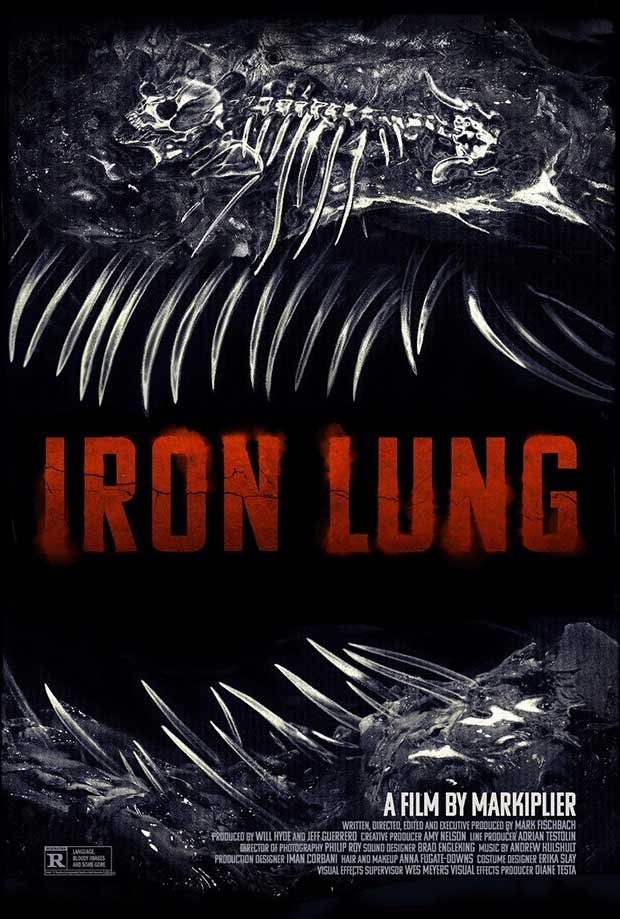
You hear the hatch wheel spin behind you, and that’s when your stomach finally does the math: one room. One door. And the door is now closed.
Through the porthole glass there’s no ocean — not the kind you know. It’s thicker than water, redder than a fresh crime scene, and it goes down forever. A whole sea of blood on a dead moon, in a universe where every star quietly packed up and left. Your orders are simple: pilot this rusted tin can through the dark, don’t run out of air, and whatever bangs against the hull three decks down — do not open that hatch. You will want to. God help you, everybody wants to. That’s the whole problem.
Welcome to Iron Lung, creeps. Harper has crawled through haunted houses, cursed VHS tapes, and marriages with worse red flags than a Soviet parade — but this? This is what happens when a YouTube king with forty million subscribers stares at the word “claustrophobia” and says hold my oxygen tank.
Plot Overview — No Major Spoilers, Scout’s Honor
In the aftermath of the “Quiet Rapture” — an event that simply erased every star and habitable planet in the universe — humanity is down to its last desperate options. Convict Simon (Mark Fischbach, a.k.a. Markiplier) gets offered a deal no sane person takes: climb into a cobbled-together submarine, get sealed into an ocean of blood on a desolate moon, and hunt for the resources keeping what’s left of the human race breathing.
That’s it. That’s the movie. One man, one sub, 125 minutes of locked-room dread where the real monster is the math: every breath you take is one breath closer to the bottom. No spoilers beyond that, scout’s honor — the film doles out answers the way the sub doles out oxygen: sparingly, and never when you ask nicely. (If you want the full dossier on the game and the filmmakers, the Think Horror wiki keeps the receipts.)
What Works — The Good Stuff (and It’s Mostly Good Stuff)
The claustrophobia is the whole monster. Fischbach shoots the submarine like a coffin somebody welded pipes into — low ceilings, tight hatches, a camera that never, ever gives you a wide shot to breathe in. Why it works: your body starts rationing air right along with Simon, which means the scariest special effect in the movie is your own lungs.
Markiplier can actually act, and Harper will die on this hill. Skeptical? Fair — so was I. But Simon’s unraveling is raw, sweaty, unhinged in the way that only comes from a man who’s run out of people to perform for. He talks to himself because the alternative is listening to the dark. Why it works: he doesn’t play a hero, he plays a man drowning in real time — and desperation is a lot harder to fake than a jump scare.
The blood ocean is the best horror location in years. An entire sea of blood, red as a fresh crime scene, stretching forever under a dead sky. It’s wet, it’s wrong, and you can’t fight it, outrun it, or reason with it. Why it works: most monsters chase you; this one just surrounds you, which means there’s no safe scene — only quieter ones.
The sound design is committing war crimes. Groaning hull, dying sonar, things that bang three decks below you in a sub you were told was empty. Why it works: in a one-room movie, the sound design does just as much heavy lifting as the camera — Fischbach weaponizes silence the way a kid weaponizes a firecracker, and the bangs land because of the quiet, not in spite of it.
What Doesn’t Work — Harper Keeps It Honest
The middle act treads water. Around the hour mark, the tease of what’s outside the sub starts looping — another ping, another bang, another long stare into red nothing — and the claustrophobia briefly turns into monotony. I felt those fifteen extra minutes in my seat, and trimming them would have made the finale hit like a depth charge.
The story is thin by design, and the design will annoy some of you. This is a pressure cooker, not a mystery box — the Quiet Rapture gets atmosphere, not answers. I admire the restraint, but if you’re the viewer who needs every thread knotted and labeled, you will leave this movie twitchy.
Game purists, a warning: the film expands and reshapes Szymanski’s lean little nightmare, and a couple of those choices sand down the game’s meanest edges. As a standalone film it absolutely works — the game is a bonus, not homework — but if you speedran the original, manage your expectations like oxygen.
Trivia & Facts — The Morgue Drawer
- The whole movie started as a joke. In February 2023, game creator David Szymanski tweeted a fake announcement — “This summer. Starring Markiplier as John Iron Lung and Jacksepticeye as The Fish.” Markiplier saw it, called him up, and the joke became a $3–5 million feature film.
- Markiplier turned down a role in Five Nights at Freddy’s (2023) to make this movie. Given that Iron Lung went on to gross $51 million, somebody’s agent owes somebody a fruit basket.
- Production got steamrolled by the 2023 SAG-AFTRA strike — awkward, since Fischbach wrote, directed, edited, and starred in the film. He joked that he was on strike against himself.
- The production used 79,800 gallons of fake blood — and Markiplier ended up hospitalized after getting too much of it in his eyes. Method acting has limits. The emergency room is one of them.
- The theatrical release partnered with blood donation drives at over 70 theaters, chasing a world record with a goal of 37,000 donations. Nothing says “indie horror” like turning your premiere into a Red Cross event.
- It was planned for just 60 screens — then fan demand crashed AMC’s website, fans camped out at theaters, and it expanded to 4,000+ screens on release day. That’s not a release strategy. That’s a siege.
- David Szymanski himself cameos in the film — as himself. When the creator of the nightmare shows up inside your nightmare, that’s what the kids call “lore.”
- The score is by Andrew Hulshult (Doom Eternal) — his first feature film soundtrack, all industrial dread and sub-hull groans. Your speakers have been warned.
- It was shot in Austin, Texas, self-financed by Fischbach, who also self-distributed it to keep 100% creative control. $51 million later, the “YouTuber movie” jokes stopped being funny and started being jealous.
Harper’s Extras
Harper’s Crypt Cocktail: The Iron Lung. Dark rum, cranberry juice, a heavy pour of grenadine, served over crushed ice in the tallest glass you own. Red as the ocean outside. Drink it slow — oxygen discipline, people.
Watch next: If Iron Lung‘s one-room dread left you gasping, crawl over to my Honey Bunch (2026) review — wake up, something’s wrong, where the locked room is a marriage and the monster has health insurance.
Harper’s Hot Take: The scariest thing in Iron Lung isn’t in the blood. It’s the air gauge. A whole movie where the villain is breathing — and it works. Sleep tight.
Where to Watch
Iron Lung (2026) self-released theatrically on January 30, 2026, then surfaced digitally on YouTube in May 2026. 125 minutes, Rated R. Watch it with the lights off, the doors locked, and nobody allowed to knock.
Frequently Asked Questions
Is Iron Lung (2026) based on a video game?
Yes — it’s based on David Szymanski’s 2022 indie horror game Iron Lung, a short, brutal first-person nightmare about piloting a submarine through a blood ocean. The film expands the game’s lean premise into a full 125-minute feature.
Where can I watch Iron Lung (2026)?
Iron Lung (2026) is available digitally on YouTube, following its self-released theatrical run that began January 30, 2026.
Who directed Iron Lung (2026)?
Mark Fischbach — a.k.a. Markiplier — wrote, directed, edited, and starred in Iron Lung. It’s his feature directorial debut, which he also self-financed and self-distributed.
What is Iron Lung (2026) about?
In a universe where the “Quiet Rapture” erased every star and habitable planet, a convict is sent to pilot a submarine through an ocean of blood on a desolate moon in search of resources. It’s a spoiler-light, claustrophobic sci-fi horror about isolation, desperation, and whatever is banging on the hull.