Halloween (1978) Review
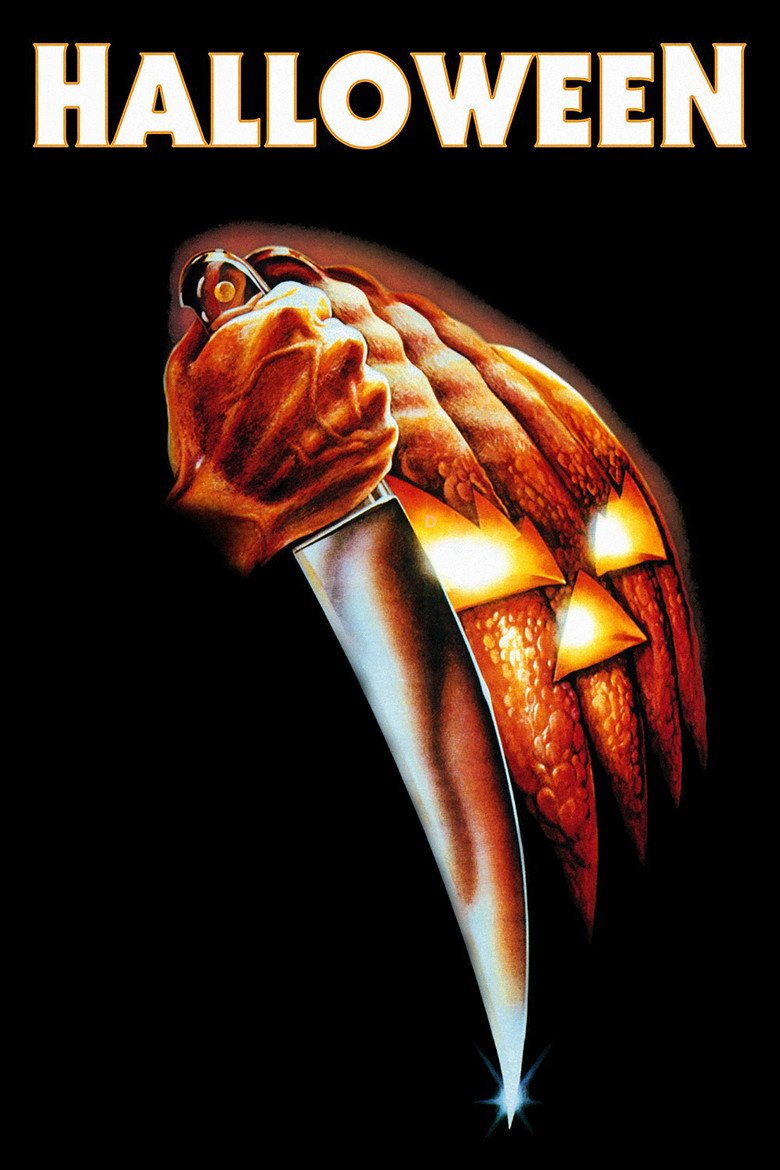
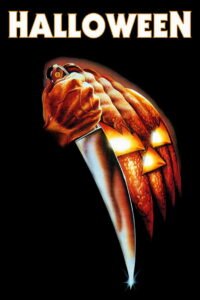
Theatrical poster for Halloween (1978). Compass International Pictures.
It’s October 31st, and the street is empty. Too empty. The jack-o’-lanterns grin from every porch, but the trick-or-treaters are long gone, and the only sound is the dry rattle of leaves skittering across the sidewalk. You tell yourself it’s just the wind. It’s always just the wind — until it isn’t.
Then you see him. Standing by the hedges. Motionless. A pale, expressionless face catching the streetlight — watching you. You blink, and he’s closer. You blink again, and he’s gone, and your heart is doing something it was never designed to do. That’s when the piano starts. Dun-dun-dun-dun-dun-dun. Five notes. And you realize, with a cold that starts in your spine and spreads everywhere: he’s not haunting the street. He’s haunting you.
Welcome to Haddonfield, horror lover. Lock your doors. It won’t help, but lock them anyway.
The Review
Okay, maybe that’s a little dramatic. But here’s the thing about Halloween — it doesn’t need me to oversell it. John Carpenter’s 1978 masterpiece is the film that took the slasher genre from a rough sketch and turned it into a blueprint that horror is still following nearly fifty years later. Every masked killer, every final girl, every babysitter-in-peril movie owes this one a debt. And the wildest part? Carpenter made it for about $325,000. That’s not a budget. That’s a dare.
The setup is beautifully simple: Michael Myers, a six-year-old boy, murders his sister on Halloween night in 1963. Fifteen years later, he escapes his sanitarium and comes home to Haddonfield, Illinois. His psychiatrist, Dr. Loomis, follows — and he’s not being subtle about the stakes. “I spent eight years trying to reach him, and then another seven trying to keep him locked up,” Loomis warns anyone who’ll listen, “because I realized what was living behind that boy’s eyes was purely and simply… evil.” Meanwhile, babysitter Laurie Strode is spending Halloween night watching the Doyle kids, unaware that something pale and patient is watching her.
What makes Halloween immortal is restraint. Carpenter understood something that most horror directors still haven’t figured out: the scariest thing isn’t the kill — it’s the waiting. Michael doesn’t sprint. He doesn’t monologue. He stands. He watches. He tilts his head at the aftermath of his own violence like a dog hearing a strange sound, and it’s more unsettling than any jump scare. He’s called “The Shape” in the credits, and that name is perfect — he’s not a man, he’s a shape in the darkness, and your brain fills in the rest. Which is always worse.
And then there’s that score. Carpenter composed it himself in three days — a simple 5/4 piano motif that shouldn’t work and absolutely does. Those five notes are the sound of dread itself. You’ll hear them in grocery stores in October and your shoulders will tense up before your brain even registers why. That’s not music. That’s conditioning.
Jamie Lee Curtis, in her film debut, gives us Laurie Strode — the original final girl, and still the gold standard. Laurie isn’t a warrior from the start; she’s bookish, a little awkward, the responsible one. But when the night goes sideways, she adapts. She fights. She survives. Curtis plays her with a grounded, girl-next-door quality that makes every moment of terror land harder — because Laurie feels real, and real people getting stalked is scarier than any scream queen caricature.
Donald Pleasence as Dr. Loomis is the film’s glorious wild card. He’s a respected British actor chewing every line of dialogue like it’s his last meal, and it’s magnificent. Loomis is the only person in the movie who understands what Michael is, and his barely-contained panic gives the audience permission to be terrified. “Death has come to your little town, Sheriff.” Chills. Every time.
Is it perfect? Almost. The pacing is deliberate — some might say slow — and the film asks you to sit in the quiet dread for long stretches. If you need constant action, this isn’t your movie. But that patience is the whole point. Carpenter is winding a spring, and when it releases in that final act — Laurie fighting for her life in the Doyle house, Loomis racing through the streets — it’s one of the most sustained sequences of terror ever put on film.
Harper’s Rating: 5 out of 5. The granddaddy of the modern slasher, and still the scariest night in suburbia ever filmed. Some movies age. This one just waits.
Harper Recommends
If Halloween has you craving more time in Haddonfield, treat yourself to the Halloween: The Complete Collection Blu-ray box set — every film from the 1978 original through the modern trilogy, with hours of behind-the-scenes features. Watching the franchise evolve (and occasionally devolve) across one shelf is a horror education. But honestly? The first disc is the one you’ll keep coming back to.
Harper’s Extras
Every Think Horror review comes with a little something extra rattling around in the goodie bag. Dig in:
- The mask: Michael’s iconic face is a Captain Kirk mask — literally. The production bought a William Shatner Star Trek mask for $1.98, spray-painted it white, widened the eye holes, and teased the hair. Horror history, born from a bargain bin.
- The budget: The entire film cost roughly $325,000 — Carpenter’s crew used real Haddonfield-area homes, borrowed equipment, and shot in 20 days. It went on to gross $70 million worldwide, making it one of the most profitable independent films ever made.
- The score: Carpenter composed the theme in 5/4 time — an unusual, off-kilter rhythm that your brain can’t quite settle into. He later admitted he was just trying to sound like the Exorcist theme’s unsettling cousin. Mission accomplished.
- The leaves: The film is set on Halloween in Illinois, but it was shot in spring in Southern California. The crew had to truck in bags of dead leaves and scatter them before every exterior shot — then gather them up and reuse them for the next setup.
- Want the full Michael Myers deep dive? Check out our Michael Myers wiki page — backstory, iconic moments, trivia, and everything that makes The Shape tick.
Where to Watch
Halloween (1978) rotates through streaming services regularly — it’s a seasonal staple every October. Check JustWatch for current streaming options in your region. It’s also widely available to rent or buy on Apple TV, Amazon Video, Google Play, and YouTube.
Sweet dreams, horror lover. And if you hear five piano notes in the dark tonight… don’t turn around. Just don’t blame us for the nightmares.