
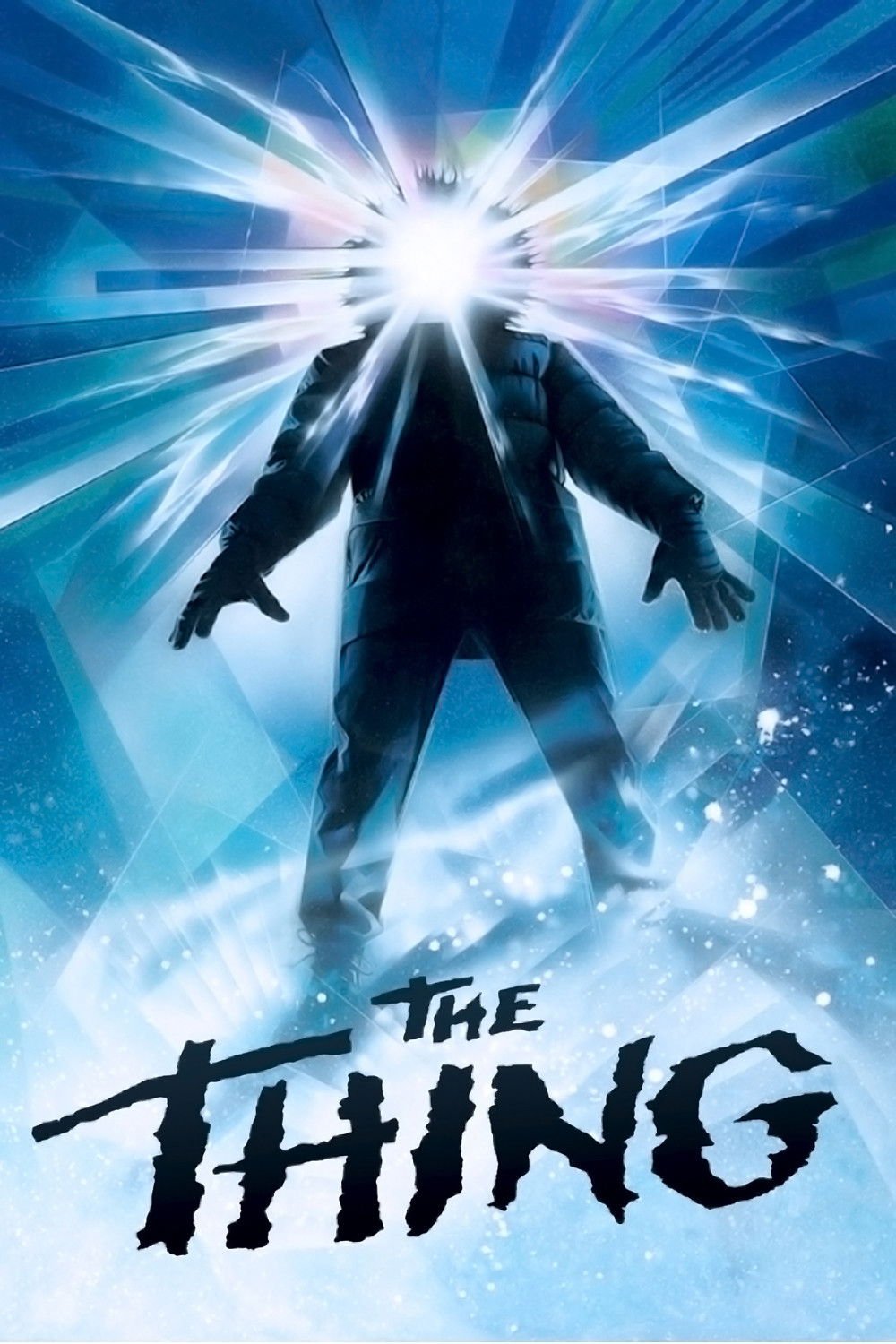
The Thing (1982) is John Carpenter’s science-fiction horror film about an Antarctic research station that takes in a shape-shifting organism and then cannot tell which of its own men is still human. Written by Bill Lancaster from John W. Campbell Jr.’s novella Who Goes There?, it is also a remake of the 1951 film The Thing from Another World. Universal Pictures released it in the United States on June 25, 1982. Kurt Russell leads an ensemble that includes Wilford Brimley, Keith David, and Donald Moffat. The film failed on first release and later became one of the most cited American horror movies of its decade.
At a glance
| Release date | June 25, 1982 (United States) |
| Director | John Carpenter |
| Writer | Bill Lancaster |
| Starring | Kurt Russell, Wilford Brimley, Keith David, T. K. Carter, David Clennon, Richard Dysart, Richard Masur, Donald Moffat |
| Runtime | 109 minutes |
| Rating | R |
| Genre | Science fiction, body horror |
| Budget | About $15 million |
| Box office | About $19.6 million domestic |
Plot summary
Winter has already closed in on an American research outpost in Antarctica. A helicopter from a nearby Norwegian camp chases a dog across the ice, shooting at it. The Americans kill the last Norwegian in the confusion and take the dog in. MacReady, the station pilot, and Copper, the doctor, fly to the abandoned Norwegian site and find a burned ruin, a hollowed corpse, and a block of ice that used to hold something. They bring the evidence home without understanding it.
The dog is not a dog. It splits open in the kennel and starts absorbing the sled animals. The station’s biologist, Blair, runs the numbers and concludes that the creature can imitate any living thing it touches, perfectly, and that if it reaches a populated coast the rest of the world is finished. Trust inside the camp collapses. A blood test becomes the only procedure anyone trusts, and even that can be sabotaged. The men burn what they can identify. They cannot agree on who is still himself.
Spoiler section: the ending
MacReady destroys the camp rather than leave the organism a way out. At dawn he and Childs, the mechanic, are the only two left, sitting in the cold with a bottle, each unsure about the other. The film ends on that standoff. Carpenter refused a last-minute reveal.
Production and behind the scenes
Carpenter had wanted a new Thing for years. The 1951 Howard Hawks production, which he admired, had turned Campbell’s imitator into a walking plant. Lancaster’s script went back to the novella’s paranoia and set the story in 1982, not the 1930s. Universal backed it as a follow-up to the heat Carpenter and Russell had with Escape from New York. Russell’s MacReady is a helicopter pilot rather than a hero with a plan. The rest of the cast was filled with character actors, so no face in the station reads as safe.
The creature work belonged to Rob Bottin, then in his early twenties, who spent more than a year designing transformations that had to be performed live, in camera. Stan Winston’s shop built the infected dog used in the kennel sequence after Bottin was hospitalized for exhaustion. The effects are not hidden in shadow. Faces pull apart, stomachs open into mouths, and a severed head grows legs. Carpenter has said he wanted the audience to see the imitation happening, because the horror is the process, not a glimpse of a monster in a doorway.
Interiors were built on the Universal lot and on refrigerated stages in Los Angeles. Glacier plates were shot in British Columbia and near Juneau, Alaska. The station’s interiors were dressed warm, wood and clutter, so the cold outside would feel worse. Ennio Morricone wrote the score, a low pulse that Carpenter simplified further in the edit. Dean Cundey shot it in anamorphic widescreen, which makes the camp look both vast and impossible to leave.
Release and reception
Universal opened The Thing on June 25, 1982, two weeks after E.T. the Extra-Terrestrial. Audiences that summer were not in the market for an Antarctic film in which no one can be trusted and nothing cute survives. Reviews were harsh about the effects and the tone. The film made about $19.6 million in the United States and Canada against a budget of about $15 million, a disappointment for Universal. Home video and a growing critical reassessment turned it around. It is now regularly ranked among Carpenter’s best films, and a 2011 prequel, also called The Thing, was built to lead into the 1982 opening.
Cast
- Kurt Russell as R. J. MacReady
- Wilford Brimley as Dr. Blair
- Keith David as Childs
- Donald Moffat as Garry
- Richard Dysart as Dr. Copper
- T. K. Carter as Nauls
- David Clennon as Palmer
- Richard Masur as Clark
- Charles Hallahan as Norris
Trivia
The blood-test scene was written so that the audience would know the method worked before the station did. Carpenter shot reactions in long takes because the actors were responding to effects they could actually see on the floor.
- Bottin’s crew nicknamed the large Norris transformation “the bacon monster” while it was being built.
- Russell’s hat and beard were partly a way to separate MacReady from Snake Plissken, whom he had played for Carpenter the year before.
- The Norwegian camp footage includes a glimpse of the block the creature came from, a visual reply to the 1951 film’s ice scene.
- The ambiguous ending was not a compromise. Carpenter and Lancaster kept it through previews.
- A novelization by Alan Dean Foster fills in a few off-screen beats the film leaves out, including more of the Norwegian camp.
- The 2011 prequel matches the axe in the door and the burned two-faced corpse so its last scenes can cut into this film’s first reel.
Related links
- John Carpenter
- Kurt Russell
- The Thing (2011), the prequel
Trailer
Go Behind the Screams
Check out these behind-the-scenes looks at how The Thing (1982) was made: