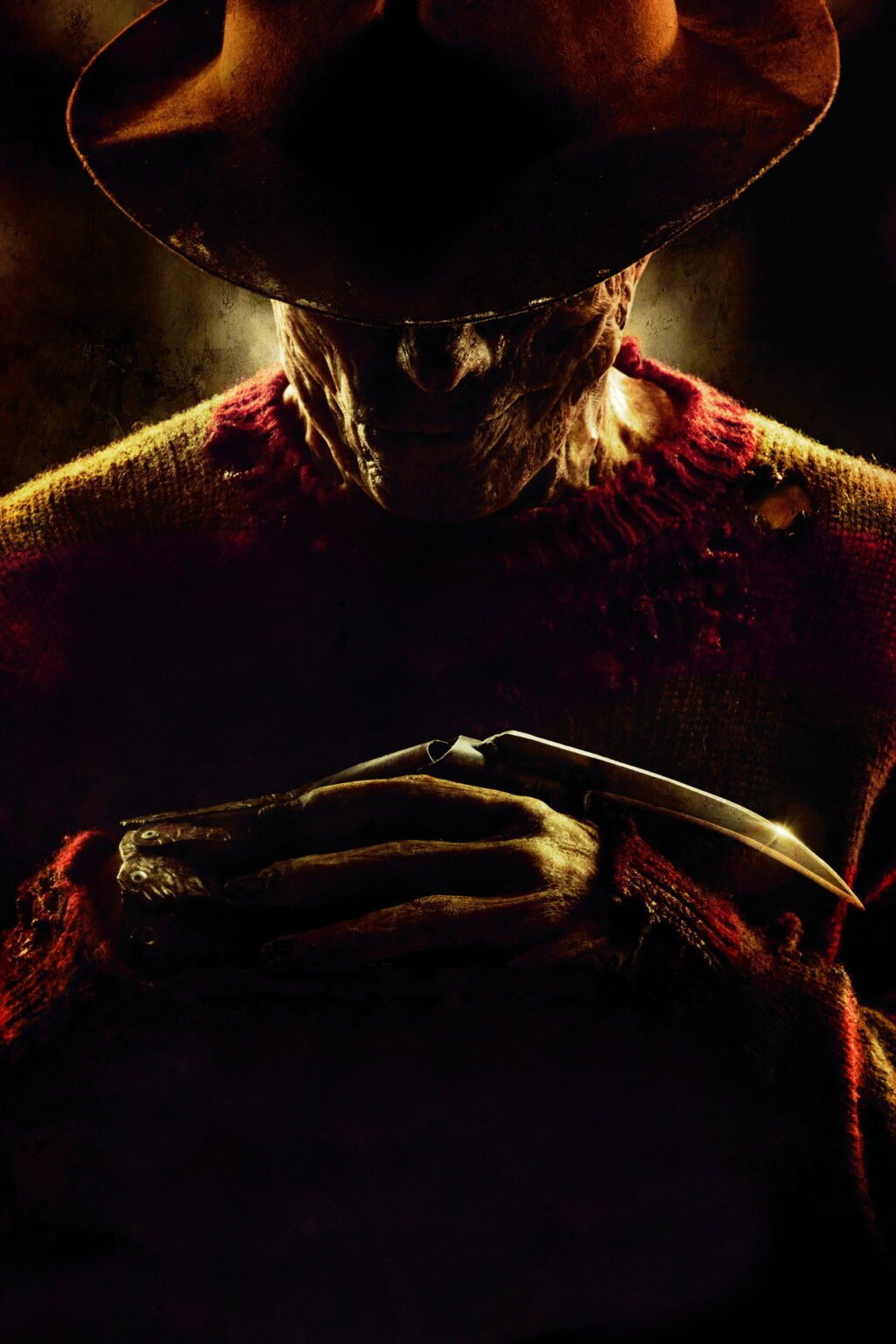
Freddy Krueger is the burned, wisecracking dream stalker at the heart of the A Nightmare on Elm Street franchise, and one of the most recognizable horror villains ever put on film. Created by writer-director Wes Craven and played by Robert Englund in eight films, Freddy turned the one thing nobody can avoid, sleep, into a hunting ground. With his battered fedora, red-and-green striped sweater and a glove tipped with blades, he has been haunting audiences since 1984.
At a glance
| Franchise | A Nightmare on Elm Street |
| First appearance | A Nightmare on Elm Street (1984) |
| Creator | Wes Craven |
| Portrayed by | Robert Englund (eight films, 1984–2003, plus the TV series Freddy’s Nightmares, 1988–1990) Jackie Earle Haley (A Nightmare on Elm Street, 2010 remake) Tobe Sexton (teenage Freddy, Freddy’s Dead: The Final Nightmare, 1991) Kane Hodder (Freddy’s gloved hand in the final shot of Jason Goes to Hell, 1993) |
| Weapon of choice | A homemade right-hand glove fitted with blades, plus total control of the dream world |
Origin story and backstory
In Craven’s original film, Fred Krueger was a child murderer from the fictional town of Springwood, Ohio. He was arrested, but walked free on a technicality because a search warrant had not been signed in the right place. Unwilling to let him go, a group of local parents tracked him to the boiler room where he had taken his victims and burned him alive.
That should have been the end of him. Instead, Freddy came back inside the dreams of those parents’ children, the so-called Elm Street kids. In the dream world he can bend reality, change shape and taunt his victims at will, and any wound he inflicts there is real when the dreamer wakes. His weakness is the flip side of that power: if a dreamer can pull him into the waking world, he becomes vulnerable.
How the sequels expanded his history
A Nightmare on Elm Street 3: Dream Warriors (1987) revealed that his mother, Amanda Krueger, was a young nun who was accidentally locked inside an asylum wing full of violent inmates. The child she later gave birth to was Freddy, which gave rise to the famous description “the bastard son of a hundred maniacs.” Freddy’s Dead: The Final Nightmare (1991) filled in more: an abusive adoptive father played by Alice Cooper, a hidden wife and daughter, and a bargain with ancient “dream demons” that let him live on after his death.
The 2010 remake rebuilt the character as a preschool groundskeeper who preyed on the children in his care, and made his crimes explicit in a way the 1984 film had deliberately avoided. Craven’s early script had leaned in that darker direction too, but the original film presents Freddy as a child killer.
Iconic moments
Freddy’s best scenes are memorable less for gore than for sheer nightmare logic. A few that every fan knows:
- The ceiling scene (1984): Tina is attacked by an unseen force and dragged up her bedroom wall and across the ceiling, an unforgettable image created with a rotating room set.
- The bathtub (1984): Nancy Thompson dozes off in the bath and the bladed glove rises silently out of the water between her knees. It is still one of the most copied shots in horror.
- Glen’s bed (1984): Johnny Depp’s character is swallowed by his own bed, followed by a now-legendary practical effect that floods the room.
- The Dream Warriors fight back (1987): The teens at Westin Hills learn to use their own dream powers against Freddy, with Nancy returning to lead them. Many fans rank it as the best sequel.
- Meta horror (1994): Wes Craven’s New Nightmare steps outside the series, with Heather Langenkamp, Robert Englund and Craven playing themselves while an ancient entity wearing Freddy’s face tries to break into reality.
- Freddy vs. Jason (2003): Freddy manipulates Jason Voorhees into killing for him, which ends in a brawl between the two icons at Camp Crystal Lake.
Appearances
Films in release order
- A Nightmare on Elm Street (1984)
- A Nightmare on Elm Street 2: Freddy’s Revenge (1985)
- A Nightmare on Elm Street 3: Dream Warriors (1987)
- A Nightmare on Elm Street 4: The Dream Master (1988)
- A Nightmare on Elm Street 5: The Dream Child (1989)
- Freddy’s Dead: The Final Nightmare (1991)
- Wes Craven’s New Nightmare (1994)
- Freddy vs. Jason (2003)
- A Nightmare on Elm Street (2010 remake)
TV, crossovers, remakes and what’s next
TV and beyond: Englund hosted the anthology series Freddy’s Nightmares (1988–1990, two seasons). The big crossover is Freddy vs. Jason (2003), and the 2010 remake starred Jackie Earle Haley. Freddy has also turned up as a playable character in games such as Mortal Kombat (2011) and Dead by Daylight (2017).
Announced (in development): In July 2026, Paramount announced a new A Nightmare on Elm Street film for its genre label Paramount Primal. It is based on Craven’s original 1984 screenplay, with U.S. rights licensed from the Wes Craven estate. No title, director, cast or release date has been announced.
Trivia and behind-the-scenes facts
- Craven said the idea came from a series of Los Angeles Times stories about people who suffered terrifying nightmares and then died in their sleep.
- Real-life inspirations for Freddy included a school bully from Craven’s youth and a disfigured stranger who frightened him as a boy by staring up at his window.
- Craven said the glove was partly inspired by watching his cat claw the couch. His original script called for fishing knives as the blades.
- The red-and-green sweater was a deliberate choice. Craven had read in Scientific American that the two colors are hard for the eye to process side by side, so he used the clash to make Freddy subtly unsettling.
- The fedora was Craven’s idea. Englund has said he fought to keep it when others pushed for different hats, arguing that its silhouette was too strong to lose.
- Englund has said Freddy’s look drew on Klaus Kinski in Nosferatu the Vampyre, and that his stance borrowed from James Cagney. Freddy holds his gloved arm low partly because the blades were heavy.
- A Nightmare on Elm Street (1984) was Johnny Depp’s feature film debut.
- The film’s success was so important to the young studio New Line Cinema that it became known as “The House That Freddy Built.”
- The American Film Institute ranked Freddy No. 40 among villains on its 100 Years…100 Heroes & Villains list.
- Freddy’s glove turns up as an in-joke in other horror films: hanging in the toolshed in Evil Dead II (1987), and in the police evidence room in Bride of Chucky (1998) next to Jason’s mask and Michael Myers’ mask.