Dwight Frye
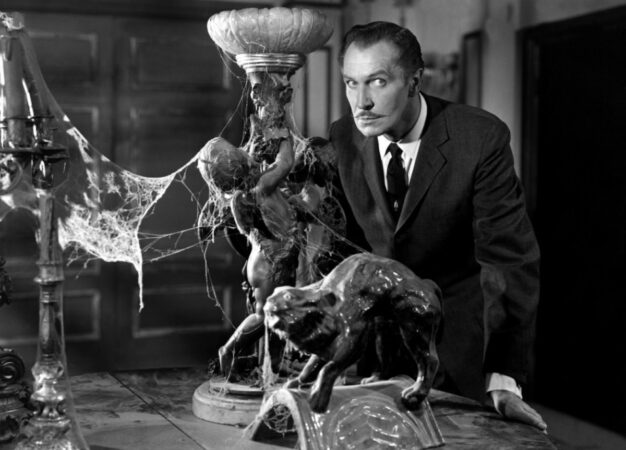
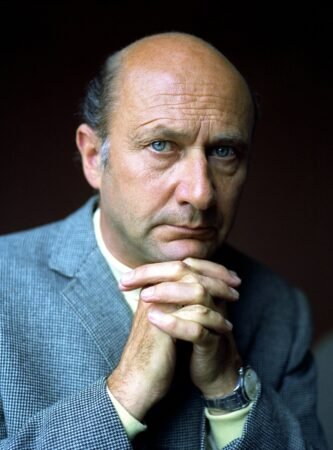
Dwight Frye (1899 to 1943) was the American actor who played Renfield in Dracula and Fritz in Frankenstein, both released in 1931.
Quick Specs
| Born | Dwight Iliff Fry, February 22, 1899, Salina, Kansas (the stage name added the “e”) |
| Died | November 7, 1943, Los Angeles, aged 44, of a heart attack |
| Buried | Forest Lawn Memorial Park, Glendale |
| Stage | featured Broadway player for eight seasons; The Devil in the Cheese (1926) with Fredric March and Bela Lugosi |
| Horror centerpieces | Renfield in Dracula (1931); Fritz in Frankenstein (1931); Karl in Bride of Frankenstein (1935) |
| Other horror | Herman Gleib in The Vampire Bat (1933); a reporter in The Invisible Man (1933); Zolarr in Dead Men Walk (1943); Rudi in Frankenstein Meets the Wolf Man (1943) |
| Also | Wilmer Cook in the first The Maltese Falcon (1931) |
| Nicknames | “The Man with the Thousand-Watt Stare,” “The Man of a Thousand Deaths” |
Who He Is
Dwight Iliff Fry was born in Salina, Kansas, on February 22, 1899; the “e” on Frye came with the stage name. The family moved to Denver, Colorado, where he grew up. He trained in voice and piano and showed promise as a concert pianist, until a school play turned him toward acting. His mother was a Christian Scientist, and he was a devout one all his life, a fact that shaped how he died.
On August 1, 1928, he married Laura Mae Bullivant, a dancer and actress known on stage as Laurette Bullivant, whom he had met in touring theater. The couple opened a New York tearoom that did well with the Broadway crowd until the 1929 crash wiped it out, thinned out Broadway work and sent them to California. Their son, Dwight David Frye, was born on December 26, 1930. He grew up to co-write his father’s authorized biography, Dwight Frye’s Last Laugh (1997), with Gregory William Mank and James T. Coughlin.
The Work, and What He Did in It
He came up through stock and touring companies. In New York, producer Brock Pemberton championed him, and he worked in comedy, musicals and drama: the Son in Six Characters in Search of an Author, Rita Coventry (1923), The Love Habit (1923). His biggest Broadway success was the comedy The Devil in the Cheese (1926), which ran 165 performances with Fredric March and, as a Greek bandit, Bela Lugosi. Frye and Lugosi shared a Broadway stage five years before Dracula.
His first screen appearances were uncredited silent bits in Exit Smiling (1926), Upstream (1927) and The Night Bird (1928). In The Doorway to Hell (1930) he played a gangster opposite a young James Cagney, and in Man to Man (1930) he was Vint Glade, a bank clerk who tearfully confesses to embezzlement. Even before horror, Hollywood was casting him as neurotics and weak men under pressure.
1931 made him and trapped him. In Dracula, directed by Tod Browning from the stage-derived script, Renfield takes on the Jonathan Harker role: he is the solicitor who travels to Transylvania to close Dracula’s purchase of Carfax Abbey, is fed on and enslaved, and comes back to England raving in Dr. Seward’s sanatorium. He eats flies and spiders for their blood, begs for “lives… not human lives,” crawls across the floor toward a fainted maid, and pleads for his soul with Van Helsing (Edward Van Sloan): “God will not damn a poor lunatic’s soul.” Dracula kills him for betraying where Mina is. Frye plays sanity draining out of a man in real time, and every Renfield since has been measured against him. He didn’t inherit the part from Broadway. The stage Renfield, Bernard Jukes, campaigned for the film role and lost it to Frye.
The same year he was Wilmer Cook, the “gunsel,” in the first screen version of The Maltese Falcon, the Ricardo Cortez film, and Jessup the butler, uncredited, in the Charlie Chan picture The Black Camel. Then came James Whale’s Frankenstein. Frye is Fritz, Henry Frankenstein’s hunchbacked lab assistant. He robs graves with Henry in the opening, cuts down a hanged man for parts, and is sent to steal a brain, where he drops the normal one and takes the abnormal one. The whole tragedy turns on that mistake. He torments the Monster with a torch and a whip until the Monster kills him. It’s a small part, and with it he created the screen’s permanent template for the mad scientist’s assistant.
After that the parts narrowed. In The Vampire Bat (1933), a Majestic picture shot on leased Universal sets, he has his biggest horror role after 1931: Herman Gleib, the village simpleton who keeps bats as pets (“He’s as soft as a cat!”), is suspected of the vampire killings and is hunted down by a mob while the real killer, Lionel Atwill’s doctor, works unobserved. Frye’s performance is the reason the film is still watched. He had an uncredited bit as a reporter in Whale’s The Invisible Man (1933) and played Dr. Thomas opposite Erich von Stroheim in The Crime of Dr. Crespi (1935).
In Whale’s Bride of Frankenstein (1935) he is Karl, Pretorius’s murderous little henchman, who gets the Bride’s heart by killing for it, and who is thrown to his death from the tower by the Monster at the climax. A substantial Karl subplot was filmed and cut, partly for length and partly to satisfy the censors, and only stills survive.
The rest was a long fade, much of it uncredited. He was Mr. Easton, a fussy hairdresser opposite Cagney again, in Something to Sing About (1937), a rare glimpse of the comic career he wanted; Fouquet’s valet in Whale’s The Man in the Iron Mask (1939); Professor Anderson in the serial Drums of Fu Manchu (1940); and Speavy in the Poverty Row Sky Bandits (1940). He was an uncredited villager in The Ghost of Frankenstein (1942) and a named one, Rudi, a bridegroom at the Festival of the New Wine, in Frankenstein Meets the Wolf Man (1943). In PRC’s Dead Men Walk (1943) he was fourth-billed as Zolarr, the hunchbacked servant to George Zucco’s twin brothers. After an uncredited hostage in Fritz Lang’s Hangmen Also Die! came his final film, Dangerous Blondes (1943), as an uncredited hoodlum. In 1941 the stage gave him Renfield again, in a Los Angeles production of Dracula.
Then, at last, a real part. Darryl Zanuck cast him as Secretary of War Newton D. Baker in the prestige Technicolor biopic Wilson, partly for his strong resemblance to Baker. A few days before filming was to begin, he died. The film went on to win five Academy Awards, without him.
Cool Verified Facts
- Fritz is not Igor. Ygor is Bela Lugosi’s different character in Son of Frankenstein (1939). The hunchbacked lab helper of a thousand parodies has Frye’s look, gait and glee, and Lugosi’s character’s name. Frye created an archetype so completely that the culture forgot which performance it was copying, and then forgot his name.
- The Alice Cooper band’s breakthrough album Love It to Death (1971) closes its second side with “Ballad of Dwight Fry,” written by Alice Cooper and Michael Bruce: a six-and-a-half-minute asylum lament whose inmate is named for him, with the final “e” deliberately dropped. On stage Cooper sang it in a straitjacket, breaking free at the end to strangle the nurse with the ties, and it stayed in his live show for decades.
- His Renfield face became iconography of its own, used on the cover of SNFU’s 1991 compilation and on Devil Doll’s Eliogabalus (1990).
- During World War II, unable to enlist because of his heart, he worked nights as a draftsman and tool designer for an aircraft company.
Signatures, Habits and Behind the Scenes
He knew exactly what was happening to him and said so in 1933, in a press release for The Vampire Bat: “If God is good, I will be able to play comedy, in which I was featured on Broadway for eight seasons and in which no producer of motion pictures will give me a chance! And please God, may it be before I go screwy playing idiots, half-wits and lunatics on the talking screen!”
Writers for ninety years have fixed on the same tools: the high, hissing laugh, the grin with the lips pulled back, and the crawling, scuttling body, across the sanatorium floor, up the gallows to the corpse, crabwise around the laboratory. He was a trained stage actor working at close range before that was the fashion, and the movement later writers call dancer-like was technique, not accident.
He hid a serious heart condition from family and friends for years and, as a Christian Scientist, refused medical treatment. On November 7, 1943, during a bus journey in Los Angeles, he had a heart attack and died, aged 44. His funeral was held at Utter-McKinley Mortuary in West Hollywood, and he was buried at Forest Lawn in Glendale. His death certificate listed his occupation as “tool designer,” not actor.
Why He Matters
Dwight Frye invented the horror henchman twice in one year, in two different registers. Renfield is the monster’s slave as tragic protagonist, a man visibly losing a war for his own soul and still the most psychologically complete figure in Dracula. Fritz is the assistant as gleeful accomplice, cruelty as recreation. Between them he wrote the grammar of the stare, the laugh, the scuttle and the devotion curdling into mania, and every later Renfield and madman’s helper has spoken it, usually without knowing whose it was.
He is also the clearest evidence of what typecasting cost in the studio era: a featured Broadway comedian for eight seasons, reduced within a few years of two triumphs to uncredited bits, Poverty Row and a night job, and asking on the record for a comedy while it happened. His story ends with a prestige role as a statesman, won on the strength of his face, and a death at 44 before the cameras turned, with the paperwork filing him as a tool designer. Horror remembers him every Halloween.