
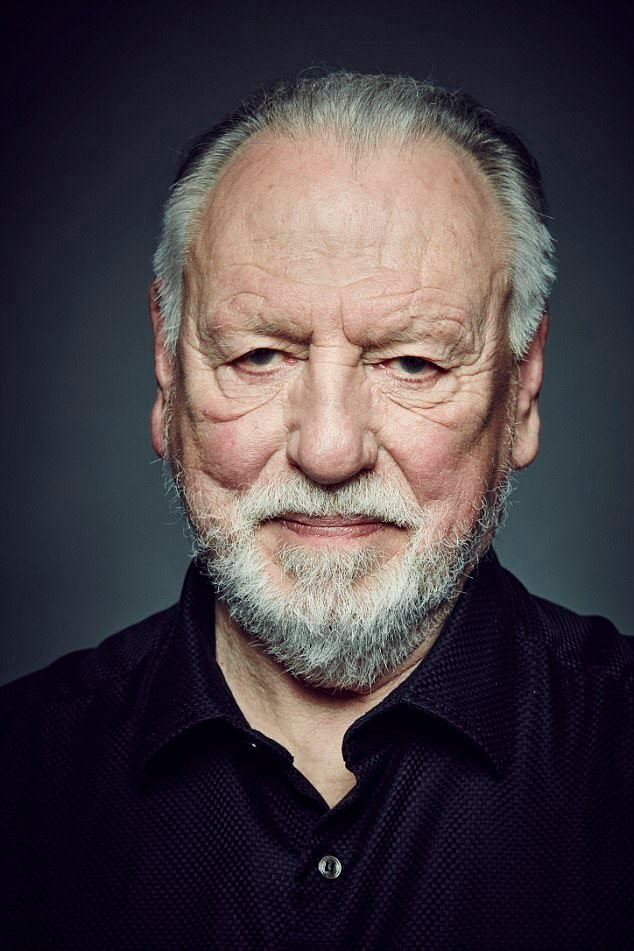
Kenneth Cranham (born 1944) is the Scottish actor who played Dr. Philip Channard, the Channard Cenobite, in Hellbound: Hellraiser II.
Quick Specs
| Born | December 12, 1944, Dunfermline, Fife, Scotland; raised in London from about age four |
| Training | National Youth Theatre; RADA (diploma, 1966) |
| Horror | Dr. Philip Channard / the Channard Cenobite in Hellbound: Hellraiser II (1988); Edgar in Tale of a Vampire (1992); Hennessey in Chimera (1991); Vicar Oddie in In the Flesh (2013 to 2014); Paddy in Vampira (1974) |
| Signature roles | Noah Claypole in Oliver! (1968); Harvey Moon in Shine on Harvey Moon (1982 to 1985); Jimmy Price in Layer Cake (2004); Pompey Magnus in Rome (2005); King Henry in Maleficent (2014) |
| Stage | André in The Father (2014 to 2016); Inspector Goole in An Inspector Calls |
| Honours | Critics’ Circle Theatre Award for Best Actor (2015); Olivier Award for Best Actor in a Play (2016); CBE (2023) |
Who He Is
Kenneth Cranham was born in Dunfermline, Fife, on December 12, 1944. His father, Ronald Cranham, was a London-born civil servant; his mother, Margaret McKay Cranham (née Ferguson), came from Lochgelly, also in Fife. He spent roughly his first four years in Scotland before the family moved to London, where he went to Tulse Hill Comprehensive School. He is a Scottish actor formed in London: a Dunfermline birth, a south London upbringing, and a training that ran through the National Youth Theatre and then the Royal Academy of Dramatic Art, where he graduated with a RADA Diploma in 1966, at 21.
His career began inside the Joe Orton story before RADA had finished with him. At 19 he played Wilson, the menacing young lodger, in the original radio production of Orton’s The Ruffian on the Stair, broadcast on August 31, 1964, and he played the part again in the play’s first stage production at the Royal Court in 1966, directed by Peter Gill. He went on to act in three Orton plays in all, including the first successful revival of Loot, as Hal, and Entertaining Mr Sloane, in the title role.
His first wife was the actress Diana Quick; they married in 1974 and divorced in 1978. He has a daughter, Nancy, from his relationship with the actress Charlotte Cornwell. His second wife, to whom he remains married, is the actress Fiona Victory, whom he met on the set of Shine on Harvey Moon; their daughter is Kathleen. He was appointed CBE in the 2023 Birthday Honours, for services to drama, at 78.
The Work, and What He Did in It
Film arrived with Oliver! (1968), Carol Reed’s musical of Dickens, in which Cranham, at 23, plays Noah Claypole, the undertaker’s apprentice who bullies the young Oliver. Through the 1970s he worked steadily: Otley (1968), Fragment of Fear (1970), the First Christian in Up Pompeii (1971), Paolo in Franco Zeffirelli’s Brother Sun, Sister Moon (1972), Robin and Marian (1976) and the Wicked Squire in Joseph Andrews (1977). His first horror credit came early, in Vampira (1974), the British horror comedy released in the United States as Old Dracula, in which David Niven’s ageing Dracula hunts for a cure for his wife. Cranham’s role, Paddy, the Delinquent, is small, but it puts him in a vampire film fourteen years before Hellbound. On television he was Charlie Collins in A Family at War (1971) and Jack Salt, a bomb-disposal sapper, in Danger UXB (1979).
Television made him a familiar face. In ITV’s Shine on Harvey Moon (1982 to 1985), Laurence Marks and Maurice Gran’s post-war comedy drama, he played the title role from the age of 37: a demobbed RAF stores clerk and former professional footballer who comes home to Hackney to find his family has presumed him dead. Four series as the lead of a popular network drama made him a household name in 1980s Britain, and the set was where he met Fiona Victory. In the same years he played Lenin in Reilly: Ace of Spies (1983).
1988 is the year that shows his range in a single line. He played Boothby, a colonial official in 1950s Cameroon, in Chocolat, Claire Denis’s semi-autobiographical debut feature, one of the most admired first films in French cinema. This is the 1988 Chocolat, not the unrelated 2000 film of the same name. In the same twelve months he became a Cenobite.
Hellbound: Hellraiser II (1988) is his horror centrepiece. Tony Randel directed it from Peter Atkins’s screenplay and Clive Barker’s story; Barker, who had directed the first film, executive-produced the sequel. It premiered at the Toronto festival on September 9, 1988, when Cranham was 43, and opened in the United States on December 23, after his 44th birthday. Ashley Laurence returns as Kirsty Cotton, Clare Higgins as Julia, and Doug Bradley as Pinhead, with Imogen Boorman as Tiffany, the mute patient obsessed with puzzles, and William Hope as Kyle MacRae, Channard’s assistant.
Cranham plays Dr. Philip Channard, director of the Channard Institute, the psychiatric hospital where Kirsty is held after the events of the first film. He is not a supporting player; he is the sequel’s engine and its human antagonist. Channard has spent years hunting the Lament Configuration and collecting puzzle boxes. Where Frank and Julia stumbled into Hell in the first film, Channard researches his way there. He has the blood-soaked mattress from the Cotton house brought to his home, has a self-harming patient bleed on it to resurrect the skinless Julia, and then feeds her his own patients to restore her.
Then he does what no human in the first film survived attempting. He follows Julia into the Labyrinth, is taken by Leviathan and is transformed into a Cenobite himself: the Channard Cenobite, a levitating figure trailing tentacles, who emerges, considers what he has become, and sighs, “And to think… I hesitated.” As the Channard Cenobite he is the climax’s true villain. He slaughters Pinhead and the original Cenobites, and it falls to Kirsty and Tiffany to destroy him. Cranham, usually cast as respectable professionals, played Channard as exactly that: a patient, courteous administrator whose evil is methodical, which is what makes the transformation land. One review of the film called him “an excellent addition to the canon” who “gives the film a dignity all of its own.”
He is not in Hellraiser III: Hell on Earth (1992). That film, directed by Anthony Hickox and starring Terry Farrell, has no Cranham performance; Channard figures only in its backstory.
The arthouse thread continued with Sebastian in Peter Greenaway’s Prospero’s Books (1991), and the horror thread with two genre leads. In ITV’s four-part Chimera (1991), Lawrence Gordon Clark’s adaptation of Stephen Gallagher’s novel about a secret human-ape hybrid experiment, he played Hennessey, on the investigating side. In Shimako Sato’s British-Japanese Tale of a Vampire (1992), drawn from Poe’s “Annabel Lee,” Julian Sands is Alex, a lovelorn vampire, and Cranham is Edgar, his rival, a hat-wearing vampire who has stalked Alex across lifetimes for revenge and is understood within the film as Edgar Allan Poe himself. He plays the feud’s patient, courteous, murderous immortal, four years after Channard.
The character-actor years made him a dependable figure of authority on either side of the law. He was Matt Maguire in Jim Sheridan’s The Boxer (1997), opposite Daniel Day-Lewis, and Tommy, one of the old-school firm around Paul Bettany’s young hoodlum, in Paul McGuigan’s Gangster No. 1 (2000). In Matthew Vaughn’s directorial debut, Layer Cake (2004), from J.J. Connolly’s novel, he is Jimmy Price, the volatile cocaine boss whose two “one last job” commissions, find a missing girl and move a million ecstasy pills, dismantle the planned retirement of Daniel Craig’s dealer. He was 59, and the plot is Price’s machinery closing on the hero.
In HBO’s Rome (2005) he played Pompey Magnus, Julius Caesar’s rival and former son-in-law, across eight episodes of the first season, from “The Stolen Eagle” to “Caesarion.” Pompey’s story ends in season one, and Cranham does not appear in the second. In Edgar Wright’s Hot Fuzz (2007), at 62, he is James Reaper, a Sandford farmer and a member of the Neighbourhood Watch Alliance, one of the village elders killing for “the greater good,” on the other side of the film’s divide from the police. In Bryan Singer’s Valkyrie (2008) he played Field Marshal Wilhelm Keitel, Hitler’s chief of staff.
The late run mixed prestige and genre. He was Monty Taylor in Made in Dagenham (2010). In Dominic Mitchell’s BBC zombie drama In the Flesh (2013 to 2014), in which sufferers of “Partially Deceased Syndrome” are rehabilitated into a hostile village, he played Vicar Oddie across both series, a genuine late horror-television role. In Disney’s Maleficent (2014), at 69, he is King Henry, the dying, embittered king whose obsession with the Moors and whose bounty on Maleficent’s wings set the story in motion: the human antagonist of the first act. He was Uncle Mikhail in the BBC’s War and Peace (2016), John Morton, Bishop of Ely, in The White Princess (2017), and Joe Turner, father of Peter Turner, opposite Annette Bening’s Gloria Grahame in Film Stars Don’t Die in Liverpool (2017).
In 2019, at 74, he played Brian Reader, the real-life ringleader of the 2015 Hatton Garden burglary, in ITV’s Hatton Garden. The same year brought three more real historical figures: David Lloyd George in Mr. Jones, Lord Curzon in Born a King and Judge Hyam in Official Secrets.
Cool Verified Facts
- In 1988 he made both Claire Denis’s Chocolat and Hellbound: Hellraiser II, the two furthest poles of that year’s cinema.
- He was in the original 1964 radio cast of Orton’s The Ruffian on the Stair at 19, and in its first stage production two years later.
- Channard is the only human villain in the Hellraiser series to become a Cenobite and then destroy Pinhead’s original cadre.
- He played a vampire in Tale of a Vampire, one understood as Edgar Allan Poe, four years after Hellbound.
- His Olivier for The Father came 23 years after his first Olivier nomination, for An Inspector Calls.
- He played Brian Reader, ringleader of the Hatton Garden burglary, at 74.
- His radio work runs the full length of his career, from Wilson in 1964 to Max Matthews in The Interrogation.
Signatures, Habits and Behind the Scenes
The stage is not his side career; it is the spine. Orton at the Royal Court in the 1960s; Inspector Goole in Stephen Daldry’s production of An Inspector Calls, which brought an Olivier nomination and transferred to Broadway in 1994 to 1995; Rough in Gaslight at the Old Vic in 2007; and then André. He created André in Christopher Hampton’s English translation of Florian Zeller’s The Father at the Theatre Royal Bath’s Ustinov Studio in autumn 2014, toured it, took it into the West End in 2015 and returned with it to the Duke of York’s in spring 2016. The production drew five-star reviews across the national press, and WhatsOnStage’s Michael Coveney called his André “the performance of his life.” By the spring of 2016 he had played the role 173 times, with about 100 performances still to go, and the run finished at around 270. He won the 2015 Critics’ Circle Theatre Award for Best Actor and, at 71, the 2016 Olivier Award for Best Actor in a Play, the first of his career, for a play performed from inside dementia. Frank Langella later played the role on Broadway and Anthony Hopkins in the 2020 film; Cranham’s was the English-language stage original.
Radio is a third career alongside stage and screen. He played DS, later DI, Max Matthews in Roy Williams’s The Interrogation for BBC Radio 4 from 2012, Thomas Gradgrind in Hard Times (2007), Claudius in Hamlet (1999) and Sergeant Cuff in The Moonstone.
His filmography keeps returning to one kind of man: the one who summons the thing he cannot control. Channard opens Hell on purpose, out of scholarship and obsession. Jimmy Price’s commissions destroy his own organisation. King Henry’s bounty creates the Maleficent who curses his line. The pattern is in the roles themselves, from the psychiatrist who researches his way to damnation to the king who manufactures his own curse.
Why He Matters
For horror, Kenneth Cranham is the man behind one of sequel horror’s great villains. Channard is the only human antagonist in the Hellraiser films who out-schemes the Cenobites, joins them and has to be destroyed rather than bargained with, and Cranham played him not as a slasher heavy but as a respectable professional whose evil is administrative and patient. Around that centrepiece sits a real genre filmography: Vampira in the 1970s, a Poe-vampire lead in Tale of a Vampire, the Chimera miniseries, and Vicar Oddie in In the Flesh a quarter of a century after Hellbound.
He is also the model of the long British acting life: Orton and RADA in the 1960s, a title role on network television in the 1980s, the defining gangster boss of the 2000s British crime cycle, Pompey for HBO, a Disney villain king, and then, in his seventies, the Olivier for The Father and the CBE. Stage first, television fame, film authority, and the profession’s highest stage honour at 71, in that order.