
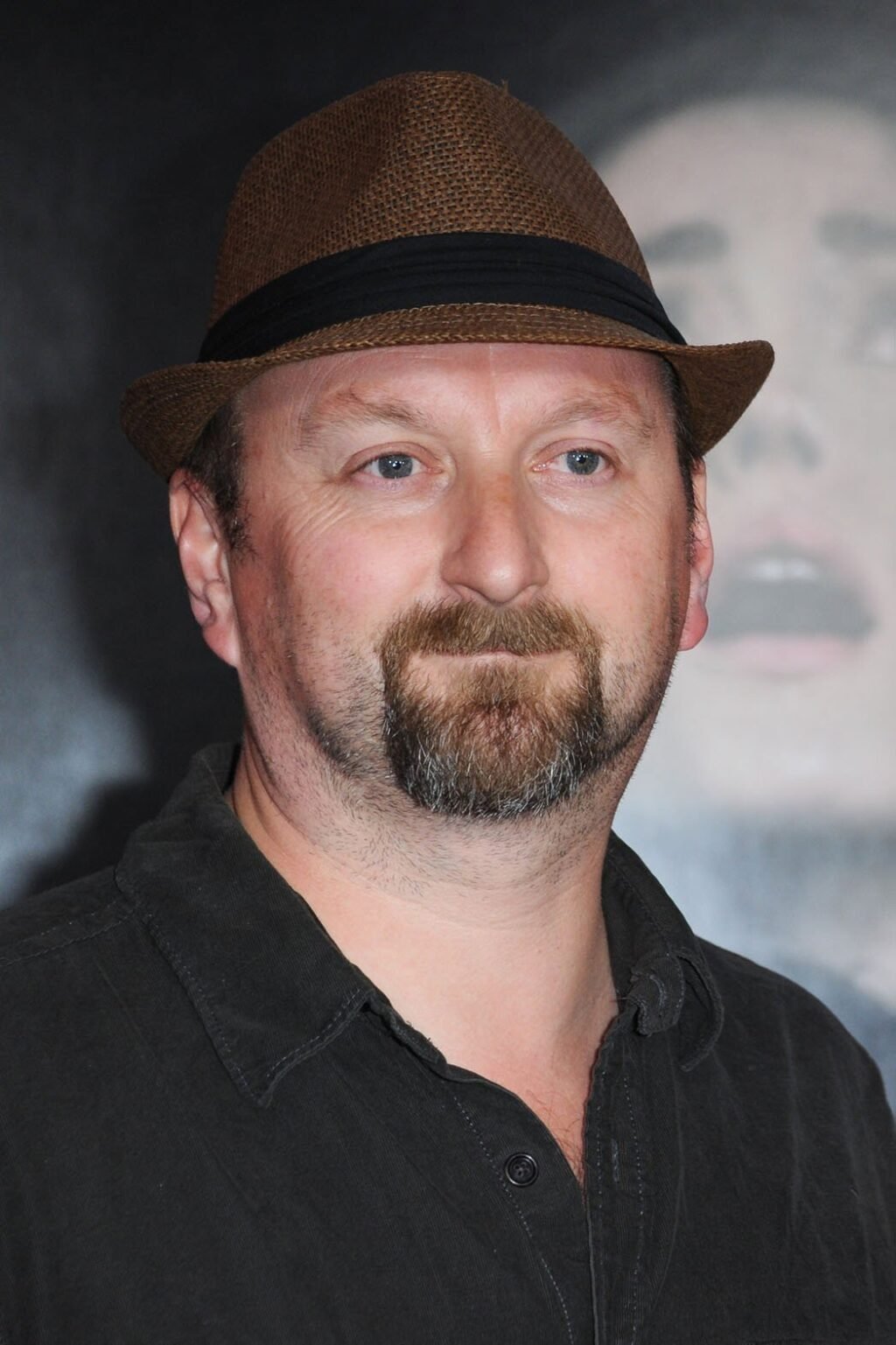
Neil Marshall is the Newcastle editor-turned-director behind Dog Soldiers, The Descent, and Game of Thrones’s greatest battles.
Quick Specs
- Born: 25 May 1970, Newcastle upon Tyne, England
- Known for: Dog Soldiers, The Descent, “Blackwater”, “The Watchers on the Wall”
- Occupations: Director, screenwriter, editor, producer
- Years active: 1994–present
- Spouse: Axelle Carolyn (m. 2007–2016, divorced)
Overview
Neil Marshall spent eight years cutting other people’s films before he ever directed one — and it shows in every frame. He is the editor who became horror’s siege master: a farmhouse full of werewolves, a cave full of crawlers, a castle wall full of wildlings. He made the defining British horror film of the 2000s, rescued Game of Thrones’ first great battle at the last minute, disowned a studio reboot, and went back to making his own films his way.
The Life
Neil Marshall was born 25 May 1970 in Newcastle upon Tyne, England. He was eleven when Raiders of the Lost Ark made him want to direct, and he started making home movies on his mum’s Super 8 camera. He attended film school at Newcastle Polytechnic in 1989, where his thesis short was a zombie film called Brain Death — made, by his own account, with a fake script and a janitor persuaded to open up at night. After film school he worked eight years as a freelance editor in Newcastle, employed by local director Bharat Nalluri, with whom he co-wrote and edited Killing Time (1998). He was married to Belgian filmmaker Axelle Carolyn from 2007 to 2016. As of August 2020 reporting, he was engaged to actress Charlotte Kirk, his co-writer and star on his later films.
The Work
Dog Soldiers (2002) was the debut, and Marshall did everything on it: writer, director, and his own editor. His own framing: “a soldier movie with werewolves, not a werewolf movie with soldiers.” A six-man Army squad on a training exercise in the Highlands finds the unit it was meant to meet slaughtered, and is besieged overnight in a farmhouse by werewolves. The film is set in Scotland but was filmed almost entirely in Luxembourg, with only a handful of Scottish establishing shots. The werewolves were practical — animatronics, bodysuits, and stilts, no CGI — and there is famously no on-screen transformation scene: the budget couldn’t do one convincingly, so Marshall broke the rule. In the US it premiered as a Sci Fi Channel telefilm.
The Descent (2005) is the breakthrough: writer-director — but not the editor; Jon Harris cut it. Marshall came up with the idea on the train home to Newcastle. Six women go caving in Appalachia a year after Sarah’s husband and daughter die in a car crash; Juno secretly leads them into an unexplored cave system; a collapse seals the entrance; and in the dark they are hunted by blind, sound-hunting humanoids the production called Crawlers. The cast was originally planned mixed; Marshall’s business partner pointed out how rarely horror has all-female casts, and Marshall cast all women, giving them different accents so audiences could tell them apart in the dark. The caves were sets built at Pinewood Studios, not a real cave. Budget £3.5 million, worldwide box office $57.1 million. It won the Saturn Award for Best Horror Film and Marshall the BIFA for Best Director. The UK ending runs a minute past the US cut, revealing Sarah’s escape as a hallucination. Marshall pushed back on calling the US version happy: “Just because she gets away, does that make it a happy ending?”
The Descent Part 2 (2009) is not a Marshall film as director. He was executive producer only; Jon Harris directed it.
Doomsday (2008) was the deliberate pastiche: writer, director, and editor, conceived from the idea of futuristic soldiers facing medieval knights. In 2035, Scotland has been walled off for decades under quarantine for the Reaper virus; when it resurfaces in London, Major Eden Sinclair (Rhona Mitra) leads a team over the wall to find a cure and finds survivors split into punk cannibals and a medieval feudal society. Marshall named Escape from New York, the Mad Max films, Excalibur, and The Warriors as his sources. Mixed reviews, box-office failure.
Centurion (2010), writer-director, is legend-based fiction: the old, now largely discredited story of Rome’s Ninth Legion vanishing in Caledonia. In 117 AD, centurion Quintus Dias (Michael Fassbender) survives the Picts’ annihilation of the legion and flees south, hunted by the mute Pict tracker Etain (Olga Kurylenko). Marshall called it “the most difficult film I’ve made.” Axelle Carolyn played Aeron, a Pict warrior. Mixed reviews, poor box office.
Then television. Marshall was called in at the last minute for Game of Thrones’ “Blackwater” (Season 2, Episode 9, 2012) after the episode’s planned director left over a personal emergency — the predecessor is unnamed in every reliable source. George R.R. Martin’s script had been cut down under budget pressure; Marshall put material back in and added gore the script hadn’t specified. Martin: “Neil Marshall reversed everything the previous director said. Marshall was like, ‘Put in more.’ He put so much back that I’d previously taken out and even added some stuff I hadn’t thought of. He was the hero of that episode.” The episode won the Hugo Award for Best Dramatic Presentation, Short Form. He returned for “The Watchers on the Wall” (Season 4, Episode 9 — penultimate, not the finale), with its unbroken 360-degree crane shot, and earned a Primetime Emmy nomination. Around them: the Black Sails and Constantine pilots, Hannibal’s “The Great Red Dragon,” Timeless, Westworld, and Lost in Space. Charles Dance’s Tywin is the character whose arrival ends the Blackwater battle.
Tales of Halloween (2015) gave him the “Bad Seed” segment. Hellboy (2019) was the disaster: director only, no writing credit, an R-rated reboot with David Harbour as Hellboy. The Wrap’s reports of on-set trouble were denied on the record by producer Lloyd Levin’s attorney. What is verified: Marshall skipped the premiere, the film was panned, he was nominated for the Golden Raspberry for Worst Director, and he has since disowned it, calling it “the worst professional experience of my life.” It was measured against Guillermo del Toro’s two earlier Hellboy films and Ron Perlman’s pre-Harbour Hellboy.
The Reckoning (2020) — director, co-writer, EP, editor — is a 1665 Great Plague witch-trial film: widowed Grace Haverstock (Kirk) is accused of witchcraft and tortured by witchfinder Moorcroft, played by Sean Pertwee, Marshall’s Dog Soldiers Sergeant Wells, eighteen years on. Reviews were poor. The Lair (2022) — director, co-writer, EP, editor — opened FrightFest 2022: an RAF pilot (Kirk) shot down over Afghanistan shelters in a Soviet bunker holding human-alien DNA creatures, then leads them to a besieged US outpost. Duchess (2024) — director, co-writer, EP, editor — is a diamond-smuggling revenge film with Kirk as crook Scarlett Monaghan (US VOD 9 August 2024). Compulsion is listed as forthcoming, undated.
The Marshall Touch
Marshall cuts his own films, and shoots for the cut — often cutting in mid-take. His monsters are practical: dancers, not stuntmen, inside the werewolf suits, on stilts and effectively blind inside animatronic heads; actors, not stuntmen, playing the Crawlers — never “the equivalent of the third zombie on the left.” He barred the Descent cast from seeing the Crawlers in full make-up until their first on-screen encounter, so the terror is real. He shoots in chronological order so the destruction is real — on Dog Soldiers, room to room, trashing each one as they went. The siege is his native structure — farmhouse, cave, outpost, castle courtyard — and his instinct under budget pressure is the opposite of retreat: put in more.
Why He Matters
Marshall made the defining British horror film of the 2000s — and its runner-up is also his. The Descent is regarded as one of the best horror films of the 2000s, and Dog Soldiers remains the modern benchmark werewolf film. He is a named member of the “Splat Pack,” the mid-2000s wave credited with bringing hard-R, practical-gore horror back — the term was coined by critic Alan Jones in Total Film, and membership lists vary, so no fixed roster is printed here. He changed what television battles look like: “Blackwater” was the first full battle episode of Game of Thrones, and his night-weather-mud-practical-gore grammar became the template for every later Thrones battle. The editor’s career is the argument for the whole filmography: the speed and brutality of his action is an editor’s.
Trivia & Facts
- Marshall barred the Descent cast from seeing the Crawlers in full make-up until their first on-screen encounter. Natalie Mendoza: “When the moment came, I nearly wet myself!”
- Dog Soldiers has no on-screen werewolf transformation scene — the budget couldn’t do one convincingly, so Marshall broke the rule and kept the creatures off-screen or in motion.
- The Descent was conceived on the train home to Newcastle, after a meeting where Celador wanted something cheaper than the zombie film he’d pitched.
- George R.R. Martin on “Blackwater”: “He was the hero of that episode.”
- Marshall on the US Descent ending: “Just because she gets away, does that make it a happy ending?”
FAQ
Who is Neil Marshall?
A Newcastle-born director, screenwriter, editor, and producer behind Dog Soldiers, The Descent, and Game of Thrones’ “Blackwater” and “The Watchers on the Wall.”
Did Neil Marshall direct The Descent Part 2?
No. He was executive producer only. The sequel was directed by Jon Harris, the first film’s editor.
Was Dog Soldiers filmed in Scotland?
No. It is set in the Scottish Highlands but was filmed almost entirely in Luxembourg, with only a handful of Scottish establishing shots.
What is Neil Marshall’s best film?
The Descent for the horror landmark, Dog Soldiers for the werewolf benchmark, “Blackwater” for television. Start with The Descent.