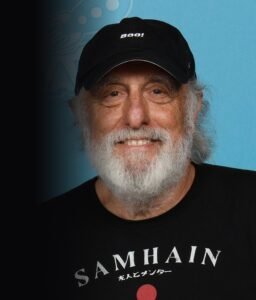
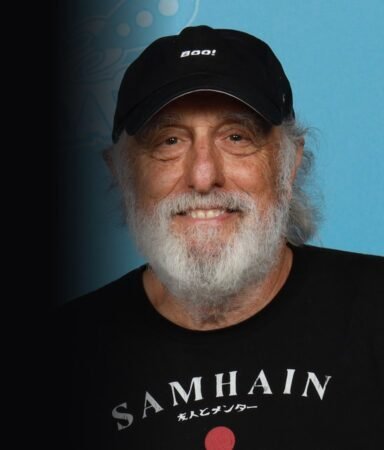
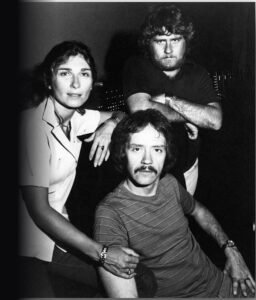
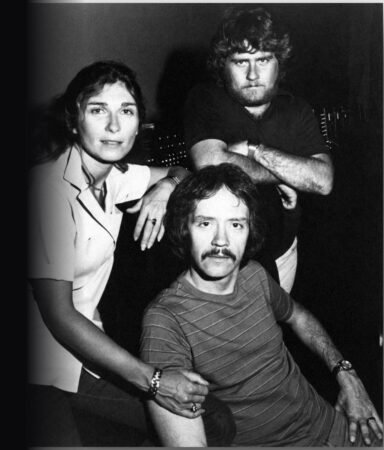
Paul W. S. Anderson: Event Horizon, Resident Evil, and the Director Who Broke the Video Game Curse
Paul W. S. Anderson is the Wallsend-born populist who made Event Horizon a haunted house in space and Resident Evil a billion-dollar series.
Overview
Paul W. S. Anderson is the director critics spent twenty years dismissing and audiences spent the same twenty years paying to see. Born in Wallsend, he broke the video-game-movie curse with Mortal Kombat (1995), built a haunted house in space with Event Horizon (1997), then wrote and produced all six of the original Resident Evil films — directing four of them — into a series that grossed over $1 billion. His first thirteen theatrical features carried not one fresh Rotten Tomatoes rating. The BFI’s frame is rehabilitation: an auteur hiding in plain sight. He calls himself a populist who cares whether his work entertains the audience, not what critics think of it.
The Life
Paul William Scott Anderson was born 4 March 1965 in Wallsend, England — not Newcastle, where he went to school at the Royal Grammar School. He began making films with a Super 8 camera at nine. Profile accounts describe him as the youngest person ever to graduate from the University of Warwick, with a BA in film and literature. He began his professional career writing five episodes of the British crime drama El C.I.D., then co-founded Impact Pictures with producer Jeremy Bolt in 1992.
The name is a guild mechanism: “W. S.” stands for William Scott. Paul Thomas Anderson had registered “Paul Anderson” with the Writers Guild, Anderson with the Directors Guild, so neither could both write and direct an American film under the name. His director-only films are credited to plain Paul Anderson. He began using Paul W. S. Anderson when he wrote and directed The Sight (2000).
He began dating Milla Jovovich after Resident Evil opened in 2002; they married on 22 August 2009. Their three daughters are Ever (born 3 November 2007, before the wedding), Dashiel (2015) and Osian (2020).
The Work
Shopping (1994) was the debut: writer-director, his only British film — teenagers into joyriding and ram-raiding, starring Jude Law in his first major leading role, on a $2 million budget. The BBFC delayed its UK release; Sundance acceptance brought Hollywood attention.
Mortal Kombat (1995) was the breakthrough: director only, Kevin Droney’s script, credited as Paul Anderson. Three weeks at No. 1 in the US, over $122 million worldwide on $18–20 million — the highest-grossing video-game adaptation to that date. He declined the sequel; Annihilation (1997) is not his film.
Event Horizon (1997) is the horror anchor: director only, credited as Paul Anderson, written by Philip Eisner with an uncredited rewrite by Andrew Kevin Walker. In 2047, the rescue ship Lewis and Clark investigates the Event Horizon, lost seven years earlier — and the ship has brought something back. Eisner pitched it as “a haunted house story in space” after rewatching The Shining, but his draft was an alien-infestation story. Anderson reoriented it toward the haunted-house tradition — The Haunting, The Shining, Solaris, Hellraiser — making the ship itself possessed by a hellish entity.
The production was a vise. Shot entirely at Pinewood, 18 November 1996 to 14 March 1997, rushed into the summer slot Titanic vacated. Anderson assembled a roughly 130-minute rough cut — unfinished effects, poor sound mix. Test audiences objected to the gore; Paramount cut over 30 minutes to reach 96. The ship was “techno-medieval,” lit in sickly “mistake-green.” A Stage 7 fire during the climax caused no injuries.
Release: $26.7 million in the US, $47.1 million worldwide on $50–70 million, D+ CinemaScore, a Viacom write-off. Home video saved it, and when Paramount asked about restoring deleted footage, most of it had been lost or destroyed: “The material just doesn’t exist.” There is no finished director’s cut, and there never was one.
Soldier (1998): director only, David Webb Peoples’ script. Kurt Russell as the near-silent Sergeant Todd. A “sidequel” to Blade Runner — shared references, no official sequel status. Under $15 million in the US on roughly $60 million.
The Sight (2000): writer-director and executive producer, an FX supernatural-mystery pilot starring Andrew McCarthy — high ratings, never picked up. The first work credited to “Paul W. S. Anderson,” and a dry run for Resident Evil: its ghost girl Alice played the Red Queen.
Resident Evil (2002): writer-director-producer, Constantin Film, Jovovich as Alice. Constantin had burned money on failed attempts, including a George A. Romero script, so Anderson wrote The Undead on spec — “a ripoff” of Resident Evil by his own word — and Constantin bought it. Alice is an original character; no game characters appear. Capcom later put the film’s Red Queen and laser corridor into the games. $33 million budget, over $100 million gross, CinemaScore B.
Producer-only on The Dark (2005), DOA: Dead or Alive (2006) and Pandorum (2009); writer-producer on Apocalypse (2004, Alexander Witt) and Extinction (2007, Russell Mulcahy), around $129 million and $147 million.
Alien vs. Predator (2004): writer-director, NOT producer — a Weyland expedition to a pyramid under Antarctic ice. It brought together the Alien and Predator franchises: over $170 million worldwide on roughly $60 million, then the highest-grossing film in either franchise, most criticized for PG-13.
Death Race (2008): writer-director-producer, Jason Statham. Marketed as a remake of Death Race 2000, but Anderson called it something of a prequel. Around $76 million on $45–65 million. The direct-to-video follow-ups are story/producer credits only.
The native-3D run: Afterlife (2010), writer-director-producer, shot on Avatar’s Fusion Camera System — $300 million on roughly $60 million. The Three Musketeers (2011), director-producer, NOT writer — around $132 million. Retribution (2012): $240 million on $65 million; a platform collapse hospitalized twelve extras. Pompeii (2014), director-producer, NOT writer: $108–118 million.
The Final Chapter (2016): writer-director-producer. He abandoned slow motion and symmetrical framing — “all kind of rugged hand-held, dirty, sweaty, sexy, gritty” — and shot 2D for post-conversion. Daughter Ever played young Alice and the Red Queen. Over $300 million on $40 million, a record $94.3 million opening in China.
The safety record, stated soberly: crew member Ricardo Cornelius died beneath a Humvee that slid off a rotating platform. Stunt performer Olivia Jackson, Jovovich’s double, collided with a camera crane, lost most of her left arm, and was partially paralyzed; a court found inadequate safety equipment. She won her South African case in 2020.
Monster Hunter (2020): writer-director-producer, his second Capcom franchise. COVID release, under $50 million worldwide on $60 million. Pulled from Chinese cinemas over the “Chi-knees” joke; Anderson and Constantin apologized, and the line was removed globally.
In the Lost Lands (2025): director, story and producer, NOT sole writer — Constantin Werner’s screenplay, from their story, based on George R. R. Martin’s 1982 short story. $55 million budget, about $6.5 million worldwide: a major flop. Producer-only on Protector; executive producer on Welcome to Raccoon City (2021), which he did not direct.
The House of the Dead is announced, not finished: set to write and direct Sega’s House of the Dead III adaptation, announced 31 October 2024, conceived in near-real time. No released film, no verified completed shoot — and no connection to Uwe Boll’s 2003 film.
The Anderson Touch
Anderson’s formal signature, in the BFI’s formulation: distrust of authority and authoritarian figures; confined, booby-trapped spaces; a keen sense of spatial orientation; and balletically captured bodies in motion — above all Jovovich’s. His first instinct is cartographic: maps before fights. The Hive in Resident Evil, the Antarctic pyramid in Alien vs. Predator, the prison in Death Race, the white-room tableaux of Afterlife — the audience learns the board, then watches the pieces move.
He calls his own films “ride films” — the rotating corridor in Event Horizon was taken directly off a ride at Universal Studios. Native 3D was a creed from 2010 to 2014 — then a deliberate apostasy for The Final Chapter, shot 2D for post-conversion. Slow motion was punctuation for the second Resident Evil trilogy, then a statement when he removed it. Economy is a brag from the debut onward: “nothing is thrown away.”
The Jovovich collaboration, counted: Anderson has directed her in seven features — Resident Evil, Afterlife, Retribution, The Three Musketeers, The Final Chapter, Monster Hunter and In the Lost Lands — and wrote and produced the two Resident Evil films she headlined that he did not direct. The business model: capped budgets, quick shoots where subsidies offered, money made on international pre-sales.
Why He Matters
Anderson broke the video-game-movie curse first, then built its biggest house. He then created, wrote and produced the six-film Resident Evil series, directing four: for a time the highest-grossing film series based on a video game, still the highest-grossing zombie film series. The horror anchor’s reputation inverted completely: Event Horizon opened to a D+ CinemaScore, negative reviews and a write-off, and now sits on Variety’s list of the 100 best horror films of all time.
Anderson invented a female action lead for a video-game adaptation in 2002 — Alice, a character with no game counterpart, played by Jovovich as an amnesiac who reclaims her identity across six films — and kept her at the center for fourteen years while game characters were held to supporting roles. He is the international-model director of his generation: British debut banned at home, Hollywood via Sundance, Capcom twice, Sega next, films carried by China, Japan, Russia and Germany rather than the US.
Trivia & Facts
- The Sight (2000), his FX supernatural-mystery pilot, was a dry run for Resident Evil: its ghost girl Alice played the Red Queen.
- He directed three episodes of the sci-fi series Origin (2018) and executive-produced it.
- The Event Horizon was designed from a scan of Notre-Dame Cathedral, rearranged into a cruciform ship — a crucifix hanging above Neptune — and its gravity drive was inspired by Hellraiser’s Lament Configuration.
- Quentin Tarantino placed The Three Musketeers at No. 11 on his Top 11 films of 2011.
FAQ
Who is Paul W. S. Anderson?
An English writer-director-producer behind Event Horizon, Mortal Kombat, Alien vs. Predator and four of the six original Resident Evil films — a self-described populist whose films grossed over $1 billion.
Did Paul W. S. Anderson direct all six Resident Evil films?
No. He wrote and produced all six and directed the 1st, 4th, 5th and 6th. Apocalypse was directed by Alexander Witt, Extinction by Russell Mulcahy.
Does a director’s cut of Event Horizon exist?
No. The roughly 130-minute assembly was an unfinished rough cut with incomplete effects and an unmixed soundtrack. Most of the deleted footage was lost or destroyed; Anderson himself says “the material just doesn’t exist.”
What is Paul W. S. Anderson’s best film?
Event Horizon for horror, Mortal Kombat for the breakthrough, The Final Chapter for scale. Start with Event Horizon.