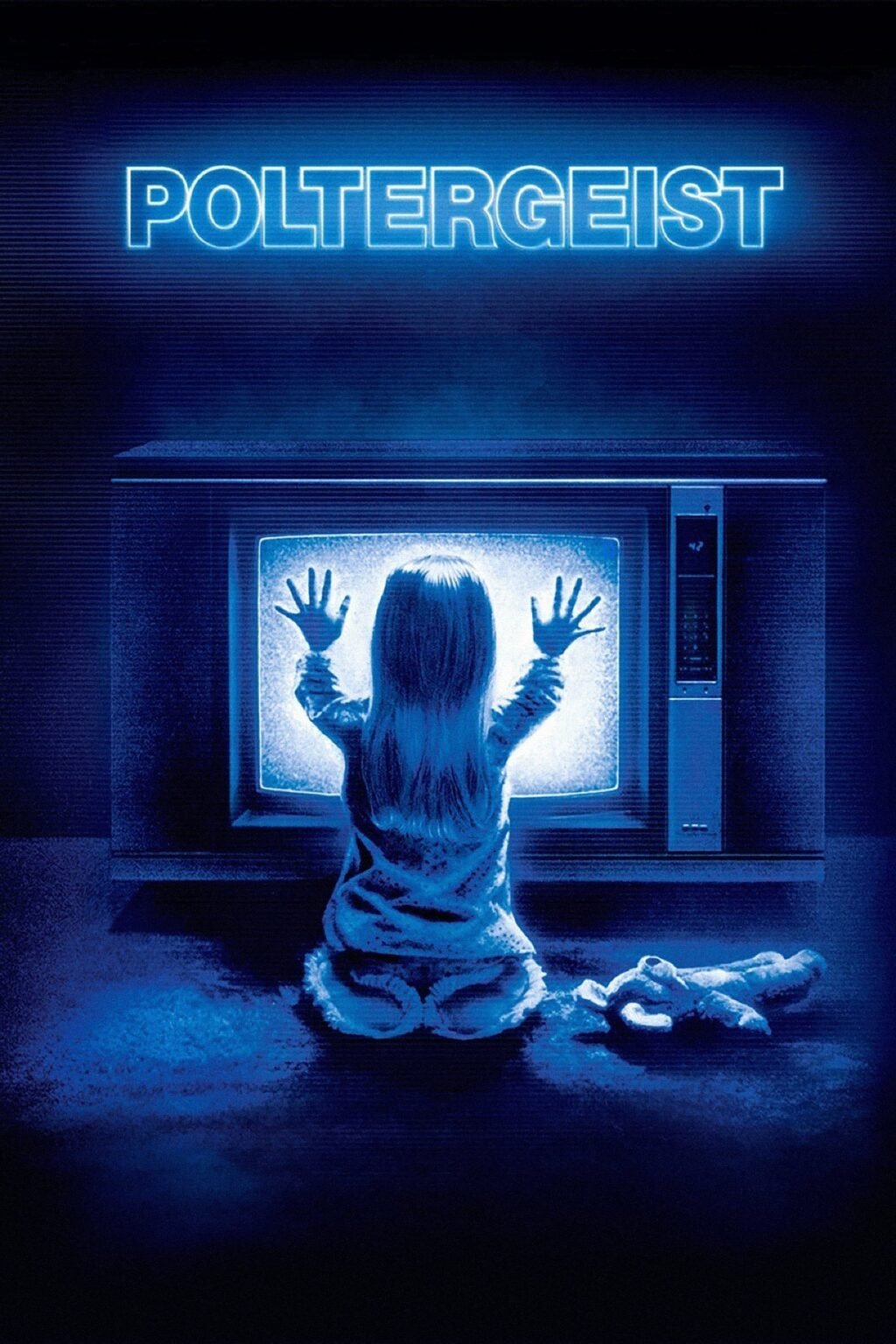
Poltergeist (1982) is a haunted-house film about a suburban California family whose youngest daughter is taken into the house itself. Tobe Hooper is the credited director. Steven Spielberg produced it and co-wrote the screenplay with Michael Grais and Mark Victor. MGM released the film in the United States on June 4, 1982. JoBeth Williams and Craig T. Nelson play the parents, Heather O’Rourke plays Carol Anne, and Zelda Rubinstein plays the medium who comes to get her back. It was a hit, a PG rating fight, and the start of a three-film series.
At a glance
| Release date | June 4, 1982 (United States) |
| Director | Tobe Hooper |
| Writers | Steven Spielberg, Michael Grais, and Mark Victor |
| Starring | JoBeth Williams, Craig T. Nelson, Heather O’Rourke, Zelda Rubinstein, Beatrice Straight, Dominique Dunne |
| Runtime | 114 minutes |
| Rating | PG |
| Genre | Supernatural horror |
| Budget | About $10.7 million |
| Box office | About $76.6 million domestic; about $121 million worldwide |
Plot summary
Steve and Diane Freeling live in Cuesta Verde, a new California subdivision Steve helped sell. Their house is ordinary in the way new houses are ordinary: a kitchen island, a half-finished pool, a television left on after the station signs off. Carol Anne, five years old, talks to the static. The first disturbances are small enough to joke about. Chairs stack themselves. The silverware bends. Then Carol Anne is pulled into a closet and does not come back. Her voice stays in the house, coming through the television set.
A parapsychology team from the university, led by Dr. Lesh, moves in with cameras and fails to get the child out. They call Tangina Barrons, a medium who treats the house as a passageway rather than a haunting. Something on the far side of that passageway is holding Carol Anne because she is bright enough to see. The parents are told they will have to go in after her. The film keeps the threat inside a single-family home, which is the point. The subdivision was built in a hurry, and the hurry has a body count under the lawn.
Spoiler section: the ending
Diane crosses over and brings Carol Anne out. Tangina declares the house clean. It is not. The beast returns on a storm night, the pool gives up what was buried under the neighborhood, and the Freelings run. Steve drops the keys to the house at the developer’s office on the way out of town. The last shot is a hotel room and a television wheeled outside.
Production and behind the scenes
Spielberg developed the story while he was preparing E.T., and the two films were shot across the same stretch of 1981. His contract kept him from directing another movie while E.T. was in production, so Hooper, already known for The Texas Chain Saw Massacre, was hired to direct. Spielberg stayed on the set for much of the shoot. Who shaped which scene has been argued ever since. Hooper is the director of record. Several crew members later described Spielberg as unusually involved for a producer. The Directors Guild looked at the credit and left it with Hooper. The film plays like a family adventure that keeps tipping into a ghost story, which is the overlap people are really describing.
The Freeling house was a real tract home in Simi Valley, dressed and partly rebuilt on soundstages for the effects work. Industrial Light & Magic handled the spectral effects. Craig Reardon’s makeup crew built the more flesh-and-blood gags, including the bathroom sequence and the corpses in the unfinished pool. Jerry Goldsmith wrote the score, a lullaby theme that curdles. The line “They’re here” was delivered by O’Rourke in a way the marketing department recognized immediately. It became the poster.
The MPAA gave the film a PG. Parents who took children to a Spielberg-branded summer movie found a face peeling into the sink and a child trapped in a bright void. The rating argument outlived the release. Poltergeist is one of the titles people still cite when they explain why PG-13 was added in 1984. Two sequels followed, Poltergeist II: The Other Side (1986) and Poltergeist III (1988). O’Rourke and Dominique Dunne both died young, and a superstition grew up around the series that the production itself never endorsed.
Cast
- JoBeth Williams as Diane Freeling
- Craig T. Nelson as Steve Freeling
- Heather O’Rourke as Carol Anne Freeling
- Dominique Dunne as Dana Freeling
- Oliver Robins as Robbie Freeling
- Zelda Rubinstein as Tangina Barrons
- Beatrice Straight as Dr. Lesh
- James Karen as Mr. Teague
Trivia
- The clown doll on Robbie’s chair was built to be disliked. Its later attack was saved for the last night in the house, after the smaller scares had already landed.
- Goldsmith’s theme was written as a children’s song so it could sit under a horror film without announcing itself.
- The burial-ground revelation is aimed at the developer, not at an ancient curse. The film’s villain is a shortcut in a real-estate file.
- Spielberg’s cameo-level presence on set fueled the directing dispute. Hooper kept the credit, and the guild did not overturn it.
- A 2015 remake reused the title and the basic kidnapping. It did not replace the 1982 film in the way its studio hoped.
- The television static in the opening was a real sign-off pattern, already vanishing from American broadcasting when the film came out.
Related links
- Poltergeist II: The Other Side
- Tobe Hooper
- Steven Spielberg
Trailer
More from Warner Bros.
Warner Bros. revisits Poltergeist (1982) in these official videos: