
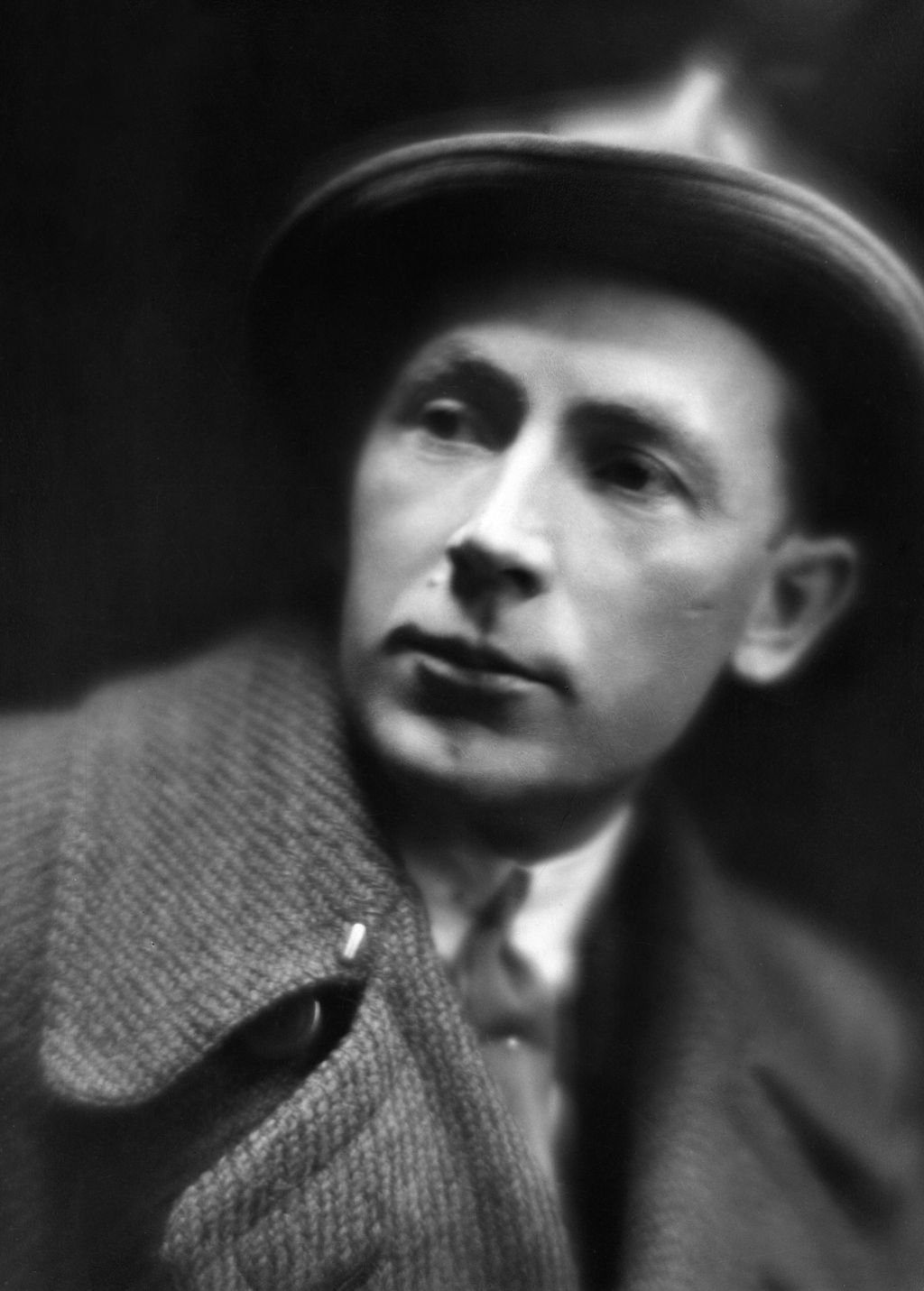
F. W. Murnau was the German director who turned shadows into monsters and made the camera dream.
Quick Specs
- Born: 28 December 1888, Bielefeld, Germany
- Died: 11 March 1931, Santa Barbara, California (aged 42)
- Born as: Friedrich Wilhelm Plumpe
- Known for: Nosferatu, The Last Laugh, Sunrise, Faust, Tabu
- Movement: German Expressionism
- Years active: 1919–1931
Overview
He made twelve years of movies and then he was gone. F. W. Murnau directed for barely a decade — 1919 to 1931 — and in that short run he made the most famous vampire film ever shot, the film many critics still call the greatest silent movie ever made, and a string of pictures that taught every director after him what a camera could do. He was born Friedrich Wilhelm Plumpe, a cloth manufacturer’s son from Bielefeld, and he renamed himself after a Bavarian town he loved. He survived eight plane crashes in the First World War, a lawsuit that tried to erase his masterpiece from existence, and the jump from German silent film to Hollywood. The car crash on the Pacific Coast Highway finally got him, one week before his last film opened. He was 42. The movies never forgot him — and in 2015, somebody stole his skull.
The Life
Little Friedrich staged plays in the family villa before he was ten. By twelve he had read Schopenhauer and Nietzsche, Shakespeare and Ibsen. He studied philology in Berlin and art history and literature in Heidelberg, where the great stage director Max Reinhardt spotted him in a student performance and pulled him into his acting school. Then the war came. Murnau served as a company commander on the Eastern Front, then joined the Imperial German Flying Corps, flying missions over northern France. He survived eight crashes without severe injury. In December 1917 he made an emergency landing in Switzerland and was interned for the rest of the war, where he ran a prisoner theater group and wrote a film script. He came home, built his own studio with actor Conrad Veidt, and started directing.
The Work
His first feature, The Boy in Blue (1919), took its spark from a Gainsborough painting and Oscar Wilde’s Dorian Gray. A year later came Der Januskopf, a Jekyll-and-Hyde variation starring Veidt and a young Bela Lugosi — now lost, like eight of his 21 films. Then the one that made him immortal. Nosferatu (1922) was an unauthorized adaptation of Bram Stoker’s Dracula, with the names changed and the vampire renamed Count Orlok. Florence Stoker, the author’s widow, sued. The court ordered every print destroyed, and Prana Film declared bankruptcy to dodge the damages. But one copy had already slipped out into the world, and that copy kept being copied. The film the law tried to erase became an early cult film and, a century later, still the most effective Dracula adaptation ever put on screen.
The Last Laugh (1924) did something even bolder: it told a whole story through the camera’s eyes. Starring Emil Jannings as a hotel doorman stripped of his uniform and his dignity, the film used a subjective camera that saw the world the way its broken hero did, and an “unchained camera” that swooped through streets, tenements, and hotel corridors. Cinematographer Karl Freund strapped a camera to his waist and stumbled across the set on roller skates to catch the viewpoint of a drunk man. The film runs almost entirely without intertitles — the pictures do the talking.
Faust (1926), his last German film, went big: Gösta Ekman as Faust, Jannings as Mephisto, and a giant winged Mephisto hovering over a town, sowing plague. Then Hollywood called. William Fox invited him over in 1926, and Murnau joined Fox Studio. Sunrise: A Song of Two Humans (1927) followed — a country-man-tempted-to-murder-his-wife fable shot like a dream — and it won the Academy Award for Unique and Artistic Production at the very first Oscars, sharing what we now call Best Picture honors with Wings. Janet Gaynor took Best Actress for it, among other films.
The Hollywood ending was not happy. 4 Devils (1928) is lost now, and City Girl (1930) was recut for the sound era; both landed badly and soured Murnau on Fox. He quit and sailed for the South Pacific with documentary pioneer Robert J. Flaherty to make Tabu (1931) in Bora Bora. Flaherty walked out after artistic disputes and Murnau finished the film alone. American censors objected to its images of bare-breasted Polynesian women. A week before Tabu opened, Murnau was riding up the Pacific Coast Highway in a rented Packard when his valet swerved to avoid a truck. The car overturned. Murnau died the next day in Santa Barbara Cottage Hospital, of a head injury.
The Murnau Touch
Murnau’s signature was movement with meaning. The camera did not just record a scene — it felt it. Shadows stretched across walls like living things. In Nosferatu, he printed negative images of white trees against a black sky, and let Count Orlok’s shadow climb a staircase on its own, fingers reaching before the body arrived. He trusted images over words: The Last Laugh barely needs its intertitles because the camera shows you a man’s humiliation in the slump of his shoulders and the blur of the street. He built dread out of architecture, weather, and light — and horror has been living in his shadow-play ever since.
Why He Matters
Sunrise is still cited by critics and directors as one of the greatest films ever made. Nosferatu invented the visual language of the screen vampire — the long fingers, the looming shadow, the plague-ship dread — and every Dracula since is arguing with it. Shadow of the Vampire (2000) turned the making of Nosferatu into its own horror movie, with John Malkovich as Murnau and Willem Dafoe as a very real vampire playing Orlok. Eight of his 21 films are gone forever, which makes the survivors feel even more precious. Murnau proved that horror could be art and that the camera could be a storyteller, not just a witness. A century on, the movies are still catching up to him.
Trivia & Facts
- In July 2015, grave robbers broke into Murnau’s family crypt in Stahnsdorf Cemetery near Berlin, opened his metal coffin, and stole his skull. Police found candle wax at the scene and did not rule out an occult motive. The skull has never been recovered. The tomb had been broken into before, in the 1970s and again in February 2015.
- Max Schreck, who played Count Orlok, had a name that translates from German as “maximum terror.” Murnau could not have cast better if he had tried.
- Greta Garbo commissioned a death mask of Murnau and kept it on her desk during her Hollywood years.
- Sunrise was not a financial success. It lost money on release and won its Oscars anyway.
- Murnau is buried in Stahnsdorf South-Western Cemetery near Berlin.
FAQ
Who was F. W. Murnau?
A German director of the silent era, best known for Nosferatu (1922) and Sunrise (1927), and a pioneer of the moving, subjective camera.
How did F. W. Murnau die?
Car crash on the Pacific Coast Highway, 10 March 1931. He died of a head injury the next day in Santa Barbara Cottage Hospital. He was 42.
Why was Nosferatu almost destroyed?
It was an unauthorized Dracula adaptation. Bram Stoker’s widow sued, won, and the court ordered all prints destroyed. One copy had already been distributed and survived.
What is F. W. Murnau’s best film?
Sunrise is the critics’ pick and won at the first Oscars; Nosferatu is the horror landmark. Watch both, then The Last Laugh.