
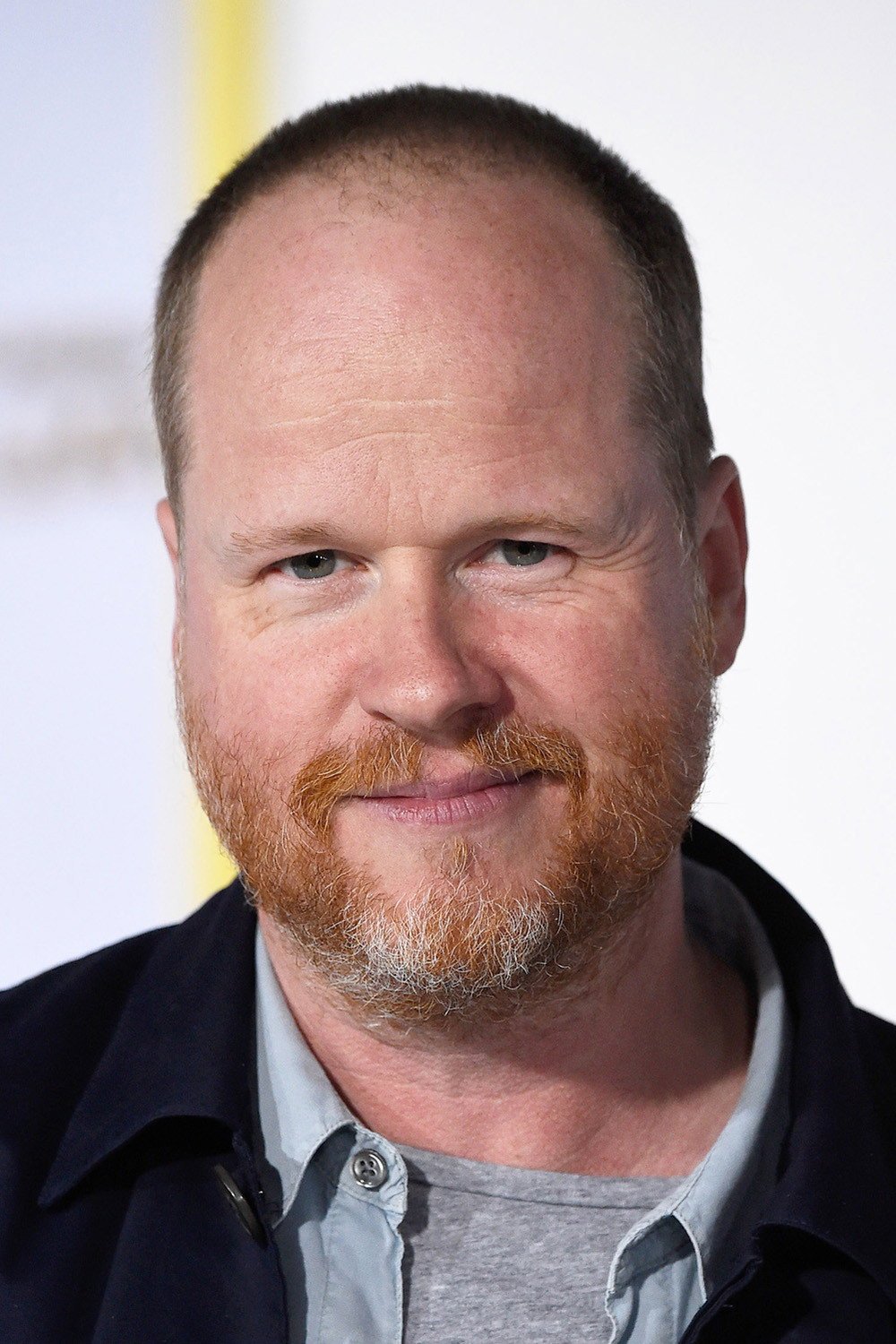
Joss Whedon (born 1964) is the American writer, director and producer who created the television series Buffy the Vampire Slayer.
Quick Specs
| Born | June 23, 1964, New York City (as Joseph Hill Whedon) |
| Age | 62 |
| Education | Riverdale Country School, New York; Winchester College, England; Wesleyan University, film studies, graduated 1987 |
| First TV job | Staff writer on Roseanne (1989, its second season) |
| Created | Buffy the Vampire Slayer (1997 to 2003), Firefly (2002), Dollhouse (2009 to 2010), The Nevers (2021) |
| Co-created | Angel (with David Greenwalt); Agents of S.H.I.E.L.D. (with Jed Whedon and Maurissa Tancharoen) |
| Horror writing | Buffy the Vampire Slayer (1992 film, screenplay); Alien: Resurrection (1997, screenplay); The Cabin in the Woods (2012, co-writer with Drew Goddard, and producer) |
| Feature director | Serenity (2005), Much Ado About Nothing (2012), The Avengers (2012), Avengers: Age of Ultron (2015) |
| Oscar record | One shared nomination, Best Original Screenplay for Toy Story (1995), as one of seven writers; no win |
| Company | Mutant Enemy Productions, the company behind Buffy, Angel and Firefly |
| Family | A third-generation television writer, after his grandfather John Whedon and his father Tom Whedon |
Who He Is
Joseph Hill Whedon was born on June 23, 1964, in New York City, and grew up on the Upper West Side of Manhattan. He is known to everyone as Joss, and he is 62.
Television writing is the family trade. His grandfather, John Whedon, wrote for radio and then for The Donna Reed Show in the 1950s and for The Dick Van Dyke Show and That Girl in the 1960s. His father, Tom Whedon, was a television writer and producer whose credits include The Electric Company, where by Joss’s own account he was the Emmy-winning head writer, plus Alice, Benson and The Golden Girls. He has been said to be the first third-generation television writer.
His mother, known as Lee Stearns, came from Kentucky, taught at Riverdale Country School and was an activist and aspiring novelist. He has two older brothers, Samuel and Matthew, and two younger brothers, Jed and Zack Whedon, both writers who later became his collaborators. His parents divorced when he was 9.
He went to Riverdale Country School, boarded at Winchester College in England, and studied film at Wesleyan University, graduating in 1987 at 22. Wesleyan gave him an honorary Doctor of Letters in 2013.
After Wesleyan he moved to Los Angeles. His first television job was as a staff writer on the second season of Roseanne in 1989. He later founded Mutant Enemy Productions, the company that made Buffy, Angel and Firefly, and co-founded Bellwether Pictures with Kai Cole, the architect and producer he married. They divorced in 2016, and they have two children.
The Work, and What He Did in It
Nearly every credit on his record is a different job. Creator is not director, co-writer is not sole writer, and an uncredited polish is not a credit at all.
Buffy the Vampire Slayer (1992), the film, is where it starts, and he was its sole screenwriter. He did not direct it and did not produce it. Fran Rubel Kuzui directed, with Kristy Swanson as Buffy and Donald Sutherland as her Watcher. He wrote a horror comedy that turned the genre’s blonde victim into the hero; the film was much changed from his script in production and was largely panned. He was 28 when it opened on July 31, 1992. “It didn’t turn out to be the movie that I had written,” he said in 2001. “I just watched a lot of stupid wannabe-star behaviour and a director with a different vision than mine, which was her right, it was her movie, but it was still frustrating.”
The script-doctor years came next, and every title in them carries the same word: uncredited.
- Speed (1994): uncredited, as Whedon himself confirms. The credited screenwriter, Graham Yost, has publicly credited Whedon’s dialogue.
- Waterworld (1995): uncredited, and Whedon jokingly insists on its inclusion himself.
- Twister (1996): uncredited, again confirmed in his own words.
- X-Men (2000): early draft work, of which little survived. It is not a writing credit.
Toy Story (1995) is a real credit, and a shared one. He came in during the troubled rewrite of Pixar’s first feature, directed by John Lasseter. It was nominated for the Academy Award for Best Original Screenplay, and the nomination names seven writers: Joss Whedon, Andrew Stanton, Joel Cohen, Alec Sokolow, John Lasseter, Pete Docter and Joe Ranft. It did not win the category.
Alien: Resurrection (1997) is his horror screenplay with the longest shadow, and the screenplay credit is his alone. Jean-Pierre Jeunet directed, with Sigourney Weaver back as a cloned Ripley and Winona Ryder as the android Call. His first treatment centred on a cloned Newt before the studio required Ripley. He was 33 when it opened that November.
His verdict is about execution, not rewriting. In 2005 he said: “It wasn’t so much that they’d changed the script; it’s that they just executed it in such a ghastly fashion as to render it almost unwatchable.” He also said “they cast it wrong, and they designed it wrong, and they scored it wrong.” Jeunet has publicly rejected the criticism in equally blunt terms. Both positions are on the record, and this page referees neither.
Buffy the Vampire Slayer (1997 to 2003), the series, is a different work from the film. He created it, executive produced it and ran it, with Marti Noxon as co-showrunner in the later seasons. Sarah Michelle Gellar starred as Buffy Summers. It premiered on The WB on March 10, 1997, ran five seasons there and two more on UPN, and ended on May 20, 2003, after seven seasons and 144 episodes.
The premise was his: high school as a horror movie, with the monsters standing in for adolescence. He ran the writers’ room and wrote and directed the episodes the record singles out:
- “Hush” (1999): the near-silent episode in which the Gentlemen steal Sunnydale’s voices, with roughly 28 minutes of no dialogue at all. It earned him an Emmy nomination for Outstanding Writing for a Drama Series in 2000.
- “The Body” (2001): the death episode, built on dialogue and played with no score. It was nominated for a Nebula.
- “Once More, with Feeling” (2001): the full musical episode, which he wrote, directed and composed. Its Emmy nomination was for Outstanding Music Direction, not for writing.
It sits on TV Guide’s and Empire’s all-time lists, and Slate called it in 2012 the most academically written-about popular-culture text of its era.
Angel (1999 to 2004) was the spin-off, co-created with David Greenwalt, which means it was never his alone. David Boreanaz’s vampire with a soul moved to Los Angeles as a supernatural detective, across five seasons and 110 episodes on The WB from 1999 to 2004, aimed darker than Buffy: addiction and redemption instead of growing up.
Firefly (2002) was his space Western for Fox, with Nathan Fillion as Captain Malcolm Reynolds. He created it and wrote and directed the pilot. Fourteen episodes were produced. Fox aired eleven of them, out of order, and cancelled the show in 2002. Then strong DVD sales and an organised fanbase, the Browncoats, got it a film.
Serenity (2005) was that film, and his feature directing debut, at 41. He wrote and directed it for Universal, and in the standard account it did not do well enough in theatres to launch a franchise.
Dr. Horrible’s Sing-Along Blog (2008) was the internet experiment. During the 2007 to 2008 Writers Guild strike he made a self-financed web musical, co-written with Zack Whedon, Jed Whedon and Maurissa Tancharoen, and released it online in three acts in July 2008, at 44. Time named it one of the best inventions of 2008.
Dollhouse (2009 to 2010), which he created and ran for Fox, starred Eliza Dushku as Echo, an “Active” whose personality is wiped and re-imprinted for wealthy clients. It ran from February 13, 2009, to January 29, 2010: two seasons and 26 aired episodes, to mixed reviews and low ratings.
The Cabin in the Woods (2012) is his horror centrepiece, and the credits have to be exact. Drew Goddard directed it, as his directing debut. Whedon co-wrote the screenplay with Goddard, a former Buffy and Angel writer who also wrote Cloverfield, and produced it.
Five friends, among them a pre-Thor Chris Hemsworth and Fran Kranz, go to a remote cabin, where technicians played by Richard Jenkins and Bradley Whitford manipulate them from an underground facility. The pair described it as an attempt to revitalise the slasher and as a satire on “torture porn,” and Whedon’s own phrase for it is a “loving hate letter” to horror.
It was shot from March to May 2009 in Vancouver on a reported $30 million budget. MGM first delayed it for a 3D conversion the makers opposed, then shelved it when the studio filed for Chapter 11 bankruptcy in November 2010. Lionsgate acquired it in 2011. It premiered at SXSW on March 9, 2012, and opened in US theatres on April 13, 2012, when he was 47. However a listing dates it, it is a 2012 release. The film grossed more than $66 million worldwide.
Much Ado About Nothing (2012) was made during a contractual break from post-production on The Avengers. He adapted and directed Shakespeare’s play in black and white, in 12 days in October 2011, at his own Santa Monica home, with Amy Acker as Beatrice and Alexis Denisof as Benedick. It premiered at festivals in 2012 and opened in US theatres in June 2013.
The Avengers (2012) and Avengers: Age of Ultron (2015) he wrote and directed, at 47 and 50, and in the standard account he was a creative consultant across Marvel’s Phase Two. The Avengers grossed $1.51 billion worldwide and was, at release, the third-highest-grossing film ever made. Age of Ultron grossed $1.405 billion.
Agents of S.H.I.E.L.D. (2013 to 2020) was co-created for ABC with Jed Whedon and Maurissa Tancharoen. He co-wrote and directed the pilot; Jed Whedon and Tancharoen, among others, ran the show day to day.
In comics he wrote Marvel’s Astonishing X-Men, created Fray for Dark Horse, and oversaw and wrote Dark Horse’s Buffy the Vampire Slayer Season Eight, which he treats as canon.
Justice League (2017) credits Zack Snyder as its sole director. Whedon came in during post-production, first to write. After Snyder stepped back following the death of his daughter, Autumn, Whedon directed extensive reshoots and delivered the theatrical cut, released that November when he was 53. He is a co-writer and the reshoot director, not the film’s credited director.
The Nevers (2021) was his HBO series about Victorian women, “the Touched,” who gain strange abilities. He created it and ran its first production block. On November 25, 2020, HBO and Whedon announced they had “parted ways,” and his statement said he was “genuinely exhausted” by making a huge show during the pandemic. Philippa Goslett was named showrunner on January 28, 2021, and the series premiered that April without his name in its marketing.
The Workplace Allegations
From 2020 to 2022, colleagues from three decades of his productions made public allegations about his conduct. It is part of his career record, set out here as it stands: who said what, who denied what, and the one institutional outcome, in the studio’s own words.
Ray Fisher, who played Cyborg in Justice League, posted on July 1, 2020, that Whedon’s “on-set treatment of the cast and crew of Justice League was gross, abusive, unprofessional, and completely unacceptable,” and said producers Geoff Johns and Jon Berg had enabled it. Jason Momoa publicly backed him.
Fisher later alleged that his role was cut for racially motivated reasons, and that he had been told Whedon lightened an actor of colour’s skin tone in post-production. Forbes later retracted the interview that carried that version. Whedon’s answer was that he brightened the entire film, every face in it. Fisher maintains his account.
WarnerMedia investigated the Justice League claims and announced in December 2020 that the investigation had concluded and “remedial action” had been taken. It has never said what that action was, and it published no findings. In March 2021, Warner Bros. chief executive Ann Sarnoff quoted the investigator, Judge Katherine Forrest, as finding no evidence of interference by Walter Hamada and saying the cuts to Fisher’s role were not racially motivated. Fisher publicly disputed how the investigation was run and what it concluded.
Gal Gadot said in December 2020 that her experience with Whedon “wasn’t the best one.” In April 2021 The Hollywood Reporter reported, with a witness account, that during a disagreement over lines Whedon threatened her career and said he could make her look “incredibly stupid” in the film. Gadot told the trade: “I had my issues with Whedon and Warner Bros. handled it in a timely manner.”
On February 10, 2021, Charisma Carpenter, Cordelia Chase on Buffy and Angel, published a two-part statement headed “My truth. #IStandWithRayFisher.” She alleged that Whedon “abused his power on numerous occasions” and had a “history of being casually cruel.” She said he threatened to fire her and mocked her religious beliefs, and that after she became pregnant before the fourth season of Angel, he called her “fat” to colleagues and asked her in a closed-door meeting whether she was “going to keep it.” She said he fired her the season after she gave birth, and that she had taken part in the WarnerMedia investigation.
Buffy colleagues responded that month. Amber Benson, who played Tara, said: “Buffy was a toxic environment and it starts at the top.” Sarah Michelle Gellar said: “While I am proud to have my name associated with Buffy Summers, I don’t want to be forever associated with the name Joss Whedon,” and said she stood with all survivors of abuse. Hers was a statement of support and distance, not a detailed account of her own. Michelle Trachtenberg, who played Dawn as a teenager, said there had been “very not appropriate” behaviour and afterwards “a rule” that he was not allowed in a room alone with her. Whedon said he was unaware of any such rule.
The earlier precursor was Kai Cole’s August 2017 essay in TheWrap, which called him “a hypocrite preaching feminist ideals” and alleged multiple affairs, including with actresses and co-workers, during their marriage. A spokesperson for Whedon said the account “includes inaccuracies and misrepresentations.”
Whedon gave his answers on the record to Lila Shapiro for New York magazine’s Vulture, in “The Undoing of Joss Whedon,” published January 17, 2022. Of Gadot he said: “I don’t threaten people. Who does that?” He suggested she had misunderstood a flowery joke because “English is not her first language.” Gadot replied to the magazine: “I understood perfectly.” He denied calling Carpenter fat (“Of course I didn’t”), while conceding he was not “mannerly” with her after learning of her pregnancy, and said most of his experiences with her were “delightful and charming.” He said the Cyborg storyline was cut because it “logically made no sense,” denied the skin-tone claim on the grounds that he brightened the whole film, and called Fisher “a malevolent force.” Of the Buffy years he said he was young, that he yelled, and that “sometimes you had to yell.” In the profile he acknowledged affairs in general terms while disputing how they were characterised, and denied wrongdoing while acknowledging that he can be confrontational.
No criminal charge, civil judgment or published studio finding against him has been reported. What stands is a set of allegations, statements of support, his denials, and one unspecified “remedial action.”
Cool Verified Facts
- His grandfather wrote for The Dick Van Dyke Show, and his father wrote for The Golden Girls.
- “Hush” runs roughly 28 minutes without dialogue, and it earned him his Emmy writing nomination.
- His first idea for Alien: Resurrection centred on a cloned Newt, not a cloned Ripley.
- He shot Much Ado About Nothing in 12 days at his own house, on a break from The Avengers.
- He even appears on screen in Angel, as Numfar.
Signatures, Habits and Behind the Scenes
Subversion is the engine, by his own account. He wanted to take “the little blonde girl who goes into a dark alley and gets killed in every horror movie” and make her the hero, and he called the series’ “very first mission statement” “the joy of female power: having it, using it, sharing it.” That idea produced Buffy, the genre autopsy of The Cabin in the Woods, and the reputation for strong female leads that the later allegations complicated. A fair account of him has to hold both of those sentences at once.
His monsters are metaphors, planned in seasons. Buffy’s horrors map onto adolescence, and the textbook case is the boyfriend who changes after sex and becomes a soulless vampire. The long arcs, with their foreshadowing and payoffs years later, are on screen in the episodes themselves.
The dialogue is the brand. Studios paid him to punch up other writers’ lines. The habits are recognisable across the work: banter under mortal pressure, pop-culture self-awareness, nouns turned into verbs and adjectives given a “-y,” and speeches that pivot from a joke to a thesis.
He mixes genres inside a single work. Firefly is a space Western, Buffy swings from horror to comedy to tragedy week by week, and Cabin is a slasher, a workplace comedy and a cosmic horror film in one structure. He composes, too: he wrote the songs for “Once More, with Feeling” and co-wrote Dr. Horrible’s.
He builds found families and then kills the darlings. His ensembles are assembled families, from the Scoobies to the Serenity crew. His habit of killing beloved characters without warning is part of the work itself, from Joyce Summers and Tara to Wash and Coulson as he was first presented.
Control is the through-line, in his own telling. The 1992 film and Alien: Resurrection taught him what happens to a writer without it; showrunning gave him “an unprecedented amount of control over the show, even for television”; and Serenity, Dr. Horrible and Much Ado were three escape routes. That is his framing of his career, presented here as his.
Why He Matters
For horror, Buffy the series re-founded the genre on television. Across seven years it showed that horror could carry long-form character tragedy, formal experiments like “Hush,” “The Body” and a full musical, and a feminist inversion of the genre’s oldest victim trope, all at once. The Gentlemen from “Hush” alone have entered the permanent iconography of screen horror. The Cabin in the Woods is the companion piece, co-written with Goddard: the genre’s own machinery, from the ritual to the archetypes to the audience’s appetite, turned into the monster.
For television, he is one of the defining showrunner-auteurs of the turn of the century: a creator with control making network genre shows that rewarded close attention to continuity before streaming existed.
The reassessment belongs in the same paragraph as the influence, not in an appendix. A creator publicly identified with feminist heroines was accused by named colleagues of the conduct set out above. He denied the central claims on the record in 2022. The studio that investigated took remedial action it never specified. And he has had no comparable project since The Nevers, which premiered without his name in its marketing. Any honest account of his place in horror has to carry all of it.