
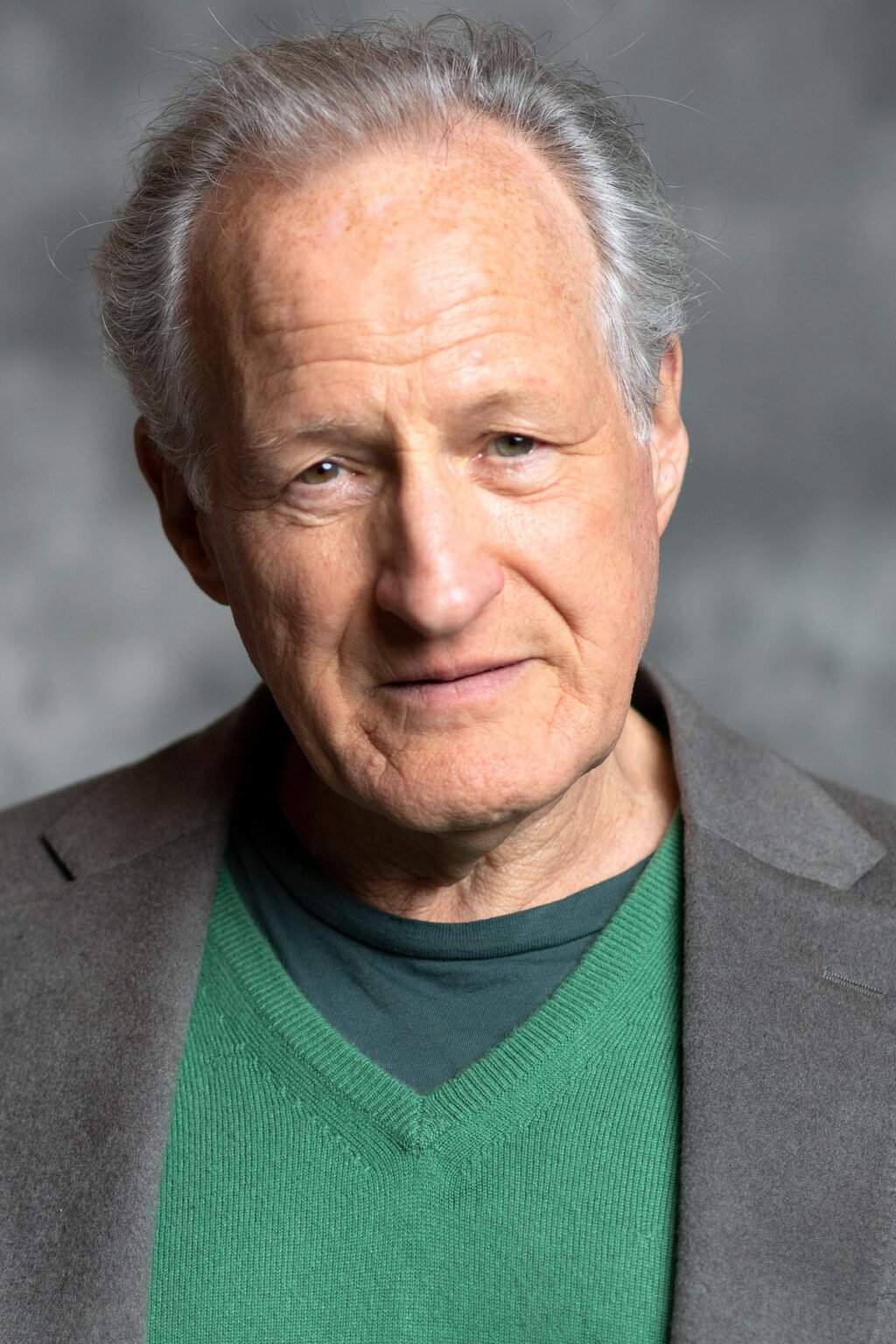
Michael Mann is the director who put Hannibal Lecter on screen first and made crime films feel like real police work.
Quick Specs
- Born: 5 February 1943, Chicago, Illinois
- Known for: The Keep, Manhunter, Heat, The Insider, Collateral
- Occupations: Director, screenwriter, producer, author
- Years active: 1968–present
- Spouse: Summer Mann (m. 1974)
Overview
Michael Mann is the most obsessive researcher in American movies. He spent three years inside the FBI’s Behavioral Science Unit writing Manhunter and put real jewel thieves on the set of Thief. His two horror films are a matched pair of beautiful disasters: The Keep, the Nazi-gothic nightmare the studio took apart in post-production, and Manhunter, the first Hannibal Lecter film, which bombed and then became the grammar of every profiler show on television.
The Life
Michael Kenneth Mann was born 5 February 1943 in Chicago, Illinois, the son of Esther and Jack Mann, a World War II veteran whom Mann has called “highly, highly principled.” He grew up in Chicago’s Humboldt Park neighborhood on the Chicago blues scene. He studied English at the University of Wisconsin–Madison, graduating in 1965, where Kubrick’s Dr. Strangelove made him fall in love with movies. He earned a graduate degree from the London Film School in 1967 and spent seven years in the UK working in commercials alongside contemporaries Alan Parker, Ridley Scott, and Adrian Lyne — contemporaries, not classmates. He returned to the US in 1971, married Summer Mann in 1974, and they have four daughters, including director and producer Ami Canaan Mann.
The Work
Mann broke in writing television: four episodes of Starsky and Hutch, four of Police Story with cop-turned-novelist Joseph Wambaugh, and he created and wrote the pilot of Vega$. Police Story taught him that first-hand research was essential — the root of everything since. Thief (1981) was his theatrical debut: James Caan as a professional jewel thief trying to buy a straight life. Real jewel thief John Santucci supplied the burglary tools, trained the cast, and plays corrupt cop Urizzi; real Chicago detective Dennis Farina made his acting debut as a mob henchman.
The Keep (1983) is the great lost horror film of the 1980s. Writer-director, adapting F. Paul Wilson’s 1981 novel: 1941, Nazi-occupied Romania, a Wehrmacht unit occupies an ancient Carpathian fortress, two soldiers looting the wall-icons loose the entity Radu Molasar, and Glaeken — Molasar’s ancient opposite — travels from Greece to confront it. Shot in Wales over 22 weeks against a planned 13, it went over budget; then post-production fell apart — effects supervisor Wally Veevers died two weeks in, the effects-heavy finale was abandoned, and Mann’s 210-minute cut became about 120 at Paramount’s demand, then 96 after bad test screenings, with no proper final sound mix ever completed. It grossed $4.2 million in the US on a $6 million budget. Wilson called it “visually intriguing, but otherwise utterly incomprehensible.” Mann has kept his distance — but in a 2009 interview he said the production design and form were in better shape than the content, and that he likes it for those aspects. It built a cult.
In television, Mann was executive producer and showrunner of Miami Vice (1984–90) and Crime Story (1986–88) — not the creator of either. Miami Vice was created by Anthony Yerkovich. He also made L.A. Takedown (1989), a TV movie pilot that was the first, compressed version of the Heat story.
Manhunter (1986) is the horror centerpiece: writer-director, adapting Thomas Harris’s 1981 novel Red Dragon. It is the first screen Hannibal, five years before The Silence of the Lambs. William Petersen plays FBI profiler Will Graham, Tom Noonan plays Francis Dollarhyde (spelled with two L’s in the film; “Dolarhyde” in the novel), Dennis Farina plays Jack Crawford, and Brian Cox plays Hannibal Lecktor — spelled with a “k” in this film, the only time in the Lecter canon. Mann kept Lecktor small on purpose — essentially two scenes — because Lecktor was “such a charismatic character that [he] wanted the audience almost not to get enough of him.” Cox based the performance on Scottish serial killer Peter Manuel. It bombed — a $15 million film that grossed under $9 million in the US. Then the reappraisal: Salon called it the best of the Lecter films, and its profiler grammar runs through Millennium, Criminal Minds, and CSI — which took Petersen himself as its lead. In June 2026 StudioCanal announced Manhunter: The Final Cut, a 4K restoration overseen and approved by Mann for the film’s 40th anniversary, which opened in US theaters 24 July 2026. Mann: “This latest iteration is that version of the film with which I’m most satisfied.”
The Last of the Mohicans (1992) was the popular breakthrough: Daniel Day-Lewis as Hawkeye in 1757. Heat (1995) is the masterpiece: Pacino’s LAPD Lt. Vincent Hanna against De Niro’s professional thief Neil McCauley — $60 million budget, $187.4 million worldwide. It is based on Chicago detective Chuck Adamson’s pursuit of a real criminal named Neil McCauley; the two once actually met and talked over coffee. The Kate Mantilini restaurant scene is Pacino and De Niro’s first-ever shared screen scene, shot unrehearsed at De Niro’s suggestion. The downtown shootout took three months of training with ex-SAS sergeant Andy McNab, and Mann kept the production-recorded gunfire because, as he put it, “Nothing artificial could come close to delivering the fear of the sound.”
The Insider (1999) was the critical peak: director and co-writer with Eric Roth, Crowe as tobacco whistleblower Jeffrey Wigand, Pacino as 60 Minutes producer Lowell Bergman — seven Oscar nominations, the most of any Mann film, and not a box-office success. Ali (2001) cast Will Smith as Muhammad Ali across 1964–74, with real boxers in every fight. Collateral (2004) cast Foxx as cab driver Max and Cruise against type as hitman Vincent, with exteriors shot digitally — the first feature shot with the Thomson Viper FilmStream — because, as Mann put it, “Film doesn’t record what our eyes can see at night.”
Miami Vice (2006) — Farrell as Crockett, Foxx as Tubbs — was deliberately not a nostalgia piece: an R-rated, present-day undercover story shot nearly fully on digital, its ending rewritten after Foxx left the Dominican Republic set. Public Enemies (2009) cast Depp as John Dillinger and Bale as Melvin Purvis, shot in the real locations: Little Bohemia Lodge, the Lake County Jail, the Biograph Theater alley. Blackhat (2015) flopped — about $20 million worldwide on a $70 million budget — and Mann owned it: “It’s my responsibility. The script was not ready to shoot.” Ferrari (2023) cast Adam Driver as Enzo, focused on three months of 1957, a film Mann had wanted to make since the 1990s.
Heat 2 is real as a novel — co-written with Meg Gardiner, published August 2022, a #1 New York Times bestseller, both prequel and sequel to the 1995 film. The film, as of October 2026, is in pre-production at Amazon MGM’s United Artists; Stephen Graham has confirmed on the record that DiCaprio plays Chris Shiherlis and Bale plays Vincent Hanna. Production is planned to begin November 2026; no release date has been announced.
The Mann Touch
Mann’s signature is first-hand research you can see on screen. Police Story taught him it; Manhunter meant three years inside the FBI’s Behavioral Science Unit; Heat meant months of LAPD ride-alongs and Folsom Prison interviews. His color is blue and his turf is the night — which is exactly why he led the digital revolution, hunting a camera that could see the night the way the eye does. His recurring subject is the professional’s code: at the top of their games, crooks and cops are not so dissimilar as men — each lives and dies by his own code, and each recognizes himself in the other. And he is a perfectionist of documented texture: cinematographer Dion Beebe called him “a director who prepares like Rembrandt and executes like Picasso.”
Why He Matters
For a horror wiki, Mann is the man who put Hannibal Lecter on screen — and kept him in a cage. Manhunter rationed Lecktor to two scenes and played him as a plausible, empathy-less clinician, a reading many critics now rank alongside or above the more famous theatrical one. The profiler grammar of modern screen crime — the investigator who thinks like the killer, the forensic procedural — runs through this film, and its star literally carried it into CSI. He also made the great lost horror film of the 1980s: The Keep, taken apart in post-production, its 4K edition sold out in 48 hours forty years later.
Trivia & Facts
- Petersen could not shake Will Graham after Manhunter wrapped — he had his beard shaved and his hair cut and dyed blond, “so that he could look into the mirror and see a different person.”
- The Manhunter climax was shot after the effects crew had left: ketchup through hoses for blood spatter, Mann throwing glass jars for bullet hits, and Tom Noonan lying in the corn-syrup blood pool so long he became stuck to the floor.
- Cox auditioned for Lecktor with his back turned, so the casting agents could judge the voice alone.
- Vinegar Syndrome’s 4K UHD edition of The Keep (29 November 2024) sold out its limited and standard editions in under 48 hours.
FAQ
Who is Michael Mann?
An American director, screenwriter, producer, and author best known for The Keep, Manhunter, Heat, The Insider, and Collateral — crime films built on obsessive first-hand research.
Did Michael Mann create Miami Vice?
No. He was executive producer and showrunner of Miami Vice and Crime Story. Miami Vice was created by Anthony Yerkovich.
Did Michael Mann disown The Keep?
No — that is a rumor. He has kept his distance and rarely discusses it, but in a 2009 interview he said the production design and form were in better shape than the content, and that he likes it for those aspects.
What is Michael Mann’s best film?
Heat for the crime epic, The Insider for the prestige drama, Manhunter for the horror. Start with Manhunter.