
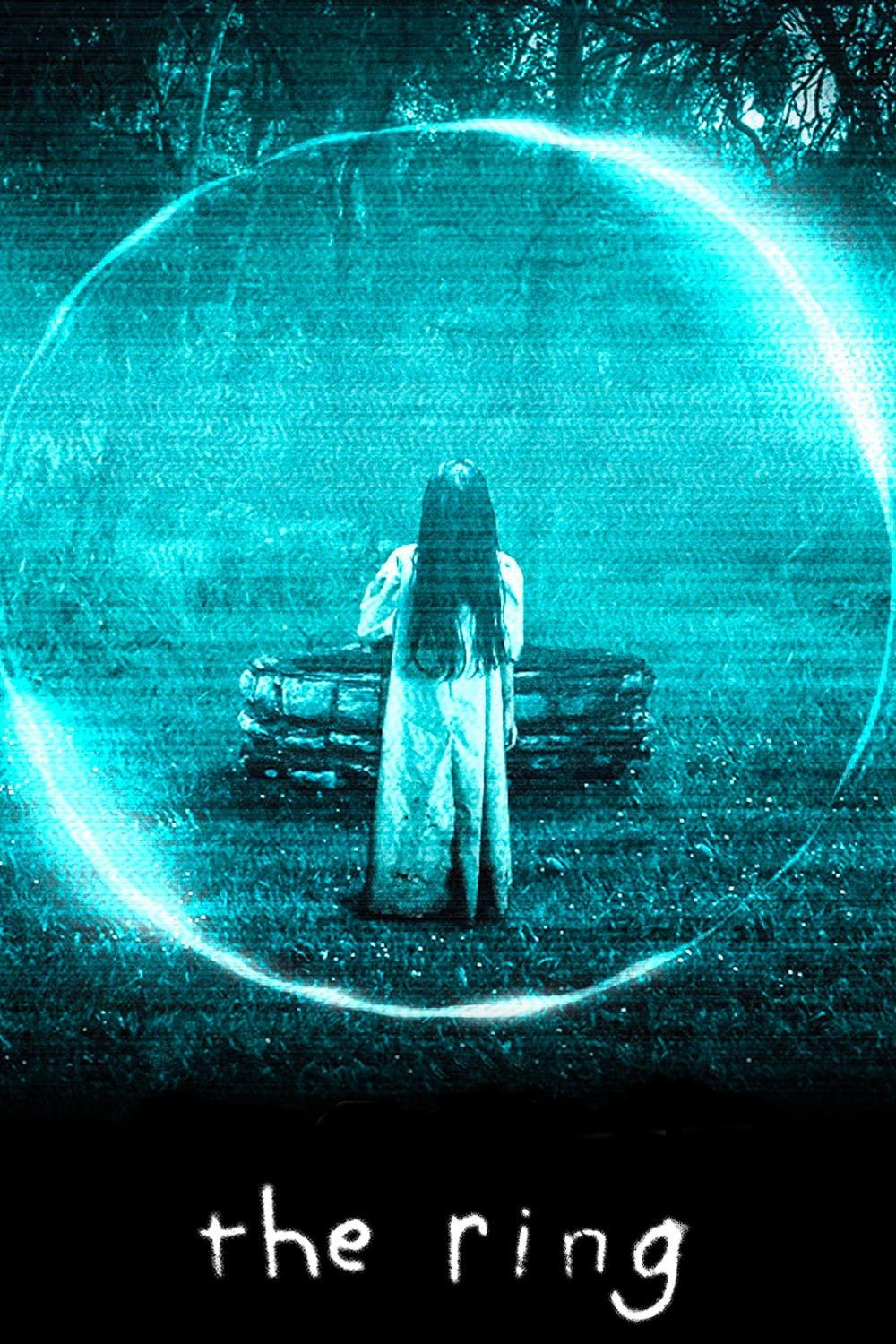
The Ring (2002) is an American supernatural horror film directed by Gore Verbinski and written by Ehren Kruger. It remakes Hideo Nakata’s Ringu (1998), which was based on Koji Suzuki‘s 1991 novel. Naomi Watts plays Rachel Keller, a Seattle journalist who watches a cursed videotape and receives a phone call telling her she has seven days to live. Her investigation leads to Samara Morgan, the American counterpart of Sadako Yamamura. The film grossed $249.3 million worldwide. It was the first major Hollywood remake of a Japanese horror film and opened the door for many more.
At a glance
| Release date | October 18, 2002 (US) |
| Director | Gore Verbinski |
| Writer | Ehren Kruger (screenplay); uncredited rewrite by Scott Frank |
| Based on | Ring (1998 film), written by Hiroshi Takahashi, and the novel Ring by Koji Suzuki |
| Starring | Naomi Watts, Martin Henderson, David Dorfman, Brian Cox, Daveigh Chase (Samara) |
| Runtime | 115 minutes |
| Rating | PG-13 (US) |
| Budget | $48 million |
| Box office | $249.3 million worldwide |
| Franchise | Ring franchise: followed by The Ring Two (2005) and Rings (2017) |
Plot summary
Two teenage girls, Katie and Becca, trade an urban legend about a videotape that kills whoever watches it a week later. That night, Katie dies, killed by something unseen. At the funeral, her mother asks her sister, Rachel Keller (Naomi Watts), to find out what happened. Rachel learns that Katie’s friends all died at the same moment in strange accidents. She traces them to a cabin at the Shelter Mountain Inn, where they watched a tape together. Rachel watches it too: a stream of disturbing, dreamlike images. Then the phone rings, and a voice whispers, “Seven days.”
She enlists her ex-husband Noah (Martin Henderson), a video analyst, and makes him a copy. Then their young son, Aidan (David Dorfman), watches the tape as well. The images lead Rachel to Moesko Island and the horse breeder Anna Morgan, who killed herself after her horses drowned themselves. Anna’s widower, Richard (Brian Cox), wants nothing to do with Rachel’s questions. On the ferry to the island, a panicked horse leaps overboard.
Spoiler section: the ending
Rachel learns that the Morgans adopted a girl named Samara (Daveigh Chase), who could burn images into objects and into people’s minds. Anna eventually dropped her into a well beneath the inn, where she survived for seven days. Rachel and Noah find the well and give Samara’s remains a burial, and they believe the curse is over. But Noah’s seven days run out, and Samara crawls out of his television to kill him. Rachel realizes she survived only because she copied the tape and showed it to someone else. To save Aidan, she helps him make a copy, and she won’t answer his question about what will happen to whoever watches it next.
Production and behind the scenes
Verbinski became interested after producer Walter F. Parkes sent him a VHS copy of the Japanese film, which he called “intriguing,” “pulp” and “avant-garde.” The film went into production without a finished script. Kruger wrote three drafts before Scott Frank did an uncredited rewrite. The original credits approved by the Writers Guild listed Ringu screenwriter Hiroshi Takahashi, but his name does not appear in the final print. Gwyneth Paltrow, Jennifer Connelly and Kate Beckinsale were all offered the lead. Verbinski said he didn’t want “big stars,” because he wanted the film to be “discovered.” He expected criticism from fans of the original and set out to keep Ringu’s minimalism. He set it in Seattle for its “wet and isolated” atmosphere.
Filming took place in 2001, mostly in Washington state, including Seattle, Port Townsend, Whidbey Island, Bellingham, Monroe and Stanwood. The Yaquina Head Lighthouse in Newport, Oregon, and the Columbia River Gorge were also used. Cinematographer Bojan Bazelli created the film’s grey, blue-green look in camera with color filters and very soft, almost shadowless light, rather than relying on digital grading. Hans Zimmer composed the score, which uses the “Dies irae” theme. Chris Cooper filmed two scenes as a murderer meant to bookend the story, but they were cut.
Release and reception
The marketing borrowed the story’s own logic. Promotional websites were built around the film’s characters and places, the cursed video aired without explanation on late-night TV in the summer of 2002, and unlabeled VHS tapes were left on car windshields outside theaters. DreamWorks opened The Ring on October 18, 2002, on 1,981 screens. It made $15 million in its opening weekend, became a sleeper hit and expanded to 700 more theaters. It grossed $129.1 million in the US and $249.3 million worldwide. It also did well in Japan, where it slightly out-grossed the original.
Reviews were mixed to positive. It holds a 72% approval rating on Rotten Tomatoes, whose consensus credits “Gore Verbinski’s haunting sense of atmosphere and an impassioned performance from Naomi Watts.” It has a Metacritic score of 57, and audiences gave it a “B−” CinemaScore. On Ebert & Roeper, Richard Roeper gave it a thumbs up, while Roger Ebert found it boring and “borderline ridiculous.” Several critics said the plot didn’t add up despite its explanations. Jonathan Rosenbaum called it “an utter waste of Watts.” The film won the Saturn Awards for Best Horror Film and Best Actress for Watts, and Daveigh Chase won the MTV Movie Award for Best Villain.
Legacy and influence
The Ring‘s success started a wave of American remakes of Asian horror, including The Grudge (2004), Dark Water (2005), Pulse (2006) and One Missed Call, Shutter and The Eye (all 2008). Bloody Disgusting ranked it sixth among the best horror films of the decade, noting that it was the first American “J-horror” remake and that it “still stands as the best.” The film placed No. 20 on Bravo’s The 100 Scariest Movie Moments. Hideo Nakata himself directed the sequel, The Ring Two (2005). A short film, Rings (2005), is set between the two films. The feature Rings (2017) was a direct sequel to the 2002 film that ignored the second one.
Trivia
- Unlike Sadako in Ringu, Samara’s face is shown clearly, and her victims are found with disfigured faces.
- The title refers both to the phone call that follows each viewing and to the ring of light seen from the bottom of the well.
- Amber Tamblyn plays Katie, the tape’s first victim on screen, and Jane Alexander appears as Dr. Grasnik.
- To promote the Ring exhibit and the release of The Ring, Sadako was given a mock public funeral in Harajuku, Tokyo, on August 10, 2002.
- The soundtrack wasn’t released during the film’s theatrical run. It came out in 2005, combined with music from The Ring Two.
- Colorist Dale E. Grahn timed the film using a traditional photochemical process rather than a digital intermediate.
Related links
- Sadako Yamamura / Samara Morgan (character)
- Ring franchise
- Ringu (1998), the Japanese original
- The Ring Two (2005) and Rings (2017)
- Gore Verbinski (director) and Ehren Kruger (writer)
- Naomi Watts and Brian Cox (cast)
- Koji Suzuki (author)