Vincent Price
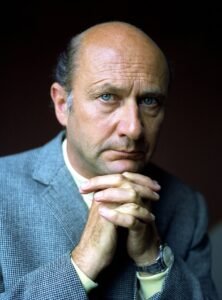
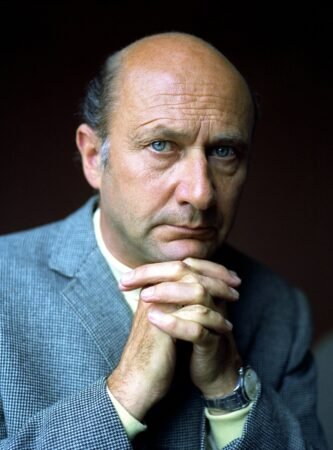
Vincent Leonard Price Jr. (May 27, 1911 – October 25, 1993) was an American actor best known as the suave, debonair villain of horror cinema — the voice and the smile that defined screen horror for a generation. Across more than 100 films, plus stage, television and radio, he played murderous sculptors, doomed aristocrats, avenging organists and Shakespearean killers, most famously in Roger Corman’s Poe cycle of the early 1960s. He was not only a horror actor: he began as a romantic lead and character actor, and he was also an art historian and collector, a lecturer, an author and a gourmet cook who wrote bestselling cookbooks. He died in Los Angeles in 1993, aged 82, of lung cancer.
At a glance
| Born | Vincent Leonard Price Jr., May 27, 1911, St. Louis, Missouri, U.S. |
| Died | October 25, 1993, Los Angeles, California, aged 82 — lung cancer |
| Occupations | Actor (film, stage, television, radio), art historian and collector, lecturer, author, cook |
| Years active | 1935–1993 |
| Spouses | Edith Barrett (divorced); Mary Grant, costume designer (divorced); Coral Browne (married 1974) |
| Children | One son from his first marriage; one daughter, Victoria Price, from his second |
| Known for | Professor Henry Jarrod in House of Wax (1953); Roderick Usher in House of Usher (1960); Prince Prospero in The Masque of the Red Death (1964); Dr. Anton Phibes in The Abominable Dr. Phibes (1971); Edward Lionheart in Theatre of Blood (1973); the spoken-word monologue on Michael Jackson’s “Thriller” (1982) |
Who He Was, the Work, and What He Did in It
St. Louis, Yale, and the London stage
Vincent Leonard Price Jr. was born on May 27, 1911, in St. Louis, Missouri, the youngest of four children of Vincent Leonard Price Sr., president of the National Candy Company, and Marguerite Cobb (née Wilcox) Price. He was educated at St. Louis Country Day School, then at Yale University, where he took a B.A. in English with a minor in art history in 1933, and then at the Courtauld Institute of Art in London. The art training was not a footnote to the acting career — it ran alongside it for the rest of his life.
His stage career began in London in 1935. In 1936 he played Prince Albert in Victoria Regina, the American production starring Helen Hayes, and he went on to Broadway work and to Orson Welles’s Mercury Theatre. He was a trained stage actor with a classical voice before he was ever a film star, and the voice — precise, amused, faintly menacing — is the instrument the whole horror career is built on.
Character actor first (1938–1952)
Price’s film debut was Service de Luxe (1938), as a romantic lead. He established himself as a character actor in the 1940s, most notably in Laura (1944), opposite Gene Tierney and directed by Otto Preminger. The rest of his 1940s work was a run of prestige pictures rather than horror: The Song of Bernadette (1943), The Keys of the Kingdom (1944), Leave Her to Heaven (1945), Dragonwyck (1946), The Three Musketeers (1948) and The Ten Commandments (1956).
Horror came to him sideways. Tower of London (1939), a Boris Karloff film, was his first venture into horror; Dragonwyck (1946), in which he played the Gothic villain Nicholas Van Ryn, was his first Gothic villain lead.
On radio he played Simon Templar in The Saint from 1947 to 1951. Decades later he hosted and starred in the BBC Radio horror and mystery series The Price of Fear in the early 1970s — the voice, again, doing the work.
Horror stardom — House of Wax and the 1950s
The breakthrough was House of Wax (1953), in which Price played Professor Henry Jarrod, a murderous sculptor. It was one of the first films shot in 3D, and the first 3-D film to land in the year’s top ten at the North American box office. Jarrod set the template Price would refine for the next forty years: the cultivated, articulate villain whose manners are the menace.
The run that followed made him a horror star outright: The Mad Magician (1954); The Fly (1958), in which he plays François Delambre — the brother, not the Fly; the scientist who becomes the Fly is André Delambre, played by David Hedison; Return of the Fly (1959); House on Haunted Hill (1959) as Frederick Loren; and The Tingler (1959).
The Corman Poe cycle (1960–1964)
The centrepiece of Price’s career is the Poe cycle: eight Edgar Allan Poe films directed by Roger Corman, seven of them starring Price. The Price titles are House of Usher (1960, also called The Fall of the House of Usher) as Roderick Usher; The Pit and the Pendulum (1961) as Nicholas Medina; Tales of Terror (1962); The Raven (1963); The Haunted Palace (1963); The Masque of the Red Death (1964) as Prince Prospero; and The Tomb of Ligeia (1964). Richard Matheson wrote the screenplays for the first three. The Haunted Palace carries a Poe title over a Lovecraft stor.
House of Usher (1960) was Corman’s first CinemaScope film. Price was Corman’s one choice for Roderick Usher, and he was paid $50,000 out of a $270,000 budget. The film grossed $2 million in the summer of 1960, American International Pictures’ biggest hit to that date. The Masque of the Red Death (1964) is widely rated the peak of the cycle — Price as Prospero, a performance the Film Foundation’s restoration guide calls career-best.
British horror and the 1970s
Witchfinder General (1968) cast Price as Matthew Hopkins, directed by Michael Reeves. It is not a Poe film, whatever the American title implies: released in the US as The Conqueror Worm to tie it to the Corman Poe cycle, with added Price narration, it is a 17th-century English Civil War story about the real witch-hunter Matthew Hopkins. Reeves died the next year, aged 25. Price’s performance as Hopkins is regularly cited as his most effectively sinister.
He also starred in The Last Man on Earth (1964), an adaptation of Richard Matheson’s novel I Am Legend. Then came the two great comic-gothic turns of the early 1970s: The Abominable Dr. Phibes (1971), in which he plays Dr. Anton Phibes, an organist avenging his wife’s death with the Ten Plagues of Egypt, followed by the sequel Dr. Phibes Rises Again (1972); and Theatre of Blood (1973), in which he plays Edward Lionheart, a Shakespearean actor murdering his critics by Shakespearean deaths. Price counted Theatre of Blood among his favourites, because it let him act Shakespeare.
On television he played Egghead in the 1960s Batman series, a role he often spoke of with pleasure.
Late career — voice, Burton, and the last roles
Price’s late career was largely voice work and valedictory appearances, and it put him in front of a new generation. He narrated Tim Burton’s short film Vincent (1982), about a boy who imagines himself as Vincent Price. He voiced Professor Ratigan in Disney’s The Great Mouse Detective (1986). And he performed the spoken-word monologue on Michael Jackson’s “Thriller” — on the album track in 1982, re-recorded for the music video in 1983. It is a spoken-word monologue, not a rap, and his laugh closes the track.
Burton cast him as the Inventor in Edward Scissorhands (1990), a role written specifically for him. It was his last significant film work — not literally his final film: he appeared in the TV movie The Heart of Justice (1992), and he voiced ZigZag in The Thief and the Cobbler, which was released in 1995, after his death.
Art, food, and the other career
The other career ran in parallel the whole time. Price was an art collector and arts consultant who lectured and wrote books on art, and he curated a collection of fine-art reprints sold through Sears, to put fine art in ordinary homes. The Vincent Price Art Museum at East Los Angeles College is named for him.
With his second wife, Mary Grant, he wrote A Treasury of Great Recipes (1965) — recipes from famous restaurants in the United States, Europe and Mexico, with menus and photographs. It was a bestseller, and it was reissued for its 50th anniversary with a preface by Wolfgang Puck and edited by his daughter Victoria. He also wrote Come Into the Kitchen (1969), on American foodways. The cook and the collector were not a second act: they were the same man as the horror star, a gourmet and an art historian who happened to play villains for a living.
The end
Vincent Price died on October 25, 1993, in Los Angeles, of lung cancer, aged 82. A&E’s Biography episode on Price aired the night after his death.
Trivia
- He was a horror star by accident of casting, not by design. He began as a romantic lead in 1938 and spent the 1940s in prestige pictures — Laura, The Song of Bernadette, The Ten Commandments. Horror stardom did not arrive until House of Wax in 1953, in the year he turned 42.
- He was Corman’s only choice for Usher. For House of Usher (1960), Price was the one actor Corman wanted for Roderick Usher — and the film, made for $270,000, grossed $2 million in one summer and became AIP’s biggest hit to that date.
- He is not the Fly. In The Fly (1958) Price plays François Delambre, the brother who watches the tragedy happen. The scientist who becomes the Fly is André, played by David Hedison — a mix-up the record has to correct again and again.
- He did not rap on “Thriller.” Price performed a spoken-word monologue on Michael Jackson’s “Thriller” in 1982, re-recorded it for the 1983 video, and his laugh closes the track.
- His favourite role let him do Shakespeare. Price counted Theatre of Blood (1973) among his favourites because playing Edward Lionheart — a Shakespearean actor killing his critics by Shakespearean deaths — let him act Shakespeare on screen.
- He played Egghead, and loved it. His turn as the egg-obsessed villain Egghead in the 1960s Batman series was a role he often spoke of with pleasure — the same arch, delighted villainy as the horror films, played for laughs.
- A boy who imagined himself as Vincent Price got a film named after him. Tim Burton’s short Vincent (1982), narrated by Price himself, is about a boy who imagines himself as Vincent Price — and Burton later wrote the Inventor in Edward Scissorhands specifically for him.
- The museum is named for the collector, not the actor. The Vincent Price Art Museum at East Los Angeles College carries his name because of the art collection and the teaching work, not the horror films.
Signatures, Habits and Behind the Scenes
- The voice. Price’s instrument was his voice: precise, cultivated, amused, with a laugh that could close a pop record. It carried his radio career (The Saint, 1947–1951; The Price of Fear, early 1970s), his narration (Vincent, 1982) and his Disney villain (Ratigan, 1986), and it is what makes a Price villain recognisable in a single line.
- The debonair villain. His villains are rarely brutes. Jarrod, Usher, Prospero, Phibes and Lionheart are all articulate, well-mannered men whose courtesy is the threat — the suave villain as a Price signature, played with a self-mocking edge that lets the audience enjoy the villainy.
- The art historian who played monsters. The Yale art-history minor and the Courtauld training were real credentials, not colour: he collected, consulted, lectured and wrote on art throughout the acting career, and put fine-art reprints into ordinary homes through Sears.
- The cook. A Treasury of Great Recipes (1965), written with Mary Grant, was a bestseller built on recipes from famous restaurants, and its 50th-anniversary reissue was edited by his daughter Victoria — the family thread running through the food books.
- The Shakespearean underneath. The stage training — London from 1935, Victoria Regina in 1936, Broadway, the Mercury Theatre — is the base under the horror persona, and Theatre of Blood is the film where he got to use it most directly.
Why He Matters
Vincent Price matters to horror because he made the villain the star. Before Price, the horror lead was often the monster or the victim; Price’s villains — Usher, Prospero, Phibes, Lionheart — are the centre of their films, articulate and watchable, and the films are built around watching a cultivated man enjoy being wicked. The Corman Poe cycle, seven films in four years, is the body of work that fixed that model, and it made Price the defining horror actor of the 1960s in the way Boris Karloff and Bela Lugosi had been in the 1930s.
He also set the pattern for the theatrical horror host: the urbane, amused guide who welcomes the audience into the film’s world before the scares begin — a style later hosts such as Elvira made their own.
Related on Think Horror
- Roger Corman — director of the Poe cycle, eight films, seven starring Price.
- House of Wax (1953), House of Usher (1960), The Pit and the Pendulum (1961), The Masque of the Red Death (1964), Theatre of Blood (1973), The Abominable Dr. Phibes (1971), Witchfinder General (1968), The Fly (1958), House on Haunted Hill (1959), The Tingler (1959), Edward Scissorhands (1990).