
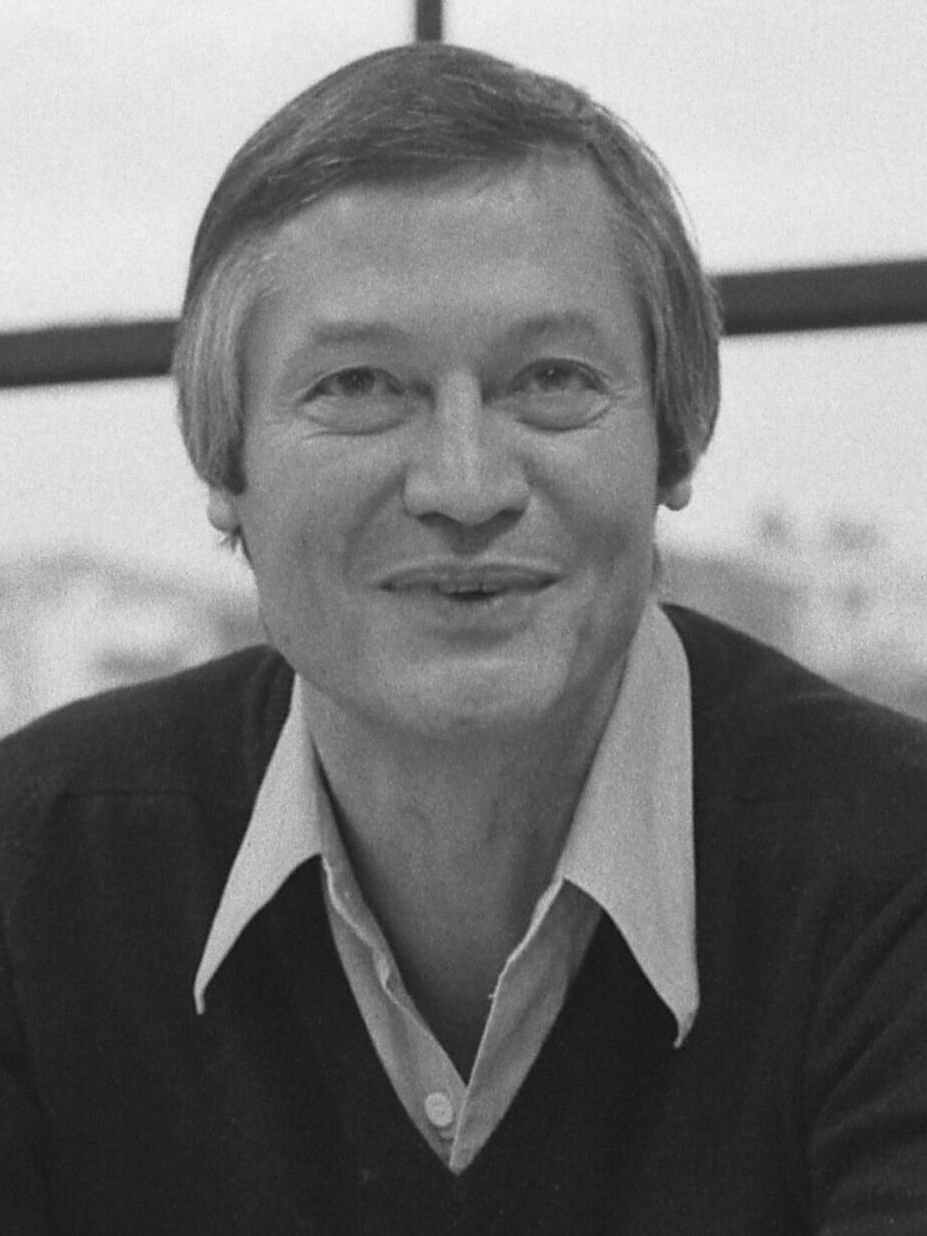
Roger Corman was the American director-producer whose Poe cycle defined gothic horror and whose bargain-budget productions launched generations of filmmakers.
Quick Specs
- Born: 5 April 1926, Detroit, Michigan
- Died: 9 May 2024, Santa Monica, California (aged 98)
- Formation: Stanford engineering degree; U.S. Navy, 1944–46; a few days as an engineer, then film
- Known for: The Poe cycle, The Little Shop of Horrors, founding New World Pictures, mentoring half of modern Hollywood
- The ledgers: Directed about 55 films; produced several hundred — never confuse the two
- Honour: Academy Honorary Award, 2009 — “for his rich engendering of films and filmmakers”
Overview
Here is the Roger Corman story in one strange sentence: the most influential American filmmaker of the second half of the twentieth century may be a man whose own best-known film was shot in two days and one night on somebody else’s leftover set, for $28,000. Corman directed about 55 features — speed-run westerns, biker pictures, and the eight-film Poe cycle that taught American horror how to be gothic — and produced several hundred more. But the producing is the legend: Francis Ford Coppola, Martin Scorsese, Jonathan Demme, Ron Howard, Joe Dante, John Sayles and Peter Bogdanovich all made their first real films under his banner, James Cameron learned his trade in his art department, and the Academy eventually handed him an Honorary Award whose citation doesn’t mention a single movie — it praises him “for his rich engendering of films and filmmakers.” He didn’t just make films. He manufactured filmmakers.
The Life
Roger William Corman was born in Detroit on 5 April 1926 — and keep him separate from his younger brother Gene, his producing partner, because the credits of “the Cormans” are not automatically Roger’s alone. He served in the U.S. Navy from 1944 to 1946, including engineering study in the Navy’s V-12 program, earned an engineering degree from Stanford, and then performed the founding act of his career: he worked a few days as an engineer, quit, and went into film. After starting at Fox he took time out to study English literature at Oxford — studied, note; no source verifies an Oxford degree, and this page won’t invent one. His wife Julie Corman is a producer in her own right — Boxcar Bertha‘s producing credit sits in her part of the family business — and his autobiography carries the perfect Corman title: How I Made a Hundred Movies in Hollywood and Never Lost a Dime (1990). It is a boast he himself undercut for decades, and the exception is the best film he ever made — see below. He died on 9 May 2024 at 98; his family announced his death without stating a cause, and none is printed here, because none was given.
The Work
Credit grammar first, because Corman’s record is where verbs go to die. His first film work was Highway Dragnet (1954), as co-producer and writer. His producing breakthrough was Monster from the Ocean Floor (1954) — produced by Corman, directed by Wyott Ordung, made in six days for $12,000. His directorial debut was Five Guns West (1955). Three films, three different “firsts,” and any bio that merges them is wrong. At American International Pictures he became the house director of the drive-in era, and in 1960 he made the legend: The Little Shop of Horrors, shot in two days and one night on sets left standing from A Bucket of Blood, for $28,000 — with a young Jack Nicholson, whose screen debut Corman had already produced in The Cry Baby Killer (1958), unforgettable as the masochistic dental patient. That is the sourced form of the story; don’t upgrade it to one day, and don’t move the two days onto any other picture.
The Poe cycle is the director’s monument: eight films for AIP between 1960 and 1964 — House of Usher, The Pit and the Pendulum, Tales of Terror, The Premature Burial, The Raven, The Haunted Palace, The Masque of the Red Death and The Tomb of Ligeia. Seven star Vincent Price; the exception, The Premature Burial, stars Ray Milland — a precision this page insists on, because the cycle’s company is half its pleasure: Barbara Steele in The Pit and the Pendulum, Hazel Court in the later films, Basil Rathbone in Tales of Terror. Two more precisions: The Haunted Palace takes its title from a Poe poem but its story from H. P. Lovecraft’s The Case of Charles Dexter Ward; and The Comedy of Terrors (1963), often swept into the cycle because Price, Karloff and Lorre are in it, was directed by Jacques Tourneur — not Corman, not a Poe film, not on his directing ledger. What Corman did across the eight was give American gothic a colour palette, a literary spine and a resident company — horror with a library card, made at exploitation speed.
And then there is The Intruder (1962), William Shatner as a rabble-rousing white supremacist poisoning a Southern town against school integration — the honourable loss. In Corman’s own oft-repeated account it was the only film of his that lost money, and he drew the lesson aloud for the rest of his life: from then on, the themes went beneath the entertainment surface. He returned to the director’s chair one last time for Frankenstein Unbound (1990), but the directing mostly stopped in the early seventies — because the producing had become the bigger act.
The Corman Touch
In 1970 he left AIP and co-founded New World Pictures with Gene, and New World ran two businesses that should not be able to coexist: exploitation production — its first film, The Student Nurses (1970), shot in three weeks for $150,000 and grossing over a million — and prestige foreign distribution, bringing Bergman’s Cries and Whispers, Fellini’s Amarcord and Schlöndorff’s The Tin Drum to American audiences, with Kurosawa, Truffaut and Herzog in the wider catalogue. The same company sold nurse pictures and Bergman. That doubleness is the man. Like his fellow independent showman William Castle, he understood that controlling distribution mattered as much as making the films.
The school’s curriculum was simple: hire the unproven cheaply, hand them a real feature, demand it finished on schedule and budget, and let success walk out the door. Francis Ford Coppola re-edited a Soviet sci-fi film into Battle Beyond the Sun, then made his directorial debut with Dementia 13 (1963) for Corman. Scorsese directed Boxcar Bertha (1972) and said it plainly: “Roger Corman gave me my start in movies… he taught me how to actually make movies… I will always be proud to say that I graduated from the school of Roger Corman.” Jonathan Demme directed Caged Heat (1974). Ron Howard got Grand Theft Auto; Joe Dante got Piranha, written by John Sayles. And James Cameron — precision, one more time — did not direct for Corman: on Battle Beyond the Stars (1980) he did art direction and visual effects, painting and building his way into the business, on a film scripted by Sayles and scored by a young James Horner. Gale Anne Hurd started as a Corman production assistant and produced The Terminator and Aliens; her verdict: “I can’t think of anyone who has, quote unquote, discovered more of Hollywood’s most talented filmmakers.” Actors ran through the same mill — Sid Haig and Bill Paxton both did early work in the Corman orbit — and Ron Howard’s tribute noted Corman had far more women in positions of authority throughout his company than any studio of the time.
Why He Matters
For horror: the Poe cycle proved gothic literary horror could carry a drive-in slate, Little Shop became a folk legend of guerrilla filmmaking, and the New World years kept American genre cinema stocked with working directors. For film overall: Corman is the working model of independent cinema before the category existed — self-financed, distribution-conscious, genre-first — and something rarer, a talent infrastructure. Four of his alumni went on to win Best Director Oscars. He never won a competitive Oscar and was never competitively nominated; what he received, at the inaugural Governors Awards on 14 November 2009, was the Academy Honorary Award, and its citation is the correct summary of the whole career: “for his rich engendering of films and filmmakers.” Not the films. The filmmakers.
Trivia & Facts
- Directed about 55 films; produced several hundred. Any biography that says he “directed over 400” has merged the two ledgers.
- The Little Shop of Horrors: two days and one night, $28,000, on the standing Bucket of Blood sets — and Nicholson as the dental patient who loves pain.
- Only seven of the eight Poe films star Vincent Price. The Premature Burial belongs to Ray Milland.
- His engineering career lasted a few days. He quit and never looked back.
- His one money-loser, by his own account: The Intruder — also arguably his finest film as a director.
- The Honorary Award citation praises the filmmakers he made, not the films — a first in Oscar citation logic, and exactly right.
FAQ
How many films did Roger Corman direct?
About 55. He produced several hundred — tallies vary by how uncredited and executive-producer work is counted — but the directing ledger is roughly fifty-five, and the two numbers must never be merged.
Did Roger Corman win an Oscar?
He received an Academy Honorary Award at the Governors Awards on 14 November 2009, “for his rich engendering of films and filmmakers.” He never won a competitive Oscar and was never competitively nominated.
Was The Little Shop of Horrors really shot in two days?
Principal photography, yes — two days and one night, for $28,000, on sets left standing from A Bucket of Blood. That is the multiply-sourced form of the legend; the “one day” version is an embellishment.
Did James Cameron get his directing start with Corman?
No. Cameron did art direction and visual effects on Corman’s Battle Beyond the Stars (1980). Corman produced Cameron’s troubled first feature, Piranha II, but Cameron’s Corman job was in the art and effects department — the distinction this page exists to keep straight.