
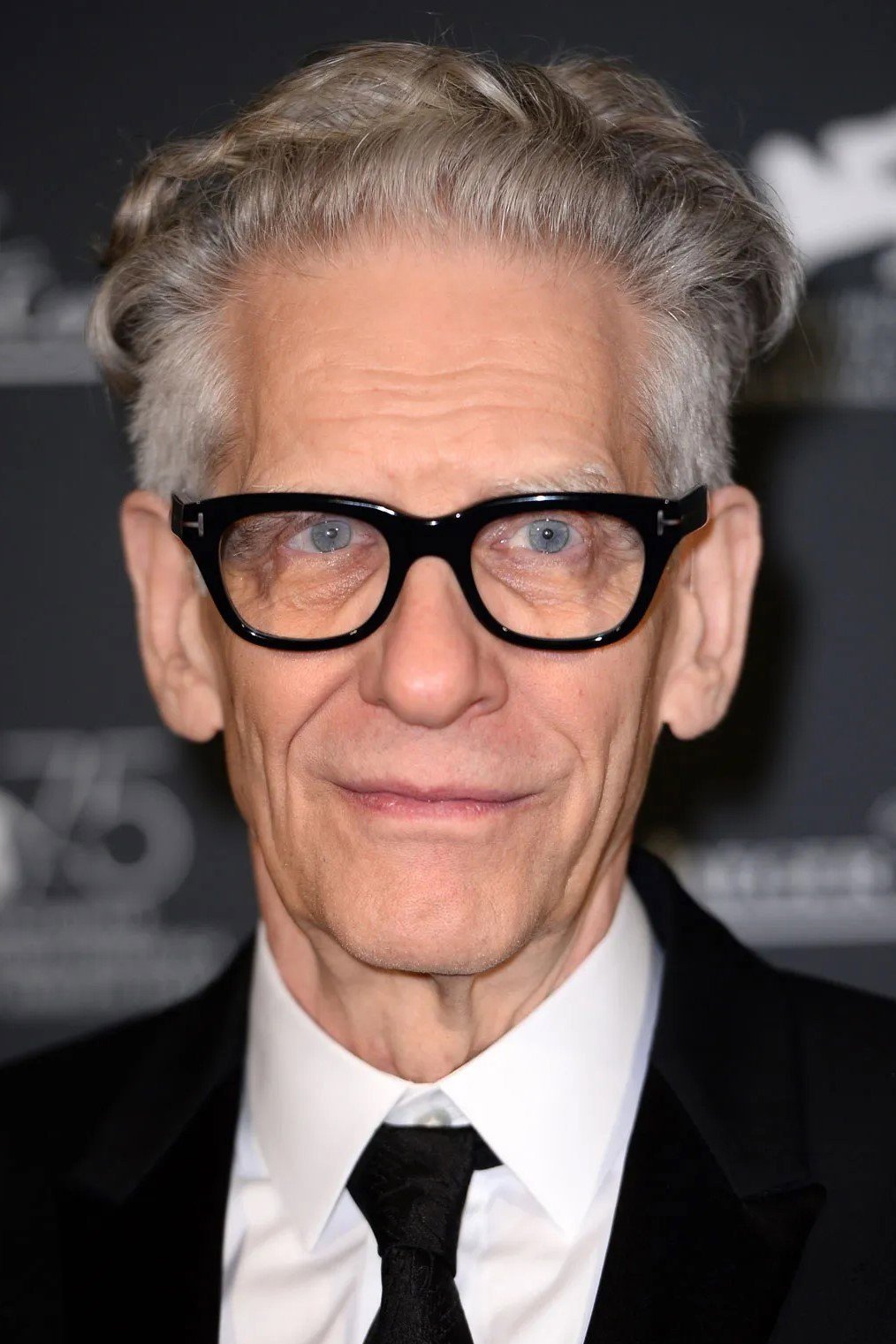
David Cronenberg (born 1943) is the Canadian director of The Fly, Videodrome and Scanners, and the filmmaker most associated with body horror.
Quick Specs
| Born | March 15, 1943, Toronto, Ontario, Canada (as David Paul Cronenberg) |
| Age | 83 |
| Education | University of Toronto, science then English literature, BA 1967 |
| Breakthrough | Shivers (1975) |
| Key horror films | Shivers (1975); Rabid (1977); The Brood (1979); Scanners (1981); Videodrome (1983); The Dead Zone (1983); The Fly (1986); Dead Ringers (1988) |
| Later films | Crash (1996); eXistenZ (1999); A History of Violence (2005); Eastern Promises (2007); Crimes of the Future (2022); The Shrouds (2024) |
| As actor | Dr. Philip K. Decker in Nightbreed (1990); Dr. Wimmer in Jason X (2001); Kovich in Star Trek: Discovery |
| Honours | Canada’s Walk of Fame and the Governor General’s Performing Arts Award (1999); Silver Bear, Berlin (1999); Officer of the Order of Canada (2002), Companion (2014); Carrosse d’Or, Cannes (2006); Légion d’honneur (2009) |
| Cannes | Special Jury Prize for Crash (1996); seven films in competition for the Palme d’Or |
| Family | Married Margaret Hindson (1972 to 1979), daughter Cassandra; married Carolyn Zeifman (1979 until her death in 2017), children Caitlin and Brandon; sister Denise Cronenberg, his costume designer |
Who He Is
David Paul Cronenberg was born on March 15, 1943, in Toronto, Ontario. He is 83, and his story is told in the present tense.
He grew up in a literary and musical household. His father, Milton Cronenberg, was a writer and editor, and his mother, Esther Cronenberg, was a pianist. That household is behind the double helix of his career, literature and biology wound together.
At the University of Toronto he enrolled in science in 1963, switched to English literature after a year, and graduated with a BA in 1967. The science year was not a detour. Biology, and insects especially, remained his imaginative home ground.
He married Margaret Hindson in 1972, and they divorced in 1979; their daughter is Cassandra. In 1979 he married the film editor Carolyn Zeifman. She died in 2017. Their children are Caitlin and Brandon.
His films are a family firm, and the credits need to stay straight. His sister, Denise Cronenberg (1938 to 2020), designed the costumes for most of his films. His son, Brandon Cronenberg, is a director in his own right, of Possessor and Infinity Pool, and those are Brandon’s films, not David’s. His daughter Caitlin is a photographer and director. His eldest, Cassandra, worked as an assistant director on his films. The name, for the record, is spelled Cronenberg.
The honours, in order, run like this:
- 1999: Canada’s Walk of Fame; the Governor General’s Performing Arts Award, Canada’s highest performing-arts honour; and the Silver Bear at the 49th Berlin International Film Festival, for the artistic contribution of eXistenZ.
- 2002: Officer of the Order of Canada, promoted in 2014 to Companion, the order’s highest rank.
- 2006: the Carrosse d’Or, the lifetime-achievement honour presented at Cannes.
- 2009: the Légion d’honneur from France.
He is not “Sir” David, and he has never been knighted. Canadian orders confer no knighthood and no title. Seven of his films have competed for the Palme d’Or at Cannes, the most recent The Shrouds (2024).
The Work, and What He Did in It
The underground features came first, from 1966 to 1970. After the shorts Transfer (1966) and From the Drain (1967), he made two hour-long experimental features, Stereo (1969) and Crimes of the Future (1970), about telepathy, mutation and sexual plague, shot in Toronto with a self-assembled crew. Before anyone was watching, he worked out the entire thematic kit at feature length, twice: the body as experiment, and science as both eros and rot.
Shivers (1975) was the breakthrough, and the scandal. A parasite turns the residents of a Montreal apartment tower into sex-maddened attackers. It was made with Canadian Film Development Corporation money, which produced Robert Fulford’s famous denunciation in Saturday Night: “You Should Know How Bad This Film Is. After All, You Paid For It.” The film, also known as They Came from Within, made his name internationally precisely through the outrage. The funding scandal belongs to the record of Canadian cinema history, not just to the reviews.
Rabid (1977) starred Marilyn Chambers, cast from the adult-film world in a deliberate piece of provocation, as a woman whose experimental surgery leaves her with a thirst for blood. The Brood (1979) is about a mother whose rage is externalised as murderous children. Cronenberg has repeatedly connected it to his own divorce and custody fight over his daughter. That connection is his own framing, in interview after interview.
Scanners (1981) was the international breakthrough. Telepaths go to war, and the exploding-head sequence, effects work by the makeup master Dick Smith, became one of the era’s defining gore images. It was his first genuine international commercial success, and it brought Genie nominations for his direction and screenplay.
Videodrome (1983) stars James Woods as a cable programmer devoured by a signal that grows tumours and hallucinations: “long live the new flesh.” It was a commercial disappointment on release, and it is treated now as prophecy. Both halves are true. It flopped then, and it is canonical now.
The Dead Zone (1983) was his Stephen King adaptation, with Christopher Walken as Johnny Smith. It is the most classical, controlled film of his early career, and the proof that he could direct another writer’s material at full strength.
The Fly (1986) is the masterpiece and the hit. It is a remake of the 1958 film, re-engineered from Charles Edward Pogue’s script. Cronenberg rewrote it extensively and insisted that Pogue keep his credit. He turned a monster remake into a love story that rots. Seth Brundle’s transformation plays as disease, addiction and ageing at once, built on Jeff Goldblum’s performance under Chris Walas’s makeup. The film won the Academy Award for Best Makeup, for Chris Walas and Stephan Dupuis. That Oscar is theirs, not Cronenberg’s, and it is the only Oscar any of his films has won. The Fly also became, by a wide margin, his biggest commercial success, at about $40 million in North America alone. He appears in it himself, as a gynecologist.
The film’s famous line has a precise history. The Fly was produced by Mel Brooks’s company, Brooksfilms, and Brooks kept his own name off its public face for fear audiences would expect a comedy. In a story discussion, Brooks reacted to a “Don’t be afraid” moment with “Yes, be afraid, be very afraid.” Cronenberg put it in the script, Geena Davis’s character speaks it, and it became the tagline. In Cronenberg’s own telling: “He wasn’t really giving me dialogue, he was just reacting. And I said, ’Yeah, I’m going to put that in the script.’ So let’s say it was a collaboration. But yes, it was Mel who came up with that.” Brooks coined it, Cronenberg adopted it, and Davis delivered it.
Dead Ringers (1988) stars Jeremy Irons as the twin gynecologists Beverly and Elliot Mantle, one actor in two performances. The critical record treats it as the summit of his classical period, and it brought him the Genie for direction.
The nineties were a decade of adaptation:
- Naked Lunch (1991): William Burroughs, braided with Burroughs’s own life, which brought another Genie in 1992.
- M. Butterfly (1993).
- Crash (1996): J.G. Ballard’s car-crash erotics, and a Cannes fight.
- eXistenZ (1999): the organic game-pod film, which won the Berlin Silver Bear.
Crash did not win the Palme d’Or. At Cannes in 1996 it received a specially created Special Jury Prize, given, in the jury’s own words, “for originality, for daring, and for audacity.” It is a separate award from both the Palme d’Or and the regular Jury Prize, created at that jury’s request. In Cronenberg’s telling, the jury president, Francis Ford Coppola, opposed giving the film the Palme, and supportive jurors engineered the special prize instead.
Spider (2002), with Ralph Fiennes, closed the first phase. Then came four films with Viggo Mortensen:
- A History of Violence (2005): Oscar nominations for Josh Olson’s adapted screenplay and for William Hurt’s supporting performance.
- Eastern Promises (2007): an Oscar nomination for Mortensen himself.
- A Dangerous Method (2011).
- Crimes of the Future (2022), which completed the reunion.
Cosmopolis (2012), from Don DeLillo, and Maps to the Stars (2014), a Hollywood satire, were followed by eight years without a feature. In that time he wrote and acted, and he lost Carolyn.
Crimes of the Future (2022) was the return to body horror, and it is not a remake of his 1970 film of the same title. Same director, same title, new film. Mortensen plays a performance artist who grows new organs for surgical theatre, with Léa Seydoux and Kristen Stewart. It premiered in competition at Cannes, when he was 79.
The Shrouds (2024) stars Vincent Cassel as a widower who builds GraveTech, shrouds that let the bereaved watch their dead decompose. Cronenberg wrote it out of his grief for his wife, Carolyn Zeifman, who died of cancer in 2017. He brought it to Cannes competition at 81, his seventh selection there.
He also has another career, as an actor, mostly in other people’s horror:
- Dr. Philip K. Decker in Clive Barker’s Nightbreed (1990): the psychiatrist who is himself the masked serial killer, his largest role and the film’s human villain.
- Dr. Wimmer in Jason X (2001): the scientist researching Jason’s regeneration, killed early. In the screenwriter Todd Farmer’s telling, the condition attached to the production was “you have to cast me,” meaning Cronenberg.
- Cameos as the gynecologist in The Fly and the obstetrician in Dead Ringers.
- Father Rousell in Resurrection (1999).
- Kovich in Star Trek: Discovery.
He also directed an episode of Friday the 13th: The Series, “Faith Healer,” in 1988. It is a horror-television directing credit that most accounts miss.
In 2014 he published a novel, Consumed.
Cool Verified Facts
- Crash won a specially created Special Jury Prize at Cannes, not the Palme d’Or.
- He is a Companion of the Order of Canada, its highest rank, and he has never been knighted.
- “Be afraid. Be very afraid.” was Mel Brooks’s line, adopted by Cronenberg and spoken by Geena Davis.
- The Fly’s Oscar, for makeup, went to Chris Walas and Stephan Dupuis.
- The Fly took about $40 million in North America, his biggest hit by a wide margin.
- Crimes of the Future (2022) is a new film, not a remake of his Crimes of the Future (1970).
- His sister Denise designed the costumes for most of his films.
- He plays the masked killer’s alter ego, Dr. Decker, in Nightbreed.
- Shivers drew the headline “You Should Know How Bad This Film Is. After All, You Paid For It.”
- Seven of his films have competed for the Palme d’Or.
Signatures, Habits and Behind the Scenes
He did not coin the term “body horror.” The label for the cinema of bodily transformation and violation was coined in criticism, credited to the critic Philip Brophy’s 1983 writing, and attached to Cronenberg’s films afterwards. Cronenberg himself has a famously ambivalent relationship with it. He is the director most associated with it, which is a different thing.
“The new flesh” is a thesis, not a brand. Across Shivers, Scanners, Videodrome and The Fly the signature is constant: the body changes first, and the soul must catch up. Disease, technology and desire are the same event in three costumes. That is the critical consensus on the work.
The surface is clinical. His films are shot and performed with deliberate coolness. The horror is in the proposition, not the temperature, and critics contrast the style with expressionist horror. The Village Voice called him “the most audacious and challenging narrative director in the English-speaking world.”
He made Toronto his life’s base. Unlike the generation of Canadian directors who left for Hollywood, he stayed. The films are Toronto-made, the crew is a family firm, and the independence is structural. It explains the creative control his filmography shows.
He has an actor’s deadpan. His Decker works because the director of Videodrome plays a monster in a suit and tie with boardroom calm. The acting career is a real second filmography, not a string of cameos.
Why He Matters
No living director has given the genre more of its modern vocabulary. The exploding head in Scanners, the stomach slot in Videodrome, Brundlefly’s decay and the surgical dread of Dead Ringers all come from him. Body horror is now the dominant dialect of twenty-first-century horror, down to his son Brandon’s Possessor, and its grammar was written in Toronto between 1975 and 1988. He is also a horror actor of record, the director other directors cast when they need evil to wear a suit.
The institutional record tells a story of its own. There are seven Cannes competition selections, the Crash prize fight, the Carrosse d’Or and the highest rank of the Order of Canada. Canada treated him as a national artist while America treated him as a cult one, and that contrast is the geography of the career.
The late proof is still arriving. At 79 he returned with Crimes of the Future. At 81 he brought The Shrouds, a film about watching the beloved dead decay, made from his own widowhood, to Cannes competition. The body-horror career has closed its own circle: the last subject of his cinema of the body is his own grief.