
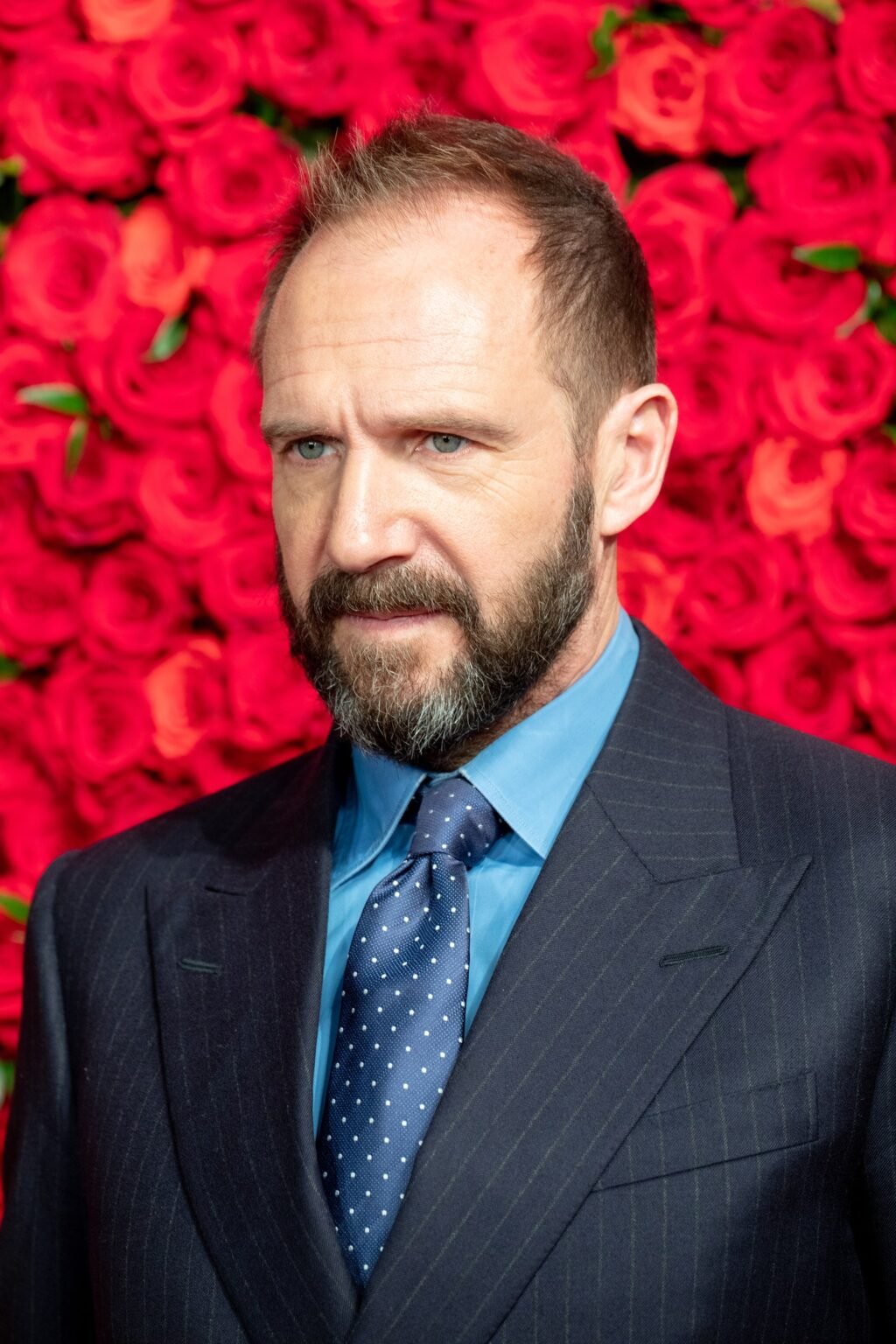
Ralph Fiennes (born 1962) is the English actor who played Lord Voldemort, Chef Slowik in The Menu and Dr Kelson in 28 Years Later.
Quick Specs
| Born | December 22, 1962, Ipswich, Suffolk, England (as Ralph Nathaniel Twisleton-Wykeham-Fiennes); first name pronounced “Rafe” |
| Training | Royal Academy of Dramatic Art (1983 to 1985), after studying painting at Chelsea College of Art |
| Horror | Francis Dolarhyde in Red Dragon (2002); Lord Voldemort in four Harry Potter films (2005 to 2011); Chef Julian Slowik in The Menu (2022); Dr Ian Kelson in 28 Years Later (2025) and 28 Years Later: The Bone Temple (2026) |
| Signature roles | Amon Göth in Schindler’s List (1993); Count László Almásy in The English Patient (1996); Gareth Mallory / M in the Bond films (2012 to 2021); M. Gustave in The Grand Budapest Hotel (2014); Cardinal Thomas Lawrence in Conclave (2024) |
| Director | Coriolanus (2011, also title role), The Invisible Woman (2013), The White Crow (2018) |
| Honours | three Academy Award nominations; BAFTA for Schindler’s List; Tony Award for Hamlet (1995) |
| Announced | President Coriolanus Snow in The Hunger Games: Sunrise on the Reaping (scheduled November 20, 2026) |
Who He Is
Ralph Nathaniel Twisleton-Wykeham-Fiennes was born on December 22, 1962, in Ipswich, Suffolk. His first name is pronounced “Rafe” and his surname rhymes with “fines.” He is the eldest of six children of Mark Fiennes (1933 to 2004), a farmer and photographer, and Jennifer Lash (1938 to 1993), a writer. His siblings are the actor Joseph Fiennes, the director Martha Fiennes, the composer Magnus Fiennes, the filmmaker Sophie Fiennes and the conservationist Jacob Fiennes, and the family also raised a foster brother, the archaeologist Michael Emery. The family’s ancestry is English, Irish and Scottish, and the surname is Norman in origin.
Joseph, born in 1970, is a separate actor with a separate career. Shakespeare in Love and Elizabeth (both 1998) are his films, not Ralph’s. Ralph did act for his sister Martha, playing the title role in her Onegin (1999).
In 1973 the family moved to Ireland, living in West Cork and County Kilkenny. He went to St Kieran’s College and then Newtown School, a Quaker school in County Waterford, before the family settled in Salisbury, where he finished at Bishop Wordsworth’s School. He studied painting at Chelsea College of Art before deciding he wanted to act, then trained at the Royal Academy of Dramatic Art from 1983 to 1985. He began at the Open Air Theatre in Regent’s Park and the National Theatre and made his name at the Royal Shakespeare Company. In 1995 he played Hamlet on Broadway and won the Tony Award for Best Leading Actor in a Play; he was nominated again for Brian Friel’s Faith Healer in 2006. He has been an ambassador for UNICEF UK since 1999. He was married to the actress Alex Kingston from 1993 to 1997.
The Work, and What He Did in It
He arrived on film fully formed. His debut, at 29, was Heathcliff opposite Juliette Binoche’s Catherine in Emily Brontë’s Wuthering Heights (1992), with no bit-part apprenticeship before it, followed by The Baby of Mâcon (1993).
Schindler’s List (1993) made him. For Steven Spielberg he plays Amon Göth, the SS commandant of the Płaszów camp, opposite Liam Neeson’s Oskar Schindler. Fiennes played Göth as banal, drunken and arbitrary: a man who shoots prisoners from his balcony as part of his morning routine, then preens, hesitates and spares a life on a whim. The horror of the performance is that the evil is administrative and moody rather than operatic. The film opened in the US on December 15, 1993, a week before his 31st birthday, so he was 30. He was nominated for the Academy Award for Best Supporting Actor and won the BAFTA in the same category; the Oscar went to Tommy Lee Jones for The Fugitive. The film won Best Picture and grossed $322.2 million worldwide.
The next roles announced his range. In Robert Redford’s Quiz Show (1994) he is Charles Van Doren, the patrician contestant at the centre of the rigged-quiz scandal. In Anthony Minghella’s The English Patient (1996) he plays Count László Almásy, the Hungarian cartographer burned beyond recognition in a plane crash, who tells his story in flashback from an Italian villa. He was 33, turning 34 that December, and was nominated for the Academy Award for Best Actor. The film won Best Picture and grossed $232.0 million. A monster and a romantic lead, three years apart, both Oscar-nominated.
His most important horror performance before Voldemort is Red Dragon (2002), Brett Ratner’s Hannibal Lecter prequel, opposite Edward Norton’s Will Graham and Anthony Hopkins’s Lecter. Fiennes plays Francis Dolarhyde, the serial killer the press calls the Tooth Fairy, who believes he is becoming the Great Red Dragon of the William Blake paintings tattooed across his back, and who becomes the would-be lover of a blind woman (Emily Watson). He played the killer as a damaged, body-obsessed man at war with his own alter ego, the most sympathetic monster in the Lecter films. He was 39. Around it came the obsessive lover Maurice Bendrix in The End of the Affair (1999), the romantic-comedy lead opposite Jennifer Lopez in Maid in Manhattan (2002), and the widowed diplomat Justin Quayle in Fernando Meirelles’s The Constant Gardener (2005). His voice was cast again and again as patrician authority or villainy: Rameses in The Prince of Egypt (1998), Lord Victor Quartermaine in Wallace & Gromit: The Curse of the Were-Rabbit (2005) and, later, Alfred in The Lego Batman Movie (2017).
He was not the first Voldemort on screen, and the record is exact. In Harry Potter and the Philosopher’s Stone (2001) the face on the back of Professor Quirrell’s head is a digital creation with Ian Hart, who played Quirrell, providing its voice and facial source, and Richard Bremmer plays Voldemort, face unseen, in the flashback. In Chamber of Secrets (2002) the young Tom Riddle is Christian Coulson, and Voldemort does not appear in Prisoner of Azkaban (2004). Fiennes’s first appearance is Harry Potter and the Goblet of Fire (2005), directed by Mike Newell. In the Little Hangleton graveyard Voldemort is reborn into a full body, robed, noseless and serpentine, duels the captured Harry and is thwarted when their wands connect. After an entrance deferred across three films and three earlier performers, Fiennes played it as cold aristocratic fury rather than cackling: the whisper, the sudden rage, the almost courtly movements. The film opened in November 2005, a month before his 43rd birthday, so he was 42. It grossed about $897 million worldwide.
He played Voldemort in four films in all. After Goblet of Fire came Order of the Phoenix (2007), with its duel against Dumbledore at the Ministry of Magic, and then Deathly Hallows: Part 1 (2010) and Part 2 (2011), the war for Hogwarts and Voldemort’s death; the last grossed about $1.34 billion. He does not appear in Half-Blood Prince (2009), whose young Riddles are Frank Dillane and, at 11, Hero Fiennes Tiffin, Ralph’s nephew, the son of his sister Martha. Uncle and nephew played the same character at different ages in the same series.
Coriolanus (2011) was his directorial debut, and he also played the title role, Caius Martius Coriolanus, which he had played on stage in 2000. He staged Shakespeare’s tragedy in modern dress and shot it as a contemporary war film, with Vanessa Redgrave’s Volumnia as its second pillar and Gerard Butler and Jessica Chastain in the cast. He was 48. It was the stage career’s fulfilment rather than a star’s vanity project, and he went on to direct The Invisible Woman (2013), in which he played Dickens, and The White Crow (2018).
A second franchise followed. In Skyfall (2012) he plays Gareth Mallory, chairman of the Intelligence and Security Committee, who succeeds Judi Dench’s M only at the film’s end. He was 49 at its release, turning 50 that December, and he played M through Spectre (2015) and No Time to Die (2021). Wes Anderson’s The Grand Budapest Hotel (2014) gave him his great non-villain role of the period: M. Gustave, the legendary concierge, a precision-engineered comic performance of manners, panic and loyalty that proved the menace elsewhere is a choice, not a limitation. The film grossed $172.9 million. Around these years came the foul-mouthed crime boss Harry Waters in In Bruges (2008), The Reader (2008), a small role as a contractor team leader in The Hurt Locker (2009), A Bigger Splash (2015), Hail, Caesar! (2016) and the Duke of Oxford in The King’s Man (2021).
The Menu (2022) brought him back to horror. In Mark Mylod’s film he plays Julian Slowik, the celebrated chef of Hawthorne, an exclusive island restaurant, whose tasting menu for twelve wealthy guests is designed course by course as an act of revenge that ends in murder and fire. Fiennes plays Slowik almost entirely in a level, courteous, quietly devastated register: a chef who has concluded that the rich have ruined the art that made him, serving a menu that escalates from humiliation to murder, with Anya Taylor-Joy’s Margot, the one uninvited guest, as his only honest interlocutor, and Nicholas Hoult’s worshipful foodie Tyler as the diner who brought her. It is a horror-thriller as much as a satire. He was 59, turning 60 that December, and the performance brought a Golden Globe nomination for Best Actor in a Comedy or Musical. The film scored 88 percent on Rotten Tomatoes and grossed about $79 million worldwide against a reported $30 million budget.
He then played Odysseus opposite Binoche’s Penelope in Uberto Pasolini’s The Return (2024), and in Edward Berger’s Conclave (2024) he is Cardinal Thomas Lawrence, Dean of the College of Cardinals, who must run the election of a new pope while investigating the dead pope’s secrets. He was 61 at release, and the role brought his third Academy Award nomination, for Best Actor, his first in twenty-eight years. He has three nominations and no wins.
28 Years Later (2025) took him into the zombie apocalypse. Danny Boyle directed and Alex Garland wrote the return to the Rage-virus series, twenty-three years after 28 Days Later. Fiennes plays Dr Ian Kelson, a shaven-headed survivor covered in iodine who has built an ossuary, a memorial of bones, to the dead, and who shelters young Spike at the story’s turn. He was 62. In his interviews for the film, Fiennes described Kelson as “above all, a survivor” living with death’s presence, a “memento mori,” and as “a rather clergy-like figure and a humanist,” and he has said the shaved head and iodine-orange skin were worked out with the design team as Kelson’s protective ritual. Kelson is not the villain; he is the film’s moral centre.
He returned as a lead in 28 Years Later: The Bone Temple (2026), directed by Nia DaCosta from Garland’s script and shot back-to-back with its predecessor. Kelson forms an unexpected connection with Samson, an Alpha Infected, while Spike is drawn into the cult of Jack O’Connell’s Jimmy Crystal. It opened in Britain on January 13, 2026, and in the US on January 16, three weeks after his 63rd birthday. The film’s record is split: it was the best-reviewed entry in the series, but it took $58.5 million worldwide against a $63 million budget.
Next, by announced casting, he is President Coriolanus Snow in Francis Lawrence’s The Hunger Games: Sunrise on the Reaping, scheduled for November 20, 2026, playing the middle-aged Snow between Tom Blyth’s young version and Donald Sutherland’s original. He told The Hollywood Reporter he would not imitate Sutherland, of whom he is a fan.
Cool Verified Facts
- His first name is pronounced “Rafe.”
- He studied painting at Chelsea College of Art before he trained as an actor.
- He won a Tony for playing Hamlet on Broadway in 1995.
- He was 30, not 31, when Schindler’s List opened, because of his December birthday.
- He did not play Voldemort until the fourth Harry Potter film.
- His nephew, Hero Fiennes Tiffin, played the young Tom Riddle.
- His Voldemort’s nose was removed digitally, frame by frame.
- Coriolanus, his directorial debut, came eleven years after he played the role on stage.
Signatures, Habits and Behind the Scenes
Voldemort’s face was a two-hour makeup and a missing nose. The makeup artist Mark Coulier has said the team took a head cast of Fiennes and designed a transformation that could be done in about two hours, because the child actors’ restricted working hours squeezed the schedule. The look combined pale makeup, eyebrow blockers, vein “tattoo transfers” on the head, teeth and nails, while the nose was erased digitally, frame by frame, using tracking markers worn on set. A real actor’s face, barely prostheticised, with one feature taken away, is why his Voldemort reads as a performance rather than a creature suit.
He nearly turned it down. Fiennes has often said he was dismissive of the offer at first, not having read the books, until his sister Martha, whose children were devotees, told him he had to understand what he was being offered.
The stillness is the signature. Across Göth, Dolarhyde, Voldemort, Slowik and Kelson the performances share a method reviewers keep naming: power expressed at low volume, in courtesy and in ritual, from Göth’s whims to Slowik’s presentation of each course to Kelson’s tending of the bones. Shakespeare is the frame around all of it, from RADA, the National and the RSC to Hamlet on Broadway and Coriolanus on stage and on film; he has never left the theatre for Hollywood. There is no verified record of a difficult set.
Why He Matters
For horror, Ralph Fiennes is the genre’s most decorated modern villain, across four decades and four modes. Göth is historical horror played as bureaucracy; Dolarhyde is the serial killer as wounded romantic; Voldemort is dark fantasy played as aristocratic theology; Slowik is the horror of service and class, plated. Kelson completes the arc by turning it inside out: horror’s survivor-priest, played by the man audiences spent thirty years watching be the monster.
He is also the bridge between the classical stage and the franchise era. His RSC training and his Hamlet Tony are not decoration on a film career but its technique: voice, stillness and textual precision that made a noseless dark lord and a soft-spoken chef more frightening than volume could. When the biggest franchises in the world needed authority, they hired the Shakespearean, as Voldemort, then M, and now, by announced casting, Snow.
And the late record is a second peak: The Menu at 59, the Conclave nomination at 62 and the Kelson films at 62 and 63, a horror centrepiece, an awards return and a franchise lead in four years.