
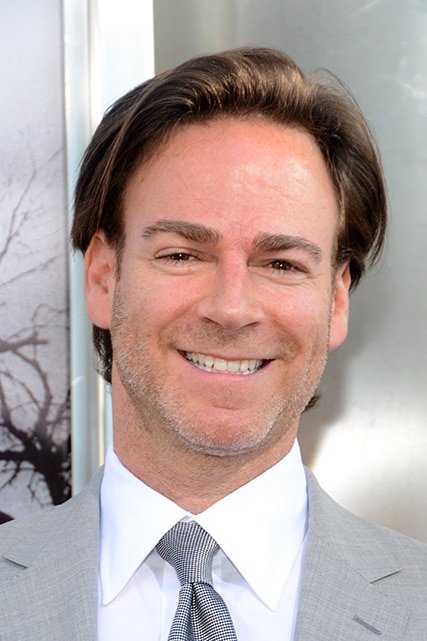
Peter Safran is the British-American producer who produced The Conjuring films and co-runs DC Studios with James Gunn.
Quick Specs
| Education | Princeton University; J.D., New York University School of Law |
| Early career | Talent manager at Gold-Miller Co and Brillstein-Grey (president of Brillstein-Grey Management from 2003) |
| Company | Founder of The Safran Company (2006) |
| Horror (as producer, with James Wan from Annabelle on) | The Conjuring (2013); Annabelle (2014); The Conjuring 2 (2016); Annabelle: Creation (2017); The Nun (2018); Annabelle Comes Home (2019); The Conjuring: The Devil Made Me Do It (2021); The Nun II (2023); The Conjuring: Last Rites (2025) |
| Other horror and thrillers | Buried (2010, producer); The Atticus Institute (2015, producer); The Monkey (2025, executive producer only) |
| Superhero films (as producer) | Aquaman (2018); Shazam! (2019); The Suicide Squad (2021); Shazam! Fury of the Gods (2023); Aquaman and the Lost Kingdom (2023); Superman (2025) |
| Executive role | Co-chairman and co-CEO of DC Studios with James Gunn, from November 1, 2022 |
Who He Is
Peter Safran is a British-American film producer, studio executive and former talent manager. The firmest part of his early record is his education: an undergraduate degree from Princeton University and a law degree, a J.D., from New York University School of Law. Reference biographies say he worked as a corporate attorney in New York before becoming an assistant at the talent agency UTA in Los Angeles.
He made his name as a manager. He worked at Gold-Miller Co until 1998 and then at Brillstein-Grey, and in 2003 he was named president of Brillstein-Grey Management, running a department of more than 200 clients that included Brad Pitt, Jennifer Aniston, Adam Sandler, Nicolas Cage and Courteney Cox. Among the people he managed over the years were Sean Combs, Adam Shankman, David Hyde Pierce, Jennifer Lopez and Brooke Shields. James Gunn was a Safran management client too, long before the two of them were producer and director, and longer still before they ran a studio together.
In early 2006 he left Brillstein-Grey to form his own company, The Safran Company, and clients went with him, among them Sean Combs, David Hyde Pierce and Brooke Shields. His brother, Tad Safran, wrote The Long Weekend (2005), on which Peter was an executive producer. He is married.
The Work, and What He Did in It
His credits come in three tiers, and they need keeping apart: producer, executive producer, and co-executive producer. He was a co-executive producer on Senseless (1998) and on The Specials (2000), an early James Gunn project that Gunn wrote and starred in, and an executive producer on Scary Movie (2000), My Baby’s Daddy (2004), Connie and Carla (2004), The Long Weekend (2005) and My Life in Ruins (2009). He was not the producer of any of them.
Under his own banner he became a high-volume producer of comedy and parody. He produced Meet the Spartans (2008), Over Her Dead Body (2008), Disaster Movie (2008), New in Town (2009), Vampires Suck (2010) and The Starving Games (2013). That is the producer who existed before The Conjuring, and his career was not horror-born.
Buried (2010) was the bridge. Safran bought Chris Sparling’s screenplay and produced the film, the Ryan Reynolds thriller set inside a coffin, which premiered at Sundance in 2010. Other producing credits in the same span include Elephant White (2011), Vehicle 19 (2013), Hours (2013), The Atticus Institute (2015), The Choice (2016), The Belko Experiment (2016), written by James Gunn, and Flatliners (2017), with Wolves at the Door (2016), Within (2016) and The Crucifixion (2017) in his horror lane. Later he produced I Want You Back (2022) and Heads of State (2025), and he was an executive producer on Dark Places (2015) and Valley of the Gods (2019).
The Conjuring Universe is the horror centrepiece. On every film in it Safran’s credit is producer, not executive producer, and from Annabelle onward his producing partner is James Wan of Atomic Monster, alongside The Safran Company and New Line.
The Conjuring (2013) began with a partnership. Safran allied himself with Tony DeRosa-Grund, who had spent years trying to set up the Warrens and the Perron family case, and Rob Cowan was the third producer. Chad Hayes and Carey W. Hayes were brought in to refine the script, and they moved its point of view from the Perron family to Ed and Lorraine Warren. In Safran’s own account he had been actively looking for a supernatural thriller, was drawn to the Perron case as a story about a father protecting his family, identified the Hayes brothers, developed the pitch with them and took it out: “every place we pitched it to bid on it. We wound up with… New Line Cinema.” James Wan directed. The film opened on July 19, 2013, cost $20 million and made about $319 million worldwide.
The universe grew from there, and Safran produced each film:
- Annabelle (2014), directed by John R. Leonetti and written by Gary Dauberman. Warner Bros. and New Line’s own notes put it plainly: “James Wan, director of the global hit, produced Annabelle with Peter Safran,” with the executive producers listed separately. It cost $6.5 million and made $256.9 million worldwide.
- The Conjuring 2 (2016), produced with Rob Cowan and Wan, and directed by Wan: $40 million budget, $321.4 million worldwide.
- Annabelle: Creation (2017), directed by David F. Sandberg: $15 million budget, $306.6 million worldwide.
- The Nun (2018), directed by Corin Hardy, the spin-off about the demon Valak from The Conjuring 2: $22 million budget, $366.1 million worldwide, at the time the franchise’s biggest film.
- Annabelle Comes Home (2019), Gary Dauberman’s directing debut: $27 million budget, $231.3 million worldwide.
- The Conjuring: The Devil Made Me Do It (2021), directed by Michael Chaves: a reported $40 million budget, $206.4 million worldwide.
- The Nun II (2023), directed by Chaves: $38 million budget, $269.7 million worldwide.
- The Conjuring: Last Rites (2025), directed by Chaves and billed as the Warrens’ final case: $55 million budget, $499.3 million worldwide, the highest-grossing film in the series.
He did not produce The Curse of La Llorona (2019). James Wan produced it, and it is often shelved with the universe, but Safran is not among its producers. And on Osgood Perkins’s The Monkey (2025) he was an executive producer only.
By the universe’s tenth anniversary, in 2023, Safran was himself putting its total “past $2 billion” in interviews. Across the nine films the budgets ran from $6.5 million to $55 million, against worldwide returns of roughly $200 million to $500 million each.
The same approach took him to DC. He produced Aquaman (2018), with Wan directing and Jason Momoa in the lead; it cost $160 million and made $1,152,028,393 worldwide, the highest-grossing film of the DC Extended Universe. He produced Shazam! (2019), directed by David F. Sandberg, the Annabelle: Creation director carried over from the Conjuring stable; it cost $90 million to $100 million and made $367.8 million worldwide. He produced Gunn’s The Suicide Squad (2021), which cost $185 million and made $168.7 million worldwide in a pandemic year when it was released in theatres and on HBO Max on the same day, and he was an executive producer of the television spin-off Peacemaker (2022 to 2025). Shazam! Fury of the Gods (2023) made $133.4 million worldwide, against the first film’s $367.8 million. Aquaman and the Lost Kingdom (2023), again directed by Wan, was the final DCEU film, released after Safran had already moved to DC Studios.
On October 25, 2022, Warner Bros. Discovery announced that James Gunn and Peter Safran would become co-chairmen and co-CEOs of DC Studios, the new division replacing DC Films, overseeing film, television and animation and reporting to David Zaslav, effective November 1, 2022. The division of labour was set from day one: Gunn on the creative side, Safran on the business and production side. Both were expected to keep making individual projects. Safran then produced Gunn’s Superman (2025), the first film of the new DC Universe under their stewardship: a former manager producing his former client’s film, as the two ran the studio together. Later corporate reporting lists both as continuing as co-chairmen.
Cool Verified Facts
- He was James Gunn’s manager before he was his producer, and his producer before he was his co-CEO.
- He produced all nine Conjuring Universe films from The Conjuring to Last Rites, but not The Curse of La Llorona.
- Annabelle was not in the original Conjuring script; Safran credits James Wan with adding her.
- He had the Conjuring 2 set blessed by a Catholic priest.
- The Conjuring: Last Rites is the series’ biggest earner, at $499.3 million worldwide.
- Before The Conjuring he produced Meet the Spartans, Disaster Movie and Vampires Suck.
- At DC Studios, Gunn took the creative side and Safran the business and production side.
- The Nun was, when it came out in 2018, the franchise’s highest-grossing film.
- David F. Sandberg went from directing Annabelle: Creation for him to directing Shazam!
Signatures, Habits and Behind the Scenes
His doctrine for building a universe is to make one good film first. “The idea always, right from the get-go, was to create a universe,” he said in 2017, “but you don’t go out and tout that as being the goal. You start off by just making one good movie,” adding that using the Warrens’ life rights and access to their cases “would be a really good starting point.”
He credits directors for what they bring. “It was actually James Wan who suggested putting Annabelle into the opening of the original Conjuring,” he has said. “It was not in the script when he came on board as director.” The doll became the franchise’s most valuable asset, and Safran gives it to Wan. “James Wan, he was our first choice to direct,” he said. “We sent him the screenplay, and he came onboard and elevated the film to what it became.” Of the famous hide-and-clap sequence: “It came from James… He just thought it was super creepy.” He describes the house style as a “character driven super scary movie, without relying on a lot of jump scares… It’s not violent, bloody, gory.”
The priest was his idea. James Wan has said of The Conjuring 2: “We had the set blessed by a Catholic priest… It was Peter’s idea to bring a priest in early on. It worked well. That’s why we didn’t have any ghostly experience.”
He started as a sceptic. Safran has said he “brought a pretty healthy dose of skepticism into it initially,” but that after three years with the Warren material, and time with Lorraine Warren, he was “definitely a believer at this point.” Safran tells the story that Vera Farmiga found three deep scratches on her laptop screen the morning after reading the script.
The father angle is why he bought in. “I was a relatively young father at the time and this notion really resonated with me,” he said of the Perron case, a story about what a father would do to protect his family. He also cites a childhood love of The Exorcist, The Omen and The Haunting.
His method is a web of repeat collaborators. Wan runs through the whole universe and Aquaman. Sandberg went from Annabelle: Creation to Shazam! Dauberman went from writer to director under him. Gunn went from management client to The Specials, The Belko Experiment, The Suicide Squad and Peacemaker, and then to the office next door at DC.
Why He Matters
For horror, Peter Safran is the producer-steward of the Conjuring Universe. As the full producer, with Wan, on all nine films from The Conjuring in 2013 to Last Rites in 2025, he is one of the two constant names across one of the most lucrative series in the genre, built on the unfashionable discipline of modest budgets against very large returns. The horror producer as the architect of a franchise, not the backer of one-off gambles, is in large part his and Wan’s invention at studio scale.
The playbook travelled. Trust a horror director, protect the tone, spend below the genre’s ceiling: the same approach produced Aquaman’s $1.15 billion and the Shazam! films out of the Conjuring director pipeline. Warner Bros. Discovery split the DC job between Gunn’s creative side and Safran’s business and production side, which is the industry’s own verdict on what he is for.
His career is the modern version of the manager who becomes an owner: law degree, agency assistant, head of a 200-client management department, his own company, a volume comedy producer, a franchise producer, and finally co-CEO of a studio.