
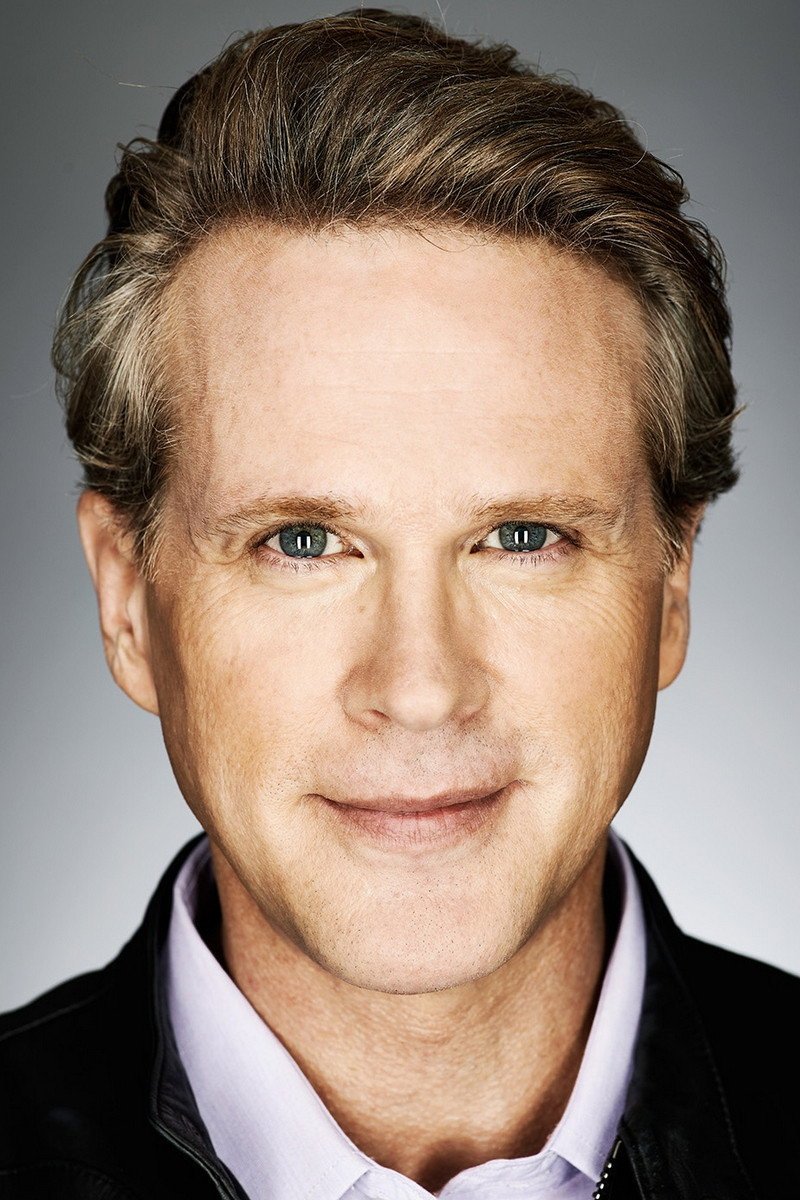
Cary Elwes (born 1962) is the English actor who played Dr. Lawrence Gordon in Saw and Saw 3D and Westley in The Princess Bride.
Quick Specs
| Born | Ivan Simon Cary Elwes, October 26, 1962, Westminster, London |
| Studied at | Harrow; Sarah Lawrence College in New York, from 1981 |
| Breakthrough | Westley in The Princess Bride (1987) |
| Horror centerpiece | Dr. Lawrence Gordon in Saw (2004), returning in Saw 3D (2010) |
| More horror | Arthur Holmwood in Bram Stoker’s Dracula (1992); Fritz Arno Wagner in Shadow of the Vampire (2000); Det. Nick Ruskin in Kiss the Girls (1997); The Alphabet Killer (2008) |
| Book | As You Wish (2014), his New York Times best-selling account of making The Princess Bride |
| Recent | Mayor Larry Kline in Stranger Things season 3 (2019); Mission: Impossible Dead Reckoning (2023) and The Final Reckoning (2025) |
Who He Is
Ivan Simon Cary Elwes was born in Westminster, London, on October 26, 1962, the youngest of three sons of the portrait painter Dominick Elwes and the interior designer Tessa Kennedy. His grandfather was the painter Simon Elwes. His parents divorced when he was a child, and in 1971 his mother married the film producer Elliott Kastner. He was raised Catholic and served as an altar boy at Westminster Cathedral.
His father died by suicide in 1975, when Cary was 12.
He went to Harrow and in 1981 moved to the United States to study acting at Sarah Lawrence College. In 1991 he met the photographer Lisa Marie Kurbikoff at a chili cook-off in Malibu; they married in 2000 and have a daughter, Dominique.
The Work, and What He Did in It
After his debut in the late 1970s he played James Harcourt in Another Country (1984) and Josef in The Bride (1985), a reworking of Frankenstein and his first brush with horror. As Guilford Dudley in Lady Jane (1986) he caught Rob Reiner’s eye.
That led to The Princess Bride (1987), Reiner’s film of William Goldman’s script, in which Elwes plays Westley: farm boy, Man in Black and Dread Pirate Roberts. It made about $30.9 million on a budget of about $16 million, a modest showing in cinemas, then became a phenomenon on home video. It won the Hugo Award, ranks No. 88 on AFI’s list of great screen romances, and entered the National Film Registry in 2016.
The years after were busy and varied: Major Cabot Forbes in Glory (1989), the rival driver in Days of Thunder (1990), the hotshot pilot Kent Gregory in Hot Shots! (1991). In Francis Ford Coppola’s Bram Stoker’s Dracula (1992) he is Lord Arthur Holmwood, the fiancé who has to drive the stake into his own undead bride, Lucy, and then helps lead the hunt to Transylvania. In The Crush (1993) he is a writer terrorized by his landlord’s teenage daughter. For Mel Brooks he took the title role in Robin Hood: Men in Tights (1993), with a line aimed squarely at Kevin Costner: “Unlike some other Robin Hoods, I can speak with an English accent.” In Twister (1996) he is Dr. Jonas Miller, the corporate-backed rival storm chaser who ignores the warnings and is killed when the tornado picks up his truck. In Kiss the Girls (1997) he plays Detective Nick Ruskin, who turns out to be the killer “Casanova.”
In Shadow of the Vampire (2000), a fictional account of the making of F. W. Murnau’s Nosferatu, he plays Fritz Arno Wagner, the cinematographer Murnau brings in partway through, opposite Willem Dafoe’s Max Schreck. In the film, Schreck breaks Wagner’s neck while Murnau keeps the camera rolling. That’s invention: the real Wagner shot more than a hundred more films, including Fritz Lang’s M, and died in 1958.
Saw (2004) is his horror centerpiece. James Wan directed from a script by Leigh Whannell, who also plays Adam. Elwes is Dr. Lawrence Gordon, an oncologist who wakes up chained in a filthy bathroom across from Adam, with a dead body between them. One of Gordon’s own patients turns out to be John Kramer (Tobin Bell). His tape gives Gordon a choice: kill Adam, or his wife Alison and daughter Diana will die. In the end Gordon saws off his own foot to escape, shoots Adam (who isn’t killed and plays dead), and crawls away, his fate left open. Then the “corpse” on the floor stands up. It’s Kramer, who says “Game over” and seals the door. The film was shot in 18 days. “We made the film on a shoestring budget, we shot it in eighteen days and for about a million dollars,” Elwes said. The bathroom was its only built set. The role earned him an MTV Movie Award nomination for Best Frightened Performance.
In August 2005 Elwes sued Saw’s producers, including his own management company, Evolution, in Los Angeles Superior Court for breach of contract and unjust enrichment. The suit claimed he had been promised a share of the profits on the same terms as other cast members and sought $500,000 in damages. The defense called it a suit that “clearly has no merit.” No outcome or terms were ever made public.
He came back for Saw 3D (2010), the seventh film in the series, because of the fans’ campaign, he said. It reveals that Gordon survived: Kramer cauterized and nursed his leg and made him a secret apprentice, and Gordon now walks on a prosthetic foot. At the end, following Kramer’s instructions, Gordon and two pig-masked helpers chain Detective Hoffman by the ankle in the same bathroom, throw the hacksaw out of reach and seal the door. (Elwes isn’t in Saw II apart from archive sound.)
Along the way he played the scheming Sir Edgar in Ella Enchanted (2004), a police captain in The Alphabet Killer (2008), loosely based on the real, unsolved Rochester killings of the early 1970s, and several small roles in Robert Zemeckis’s A Christmas Carol (2009). He was Hawkins’s crooked mayor, Larry Kline, in season 3 of Stranger Things (2019). Recent work includes the Palm boss Carl Yankowski in BlackBerry (2023), Denlinger, the Director of National Intelligence, in Mission: Impossible Dead Reckoning (2023) and The Final Reckoning (2025), and Brigadier Gubbins, “M,” in The Ministry of Ungentlemanly Warfare (2024).
Cool Verified Facts
- He and Mandy Patinkin trained with the Olympic fencer and Star Wars sword master Bob Anderson and stunt coordinator Peter Diamond. Both learned to fence with either hand and did the famous duel themselves, apart from two somersaults, after months of training in total.
- He broke his toe on André the Giant’s ATV before the duel was shot, hid the injury for fear of being recast, and fenced on it before it had healed.
- For the scene where Count Rugen knocks Westley out, he asked Christopher Guest to really hit him with the sword pommel. Guest did, and Elwes woke up in the emergency room getting stitches, from the same doctor who had treated his toe. “When you see Westley fall to the ground and pass out, that’s not acting.”
- Billy Crystal’s Miracle Max improvisations were so funny that Patinkin bruised a rib trying not to laugh, Elwes had to be replaced by a dummy in some “mostly dead” shots, and Reiner was sent off the set for laughing.
- He based Mayor Kline on “a bunch of politicians that I saw on television… folk who really cared more about their constituents’ votes than they did about the constituents themselves.”
Signatures, Habits and Behind the Scenes
André the Giant had had back surgery before The Princess Bride and couldn’t take the weight of Elwes or Robin Wright, so the carries and lifts were done with ramps, cables and doubles. Elwes’s memoir adds André’s legendary drinking, including a mixed drink he called “The American”: “I’ve never tasted airplane fuel, but I imagine that was the closest thing.”
That memoir, As You Wish (2014), written with Joe Layden and with a foreword by Reiner, became a New York Times best seller. Elwes built it from the whole cast’s memories, including those of Wright, Patinkin, Crystal, Guest and Goldman, which is why it’s now the standard account of how the film was made.
Saw was made with no room for extra takes. The bathroom was the only set, Danny Glover’s scenes were shot in two days, and the editor had to manufacture coverage in post.
Why He Matters
Cary Elwes owns a permanent place in two very different fandoms. Westley is the defining swashbuckling romantic of the home-video generation. Dr. Gordon is one of horror’s great slow-burn reveals: a victim in 2004 who returns six years later as the apprentice, in the same bathroom, with the hacksaw.
Behind the “nice Englishman” image runs a genuine horror thread: staking Lucy in Coppola’s Dracula, the doomed Wagner in Shadow of the Vampire, the killer cop in Kiss the Girls, Gordon twice. Horror kept finding the darkness in him.