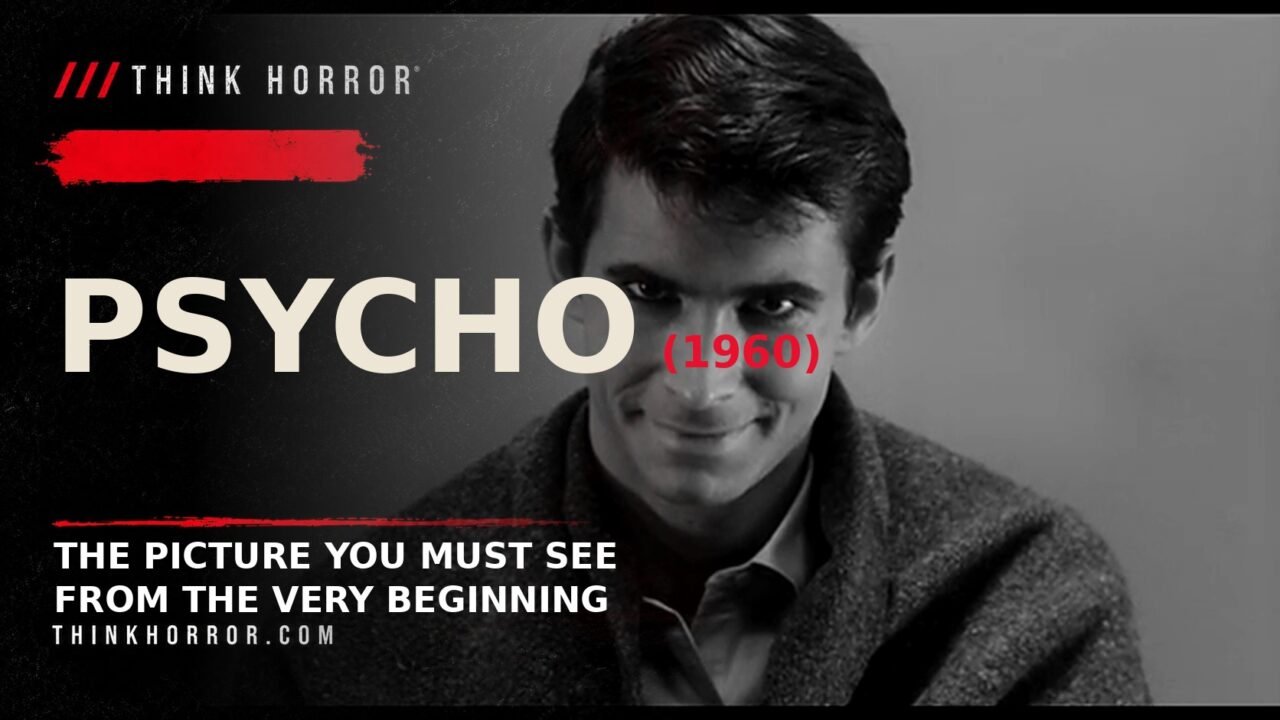
Psycho is Alfred Hitchcock’s cheap, black-and-white shocker: a thief on the run, a vacant motel, a boy and his mother.
Rain has drummed the windshield for an hour and the wipers have surrendered. Your neck aches from watching for patrol cars. Then, through the weather, a neon word: VACANCY. The young man who hurries out to greet you is polite and soft-spoken. He offers you supper, and the safest room in the world. Fiends, you have never been in more danger in your life.
Welcome back to the crypt. Tonight’s file is the picture that taught horror to hunt in daylight, made by the most famous director alive on a shoestring. Alfred Hitchcock came off North by Northwest — his biggest, glossiest picture — and chose to shoot a squalid paperback in black and white with his television crew. Paramount wanted no part of it. He made it anyway. Psycho.
Watch the Trailer

Quick Specs
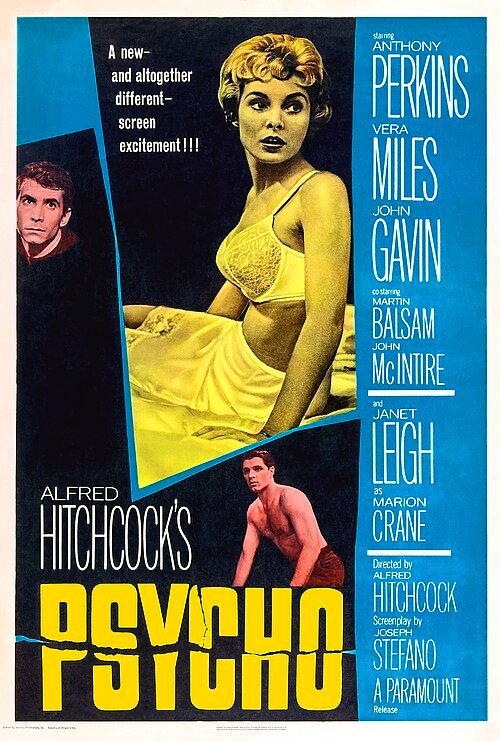
- Director: Alfred Hitchcock
- Writer: Joseph Stefano
- Producer: Alfred Hitchcock
- Cast: Anthony Perkins, Vera Miles, John Gavin, Martin Balsam, John McIntire, Janet Leigh
- Studio: Shamley Productions
- Distributor: Paramount Pictures
- Release Date: June 16, 1960 (New York premiere); September 8, 1960 (United States)
- Runtime: 109 minutes
- Rating: R
- Budget: $806,947
- Box Office: $50 million worldwide ($32 million initial North American gross)
The Review
Robert Bloch’s novel was a paperback loosely inspired by Ed Gein, the Wisconsin murderer — and Paramount’s readers had thrown it out as too repulsive to film. Hitchcock’s assistant Peggy Robertson fished it back after a glowing review; he bought the rights quietly, anonymously, for $9,000, then had copies of the novel bought up so the ending would keep. Paramount still said no, so Hitchcock made the studio an offer with himself as the stake: he would pay for the picture himself, shoot it fast at Universal with the crew from his television series, Alfred Hitchcock Presents, and waive his director’s fee in exchange for 60% of the negative. He filmed in black and white partly to hold costs under a million, and partly because color would make one scene unshowable. The final bill was $806,947.
What that money buys is a masterclass in misdirection. Marion Crane (Janet Leigh), a Phoenix secretary in love with a man too indebted to marry her, steals $40,000 and runs — and for its opening stretch the film is hers: her guilt, her near-misses, a patrolman’s sunglasses at her window. Rain drives her off the highway to the Bates Motel, where Norman (Anthony Perkins) — shy, smiling, up to his elbows in the taxidermy of birds — feeds her milk and sandwiches in the parlor, talking of private traps, until she decides to go back and return the money. Then, the shower. You know the rest. It doesn’t protect you: less than halfway through its running time, Psycho murders its own protagonist and hands the picture to her killer.
The audacity is structural. With Marion sunk in a swamp — car, belongings, stolen cash and all — the film rebuilds itself around the people searching for her: her sister Lila (Vera Miles), her lover Sam (John Gavin), and insurance investigator Arbogast (Martin Balsam), who climbs the Bates staircase and gives the audience its second lesson in what this picture is willing to do. Our full file on Norman Bates walks the case; the short version is a search that leads us, room by room, into that house and to the fruit cellar. Then came June 16, 1960. Hitchcock guarded the ending — no press interviews for his stars, no advance screenings for critics — and sold the film on a rule no American picture had ever been sold on: nobody admitted after the start. Owners balked, then watched the lines form around the block. The first notices were split down the middle — one London critic walked out and resigned her post — but the public had already voted: Psycho was the second-biggest hit of 1960, behind only Spartacus, and the critics caught up within the year.
What Works
- The murder in the middle is the whole design. Killing Marion isn’t a twist pasted onto a thriller; it’s the engine. Hitchcock and Stefano took the two chapters Bloch gave her and stretched them into nearly half the film so the loss would cost us — then let our sympathy slide, shamefully, toward the boy scrubbing the bathroom clean. Every later film that killed its apparent lead is paying rent on this scene. When this desk reviewed Scream, we called its gambit the Psycho play. This is the play.
- Anthony Perkins builds Norman out of apologies. The stammer, the smile, the flinch when he criticizes his mother, the rush to forgive her — Perkins plays Norman as a boy the world has half-excused, which is why the parlor scene aches before it chills. By the fruit cellar, the horror isn’t that a monster fooled us. It’s that we liked him. We still do.
- Herrmann’s strings do the stabbing. Herrmann scored the picture for a string orchestra — no brass, no woodwinds — and kept the strings muted, so the film hums at the pitch of a held breath: hurtling in the main title, circling in ostinato, waiting. “33% of the effect of Psycho was due to the music,” Hitchcock said. The shriek in the shower is the famous part. The dread underneath everything else is the achievement.
- The craft stays invisible until it’s all you can see. John L. Russell’s photography turns a TV crew’s sets into a geography of guilt — Phoenix glare, highway rain, the house on its hill — and George Tomasini’s editing never shows you the thing you’d swear to. Horror, Psycho argues, lives in the cut, not the wound.
What Doesn’t
- The psychiatrist’s lecture stops the film to footnote it. After the cellar, Psycho sits us in the courthouse and has Dr. Richman explain Norman — the mother, the jealousy, the diagnosis. It plays like insurance against confusion, and it deflates the mystery the film spent two hours protecting. The final shot in the cell rescues the ending. The lecture is the toll you pay to reach it.
- The middle investigation runs on rails. Between Arbogast’s fall and the return to the motel, Sam and Lila’s detective work is more dutiful than dangerous — interviews, a sheriff’s exposition, a wait for the plot to come back to the house. Vera Miles gives Lila what the script allows, but she’s written as a function: the sister who must open the cellar door. After an hour of Hitchcock breaking every rule, the machinery showing is a small but real letdown.
The ledger, this time, is a coronation with receipts. Psycho stands at 97% on Rotten Tomatoes, 95% with audiences, and 97 out of 100 on Metacritic — numbers the desk’s other five-raven titles cannot touch. It earned four Academy Award nominations, including Best Director and Best Supporting Actress for Leigh, who won the Golden Globe; its screenplay won the Edgar Award; and in 1992 it entered the National Film Registry. The critics who sneered recanted within months. The audience never had to.
Full disclosure, fiends, because Harper keeps an honest crypt: this is a desk verdict — built from the verified record, the awards shelf and the consensus, not a fresh team screening. Nobody on the Think Horror crew re-screened the film for this review, and we won’t pretend otherwise. Some pictures you re-judge. This one you check on, like weather over the motel.
Harper’s verdict: 5 ravens — Buried with honors.
Trivia & Facts
- Forty-five seconds, a week of work, and dessert for blood. The shower murder took seven days to film in December 1959 and was assembled from 78 camera setups and 52 cuts — yet the knife is never shown entering Marion’s body; the editing does the violence. The “blood” spiraling down the drain isn’t stage blood: it’s chocolate syrup, which read in black and white. The stabbing sounds came from a knife in a casaba melon.
- The most famous cue in horror was nearly silence. Hitchcock planned the shower scene to play without music. Bernard Herrmann wrote “The Murder” anyway — those shrieking violins, violas and cellos — and played it for him; Hitchcock reversed himself and kept it. Given the master’s later estimate — a third of the film’s effect was the music — it may be the most profitable act of disobedience in film history.
- Nobody was admitted after the start — and that was the advertising. The secrecy started early, with the novel bought up so the ending couldn’t leak, his stars barred from interviews, critics made to queue with the paying public. Then Hitchcock ordered theaters to refuse entry once the picture had begun — the first film in America sold on that basis. Owners predicted ruin; by the second day they were enjoying the lines.
Harper’s Extras
- Psycho (1960) — the full wiki file: the complete case file — production, release and legacy in crown-jewel depth.
- Norman Bates — the wiki file: the boy, his mother, and the house on the hill.
- Alfred Hitchcock — the wiki file: the master at his most ruthless — and his most economical.
- Psycho II — the wiki file: Norman comes home, twenty-two years later.
- Crank it: Bernard Herrmann’s score, written for strings alone. He later rebuilt it as a concert work, Psycho: A Narrative for String Orchestra — the shower shriek in formal wear. Start with the Prelude. Mind your pulse.
Where to Watch
As of November 6, 2026, it’s streaming on Netflix (including Netflix Standard with Ads); rent or buy it on Amazon Video, Apple TV Store or Fandango At Home.
Frequently Asked Questions
Is Psycho based on a true story?
Inspired, not based. Bloch wrote the novel in the long shadow of Ed Gein’s arrest — the grave robber who kept his dead mother enthroned in a sealed-off room — and the resemblance lives in Norman’s situation, not in any crime’s details. Marion, the money, the motel: invention. The mother in the house: that part, the headlines supplied.
Why does Marion Crane die so early?
Because the shock is the design. In Bloch’s novel, Marion’s story fills two chapters of seventeen; Hitchcock and Stefano stretched it to nearly half the film, cast a star, and let the marketing sell her as the lead, so that losing her would cost the audience its bearings. It worked so well that latecomers were turned away at the door: arrive after the start, and you’d never have met her at all.
Is Psycho the first slasher film?
It’s the one the genre is dated from. Psycho is counted among the earliest slasher films, and everything from Halloween onward runs on its wiring. Michael Powell’s Peeping Tom, from Britain the same year, is the other claimant. The honest crown is shared. The influence isn’t.
Until next time, fiends — drive carefully, and if a quiet young man offers you a sandwich and a glass of milk, ask yourself what he’s too polite to say. Harper will keep the vacancy sign lit for you.
The weekly roundup
One letter a week, from the crypt.
- New reviews, with the ravens
- New wiki entries and news
- Cool stuff worth your night
Weekly. No spam, unsubscribe in one click.