You are the new girl at Westin Hills, and your wrists opened in a dream nobody believes was a dream. The doctors call it attempted suicide; your mother calls it attention. Then the new intern sits down across from you, looks at the bandages, and says the name you have been screaming in your sleep — and she believes you, fiend, because she survived him first.
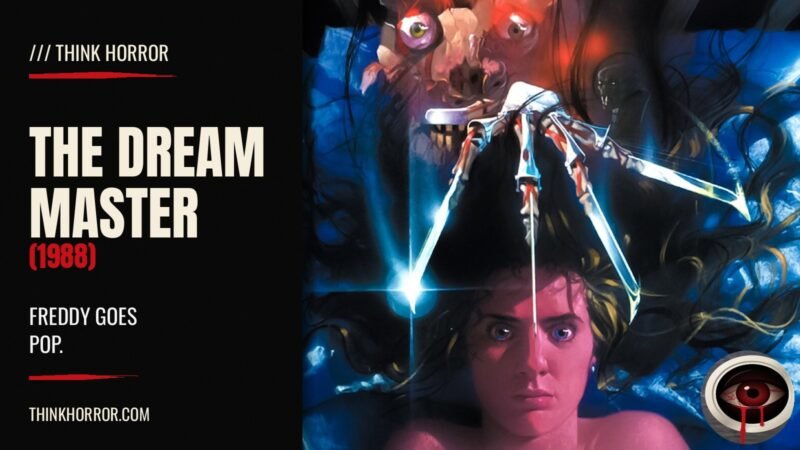
Dream Warriors (1987), the third Nightmare on Elm Street, brings Nancy Thompson back to train Freddy Krueger’s last targets to fight him inside their dreams.
The setting is Westin Hills Psychiatric Hospital, where the last surviving children of the parents who burned Fred Krueger alive are warehoused as suicides-in-waiting — sleepwalkers, addicts, mutes, and one girl, Kristen Parker, whose wrists were slashed in a dream and whose mother committed her for it. They are dying one nightmare at a time, diagnosed as everything except hunted. Then an intern therapist arrives who has heard the lullaby before, because she survived it. What follows is the film that saved a franchise by changing its physics: the prey organize.
The context matters. Freddy’s Revenge (1985) had broken with the original’s rules and been savaged for it; New Line went back to Wes Craven, who had sold his creation for a song and watched it become a phenomenon. Craven agreed to co-write a third film intending to end the series — and instead wrote, with Bruce Wagner, the treatment whose central idea proved immortal: the last of the Elm Street children discover, under hypnosis, that in their dreams they are not helpless. Chuck Russell, a young producer making his feature directing debut, rewrote the script with Frank Darabont and shot it for a reported $4.3–4.6 million. It opened at number one with $8.9 million — at the time a record opening for an independent film — and finished with $44.8 million, the biggest Elm Street gross to that date. The executioner had become the establishment. Harper’s file follows.

Quick Specs
- Director: Chuck Russell
- Screenplay: Wes Craven, Bruce Wagner, Frank Darabont and Chuck Russell
- Starring: Heather Langenkamp (Nancy Thompson), Patricia Arquette (Kristen Parker), Robert Englund (Freddy Krueger), Craig Wasson (Dr. Neil Gordon), Ken Sagoes (Roland Kincaid), Rodney Eastman (Joey Crusel), Jennifer Rubin (Taryn White), Bradley Gregg (Phillip Anderson), Ira Heiden (Will Stanton), Penelope Sudrow (Jennifer Caulfield), Laurence Fishburne (Max Daniels), John Saxon (Donald Thompson), Brooke Bundy (Elaine Parker), Nan Martin (Sister Mary Helena / Amanda Krueger)
- Music: Angelo Badalamenti
- Cinematography: Roy H. Wagner
- Editor: Terry Stokes and Chuck Weiss
- Producers: Robert Shaye, Wes Craven (executive producer)
- Production Company: New Line Cinema, Heron Communications and Smart Egg Pictures
- Distributor: New Line Cinema
- Premiered: February 27, 1987
- Runtime: 96 minutes
- Rating: R
- Budget: $4.3–4.6 million (reported)
- Box Office: $44.8 million
- On This Site: Dream Warriors in the wiki · A Nightmare on Elm Street (1984)
The Review
Start with the idea, because the idea is the film. The first Nightmare established the cruellest rule in horror: sleep and you die, alone, in a place where your body is a rumour. Part 2 broke the rule and lost the audience. Dream Warriors restores it and then adds the twist that re-founded the series — inside the dream, you are not only prey. You are whatever you most deeply believe you are. Kristen can pull other sleepers into her dream. Kincaid is immensely strong. Joey, mute in the waking world, has a voice that can shatter Freddy’s hold. Taryn is, in her own immortal self-description, beautiful and bad, with switchblades for hands. Will, wheelchair-bound awake, stands up in the dream as a wizard. It is a superhero film wearing a slasher’s skin — a decade before that hybrid had a name — and it converts the franchise’s engine from endurance to resistance. The kids do not survive by waking up. They survive by standing together in the one place Freddy thought he owned.
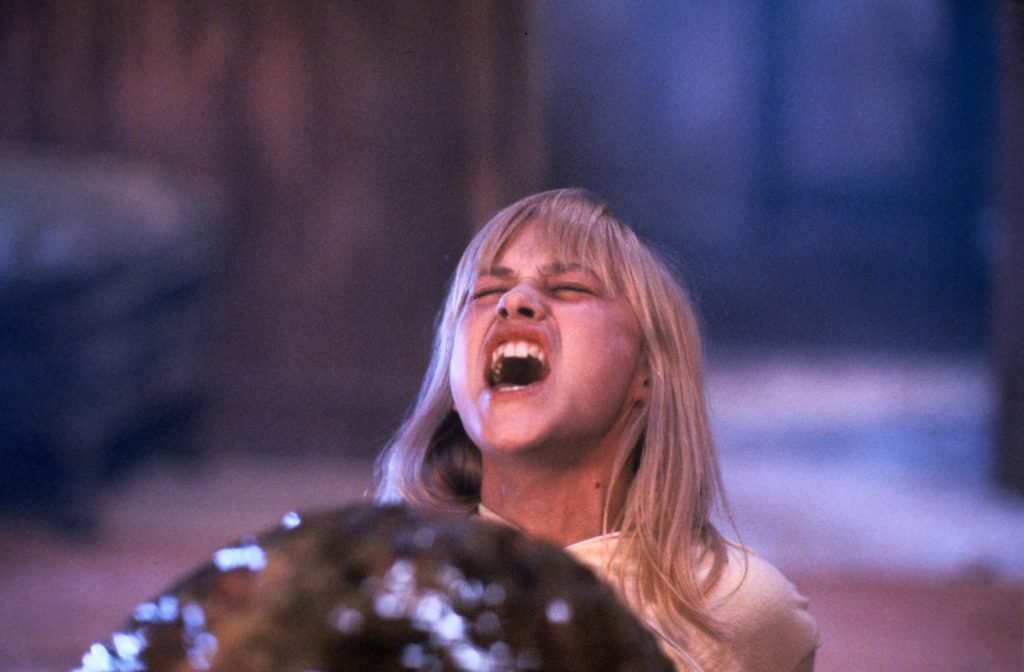
The discovery is staged through Nancy Thompson, and Heather Langenkamp’s return is the film’s emotional masterstroke. Nancy is no longer the girl who set booby traps in a suburban house; she is an intern therapist — note the rank, fiends, an intern, not the doctor some listings promote her to — who has spent six years converting survival into a profession. Her authority in the group scenes is absolute because it is earned: she is the only adult in the building who believes them, and the film understands what that belief is worth to teenagers whose parents, doctors and priests have all filed their terror under pathology. When she tells them they are the last of the Elm Street children, the line lands as both mythology and sentence. And Patricia Arquette, in her feature debut, gives Kristen the raw, unguarded quality that makes the group cohere — a girl whose gift is literally bringing people with her, and whose terror is that she will bring them into the room where they die.
The set pieces are the series’ practical-effects summit, and they have not dated the way their descendants have. The Freddy-snake — fourteen feet of radio-controlled animatronic trying to swallow Kristen whole in the opening act — remains the single most audacious image in the franchise: obscene, Freudian, and built, not rendered. Phillip’s death is the cruellest: Freddy pulls the tendons from his arms and walks him to a ledge like a marionette, a sleepwalker’s death that the waking world files as suicide. Jennifer’s is the most famous: dozing before a television, she meets Freddy bursting out of the set itself — out of it, fiends, not dragged in — for the line Robert Englund ad-libbed on the spot and immortality claimed: “Welcome to prime time, bitch!” Taryn’s syringe-fingered overdose and Will’s last stand as the Wizard Master complete a run of kills each tailored to the victim’s wound with a precision that is almost compassionate, until you remember whose tailor it is. This is Freddy at his most inventive and his most cruel — the sequels would make him funnier; none would make him better.
The mythology, remarkably, deepens instead of sprawling. A mysterious nun, Sister Mary Helena, tells Dr. Gordon the truth about Freddy’s conception: his mother Amanda Krueger, a Westin Hills staff member, was accidentally locked in the ward with hundreds of violent patients over a holiday, and Freddy was born of what was done to her — the film’s own unforgettable phrase makes him the bastard son of a hundred maniacs. Even Roger Ebert, who dismissed it as “filmmaking by the numbers, without soul,” singled that very line out with delight. The remedy the nun prescribes — lay Freddy’s bones to rest in hallowed ground — gives the film a second, waking-world front: Nancy’s alcoholic father, John Saxon’s Don Thompson, must finally help bury what he helped burn. And the plan, when it comes, works. Freddy is destroyed by the completed burial even as he kills — a climax with the courage to let its mechanism succeed and its victory still cost everything.
Spoiler Section
Spoilers settle here, fiends — the ending is discussed plainly.
Nancy dies the way the film has taught us she would: protecting a kid. Freddy comes to her wearing her dead father’s face — Don himself has just been killed in the junkyard by Freddy’s animated skeleton — and though she sees through the disguise, she sees through it a heartbeat too late. Dying, she still drives Freddy’s own glove into him as Neil completes the burial in the waking world, and she goes out in Kristen’s arms promising to dream her into a beautiful dream. It is the finest death in the series because it is a completed arc: the final girl of 1984 becomes the mentor of 1987 and spends herself, deliberately, on the next generation. The film then closes with the lights switching on in Kristen’s model of 1428 Elm Street — a sting, not a reversal. The bones plan worked. The sting merely admits what every producer knows: houses like that do not stay dark.
The craft around all this is lean and hungry. Russell directs with a producer’s economy and an effects man’s appetite; Angelo Badalamenti’s score gives the dreams an oneiric ache entirely unlike the original’s electronic pulse, while Charles Bernstein’s 1984 material threads through as memory. Dokken’s title song — written by guitarist George Lynch and bassist Jeff Pilson, and it matters who wrote it, because the credit is constantly stolen for Don Dokken — peaked at No. 22 on Billboard’s mainstream rock chart (it never touched the Hot 100) and became the rare soundtrack single that is also a plot summary: dream warriors, fighting for the night. The critics were divided on release — Ebert’s dismissal against the New York Times’ Janet Maslin praising the dream sequences as ingenious — and the audience simply adopted it. It is now routinely called the best of the sequels, and for once the routine judgement is correct.
What it launched: Patricia Arquette (Kristen was recast with Tuesday Knight for Part 4 — Arquette herself did not return), Frank Darabont’s screenwriting career, the Westin Hills and Hypnocil mythology the series would reuse for decades, and a Part 4 that out-grossed it by going broader and campier. And the house may yet reopen: after the US rights to Craven’s original screenplay reverted to his estate in 2019, Paramount Pictures licensed them in July 2026 for a new film “set in the world of A Nightmare on Elm Street,” to be produced by Craven’s widow Iya Labunka, his son Jonathan Craven, and attorney Marc Toberoff at Paramount’s genre label Paramount Primal. No director, writer, cast or release date has been announced, and Robert Englund’s involvement is unconfirmed — print nothing stronger than that, fiends, whatever the internet tells you.
Trivia
- Craven meant to end it. Wes Craven returned to co-write intending this to be the final Elm Street film. He was offered the director’s chair but was unavailable; the film is Chuck Russell’s feature directorial debut. Craven does not direct a frame of it.
- New Nightmare was born here. Craven’s first concept for this film — Freddy invading the real world to haunt the actors making an Elm Street sequel — was rejected by New Line. He kept it, and eight years later it became Wes Craven’s New Nightmare (1994).
- Seventy percent rewritten. Russell and Frank Darabont rewrote roughly 70% of the Craven/Wagner script, which the producers judged a $20 million script for a $4 million film. The Dream Warriors group concept survived intact. In the original script, Joey and Kincaid both died — in the finished film, both survive.
- The line was an ad-lib. “Welcome to prime time, bitch!” was improvised by Robert Englund during Jennifer’s TV death — the scripted portion ended with her “big break in TV.” Five fake televisions were built for the effect.
- Her fear was real. Dick Cavett hand-picked Zsa Zsa Gabor as his talk-show guest for Jennifer’s dream. Per Englund, Gabor never read the script and did not know Freddy would appear — her fright in the scene is genuine.
- Credit where due. Dokken’s “Dream Warriors” was written by guitarist George Lynch and bassist Jeff Pilson, not Don Dokken. It peaked at No. 22 on Billboard’s Hot Mainstream Rock Tracks and never charted on the Hot 100; the platinum record belongs to the album, Back for the Attack. The film’s own end credits misspell the song “Dream Warrior” (singular).
- It ignores Part 2 entirely. Dream Warriors is a direct sequel to the 1984 film — Nancy’s survival is placed six years earlier — and neither continues nor references Freddy’s Revenge or Jesse Walsh.
- Banned in Queensland. Taryn’s syringe death got the film banned in Queensland, Australia, by the Bjelke-Petersen government; the ban stood until the state’s Film Board of Review was abolished in 1990.
- The junkyard came back. The Puente Hills Landfill junkyard set is the only set from this film reused in a sequel (Part 4). UCLA’s Royce Hall stands in for Westin Hills’ exteriors.
Where to Watch
As of November 9, 2026, in the US: A Nightmare on Elm Street 3: Dream Warriors streams by subscription on AMC. You can rent or buy it digitally on Amazon Prime Video, Google Play, Apple TV Store, Fandango At Home, Spectrum On Demand and YouTube. Blu-ray editions and the 2025 4K UHD collection are in print. Streaming availability can change.
The Verdict
Rating: 4.5 ravens out of 5.
So this A Nightmare on Elm Street 3: Dream Warriors (1987) review lands at four and a half ravens — the half withheld only because the original exists. Dream Warriors is the sequel that out-dreamed them all — the film that taught Freddy Krueger’s victims to organize, armed a ward of written-off teenagers with the selves they were denied awake, and gave its returning heroine a death worthy of her survival. The kids stop running and start fighting, and Freddy was never better. Sleep tight.
The weekly roundup
One letter a week, from the crypt.
- New reviews, with the ravens
- New wiki entries and news
- Cool stuff worth your night
Weekly. No spam, unsubscribe in one click.