
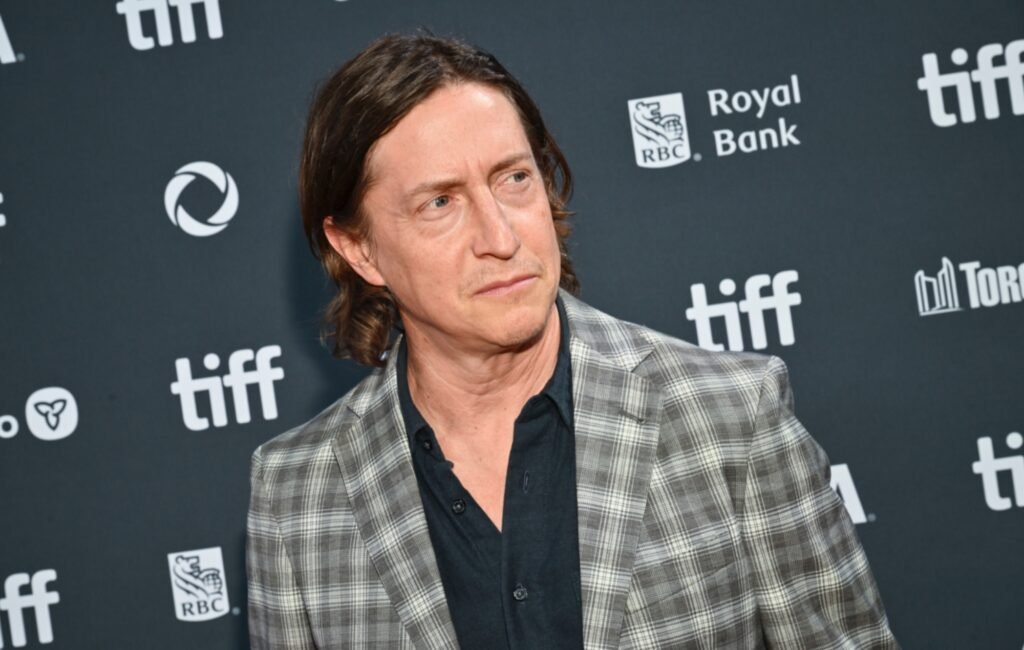
David Gordon Green (born April 9, 1975) is the American filmmaker whose career zigzags from Malick-esque indie poetry to stoner comedy to the Halloween legacy sequels — the most unpredictable résumé in modern horror.
Quick Specs
- Born: April 9, 1975, Little Rock, Arkansas
- Known for: George Washington (2000), Pineapple Express (2008), Halloween (2018)
- Role: Director, screenwriter
- Active: 1997–present
The dean’s son who filmed like a poet
Green was one of four children, born in Little Rock and raised in Richardson, Texas. His mother, Jean Ann, was a Lamaze instructor; his father, Hubert Gordon Green Jr., was a medical school dean. He went to Richardson High School, then the University of Texas at Austin, then the University of North Carolina School of the Arts, where he studied film directing. As a student he made the shorts Pleasant Grove and Physical Pinball — already reaching for something lyrical.
Then George Washington (2000) detonated. Green’s debut feature — which he wrote and directed at twenty-five — is a dreamlike portrait of poor Black kids in a decaying Southern town, shot with the patience and light-worship of Terrence Malick. Critics didn’t just praise it; they anointed him, comparing him to Malick himself as the potential heir to American art cinema. All the Real Girls (2003) confirmed the promise. Undertow (2004) adapted a Malick story (written under a pseudonym) with Malick producing — the blessing made literal. Snow Angels (2007) premiered at Sundance with Sam Rockwell and Kate Beckinsale.
He was the indie world’s golden boy. Then he made a stoner comedy.
The work, and the whiplash
Pineapple Express (2008) — Seth Rogen, James Franco, a process server and his dealer on the run — was the pivot nobody predicted and everybody argued about. The Malick heir directing a weed farce? But Green brought his lyricism to the chaos anyway, and the film became a cult hit. He directed twelve episodes of HBO’s Eastbound & Down and served as consulting producer. Your Highness (2011) and The Sitter (2011) bombed, and the comedy experiment looked shaky.
So he went home: Prince Avalanche (2013) and Joe (2013) — small, soulful, Nicolas Cage giving one of his best performances in the latter. Manglehorn (2014), Our Brand Is Crisis (2015), Stronger (2017). The indie poet was back. For about five minutes.
Because in 2018, Jason Blum called. Halloween — produced by Blum, executive produced by John Carpenter, co-written by Green and his old friend Danny McBride — ignored every sequel and positioned itself as the direct follow-up to the 1978 original. Jamie Lee Curtis returned as Laurie Strode, forty years later, traumatized and armed. It worked: critically embraced, commercially massive, the rare legacy sequel that justified its existence. Halloween Kills (2021) and Halloween Ends (2022) completed the trilogy — more divisive, never boring. Then The Exorcist: Believer (2023), another legacy-sequel swing, this one landing harder with critics.
Through it all, the TV work hummed: Red Oaks, Vice Principals, The Righteous Gemstones — all with Green executive producing, all bearing the McBride-universe fingerprints.
What he actually did on the movies
On Halloween (2018), Green’s indie instincts were the secret weapon. He shot Haddonfield like a real town, gave Laurie’s trauma the weight of forty years, and let Carpenter’s DNA — the widescreen dread, the patience — do the heavy lifting. The opening: Michael Myers in the sanitarium courtyard, the camera pulling back through the inmates. That’s a Green image — lyrical, patient, wrong. He understood that the scariest thing about Michael isn’t the knife, it’s the waiting.
The McBride partnership is the engine. They’ve been collaborators since the comedy years, and their Halloween scripts try to do two things at once: honor the mythology and interrogate it. Halloween Ends — the most argued-over of the three — is really a movie about what a town does with its monster after the monster stops coming. That’s an indie-poet idea wearing a slasher mask.
The cool information
The Malick connection isn’t just critical shorthand — Green literally adapted a Malick story for Undertow, with Malick producing. The heir made a film from the master’s drawer. Then he made Pineapple Express. If there’s a more violent career pivot in modern American film, it’s hard to name.
The Halloween trilogy’s numbers tell the Blumhouse story: the 2018 film proved the legacy-sequel model could work artistically and commercially, and every studio spent the next five years trying to copy it. Green didn’t invent the legacy sequel, but he perfected its first great execution.
And Charleston, South Carolina — where he lives — keeps showing up in the work’s DNA: the South as a place of beauty and rot, lyricism and violence, often in the same frame.
Signatures and habits
Lyrical patience, even in slashers. The South as spiritual geography. Collaborators for life — McBride above all. Genre as a costume the indie poet wears without ever quite disappearing inside it. And the willingness to swing: comedy, horror, drama, television, whatever’s next.
Why he matters
Green is the living argument against typecasting — the director who proved you can make George Washington and Halloween Kills with the same hands and mean both. His Halloween trilogy gave the slasher its most thoughtful late chapter and launched a thousand legacy sequels, for better and worse. The dean’s son from Little Rock who filmed like a poet ended up directing Michael Myers. The zigzag is the career.