
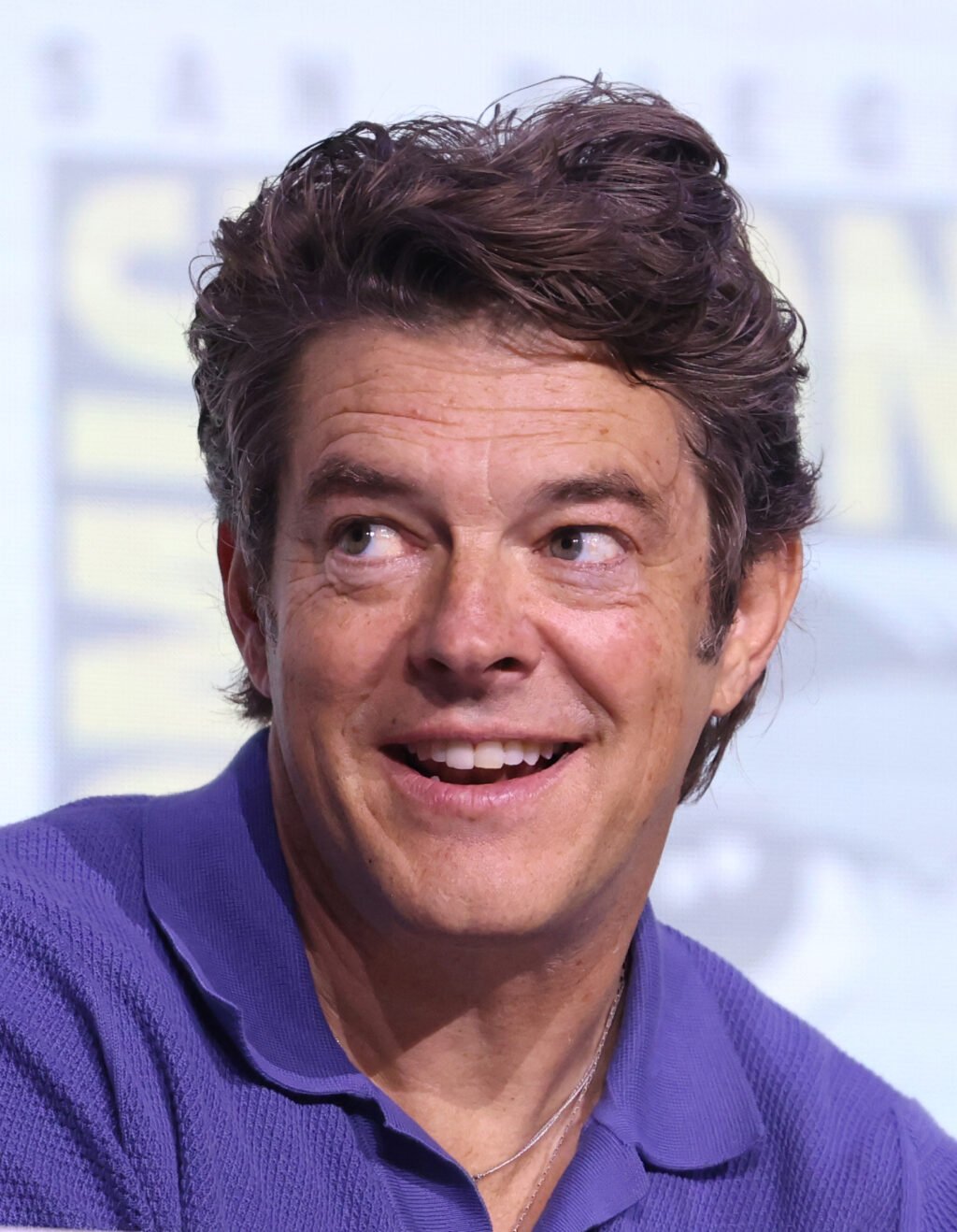
Jason Blum (born 1969) is the American producer who founded Blumhouse Productions and made micro-budget horror a studio business.
Quick Specs
| Born | February 20, 1969, Los Angeles, California (as Jason Ferus Blum) |
| Education | Vassar College (1991) |
| Company | Founder and CEO of Blumhouse Productions (founded 2000) |
| Job | Producer and executive producer. He has never directed or written a feature. |
| Horror (as producer) | Paranormal Activity (2007; wide release 2009, acquired); Insidious (2010; wide release 2011); Sinister (2012); The Purge (2013); Split (2016); Get Out (2017); Halloween (2018); Us (2019); The Invisible Man (2020); The Black Phone (2021); M3GAN (premiered 2022; wide release 2023); Five Nights at Freddy’s (2023) |
| Prestige (as producer) | Whiplash (2014), Get Out (2017) and BlacKkKlansman (2018), all Best Picture nominees |
| Honours | Two Primetime Emmys, for The Normal Heart (2014) and The Jinx (2015), and a third nomination, for Sharp Objects (2019); TIME 100 (2017); CinemaCon Producer of the Year (2016) |
Who He Is
Jason Ferus Blum was born on February 20, 1969, in Los Angeles. His middle name comes from his father’s gallery. Irving Blum was an independent art dealer and the director of the Ferus Gallery in Los Angeles; his mother, Shirley Neilsen Blum, is an art historian and professor, who had earlier been married to the museum director Walter Hopps, Ferus’s co-founder.
His father’s most famous deal is the family’s founding story. In July 1962 Irving Blum gave Andy Warhol his first solo exhibition, the Campbell’s Soup Cans show at Ferus, with 32 canvases set out on shelves like groceries. When individual canvases started to sell, he bought them back and acquired the complete set from Warhol for $1,000, paid in ten monthly instalments of $100, keeping it intact; he later sold it to the Museum of Modern Art. Buy the unfashionable work cheaply, keep the set together, bet on it: that is the business the son grew up around.
His parents split when he was young, and profiles of him describe a childhood spent largely on the East Coast, in Dobbs Ferry, New York, and boarding at the Taft School in Connecticut. Profiles also recount that, staying at his father’s New York apartment as a boy, he sometimes slept on the sofa under all 32 Soup Cans hanging in rows on the wall.
He graduated from Vassar College in 1991. His roommate there was the future filmmaker Noah Baumbach, and that friendship produced his first film.
He married the writer Lauren A. E. Schuker, credited professionally as Lauren Schuker Blum, on July 14, 2012, when he was 43. His current official biography lists three children, Bette Sue, Booker and Roxy. He sits on the boards of the Sundance Institute, The Public Theater, Vassar College and the Academy Museum of Motion Pictures. He was named to the TIME 100 in 2017 and was CinemaCon’s Producer of the Year in 2016.
The Work, and What He Did in It
Every credit below is as a producer or executive producer: the person who financed, packaged, protected or placed the film. The directors are named because the two jobs should never be blurred. Blum has never directed a feature.
He started in theatre, as the producing director of the Malaparte Theater Company, which Ethan Hawke founded. He then went to work for Bob and Harvey Weinstein at Miramax in New York, rising to co-head of Acquisitions and Co-Productions, and later worked as an independent producer for Paramount Pictures.
His producing debut was his Vassar roommate’s first film, Noah Baumbach’s Kicking and Screaming (1995), a post-college comedy-drama that premiered at the New York Film Festival. He was 25 or 26. The financing is his signature story, told below.
He founded Blumhouse Productions in 2000, at 30 or 31. The founding idea has never changed: very small budgets in return for directors’ full creative control. As Inc. described the mature model in 2017, original films generally cost about $5 million or less, and sequels up to about $10 million.
Paranormal Activity was the breakthrough, and his part in it was acquisition, not origination. Oren Peli wrote, directed, shot and edited the film himself, in his own house, for about $15,000. Blum saw the finished film, championed it, and helped dress it up and place it. “We did Paranormal Activity, [which] was finished,” he said. “And then I saw it finished, bought it, dressed it up a little bit. You know, that’s the best thing.” DreamWorks and Paramount paid $350,000 for the US rights, then spent about $200,000 more, about $150,000 on new sound work and about $50,000 on reshooting the ending, for an all-in cost of roughly $215,000. It went wide in October 2009, when Blum was 40, and made about $193 million worldwide. More films in the series followed.
Insidious premiered at the Toronto International Film Festival in 2010 and opened in theatres in 2011. It reunited the Saw pair, James Wan directing and Leigh Whannell writing, under the Blumhouse model, and it made roughly $97 million to $100 million worldwide on a budget of about $1.5 million. Sinister (2012), with Scott Derrickson directing Ethan Hawke, made about $77 million worldwide on about $3 million.
The Purge (2013), produced with Michael Bay’s Platinum Dunes, was James DeMonaco’s premise of one night a year of legal crime, built for the model. It cost about $3 million, opened to $34 million, and made about $89.3 million worldwide. Sequels, a prequel and a television series followed.
Whiplash (2014) was the proof that the model could make prestige. Damien Chazelle expanded his own prize-winning Sundance short into a drumming drama that cost about $3.3 million and made about $49 million worldwide, and it was nominated for the Academy Award for Best Picture, with Blum among the producers.
Television brought him his two wins. He was an executive producer of Ryan Murphy’s The Normal Heart (HBO, 2014), from Larry Kramer’s play about the AIDS crisis, which won the Emmy for Outstanding Television Movie in 2014. He was also an executive producer of Andrew Jarecki’s The Jinx: The Life and Deaths of Robert Durst (HBO, 2015), which won the Emmy for Outstanding Documentary or Nonfiction Series in 2015 and a Peabody Award.
M. Night Shyamalan’s Split (2016), a stealth sequel to Unbreakable, made about $278 million worldwide on about $9 million.
Get Out (2017) was Jordan Peele’s first film as a director. Blum produced it with Sean McKittrick, Edward H. Hamm Jr. and Peele. It cost $4.5 million and made $255.4 million worldwide. It was nominated for Best Picture; the film’s Oscar, for Original Screenplay, went to Peele. Blum’s contribution was the model’s promise kept: a comedian’s uncompromising horror script, made cheaply, with the director’s final cut protected. Spike Lee’s BlacKkKlansman (2018) gave Blum a third Best Picture nomination. He has never won an Oscar.
Halloween (2018) was the franchise revival. Blumhouse made a direct sequel to John Carpenter’s 1978 original that ignored all the other sequels, with David Gordon Green directing, Jamie Lee Curtis returning, and Carpenter executive-producing and scoring. It cost about $10 million and made about $255 million worldwide, and at release it was the highest-grossing slasher film ever in unadjusted dollars. Halloween Kills (2021) and Halloween Ends (2022) followed.
He was among the producers of Peele’s Us (2019), with Peele, Sean McKittrick and Ian Cooper. He was an executive producer of HBO’s Sharp Objects (2018), nominated for the Emmy for Outstanding Limited Series in 2019, his third Emmy nomination.
The Invisible Man (2020) was Leigh Whannell’s standalone rebuild of the Universal monster, the film that replaced Universal’s abandoned “Dark Universe” plan, with Elisabeth Moss as Cecilia Kass. It cost $7 million and made about $144 million worldwide, released just before theatres shut in March 2020 and still a decisive hit.
The Black Phone (2021) brought the Sinister team back together, with Derrickson directing Ethan Hawke as the Grabber, from Joe Hill’s story. M3GAN, which premiered in 2022 and went wide in January 2023, was made with James Wan’s Atomic Monster and directed by Gerard Johnstone; its killer doll’s dance clip became a viral marketing event before release, and it made about $180 million worldwide on about $12 million. Five Nights at Freddy’s (2023), Emma Tammi’s adaptation of the video game with Josh Hutcherson and Matthew Lillard, opened in theatres and on Peacock on the same day and made about $291.5 million worldwide on about $20 million.
The wider slate includes Oculus (2013), The Gift (2015), Hush (2016), Ouija: Origin of Evil (2016), Happy Death Day (2017), Upgrade (2018) and Freaky (2020).
Cool Verified Facts
- His middle name, Ferus, comes from his father’s Los Angeles gallery, where Warhol had his first solo show.
- Noah Baumbach was his roommate at Vassar, and Blum produced his first film.
- He did not make Paranormal Activity. Oren Peli did, for about $15,000; Blum recognised it and helped place it.
- He has three Best Picture nominations and no Oscar. His two wins are Emmys.
- Halloween (2018) was, at release, the highest-grossing slasher film ever in unadjusted dollars.
- His name is Blum, not Bloom, and he is not the songwriter Jason Blume.
- Get Out cost $4.5 million and made $255.4 million worldwide.
- Sophia Takal’s Black Christmas (2019) was Blumhouse’s first theatrically released feature directed by a woman.
Signatures, Habits and Behind the Scenes
The model is his creative act, and he has put it in one sentence. He looks for experienced, talented directors, often ones with something to prove, and offers them what studios do not: “I can’t promise you a hit, but I can promise you that the movie will be yours.” In exchange the director accepts a micro budget, few locations, few speaking parts, a shoot of roughly 20 to 25 days, and stars working for scale or deferrals. Bloomberg summed him up as making “blockbusters for pennies.”
He thinks the best producing is acquisition. “Paranormal Activity was finished… I saw it finished, bought it, dressed it up a little bit. That’s the best thing. That’s the easiest. We did that on Unfriended, too. And The Visit.” The producer as the person who recognises the finished thing is a dealer’s eye, which is exactly what he inherited.
The Steve Martin letter is his founding anecdote. To finance Kicking and Screaming, Steve Martin, a family friend, agreed to read Baumbach’s script and to endorse it in writing if he liked it. He did, and Blum replaced the script’s title page with Martin’s letter and sent it again to every executive who had passed. “We stuck Steve Martin’s letter on the script and we re-sent it out to all these people,” he has said. It worked, and the lesson he takes from it runs through the whole career: packaging is producing.
He has also been wrong in public and corrected course. In a 2018 interview he explained the lack of women directors on his horror slate by saying that not many women directors were inclined toward horror. After immediate criticism, including widely shared lists of working women horror directors, he apologised for his “dumb comments,” and in 2019 Sophia Takal’s Black Christmas became Blumhouse’s first theatrically released feature directed by a woman.
And he has a sense of humour about credit. After being congratulated in 2022 for Peele’s Nope, which Blumhouse did not produce, he posted: “When someone congratulates me for a movie I have not produced there are times when I do not correct them.”
Why He Matters
For horror, Jason Blum rebuilt the economics of the American genre film. After Paranormal Activity, the run of Insidious, Sinister and The Purge proved that a studio-scale horror slate could be made at independent prices with directors holding final cut. Get Out, the 2018 Halloween and The Invisible Man then proved that the same model could carry social horror, a legacy sequel and a classic-monster rebuild. The careers of James Wan, Leigh Whannell, Scott Derrickson, Jordan Peele and M. Night Shyamalan all pass through his financing at key moments.
Outside horror, three Best Picture nominations and two Emmy wins make the “horror producer” one of the most decorated producers of his decade in any genre. The micro-budget discipline turned out to be a general theory of producing, not a horror trick.
And the line from the Ferus Gallery runs straight to Blumhouse: buy the unfashionable artist cheaply, keep the set together, bet on the work. It is the same business, run by the son, in a different medium.