
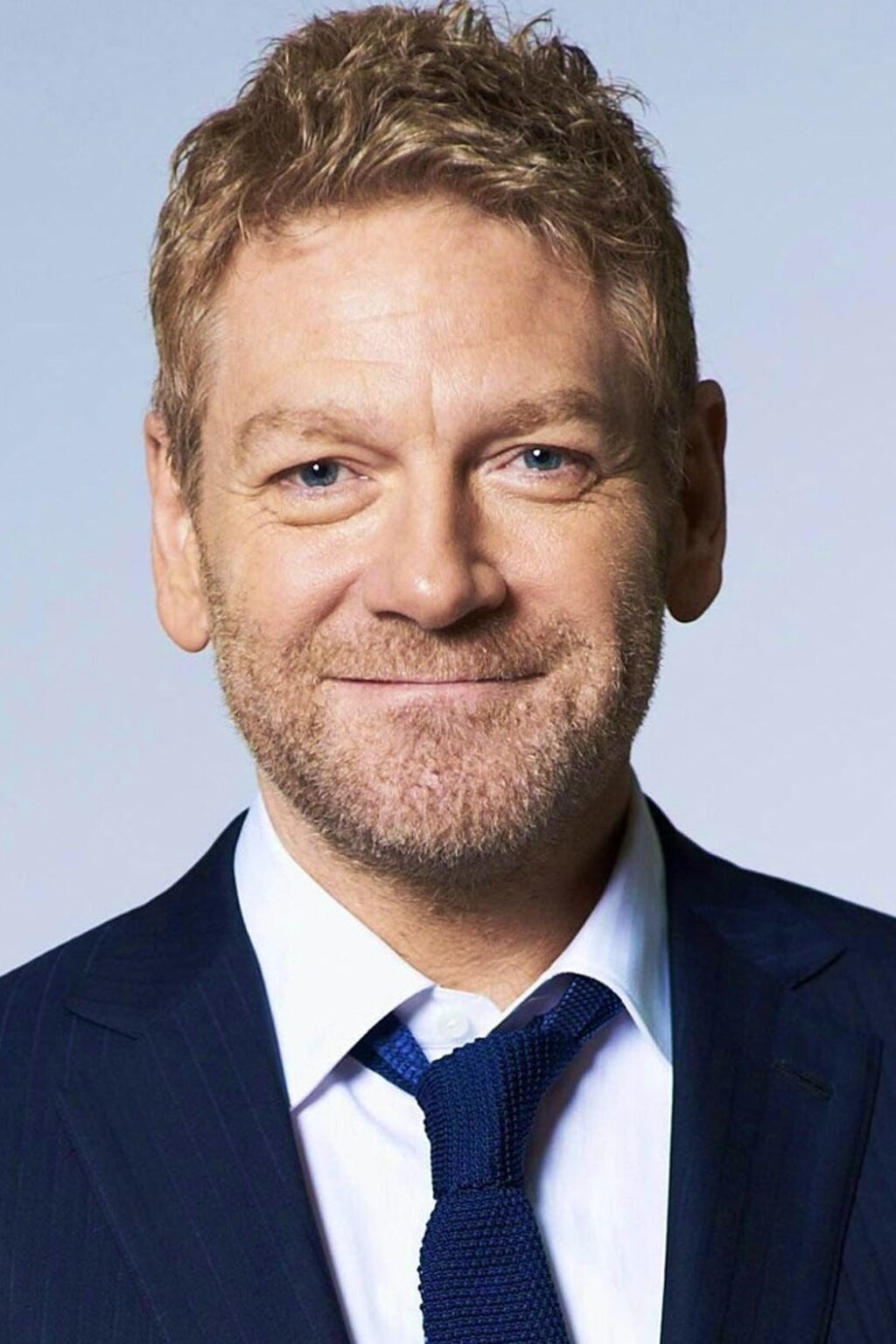
Sir Kenneth Branagh is the Belfast-born actor-director who directed and starred as Victor Frankenstein in Mary Shelley’s Frankenstein (1994).
Quick Specs
| Born | Kenneth Charles Branagh, December 10, 1960, Belfast, Northern Ireland; moved to Reading, Berkshire, at nine |
| Training | Royal Academy of Dramatic Art (graduated 1981; Bancroft Gold Medal) |
| Horror | director and Victor Frankenstein in Mary Shelley’s Frankenstein (1994); director and Hercule Poirot in A Haunting in Venice (2023); director and star of the reincarnation thriller Dead Again (1991) |
| Signature work | Henry V (1989); Much Ado About Nothing (1993); Hamlet (1996); Gilderoy Lockhart in Harry Potter and the Chamber of Secrets (2002); Kurt Wallander in Wallander (2008 to 2016); director of Thor (2011); Laurence Olivier in My Week with Marilyn (2011); writer-director of Belfast (2021) |
| Oscars | eight nominations in seven categories; one win, Best Original Screenplay for Belfast (2022) |
| Honours | knighted in the 2012 Birthday Honours; Primetime Emmy for Conspiracy (2001); BAFTA TV Leading Actor for Wallander (2010); International Emmy for Wallander (2017); President of RADA (2015 to 2024) |
Who He Is
Kenneth Charles Branagh was born in Belfast, Northern Ireland, on December 10, 1960, the middle of three children of working-class Protestant parents. His father, William Branagh, was a plumber and joiner who ran a company fitting partitions and suspended ceilings; his mother was Frances (née Harper). The family lived in the Tiger’s Bay area of north Belfast, and he went to Grove Primary School.
In early 1970, when he was nine, the family left for England to escape the Troubles and settled in Reading, Berkshire. He attended Whiteknights Primary School and Meadway School in Tilehurst, appeared in school productions, and joined Reading’s Progress Theatre. At school he learned to speak with a Received Pronunciation accent to avoid being bullied. He has never let go of where he came from: “I feel Irish. I don’t think you can take Belfast out of the boy.”
He trained at the Royal Academy of Dramatic Art in London. In 1980, while still a student, he performed a Hamlet soliloquy for Queen Elizabeth II during her visit to the Academy, at 19. He graduated in 1981 with the Bancroft Gold Medal, the school’s award for its outstanding student.
He was married to Emma Thompson from 1989 to 1995; they acted together in Fortunes of War, Henry V, Dead Again, Peter’s Friends and Much Ado About Nothing. In 2003 he married Lindsay Brunnock, a film art director he met while making Shackleton.
He was appointed a Knight Bachelor in the 2012 Birthday Honours “for services to drama and to the community in Northern Ireland” and received the accolade at Buckingham Palace on November 9, 2012, at 51. Afterwards he said he felt “humble, elated, and incredibly lucky.” He was President of RADA from 2015 to 2024, succeeding Richard Attenborough. Belfast gave him the Freedom of the City on January 30, 2018, and the University of Birmingham’s Shakespeare Institute, which holds the Renaissance Theatre Company archive, made him an honorary Doctor of Literature in 2001.
The Work, and What He Did in It
He made his professional stage debut six weeks after leaving RADA and won the Society of West End Theatre Award for Best Newcomer for Another Country (1982). In 1984 he joined the Royal Shakespeare Company, where he was acclaimed as Henry V and Hamlet. In 1987 he left to co-found the Renaissance Theatre Company with David Parfitt, working as actor, writer and director. The company toured his Hamlet, King Lear and Twelfth Night, became Renaissance Films, and produced his first film.
That film was Henry V (1989), his directing debut. He adapted Shakespeare’s play, directed it and played the king, in a muddy, bloody, post-Falklands reading deliberately set against the pageantry of Laurence Olivier’s 1944 film. Around the 28-year-old he gathered Paul Scofield, Derek Jacobi, Ian Holm, Brian Blessed, Judi Dench, Emma Thompson, whose cinema debut, The Tall Guy, had opened earlier in 1989, and a young Christian Bale. He took the play and the role most owned by Olivier and made both contemporary. The film won the Oscar for Best Costume Design, Branagh was nominated for Best Actor and Best Director, and he won the BAFTA for direction. The era called him the new Olivier.
Dead Again (1991), which he directed and starred in with Thompson in dual roles, was his first film as director away from Shakespeare: a Los Angeles neo-noir built on murder, hypnosis and a past-life haunting, and his first thriller. He directed Swan Song (1992), a short from Chekhov starring John Gielgud, nominated for the Oscar for Best Live Action Short Film. In Much Ado About Nothing (1993) he directed and played Benedick opposite Thompson’s Beatrice, in the sunlit Tuscan version that took his Shakespeare to a mainstream audience.
Mary Shelley’s Frankenstein (1994) is his horror centrepiece, and he directed it. Francis Ford Coppola produced it, with James V. Hart and John Veitch, through his American Zoetrope company for TriStar. Coppola had directed Bram Stoker’s Dracula (1992) himself; after that he wanted Frankenstein made, with Robert De Niro as the Creature and Branagh directing. The screenplay is by Steph Lady and Frank Darabont, and the film opened in the US on November 4, 1994, when Branagh was 33. Branagh plays Victor Frankenstein. De Niro is the Creature. Helena Bonham Carter is Elizabeth, Tom Hulce is Henry Clerval, Ian Holm is Victor’s father, John Cleese plays Professor Waldman straight, and Aidan Quinn is Captain Walton, to whom the story is told in the Arctic.
He set out to make the faithful Frankenstein. The film restores Shelley’s frame story, the Creature’s eloquence and self-education, and his demand for a bride, all elements the famous earlier films dropped. He played Victor as a figure of obsession and vanity, “a good man who lets his obsession and vanity get in the way,” in his own words, adding: “He creates the Creature and then abandons it. The Creature is like a rejected child.” He staged the film as gothic horror at operatic pitch, and the creation sequence is its set piece: the Creature is born in a vat of amniotic fluid and slides helpless across the laboratory floor, creation played as a botched birth rather than a triumph.
De Niro spent months preparing, and to find the Creature’s speech, language struggling out of a rebuilt brain, he modelled it on stroke survivors relearning to talk. “He didn’t want to sound urban and New York,” Branagh said, and the two worked out together what the Creature would know, settling on a want of “simple human companionship” as his philosophy. Whatever the finished film’s excesses, the Creature’s intelligence and wounded articulacy were designed.
The reviews were mixed to negative, with many critics charging the film with excess and frantic pace even while praising De Niro, and its reputation is still argued over. It was nominated for the Oscar for Best Makeup. The commonly tracked figures put the budget at about $45 million and the worldwide gross at about $112 million, of which only about $22 million was domestic. It was made in answer to the line of screen Frankensteins that runs back to James Whale’s 1931 Frankenstein. Its possessive title mirrors Bram Stoker’s Dracula, the branding that still leads people to call it Coppola’s film; it is Branagh’s.
Hamlet (1996), which he directed and starred in, is the full-text, four-hour Hamlet, shot on 70mm and set in a 19th-century court. It brought an Oscar nomination for Best Adapted Screenplay; he was 36 at release. With Henry V it defined him.
The new century made him a character actor of range. In HBO’s Conspiracy (2001), the film of the Wannsee Conference, he played Reinhard Heydrich and, at 40, won the Primetime Emmy for Outstanding Lead Actor in a Limited Series or Movie. In Harry Potter and the Chamber of Secrets (2002) he was Gilderoy Lockhart, the vain, fraudulent Defence Against the Dark Arts teacher, a celebrity memoirist who built his fame on other wizards’ deeds and memory charms. At 41 he was sending up the handsome Shakespearean image inside the biggest family-gothic franchise of the era.
In Wallander (2008 to 2016), the BBC’s English-language adaptations of Henning Mankell’s Swedish crime novels, he played the melancholy Ystad detective Kurt Wallander across four series. The series won the BAFTA TV Award for Best Drama Series in 2009, with Branagh among its credited recipients as executive producer. His own Leading Actor BAFTA came in 2010, at 49, and the International Emmy for Best Actor followed in 2017. Nine years of a haunted detective bridged the Shakespeare years and the Poirot years.
He directed Thor (2011), Marvel’s first Thor film, without acting in it, casting the then little-known Chris Hemsworth and Tom Hiddleston in the roles that defined them and reading the Odin, Thor and Loki triangle as Shakespearean family drama. He was 50. The same year, in My Week with Marilyn (2011), he played Laurence Olivier himself, opposite Michelle Williams’s Marilyn Monroe, during the making of The Prince and the Showgirl. His Olivier is vain, exasperated and magnetic, confronted by a method he cannot direct, and the performance brought an Oscar nomination for Best Supporting Actor. Twenty-two years after being compared to Olivier, he played him.
Murder on the Orient Express (2017) began his Agatha Christie trilogy, which he directed, produced and starred in as Hercule Poirot, with the moustache, the accent and a carriage that included Judi Dench, Johnny Depp, Michelle Pfeiffer and Penélope Cruz. He was 56. The film relaunched Poirot for a new generation. Death on the Nile (2022), delayed repeatedly by the pandemic, moved his Poirot to an Egyptian river steamer with Gal Gadot and Armie Hammer among the suspects.
Between them he worked as an actor for hire for Christopher Nolan three times: Commander Bolton, the officer on the mole, in Dunkirk (2017); Andrei Sator, the dying Russian oligarch who is the villain of Tenet (2020); and the Danish physicist Niels Bohr in Oppenheimer (2023). Authority, menace and conscience, in three films.
Belfast (2021), which he wrote, directed and produced, is his most decorated film. Shot largely in black-and-white, with colour kept for the films and theatre the boy escapes into, it follows nine-year-old Buddy (Jude Hill) on a working-class Protestant street in north Belfast in the summer of 1969, as the Troubles arrive on his road. His Ma (Caitríona Balfe) holds the family together, his Pa (Jamie Dornan) works in England and refuses to join the local strongman’s campaign, and his grandparents (Judi Dench and Ciarán Hinds) anchor the street, until the family faces the choice Branagh’s own family faced: stay, or leave. He has called it his most personal film. It is semi-autobiographical: drawn from his family’s move, with Buddy as a constructed stand-in. The film premiered in the autumn of 2021, when he was 60, and earned seven Oscar nominations. Three were his: Best Picture as producer, Best Director, and Best Original Screenplay, which he won on March 27, 2022, at 61. It was his first Oscar, on his eighth nomination, 32 years after his first. He also won the Golden Globe for the screenplay, and the film won the BAFTA for Outstanding British Film.
A Haunting in Venice (2023) is the most horror-forward of his Poirots. Loosely based on Christie’s Hallowe’en Party (1969) and moved from an English village to post-war Venice, it has a retired Poirot lured by the novelist Ariadne Oliver (Tina Fey) to a Halloween séance in a decaying, reputedly haunted palazzo. The medium Joyce Reynolds (Michelle Yeoh) conducts it for the grieving Rowena Drake (Kelly Reilly). A guest is murdered, and Poirot, locked in with the suspects through a storm, must solve it while the film keeps open, far longer than its predecessors dared, the possibility that the haunting is real. It opened on September 15, 2023, when he was 62, and reviews described it in gothic terms, as a haunted-house film folded inside a whodunit.
Cool Verified Facts
- With Belfast he became the first person ever nominated for Oscars in seven different categories: Best Actor, Supporting Actor, Director, Adapted Screenplay, Original Screenplay, Picture and Live Action Short Film.
- That is eight nominations, not seven. Best Director appears twice, for Henry V and Belfast. His one win is for the Belfast screenplay.
- He directed Mary Shelley’s Frankenstein. Coppola produced it.
- He was compared to Olivier for Henry V in 1989 and played Olivier in My Week with Marilyn in 2011, and was Oscar-nominated both times.
- He directed Thor and Belfast without acting in either. He directed all three of his Poirot films.
- At 19, as a RADA student, he performed a Hamlet soliloquy for the Queen.
- Conspiracy brought him a Primetime Emmy. His International Emmy is for Wallander, in 2017.
Signatures, Habits and Behind the Scenes
He builds companies, not just casts. The Renaissance Theatre Company, founded with David Parfitt in 1987 when the RSC felt too large and impersonal, led to Renaissance Films and to Henry V. The actor-manager model, Olivier’s model and the 19th century’s, runs through the whole career: the man who founds the company directs the film, plays the lead and, with Belfast, writes his own childhood.
The accent is an instrument with a biography. The Belfast boy who taught himself RP at a Reading school to stop the bullying grew into the actor-director whose Poirot is built on a fastidious Belgian accent, whose Wallander is a near-wordless English melancholy, and whose own voice still carries Belfast underneath.
Directing himself is the habit, not the exception: Victor Frankenstein, Henry V, Hamlet, Benedick and Poirot three times. Just as telling are the films he directs without appearing in, such as Thor, Cinderella and Belfast. When the material is autobiographical or industrial he stays behind the camera. When it is canonical and theatrical, Shakespeare, Shelley or Christie, he puts himself at its centre.
His Frankenstein has a postscript in the line of Victors that followed: the 2015 film Victor Frankenstein, Paul McGuigan’s version with James McAvoy and Daniel Radcliffe, came twenty-one years after his.
Why He Matters
For horror, Kenneth Branagh is the bridge from canonical literature. He directed and starred in the Frankenstein that set out to restore Shelley’s novel, with De Niro’s Creature as its tragic centre, and almost thirty years later directed the Poirot series into outright gothic horror with A Haunting in Venice. Add the reincarnation thriller Dead Again at the start, and the pattern is a career that keeps returning classic properties to their darker source texts. He is not the Shakespeare man who once made a monster movie. He is the director who was twice trusted with a classic property because he would play its horror straight.
The seven-category record is a genuine first: actor in lead and supporting roles, director, writer of adapted and original screenplays, producer, and short-film maker, across five decades. And Belfast closed the circle the childhood opened. The nine-year-old who left Tiger’s Bay in 1970 won his Oscar at 61 for writing the film of that leaving.