Psycho (1960) is Alfred Hitchcock’s black-and-white horror thriller about Marion Crane, a secretary on the run with stolen cash, and Norman Bates, the shy young man who runs a half-empty roadside motel. Joseph Stefano adapted it from Robert Bloch’s 1959 novel, and Hitchcock made it cheaply with the crew of his television show. It became the biggest commercial hit of his career, gave cinema its most famous shower scene and introduced Norman Bates, one of horror’s defining villains. It is often cited as one of the earliest slasher films and regularly appears on lists of the greatest films ever made.
At a glance
| Release date | June 16, 1960 (New York City) |
| Director | Alfred Hitchcock |
| Writer | Joseph Stefano (screenplay) |
| Based on | Psycho (1959 novel) by Robert Bloch |
| Starring | Anthony Perkins, Vera Miles, John Gavin, Martin Balsam, John McIntire, Janet Leigh |
| Runtime | 109 minutes |
| Rating | Approved under the Production Code (1960); rated M by the MPAA in 1968 and re-rated R in 1984 |
| Budget | $806,947 |
| Box office | About $50 million worldwide |
| Franchise | Psycho (three sequels, a remake and the TV series Bates Motel) |
Plot summary
In Phoenix, Arizona, real estate secretary Marion Crane (Janet Leigh) steals $40,000 in cash from her employer. She wants to start a new life with her boyfriend, Sam Loomis (John Gavin), whose debts keep delaying their marriage. Driving toward Sam’s town through a heavy rainstorm, she pulls off the highway and checks in at the Bates Motel. The motel is run by Norman Bates (Anthony Perkins), a polite, nervous young man who lives in the old house on the hill above it with his invalid mother, and he seems to be under her thumb.
When Marion goes missing, her sister Lila (Vera Miles), Sam and a private investigator named Milton Arbogast (Martin Balsam) start looking for her. Every trail leads back to the motel and to the mother nobody else ever seems to see.
Spoiler section: the ending
Marion is murdered in her motel shower less than halfway through the film, which shocked audiences in 1960 because she was played by the film’s biggest star. Arbogast is killed when he enters the house. In the fruit cellar, Lila finds Mrs. Bates’s preserved corpse, and Norman bursts in wearing his mother’s clothes before Sam overpowers him. A psychiatrist explains that Norman murdered his mother years earlier and now shares his mind with a “Mother” personality. The film ends with Norman sitting alone in a cell while Mother’s voice speaks his thoughts.
Production and behind the scenes
Bloch’s novel was loosely inspired by the case of the Wisconsin murderer and grave robber Ed Gein. Peggy Robertson, Hitchcock’s longtime assistant, spotted a positive review of the book in The New York Times, though Paramount’s story readers had already turned it down. Hitchcock bought the rights for $9,500 and reportedly had copies of the novel bought up to protect its twist. Joseph Stefano, who had only one film credit, made Norman younger and more sympathetic than Bloch’s middle-aged, heavy-drinking version, and he decided to open the film with Marion’s story rather than Norman’s.
Paramount did not want to make the film and refused Hitchcock his usual budget, so he financed it himself through his company, Shamley Productions. He shot at Revue Studios on the Universal lot with the crew of Alfred Hitchcock Presents, filming in black and white partly to keep costs under $1 million. Filming ran from November 11, 1959, to February 1, 1960. Leigh accepted $25,000, about a quarter of her usual fee, and Perkins agreed to $40,000.
Saul Bass designed the title sequence and storyboarded the shower scene. Bernard Herrmann scored the film for strings alone, rather than the jazz score Hitchcock had asked for, and Hitchcock later credited the music with a third of the film’s effect.
Release and reception
Psycho opened on June 16, 1960, at the DeMille and Baronet theaters in New York. Hitchcock ran the publicity himself. He kept Leigh and Perkins away from interviews, made critics see the film with paying audiences, and enforced a then-unusual rule that no one would be admitted after the film had started.
Early reviews were sharply divided. Bosley Crowther of The New York Times was unimpressed by what he called an “obviously low-budget job,” and The Observer‘s C. A. Lejeune walked out and then resigned as the paper’s film critic. Audiences felt differently. Psycho earned $32 million in its first run and was the second-highest-grossing film of 1960, behind Spartacus. Its worldwide total is usually put at about $50 million, and it remains the most commercially successful film of Hitchcock’s career. It received four Academy Award nominations, including Best Director and Best Supporting Actress for Leigh. Today it holds a 97% approval rating on Rotten Tomatoes and a Metacritic score of 97.
Legacy and influence
Psycho is often called the first psychoanalytical thriller, and it reset the limits of what American films could show in terms of violence and sexuality. Killing off its top-billed star at the end of the first act was a structural shock that filmmakers have imitated ever since. Many critics count it among the first slashers, though some historians give that title to Michael Powell’s Peeping Tom, released the same year. The Library of Congress added it to the National Film Registry in 1992, and in the 2022 Sight and Sound poll it ranked 31st among critics and 46th among directors.
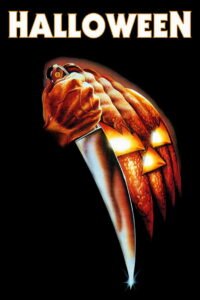
The film’s fingerprints are all over later horror. John Carpenter’s Halloween (1978) starred Leigh’s daughter, Jamie Lee Curtis, and named a character Sam Loomis, while Wes Craven’s Scream (1996) cited Hitchcock’s film directly. After Hitchcock’s death in 1980, Universal produced Psycho II (1983), Psycho III (1986, directed by Perkins) and the TV film Psycho IV: The Beginning (1990). Perkins played Norman in all three. Gus Van Sant then made a near shot-for-shot color remake, Psycho (1998), with Vince Vaughn as Norman.
Trivia
- Hitchcock’s cameo comes early. He stands outside Marion’s office in a Stetson. Wardrobe supervisor Rita Riggs said he chose the scene so he could share it with his daughter, who plays Marion’s co-worker.
- Counts of the shower scene’s shots vary. The 2017 documentary 78/52 takes its title from a commonly cited 78 camera setups and 52 cuts. The blood was chocolate syrup, and the sound of the knife was reportedly made by stabbing a melon.
- Marion flushes a scrap of paper down a toilet, and the film is often cited as the first mainstream American film to show a toilet flushing.
- Hitchcock is reported to have earned more than $15 million from the film. He then traded his rights in Psycho and his TV series for 150,000 shares of MCA, Universal’s parent company.
- Norman’s line “A boy’s best friend is his mother” is No. 56 on AFI’s list of the 100 greatest movie quotes.
Related links
- Norman Bates (character)
- Marion Crane (character)
- Psycho (franchise)
- Psycho II (1983) and Psycho (1998)
- Alfred Hitchcock (director)
- Anthony Perkins and Janet Leigh (cast)
- Robert Bloch (novelist) and Joseph Stefano (screenwriter)
- Bernard Herrmann (composer)
- The Texas Chain Saw Massacre (1974), another film shaped by the Ed Gein case