
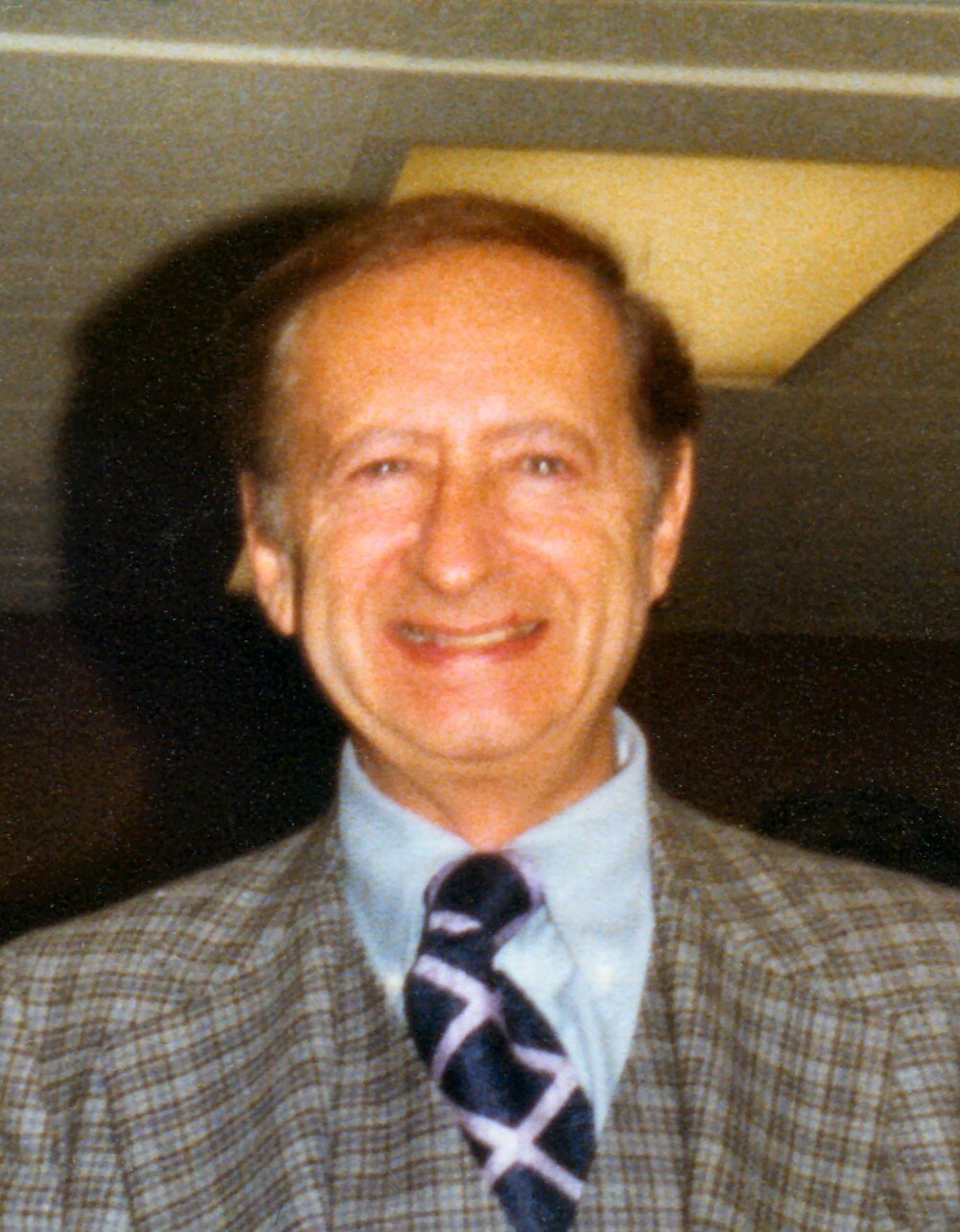
Robert Bloch was the American author who wrote Psycho, apprenticed by letter to H. P. Lovecraft and bridged pulp horror to the modern age.
He is the hinge figure of twentieth-century horror: a teenager who sold his first stories to Weird Tales while H. P. Lovecraft critiqued his drafts by mail, and the same man, four decades later, whose novel Psycho rebuilt horror as psychological, contemporary and ordinary — a bypassed motel, a stolen forty thousand dollars, a mother in the house on the hill. He also held the profession’s honours in both worlds: a Hugo, the first World Fantasy lifetime award ever given, and a signature joke that Stephen King borrowed and credited to him. “Despite my ghoulish reputation, I really have the heart of a small boy,” Bloch wrote. “I keep it in a jar on my desk.” He died in Los Angeles on 23 September 1994, aged 77.
Quick Specs
- Born: 5 April 1917, Chicago, Illinois
- Died: 23 September 1994, Los Angeles, California (aged 77)
- Known for: Psycho (1959), “Yours Truly, Jack the Ripper” (1943), “That Hell-Bound Train” (1958)
- Honours: Hugo Award for Best Short Story (1959); first World Fantasy Award for Life Achievement (1975); Bram Stoker Lifetime Achievement Award (filed 1989; generally listed 1990)
The Boy Who Wrote to Lovecraft
Bloch was born in Chicago, the elder of two children of Raphael Bloch, a bank cashier, and Stella Loeb Bloch. The family lived in Maywood, a Chicago suburb, and the formative fright came early: at about eight he saw Lon Chaney in The Phantom of the Opera (1925), which gave him recurrent nightmares and a lifelong love of Chaney’s films. In 1927 he discovered Weird Tales. After his father lost bank jobs in the Depression, the family moved to Milwaukee, his mother’s social-work job supporting them; Bloch graduated from Lincoln High School there in June 1934. In 1933, at sixteen, he wrote to H. P. Lovecraft, whose fiction he admired. Lovecraft replied — encouraged him, read and critiqued the teenager’s drafts before submission, suggested he try writing for publication at all — and drew him into what became known as the Lovecraft Circle. They never met: the friendship existed only in letters, Lovecraft in Providence being habitually too poor to travel, and the correspondence grew substantial enough to fill a published volume of Lovecraft’s letters.
The professional sales came in July 1934, when Bloch was seventeen: “The Secret in the Tomb” and “The Feast in the Abbey,” both sold to Weird Tales — his first professional sales, though a semiprofessional story, “Lilies,” had appeared in Marvel Tales that year. Publication ran the reverse of sale order: “The Feast in the Abbey” appeared first, in the January 1935 issue. Within eighteen months his fiction was selling regularly; over his first decade he published more than a hundred stories. The early work is openly Lovecraftian, and he extended the Cthulhu Mythos itself, inventing the oft-cited grimoires De Vermis Mysteriis and Cultes des Goules. His first book was the collection The Opener of the Way (1945), published by August Derleth’s Arkham House — the house founded to publish Lovecraft.
The apprenticeship produced the single most charming document in the record. In “The Shambler from the Stars” (Weird Tales, September 1935), the eighteen-year-old Bloch killed off a Lovecraft-like mystic at the hands of the creature he summons. Weird Tales required the victim’s permission, and Lovecraft signed an authorisation for Bloch “to portray, murder, annihilate, disintegrate, transfigure, metamorphose, or otherwise manhandle the undersigned in the tale entitled THE SHAMBLER FROM THE STARS.” Lovecraft replied in kind with “The Haunter of the Dark” (1936), in which “Robert Blake” — living at Bloch’s actual Milwaukee address, 620 East Knapp Street — is killed, and dedicated the story to Bloch; in the standard Lovecraft-scholarship claim, he is the only person Lovecraft ever dedicated a story to. Bloch completed the exchange himself fifteen years later with “The Shadow from the Steeple” (1950). Lovecraft died in 1937, when Bloch was nineteen, turning twenty. Meanwhile the working life ran in parallel: the Milwaukee Fictioneers, radio jokes, publicity and speeches for a successful dark-horse mayoral campaign in 1939, and from 1942 to 1953 a copywriting job at the Gustav Marx Advertising Agency, writing fiction on the side.
The Distinctly Blochian Story
“Yours Truly, Jack the Ripper” (Weird Tales, July 1943) is the first distinctly Blochian story in the standard account: the Ripper cast as an eternal being who must make human sacrifices to sustain his immortality, researched with more genuine detail of the 1888 case than most fictional treatments of its time. It became one of the most reprinted fantasy tales of the twentieth century, and Bloch returned to the Ripper for the rest of his life — “A Toy for Juliette” in Dangerous Visions (1967), a Star Trek episode, and the full novel The Night of the Ripper (1984), Inspector Abberline’s investigation with figures including Arthur Conan Doyle woven in. His first novel, The Scarf (1947), is a first-person psychological thriller: Daniel Morley, a writer who uses real women as models for his characters and then murders them with the maroon scarf he has kept since childhood. The theme — the serial killer inside an ordinary skull — is the one he would return to in Psycho. By the mid-1940s, he said in interview, “I had pretty well mined the vein of ordinary supernatural themes until it had become varicose… the real horror is not in the shadows, but in that twisted little world inside our own skulls.” Three novels came in 1954 alone — Spiderweb, The Kidnapper and The Will to Kill — the year Weird Tales itself ceased publication. In 1953 he had moved his family to Weyauwega, Wisconsin, his wife Marion’s hometown, so she could be near friends and family during her illness, and wrote novels there. And in The Magazine of Fantasy and Science Fiction in September 1958 he published “That Hell-Bound Train” — the hobo Martin, who trades his soul for the power to stop time at his happiest moment, can never choose the moment, and finally stops time on the train itself. It won the Hugo Award for Best Short Story in 1959.
Psycho
What happened in Wisconsin in 1957 is the most mistold story in horror, so take it from Bloch himself. He was living in Weyauwega when Ed Gein’s crimes were exposed in nearby Plainfield. His account, in his 1993 memoir and on the record since: “I based my story on the situation rather than on any person, living or dead, involved in the Gein affair; indeed, I knew very little of the details concerning that case and virtually nothing about Gein himself at the time.” All he knew was that a man in a small town had committed shocking murders, unsuspected, in a place where — as he put it — “if you sneezed on the north side of town, on the south side they said ‘Gesundheit!'” Only after inventing Norman Bates did he discover how closely his imaginary character resembled the real Gein. The distinctions matter: Gein ran no motel, killed nobody in a shower, and did not preserve his mother’s body. Those are Bloch’s inventions.
Psycho was published by Simon & Schuster on 10 April 1959. It opens with Norman, not the victim: the novel’s Norman Bates is a plump, bespectacled, hard-drinking motel keeper of about forty, dominated by his mother — Anthony Perkins’s slim, boyish Norman is the film’s recasting, not the page’s. Mary Crane, who has stolen $40,000 so her fiancé Sam Loomis can pay his debts and marry her, enters in chapter two, loses the highway, and checks into the bypassed Bates Motel in Fairvale. Bloch kills his apparent heroine early, in the shower, by beheading — in two sentences: “It was the knife that, a moment later, cut off her scream. And her head.” The film’s celebrated stabbing montage is not in the book, and neither is the name the film made famous: the novel’s victim is Mary, renamed Marion for the screen, in the standard account because real Mary Cranes were found in Phoenix. The novel then rebuilds itself around the investigation — Lila Crane (played by Vera Miles in the film), Sam, and the detective Arbogast — and around Norman’s interior narration, in which his conversations with “Mother” are presented as if she were alive. His craft rule, as his contemporaries understood it, was that unseen terrors beat graphic detail: the result of the blow was implied, never described. The beheading is the technique, not an exception to it.
A laudatory New York Times review is how the book reached Alfred Hitchcock. The film rights were sold blind — anonymously — for a four-figure sum in the $9,000 to $9,500 range in the retellings, of which Bloch kept only part, and with no percentage of the film’s profits: the grievance every account agrees on. It was Hitchcock who then bought up as many copies of the novel as he could to protect the ending — the famous stunt is the director’s, not the author’s. Psycho (1960) was directed by Hitchcock with a screenplay by Joseph Stefano; Bloch had, in his own words, “nothing to do with the screenplay. I was living in a small town in Wisconsin.” The film — made for $806,947 and returning some $50 million worldwide, the film’s figures, not Bloch’s earnings — carried his construction around the world, Perkins in the role, Janet Leigh in the shower, Bernard Herrmann on the score. Hitchcock’s own reported verdict: “Psycho all came from Robert Bloch’s book.” Bloch’s standard reply to viewers who told him they could no longer take a shower: “I can only tell them that they’re lucky I didn’t kill off my victim on a toilet seat.”
The Hollywood Years
The family moved to Los Angeles around 1960, and after a Writers Guild strike Bloch became a heavily used television and film writer. His own site’s television page gives the counting this page uses, because the numbers collapse if “wrote” and “was the source for” are mixed: he wrote eight teleplays for Alfred Hitchcock Presents, continuing into The Alfred Hitchcock Hour — one of them, his adaptation of his own “The Sorcerer’s Apprentice,” was shelved as too gruesome for its original run and aired only in syndication. For Boris Karloff’s Thriller he wrote seven scripts, many adapting his own stories; his adaptation of D. M. Lessing’s “The Grim Reaper,” starring William Shatner, is named among the series’ most memorable episodes, and it was through Thriller that he met Boris Karloff and became his close friend. For Star Trek he wrote exactly three episodes: “What Are Little Girls Made Of?” (1966), “Catspaw” (1967) — the Halloween episode, based on his own story “Broomstick Ride” — and “Wolf in the Fold” (1967), which reworks his Ripper-as-eternal-evil idea with Jack the Ripper surviving into the future. His film screenplays include Strait-Jacket (1964) for William Castle, The Night Walker (1964) and The Skull (1965), and the Amicus anthologies Torture Garden (1967), The House That Dripped Blood (1971) and Asylum (1972). The honours ran alongside: a special Mystery Writers of America Edgar honour for Psycho; in 1975, at the first World Fantasy Convention in Providence, the first World Fantasy Award for Life Achievement ever presented; a World Science Fiction Convention Special Award in 1984 for fifty years as an SF professional; the Bram Stoker Lifetime Achievement Award — filed under 1989 by the Horror Writers Association’s own recipients list, generally listed as 1990; and the World Horror Convention Grand Master Award in 1991. He also served as president of the Mystery Writers of America around 1970.
The Print Sequels Are Not the Films
Bloch’s Psycho II (1982) is a Hollywood satire: Bates escapes the asylum disguised as a nun and heads for Hollywood, where a slasher film of his crimes is in production, and his psychiatrist pursues him. Universal did not want it filmed — for its attack on splatter-film Hollywood, in the standard account — and Bloch was, by his later account, not invited to the screenings of the film sequel. That film, Psycho II (1983), in which Norman is released and tries to live normally, is a different story by other writers; the two works share a title and nothing else. The same divorce applies at the other end: Psycho House (1990), in which murders resume when the Bates Motel is reopened as a tourist attraction, has no relation to the film Psycho III (1986). The late career closed the oldest circle too: Strange Eons (1978) was his fullest return to Lovecraft, a Mythos novel built on the premise that Lovecraft’s fiction might have been fact. His last published novels, both 1990, were Psycho House and The Jekyll Legacy, written with Andre Norton. His memoir, Once Around the Bloch: An Unauthorized Autobiography (1993) — the title is one of his bibliography’s signature puns, alongside collections like Tales in a Jugular Vein and Such Stuff as Screams Are Made Of — is humorous, self-deprecating, and the primary source for his own accounts of Gein, Lovecraft and the Psycho sale; it won the Bram Stoker Award for Non-Fiction. Ramsey Campbell’s verdict on the man stands as the record’s: Bloch was “the best stand-up act since Boris Karloff in Frankenstein.”
Why He Matters
Psycho the novel is the hinge of modern horror. Bloch took the pulp toolkit — the twist ending, the unreliable domestic interior, the monster who is the man next door — and rebuilt it as psychological horror in a contemporary, ordinary setting; the sympathetic protagonist killed early, the killer whose second self does the killing, the closing interior-monologue chill became the genre’s grammar, and Hitchcock’s film carried Bloch’s construction, not merely his plot, around the world — through the 1998 remake and every Norman since. He is also the bridge figure between two eras of the field: the Lovecraft Circle’s teenage correspondent, publishing in Weird Tales in 1935, and a working Hollywood writer whose creation anchored a franchise into the 1990s. Even the corrections are his: his 1962 essay “The Shambles of Ed Gein” was selected by the Library of America in 2008 for its two-century retrospective of American true crime — the author dismantling the Gein legend in essay form, decades before that became fashionable. And the joke outlived them all. Stephen King used the heart-of-a-small-boy line in talks for years — crediting Bloch by name, as the record shows, before later retellings dropped the credit and attached the line to King. Bloch had been printing it since the 1940s. The heart is his. It is still in the jar.
Keep it locked on Think Horror — we all go a little mad sometimes.