
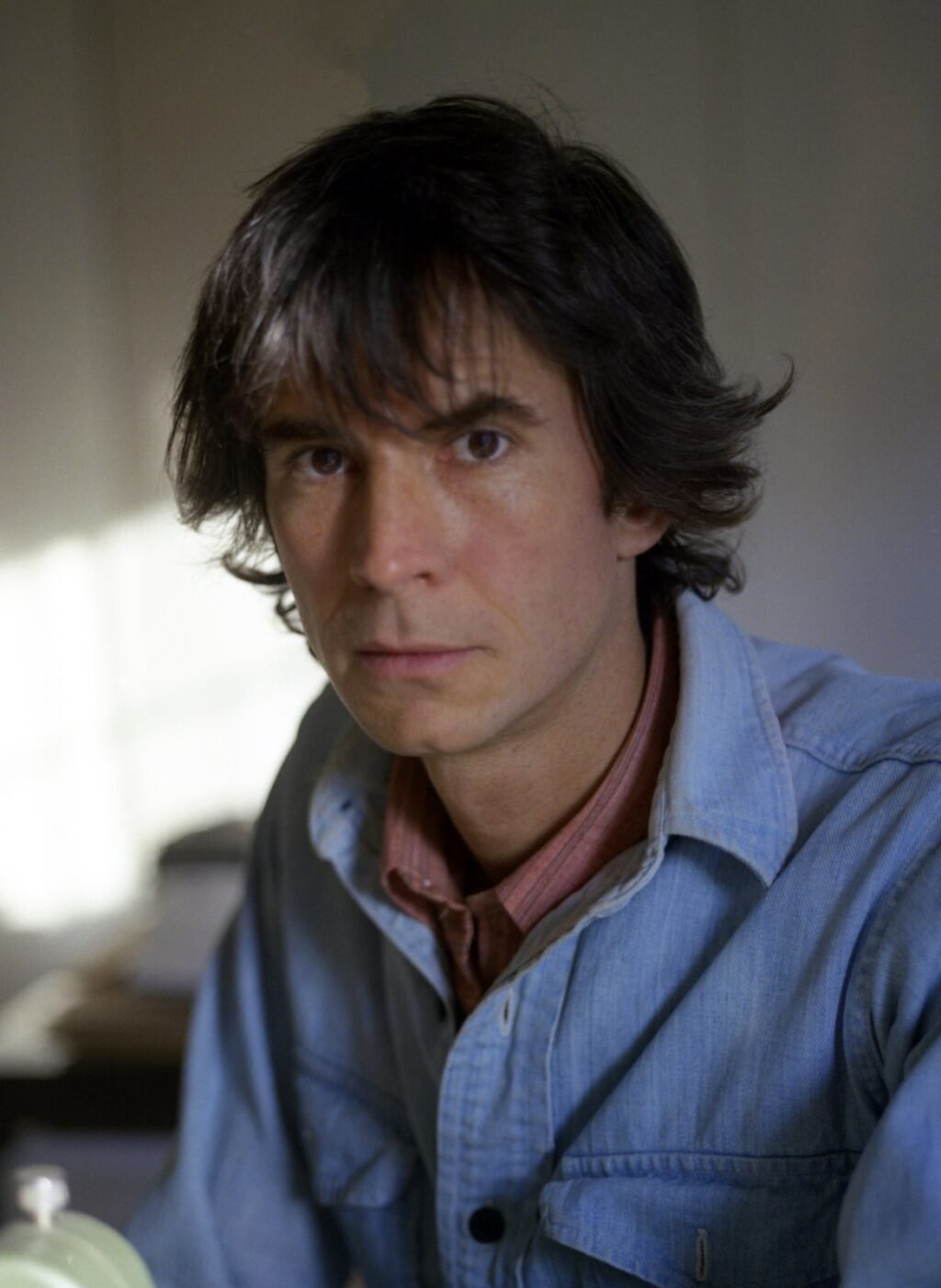
Anthony Perkins (1932 to 1992) was the American actor and director who played Norman Bates in Psycho and directed Psycho III.
Quick Specs
| Born | April 4, 1932, New York City, New York |
| Died | September 12, 1992, Los Angeles, California, aged 60 |
| Father | The stage and screen actor Osgood Perkins (died 1937) |
| Film debut | The Actress (1953), opposite Spencer Tracy |
| Oscar record | One nomination, Best Supporting Actor, for Friendly Persuasion (1956); none for Psycho |
| Other awards | Golden Globe for New Star of the Year (Friendly Persuasion); Best Actor at the Cannes Film Festival for Goodbye Again (1961); the Edgar Award for The Last of Sheila (1973), co-written with Stephen Sondheim |
| Defining role | Norman Bates in Psycho (1960), Psycho II (1983), Psycho III (1986) and Psycho IV: The Beginning (1990) |
| As director | Psycho III (1986) |
| Psycho shoot | November 1959 to February 1960, aged 27 to 28 |
| Psycho fee | $40,000, the production’s top acting fee |
| Final Norman | Psycho IV: The Beginning (1990), a television film directed by Mick Garris |
| Family | Married Berry Berenson (1973); sons Osgood “Oz” Perkins (born 1974) and Elvis Perkins (born 1976) |
Who He Was
Anthony Perkins was born on April 4, 1932, in New York City. His father was the actor Osgood Perkins, a noted Broadway performer who also appeared in early sound films, including the 1932 Scarface. Osgood died in 1937, when Anthony was five. The acting inheritance and the early loss are both part of the record.
The name runs through four generations, and it causes confusion in the databases. There is Osgood Perkins the father, an actor who died in 1937. There is Anthony. And there is Anthony’s elder son, Osgood “Oz” Perkins, named for his grandfather, who is the director of Longlegs. Anthony did not make his son’s films, and his father did not make his.
His film debut came in The Actress (1953), opposite Spencer Tracy. Then came the arrival. For Friendly Persuasion (1956) he was nominated for the Academy Award for Best Supporting Actor, and he won the Golden Globe for New Star of the Year. He was 24.
That sequence matters for everything that follows. Perkins did not come to Hitchcock as a newcomer to be made by one role. He came with an Oscar nomination, a Golden Globe and a run of leading parts, which is exactly what made his casting as Norman so effective, and so hard to shake off afterwards.
He also had a genuine teen-idol phase. In the late 1950s he recorded pop singles, and “Moon-Light Swim” reached the US charts in 1957. That phase matters, because Psycho was cast directly against it.
In 1973 he married the photographer Berry Berenson. They had two sons: Osgood, known as Oz, born in 1974, and Elvis, a musician, born in 1976. Stephen Sondheim, his co-writer on The Last of Sheila, was Oz’s godfather.
Anthony Perkins died on September 12, 1992, in Los Angeles, of AIDS-related pneumonia. He was 60. He had not publicly disclosed his illness, and a statement from him, released by his family after his death, addressed it directly.
Berry Berenson was killed on September 11, 2001, as a passenger on American Airlines Flight 11. It is part of this family’s history, and of Oz Perkins’s own public account.
The career needs to be held as a double truth. Norman Bates did not end it. Perkins worked for thirty-two years after Psycho: European art films, a Cannes Best Actor prize, a stage career, writing and directing. But Norman did colonise it, and he came back to the role three more times. Neither of the easy versions is right. Psycho did not ruin him, and he did not escape it. Both a distinguished career and a permanent possession by one role are true at once, and his own son is the witness.
The Work, and What He Did in It
Friendly Persuasion (1956) brought the nomination. William Wyler directed. Perkins played Josh Birdwell, a Quaker boy torn between his faith’s pacifism and the Civil War arriving at his door. He held the film against Gary Cooper at 24 and was nominated for Best Supporting Actor. It was his only Oscar nomination. Any account that starts his career at Psycho misses that he arrived already certified.
He was a fifties leading man, and he specialised in sensitive, haunted young men before Hitchcock turned that quality into a weapon:
- Fear Strikes Out (1957): the baseball player Jimmy Piersall, in a breakdown performance that prefigures Norman’s fragility.
- The Tin Star (1957): opposite Henry Fonda.
- Tall Story (1960).
Psycho (1960) is the defining performance. He was 27 when the shoot began, in November 1959, and 28 by the time it ended in February 1960. Five things about it are on the record.
- He built Norman out of boyishness. There are the hesitations, the bird-stuffing hobby, the line “a boy’s best friend is his mother,” and the nervous candy-eating, a detail the production record credits to him. The horror arrives through sympathy first.
- He was the bigger investment. He was paid $40,000, the production’s top acting fee, on a film whose total budget was $806,947. Janet Leigh was paid $25,000, and she was working off a contract obligation. Retellings that make him the cheap newcomer and her the expensive star have the shape backwards.
- He is not the figure in the shower. Mother’s attacks were performed by doubles and stunt performers, and Mother’s voice was principally Virginia Gregg’s. Some accounts add other voices for single lines, but Gregg is the documented one. Norman, as Perkins played him, is never the body in the shower scene.
- He received no Oscar nomination for it. The omission is one of the Academy’s famous ones.
- The casting was an irony. Hitchcock cast the era’s sensitive boyfriend, a teen-idol pop singer, as its monster.
That last point is the key to the whole performance. Audiences in 1960 knew Perkins as the Quaker son of Friendly Persuasion, the fragile ballplayer of Fear Strikes Out and the singer of a charting pop record. Hitchcock used that familiarity as a trap, and Perkins played into it with precision. Norman’s boyishness is the Perkins audiences already liked, and the horror arrives through that sympathy, not around it.
Norman Bates is Robert Bloch’s creation. Perkins played him, and the distinction matters on a wiki.
The European years came next. Within a year of Psycho’s premiere he bought out his Paramount contract and moved to France, where he worked in European productions. For Goodbye Again (1961), opposite Ingrid Bergman, he won Best Actor at the Cannes Film Festival, at 29. Europe gave him the top acting prize that America had not.
The American middle career was wide:
- Pretty Poison (1968): a cult performance opposite Tuesday Weld, Norman’s dark cousin in the suburbs.
- Catch-22 (1970).
- The Life and Times of Judge Roy Bean (1972).
- Murder on the Orient Express (1974).
Alongside the films he kept a parallel stage career, headlining Broadway productions through the 1960s and 1970s, in a circle that included Stephen Sondheim. That led directly to the writing.
The Last of Sheila (1973) made him a screenwriter. Perkins co-wrote the whodunit with Sondheim. The two men were famous puzzle-hunters together, and the screenplay won the Edgar Award from the Mystery Writers of America. The actor at the centre of the most famous mystery of his era was also one of the architects of the modern puzzle film, and the line of star-cast whodunits that runs down to Knives Out passes through this credit.
Then Norman came back, three times:
- Psycho II (1983): directed by Richard Franklin from a script by Tom Holland. Norman is released as cured, and Perkins, at 50, plays him as a gentle, frightened man the world turns back into a monster. The performance is the film’s praised centre. Twenty-three years on, the sequel asks the audience to fear for Norman rather than fear him, and it works because Perkins plays the cure as real and fragile.
- Psycho III (1986): Perkins directed it himself, at 54, and starred. It is the only sequel he directed, and it separates him from every other horror-icon actor of his generation: he took the camera for his own haunting.
- Psycho IV: The Beginning (1990): a television film, directed by Mick Garris, and his final Norman.
That makes four Psycho films in all, one of them as director. He did not direct the sequels; he directed one of them.
His late work included Crimes of Passion (1984) for Ken Russell and Daughter of Darkness (1990), with television work into 1992. He worked until the year of his death.
Cool Verified Facts
- His only Oscar nomination was for Friendly Persuasion, in the supporting category. Psycho brought him none.
- He was paid $40,000 for Psycho, more than Janet Leigh’s $25,000.
- He is never the figure in the shower. Doubles performed Mother’s attacks, and Virginia Gregg was Mother’s principal voice.
- He won Best Actor at Cannes for Goodbye Again in 1961.
- He co-wrote The Last of Sheila with Stephen Sondheim, and it won the Edgar Award.
- He directed Psycho III, the only Psycho film he directed.
- He had a charting pop single, “Moon-Light Swim,” in 1957.
- He won the Golden Globe for New Star of the Year for Friendly Persuasion.
- Within a year of Psycho’s premiere, he bought out his Paramount contract and moved to France.
- Stephen Sondheim, his writing partner, was godfather to his son Oz.
- His father, Osgood Perkins, appeared in the 1932 Scarface. His son, Oz Perkins, directed Longlegs.
Signatures, Habits and Behind the Scenes
The nervous boyishness was technique, not type. The same instrument runs through Jimmy Piersall in Fear Strikes Out, Josh Birdwell and Norman: youth held a beat too long, and politeness used as a dam. Casting directors saw a type. Europe and Cannes, and the puzzle-film world of Sondheim, valued the instrument at full price, while Hollywood kept pricing it as Bates.
He had a puzzle mind. The Sondheim collaboration grew out of the two men’s famous murder-game parties in New York. It is the behind-the-scenes fact that best explains him: the actor inside the most famous mystery of his era was, off screen, a serious constructor of mysteries himself.
He managed the haunting on his own terms. Rather than refusing Norman, he returned to the role three times, once behind the camera. His son’s testimony is that the family’s accounting stayed double. “My dad became Norman Bates in a way that just sort of stuck to him… it becomes a curse,” Oz Perkins told Vanity Fair. The role paid for everything and cost everything. He was neither its victim nor its escapee, but a man who kept renegotiating with his own ghost.
He kept working in the open. Across his career he acted, sang, wrote, directed and headlined on Broadway, and the record shows a man who used every part of the business rather than hiding from any of it. Even his last years were working years, with films and television into 1992.
There is no verified “difficult” record. What survives of him is craft, contracts and family, not on-set conflict, and this page invents none.
Why He Matters
Norman Bates is the genre’s pivot from monster to man. Karloff’s Monster had sympathy, and Lugosi’s Dracula had style. Perkins’s Norman had a face audiences had already trusted in other movies, the teen idol and the Quaker boy, and horror has lived in that betrayal ever since. Every performance in which the killer turns out to be the nice young man descends from what he did at 27, for $40,000.
The sequels extend the argument. In Psycho II he made the audience pity the monster it remembered, and in Psycho III he took the camera himself. No other horror-icon actor of his generation directed a film in his own monster’s series. He did not refuse the role that defined him, as some actors did. He kept working on it, from in front of the camera and behind it, for thirty years.
The fuller record is the reason this page exists. There is an Oscar nomination at 24, a Cannes Best Actor prize at 29, an Edgar-winning screenplay written with Sondheim, and a directed sequel at 54. Norman was the largest room in a much bigger house. He worked for thirty-two years after Psycho, and Oz Perkins’s own directing career is the living continuation of the family name in horror.
Psycho’s reputation has only grown, and his has grown with it. The “curse” his son names is also the culture’s verdict that one performance can be too complete to escape.