
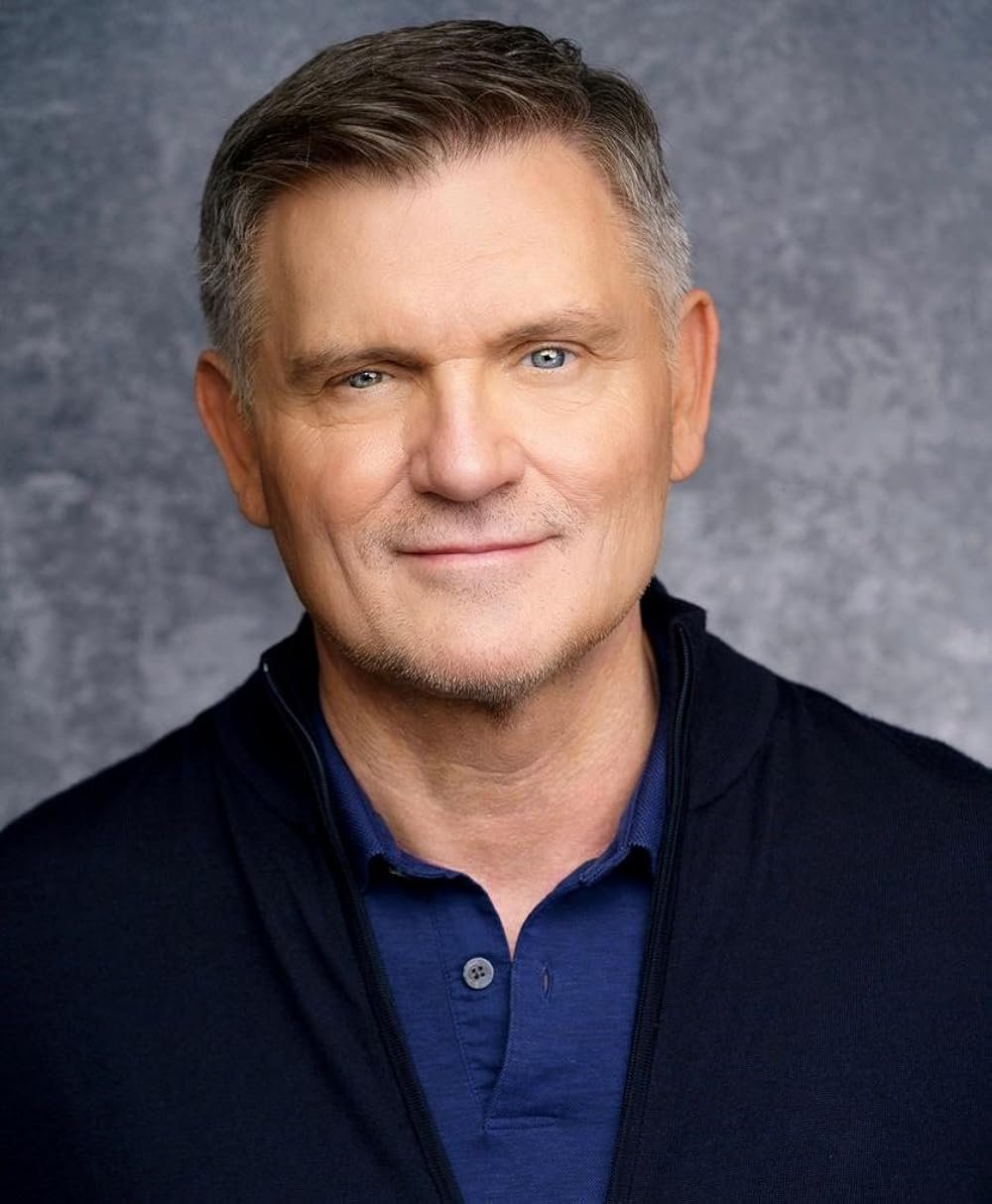
Kevin Williamson is the American screenwriter who wrote Scream, created Dawson’s Creek and revived the slasher.
Some writers get a hit. Williamson got a hinge — where modern horror swings from one era into the next. In December 1996, Scream arrived carrying his screenplay and Wes Craven’s direction, and the slasher, dead for years, stood back up. What followed split in two directions at once: the horror films that defined a generation of fright fans, and the television shows that defined a generation of teenagers. Thirty years after he created Ghostface’s world, he directed Scream 7 himself — and audiences made it the biggest film in the franchise. With Williamson, the credits are where the story lives.
Quick Specs
- Born: 14 March 1965, New Bern, North Carolina
- Full name: Kevin Meade Williamson
- Education: East Carolina University — theatre arts, class of 1987
- Known for: Scream (1996), Dawson’s Creek, I Know What You Did Last Summer, The Vampire Diaries (co-developer)
- Directing credits: Teaching Mrs. Tingle (1999), Scream 7 (2026)
- Honour: Saturn Award for Best Writing, Scream (1997)
The Fisherman’s Son
Williamson grew up on the North Carolina coast, the younger son of Wade Williamson, a fisherman, and Faye Williamson, remembered in the family as a storyteller. The family spent his early years in Aransas Pass, Texas, near Corpus Christi, before returning to North Carolina ahead of his high-school years, to the Oriental and New Bern country he would keep writing about all his life. A childhood trip to the Poe Museum in Richmond — where “The Raven” was written out on the walls, room by room — lodged in him early.
At East Carolina University in Greenville he studied theatre arts, graduating with the class of 1987 at twenty-two. He went to New York to act, landed a part on the soap opera Another World in 1990, then moved to Los Angeles in 1991, assisting a music-video director by day and writing at night. The acting was real but small. The writing was the point.
There is a harder family story underneath the career, and Williamson only put it fully on the record in 2025. When the North Carolina fishing industry collapsed in the 1980s, his father turned to drug smuggling to support the family, was caught, and went to prison. “He was trying to support his family, and he made a decision, and he ultimately was caught, and he paid the price,” Williamson said. “And he went to prison, very much like Joey Potter’s dad.” In Dawson’s Creek, Joey’s father is inside for conspiracy to traffic marijuana. “That was my dad’s charge,” Williamson said. “Exactly.” It comes back, nearly forty years later, as the spine of his most personal series.
The Script That Started It
In Los Angeles, Williamson took screenwriting classes at UCLA — classes, never a degree — and there wrote his first screenplay, Killing Mrs. Tingle. A production company bought it in 1995 and shelved it: a calling card, not a breakthrough.
The breakthrough came while he was house-sitting. A news-magazine segment about Danny Rolling, the “Gainesville Ripper” who had murdered five students in Florida, scared him — an open window did the rest. By his oft-told account, he built an eighteen-page treatment around an opening sequence, then wrote the full script in about three days, broke and behind on his rent, and tacked on short treatments for two sequels so the package arrived franchise-shaped. The script was called Scary Movie. Its teenagers had seen every slasher film ever made; its killer stalked them by telephone and quizzed them on the genre; and in a party scene, a horror obsessive named Randy Meeks recited the rules of surviving a horror movie — never have sex, never drink or do drugs, never say “I’ll be right back.” Studios bid for it. Dimension Films won.
Scream was directed by Wes Craven, who had turned the project down more than once before committing — and credit discipline matters here, because it matters everywhere in Williamson’s story: Williamson wrote it, Craven directed it. The Ghostface mask was an existing novelty mask found on a location scout, not a design by either man, and the voice on the phone belongs to Roger L. Jackson, whom Craven kept physically separated from the cast while he made the calls for real.
The opening sequence became immortal for a reason neither man planned. Drew Barrymore had been cast as Sidney Prescott, then asked to play Casey Becker, the girl who dies in the first twelve minutes. “In the horror film genre, my biggest pet peeve was that I always knew the main character was going to be slugging through at the end,” Barrymore explained. “What I wanted to do is to take that comfort zone away.” Williamson wanted the same shock: “I wanted it to be this big, huge Janet Leigh moment. And then when she dies, you’re like, ‘Wait a second. Wasn’t she on the poster?'” Neve Campbell inherited Sidney — and the film that followed, retitled Scream late in production by the Weinsteins, opened on 20 December 1996 and built by word of mouth into a phenomenon: made for a reported $14–15 million, it took in roughly $173 million worldwide. Williamson won the Saturn Award for Best Writing, and Entertainment Weekly named him one of its Entertainers of the Year for 1997.
The Wave
What Williamson did next, he did at a sprint. Scream 2 reached theatres on 12 December 1997, barely a year after the first film, with Craven directing again and Williamson writing a sequel that was itself an essay on sequels — a film-within-the-film premiere, and Randy back on a film-class stage reciting the rules for part two. It took in roughly $172 million worldwide on a reported $24 million budget. Behind the scenes, the production ran counter-intelligence against script leaks: dummy scripts with fake endings were written and, on Williamson’s later account, deliberately leaked — “we wrote a dummy script and leaked it. And then we had a second dummy script that we also leaked. And then the real one got out, but no one seemed to care by the time the real one got out.” The older legend — that a leak forced a new ending mid-shoot — is one Williamson disputes; both versions circulate, but the killers, Mickey and Mrs. Loomis, were in his telling always the plan.
Two more 1997–98 scripts confirmed the wave was a market. I Know What You Did Last Summer (1997), directed by Jim Gillespie, was Williamson’s screenplay built on Lois Duncan’s 1973 young-adult novel — except Duncan’s book is a restrained suspense story with no slasher murders at all. The hook-handed Fisherman and the body count are Williamson’s inventions. Duncan, whose own daughter had been murdered in 1989, hated what the film did to her book: “I was appalled when my book, I Know What You Did Last Summer, was made into a slasher film. As the mother of a murdered child, I don’t find violent death something to squeal and giggle about.” Williamson had no involvement in that film’s sequels. The Faculty (1998), directed by Robert Rodriguez, carries Williamson’s screenplay credit over a story by David Wechter and Bruce Kimmel — he was hired to rewrite their script and rebuilt it so thoroughly, The Breakfast Club against Invasion of the Body Snatchers, that the screenplay credit became his. It made $63.2 million worldwide on a reported $15 million budget and gathered a cult afterlife. And Halloween H20 (1998), often scraped into his filmography as a writing credit, is not one: the screenplay is Robert Zappia and Matt Greenberg’s. Williamson contributed early treatment input and uncredited dialogue work and took a co-executive producer credit.
The shelved script came back around. Williamson made Teaching Mrs. Tingle his directorial debut — shot as Killing Mrs. Tingle, retitled after the Columbine massacre, released 20 August 1999 with Katie Holmes against Helen Mirren. It succeeded neither critically nor commercially, and remained his only directing credit for twenty-seven years.
Capeside
Running underneath the horror wave was the other Williamson. Dawson’s Creek premiered on The WB on 20 January 1998 and ran six seasons, to 14 May 2003. He pitched it off his own childhood — growing up on a real creek, filming movies in the backyard, idolising Spielberg — and Dawson Leery, the Spielberg-obsessed aspiring filmmaker, is built from him, with pieces of Williamson and his friends distributed through Joey Potter too. But discipline again: Capeside is a fictional town set in Massachusetts, a network compromise — the show was filmed in Wilmington, North Carolina.
Williamson ran the show for its first two seasons, left to make Wasteland, and returned only to write the two-part series finale in 2003. In season two, the show carried Jack McPhee’s coming-out storyline — written with Greg Berlanti, designed from the character’s introduction — and Williamson, who spoke publicly about being gay in February 1999, timed with those episodes, later said it was the first time he “got to write that side of myself.” His 2025 account of why horror and Capeside are the same story deserves its own space: “I was the final girl. I was Jamie Lee Curtis. I was Laurie Strode. I always felt like I was the little gay kid trapped in a small Southern town that was very conservative, and I didn’t belong. I always felt like I was trying to survive, to get through the day.”
The years after were leaner. Wasteland (1999) was cancelled after three aired episodes; Glory Days (2002) and Hidden Palms (2007) each lasted a single season. Scream 3 (2000) went forward with Williamson as producer only — the screenplay is Ehren Kruger’s, from Williamson’s characters — and Williamson has said he did not watch the finished film for years, and that when he finally did, “from a writing standpoint I could tell it was from a different hand.” Cursed (2005), his werewolf reunion with Craven, was halted weeks from the end of its original shoot, ordered into a near-total rewrite, stripped of Rick Baker’s practical effects work, recast, re-shot and finally cut from an R to a PG-13 before its February 2005 release. The released film is a studio-rebuilt version of his script — not the film either man set out to make — and it failed commercially, at roughly $30 million worldwide.
The Comeback, and the Full Circle
Television brought him back. The Vampire Diaries, developed with Julie Plec from L. J. Smith’s novels, premiered on The CW on 10 September 2009 and ran eight seasons and 171 episodes. Williamson was heavily involved for the first two or three years, then handed it over: “After the first two or three years, where I was very heavily involved, I said, ‘What’s gonna happen now? Well, it’s on you guys.’ I walked away, they kept it alive.” Plec ran the show for its full run, and its spin-offs are hers — Williamson is the co-developer, not the sole creator, and the distinction is the credit. He followed it with The Following (2013–2015), three seasons of Kevin Bacon hunting James Purefoy’s cult of killers, and single-season creations Stalker, Time After Time and Tell Me a Story.
Scream 4 (2011) was his return to Woodsboro as a writer — sole screenplay credit, with Kruger again brought in for uncredited polish whose extent is genuinely disputed — and it stands as Craven’s final film as director. A decade later, Sick (Toronto, September 2022; Peacock, January 2023) put him back in the stand-alone slasher: a lockdown lake-house home-invasion film co-written with Katelyn Crabb, his former assistant, widely received as a return to form. For Scream (2022) and Scream VI (2023) — written by James Vanderbilt and Guy Busick, directed by Radio Silence — Williamson served as executive producer only. He had initially refused to return at all: he did not want to do Scream without Craven, who died in 2015. He agreed on one condition — that the film be dedicated to Craven. It was.
In June 2025, Netflix premiered The Waterfront, his most personal series: a North Carolina fishing dynasty sliding into drug smuggling as the industry dies — his father’s story, told straight at last, filmed around Wilmington and Southport. He had promised his father he would write it; his father said, “Wait until I’m dead,” then relented, wanting to see it. The series spent five weeks in Netflix’s global Top 10, three of them at number one — and Netflix cancelled it after a single season that August. Williamson’s public response was gratitude, calling it “one of the best experiences of my life.”
Which leaves the door he finally walked through himself. The road to Scream 7 ran through upheaval: Radio Silence stepped back in 2023; Christopher Landon was hired to direct; Spyglass fired star Melissa Barrera that November — a studio decision Landon has stated publicly was not his — and Landon himself exited in December. In March 2024 the retooled film was announced: Neve Campbell returning after sitting out the previous film over a pay dispute, and Kevin Williamson directing. The finished film, released 27 February 2026, credits the screenplay to Williamson and Guy Busick, from a story by Vanderbilt and Busick, and re-centres the series on Sidney, now a mother, with Ghostface hunting her teenage daughter. On a reported $45 million budget it opened to a franchise-record $97.2 million weekend and went on to pass $200 million worldwide — the highest-grossing film in the franchise, even as critical reception ran broadly negative. Thirty years after a broke house-sitter wrote the rules, the writer directed the biggest entry in his series.
Why He Matters
For horror, the ledger is simple: Scream is the hinge of the modern genre — meta without parody, funny without defusing the fear, built around a final girl with a dead mother and a phone that would not stop ringing. It revived the slasher and set the template the next decade copied. But Williamson’s deeper significance is the career itself: directors of the first rank shot his scripts, and audiences learned to follow a writer’s name the way they follow a star’s. The one original-run Scream he did not write is the one everyone, including Williamson, singles out as different — proof, in ledger form, that the voice was the franchise. Add the television — Dawson’s Creek defining The WB’s era and putting a gay teenager’s coming-out at the centre of mainstream American TV in 1999, The Vampire Diaries anchoring The CW’s — and few writers have stamped two networks and one genre this hard. Underneath all of it runs the same story at different ages: the fisherman’s son from the Carolina coast, the outsider who survived by learning the rules of the story he was trapped in. The work had been saying it all along.
Keep it locked on Think Horror — never, ever say you’ll be right back.