
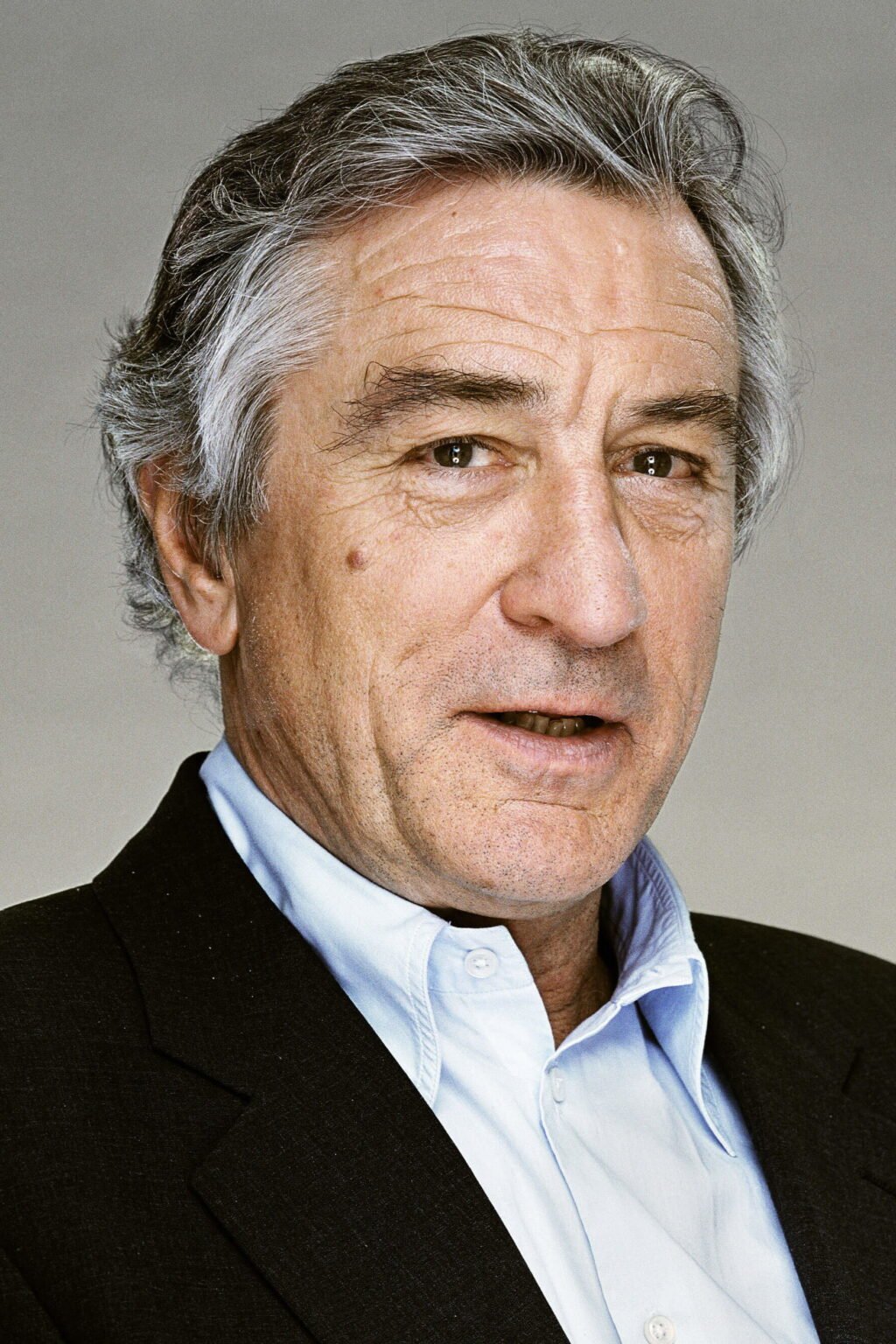
Robert De Niro (born 1943) is the Oscar-winning actor who played the Creature in Mary Shelley’s Frankenstein and Max Cady in Cape Fear (1991).
The tattoos on Max Cady were vegetable dye, and they had to keep growing. Robert De Niro bulked up as the Cape Fear shoot went on, so the designs on his body were enlarged by about 10 percent to keep pace with him, and once filming ended they took months to fade.
Quick Specs
| Born | August 17, 1943, Greenwich Village, Manhattan, New York City (as Robert Anthony De Niro) |
| Citizenship | United States; Italy, by government grant in 2006 |
| Horror and dark roles | Louis Cyphre in Angel Heart (1987); Max Cady in Cape Fear (1991); the Creature in Mary Shelley’s Frankenstein (1994); Gil Renard in The Fan (1996); Dr. Richard Wells in Godsend (2004); David Callaway in Hide and Seek (2005); Pete Willis in The Whisper Man (2026) |
| Oscar record | Eight acting nominations, two wins (The Godfather Part II; Raging Bull), plus a Best Picture nomination as producer of The Irishman |
| Golden Globes | Best Actor for Raging Bull; Cecil B. DeMille Award (2011) |
| BAFTA | Eight nominations, no wins |
| With Scorsese | Ten feature films, Mean Streets (1973) to Killers of the Flower Moon (2023) |
| As director | A Bronx Tale (1993); The Good Shepherd (2006) |
| Co-founded | Tribeca Productions (1989); the Tribeca Film Festival (2002) |
| Children | Seven |
Who He Is
Robert Anthony De Niro was born on August 17, 1943, in Greenwich Village, Manhattan, the only child of two painters. His mother, Virginia Admiral, was a painter and poet who had studied under Hans Hofmann; his father, Robert De Niro Sr., was an abstract expressionist. His parents met at Hofmann’s painting classes in Provincetown and separated when he was two. His mother raised him in Greenwich Village and Little Italy, and his father lived nearby and stayed close. His father’s side was Irish and Italian, with great-grandparents who emigrated from Ferrazzano, in Molise, in the late 19th century; his mother’s was Dutch, English, French and German. As a pale child he was nicknamed “Bobby Milk.”
He went through PS 41, the Little Red School House, a brief spell at the High School of Music and Art, a public junior high, McBurney School and Rhodes Preparatory School, graduated from none of them and left school at 16 to act. His stage debut had come at ten, as the Cowardly Lion in a school Wizard of Oz. He trained at HB Studio, the Stella Adler Conservatory and Lee Strasberg’s Actors Studio.
Italian citizenship came by grant, not by descent, since neither his parents nor his grandparents were born in Italy. Ferrazzano made him an honorary citizen in 2004. A planned ceremony in Venice that September drew protests from the Order Sons of Italy in America, and the full citizenship and passport were presented in 2006 by the Rome mayor, Walter Veltroni, at the Rome Film Festival.
He has seven children. With Diahnne Abbott, married from 1976 to 1988, he has a son, Raphael, born in 1976, and he adopted her daughter, Drena, born in 1971. With Toukie Smith, his partner from about 1988 to 1996, whom he never married, he had twins in 1995, Julian and Aaron, born through IVF and a surrogate. He married Grace Hightower on June 17, 1997; their son, Elliot, was born in March 1998 and their daughter, Helen Grace, in December 2011, via a surrogate. In March 2016 De Niro said publicly that Elliot has autism. A 1999 divorce filing was never finalized, and the couple renewed their vows in November 2004 under a prenuptial agreement. They separated in November 2018, and courts upheld that agreement in February 2021 and again on appeal in October 2021. With his partner Tiffany Chen, a martial-arts instructor he met on The Intern, he had a daughter, Gia Virginia Chen-De Niro, on April 6, 2023, when he was 79. He broke the news by correcting an interviewer: “Seven, actually. I just had a baby.”
In April 2025, Airyn De Niro, born Aaron and Julian’s twin, came out as a transgender woman in an interview with Them. Her father’s statement, to Variety and Deadline: “I loved and supported Aaron as my son, and now I love and support Airyn as my daughter. I don’t know what the big deal is. I love all my children.”
His grandson Leandro De Niro Rodriguez, Drena’s son, died on July 2, 2023, at 19, of an accidental overdose, as ruled by New York City’s chief medical examiner. “I’m deeply distressed by the passing of my beloved grandson Leo,” De Niro said, asking for privacy to grieve.
He was diagnosed with prostate cancer in October 2003, had surgery at Memorial Sloan Kettering that December, recovered, and has talked about it publicly.
The Work, and What He Did in It
The De Palma Start
Brian De Palma gave him his first roles. The Wedding Party was shot in 1963 and released in 1969; Greetings (1968), as Jon Rubin, was his first credited screen role, and Hi, Mom! (1970) brought Jon Rubin back. In 1973 he played Bruce Pearson in Bang the Drum Slowly and Johnny Boy Civello in Mean Streets, the first of his ten features with Martin Scorsese.
The Godfather Part II (1974)
He had auditioned without success for the first Godfather, and Francis Ford Coppola remembered him after Mean Streets. As the young Vito Corleone, roughly 80 percent of his dialogue is in Sicilian, a language he did not speak, with about eight words of English. He lived in Sicily for months to prepare, and by his own account to GQ he recorded Marlon Brando’s Vito scenes with the producer Gray Frederickson and studied the performance technically. He won the Oscar for Best Supporting Actor at 31. He was filming 1900 in Italy for Bernardo Bertolucci and could not attend, so Coppola accepted for him.
He and Brando became the first two actors to win Oscars for playing the same character, and he was the first actor to win one for a performance almost entirely in a foreign language. On the money, the record splits: the distributor’s figures put the film near $93 million worldwide by 1994, while tracker pages show about $48 million on international data that is nearly empty. It cost $13 million.
Taxi Driver (1976)
Travis Bickle in Scorsese’s Taxi Driver brought his first Best Actor nomination. The film, with Jodie Foster, carries Bernard Herrmann‘s final score and won the Palme d’Or at Cannes, an award for the film rather than for him. It cost $1.9 million in most accounts, $1.8 million in some, and has taken about $29 million worldwide with re-releases.
The mohawk was not real. It was a bald cap by the makeup artist Dick Smith, glued over his crew cut with a strip of horse hair, because the film shot out of sequence. The idea itself came from Vietnam veterans’ practice, through the production’s veteran contacts.
The most famous moment has three tellers and no settled version. Paul Schrader’s script had only a stage direction at the mirror. Schrader says De Niro called to ask what Travis should say and he told him, “Just make up stuff,” adding, “To me, it’s the best thing in the movie. And I didn’t write it.” Scorsese says they were running behind and De Niro “just started talking to himself… like a jazz riff.” De Niro, in Rome in 2006: “I improvised some and some was scripted, but I don’t remember which.” The American Film Institute ranks “You talkin’ to me?” tenth among its 100 greatest movie quotes.
He followed it with Monroe Stahr in Elia Kazan’s The Last Tycoon (1976), Jimmy Doyle in Scorsese’s New York, New York (1977), and Michael Vronsky in Michael Cimino’s The Deer Hunter (1978), a second Best Actor nomination.
Raging Bull (1980)
“I read the book while filming 1900 in Italy with Bertolucci. Then I called Martin Scorsese. The book had a lot of heart,” he has said of Jake LaMotta’s autobiography. He trained with LaMotta himself, roughly 1,000 rounds of sparring, and fought three real bouts in Brooklyn, winning two. “Anytime he wants to quit acting, I could easily make him into a champion… He’s that good,” LaMotta said. Production then shut down, for about two months by most accounts, while he gained 60 lb eating his way through Italy and France to play the older LaMotta, and Scorsese sometimes cut takes short over his breathing. Some profiles round the gain toward 70 lb; 60 is the documented figure. He won the Oscar for Best Actor at 37, and the Golden Globe. The film cost $18 million and took about $23.4 million.
The Eighties, and Angel Heart (1987)
He was Monsignor Desmond Spellacy in True Confessions (1981) and Rupert Pupkin in Scorsese’s The King of Comedy, which premiered in 1982 and reached US cinemas in February 1983. Sergio Leone cast him as David “Noodles” Aaronson in Once Upon a Time in America (1984), and Terry Gilliam made him Harry Tuttle in Brazil (1985). He was Rodrigo Mendoza in Roland Joffé’s The Mission (1986), another Palme d’Or winner, again the film’s prize, and that year he made his Broadway debut in Cuba and His Teddy Bear.
Alan Parker’s Angel Heart (1987) is full horror. De Niro plays Louis Cyphre, a name that is the film’s own Lucifer device. The same year he gained weight to play Al Capone in De Palma’s The Untouchables, and in 1988 he was Jack Walsh in Martin Brest’s Midnight Run.
Goodfellas to Cape Fear (1990 to 1991)
Goodfellas (1990), Scorsese’s adaptation of Nicholas Pileggi’s Wiseguy, made him Jimmy “the Gent” Conway, drawn from the real Jimmy Burke; it cost $25 million and took about $47.1 million. Penny Marshall’s Awakenings (1990), as Leonard Lowe, brought another Best Actor nomination.
Cape Fear (1991) was their seventh film together, a remake of J. Lee Thompson’s 1962 film of John D. MacDonald’s The Executioners. Steven Spielberg developed it, found it too violent, and traded it to Scorsese in exchange for Schindler’s List; at that stage Spielberg had pictured Bill Murray as Cady. Robert Mitchum and Gregory Peck, the stars of 1962, came back in supporting roles, and Elmer Bernstein adapted Herrmann’s 1962 score. Paul Jacobs designed the temporary tattoos. A story widely reported, though with no primary record behind it, says De Niro paid $5,000 to have his teeth ground down for the part and $20,000 to have them restored. He was nominated for Best Actor, Juliette Lewis was nominated too, and the film took about $182.3 million worldwide on a $35 million budget, Scorsese’s first film to pass $100 million.
Mary Shelley’s Frankenstein (1994)
Coppola produced Mary Shelley’s Frankenstein through American Zoetrope after Bram Stoker’s Dracula, and his mandate was De Niro as the Creature with Kenneth Branagh directing. Branagh also plays Victor, with Helena Bonham Carter as Elizabeth and Tom Hulce, Ian Holm, John Cleese and Aidan Quinn in the cast. De Niro was also an associate producer. In the film the monster is called “the Creation”; De Niro is billed as the Creature.
The makeup designer was Daniel Parker. He and Branagh spent about nine months on the concept, a “butchered mismatch” of parts with two different eyes, and De Niro spent up to ten hours a day in the makeup chair. The film premiered at the London Film Festival on November 3, 1994, and opened in the US the next day. It is often described as one of the most faithful Shelley adaptations, and reviews were mixed. It is not the flop it is sometimes called: on a $45 million budget it took about $112 million worldwide. Only the US gross, about $22 million, was weak; around $90 million came from abroad.
Heat, Casino and The Fan (1993 to 1999)
His first film as director, A Bronx Tale (1993), came from Chazz Palminteri’s one-man play, with Palminteri writing the screenplay and playing Sonny and De Niro as Lorenzo Anello. It took about $17.3 million, almost all of it in the US, and did not recoup. “How could you not be disappointed? You do all this work for it,” he said at its 30th-anniversary event in 2023.
In 1995 came Casino, his eighth Scorsese film, as Sam “Ace” Rothstein, drawn from Frank “Lefty” Rosenthal ($116.1 million worldwide), and Michael Mann’s Heat, as Neil McCauley, named for the real 1960s Chicago criminal pursued by the detective Chuck Adamson, Mann’s source ($187.4 million). He and Al Pacino had both been in The Godfather Part II, in separate timelines, so the Heat coffee scene is their first shared scene on screen. The myth that they shot their sides separately is false; behind-the-scenes footage shows them together in the frame.
In Tony Scott’s The Fan (1996) he is Gil Renard, the obsessed fan. He was Louis Gara in Quentin Tarantino’s Jackie Brown (1997), and Harold Ramis’s Analyze This (1999), as Paul Vitti, turned him toward comedy.
Comedy and Two Horror Twists (2000 to 2008)
Meet the Parents (2000), which he also produced, made him Jack Byrnes and became the biggest gross of his career to that point, about $330.4 million on $55 million. Meet the Fockers (2004) took about $516.6 million and Little Fockers (2010) about $310.7 million. Frank Oz’s The Score (2001), with Brando and Edward Norton, is the only film in which De Niro and Brando share scenes, and Brando’s last.
Then two straight horror films with twists. In Nick Hamm’s Godsend (2004) he is Dr. Richard Wells, who offers to clone a grieving couple’s eight-year-old son, Adam, after the boy is killed; the twist is that Wells mixed Adam’s DNA with his own dead son’s. Variety noted the ending was “reportedly one of several shot.” In John Polson’s Hide and Seek (2005) he plays David Callaway, whose daughter Emily has a sinister imaginary friend called Charlie, and the twist is that Charlie is David. The final reel was shipped to theatres separately to protect it, and the DVD carries four alternate endings.
He was Captain Shakespeare in Stardust (2007), directed The Good Shepherd (2006), his second and to date last feature as director, and reteamed with Pacino as co-leads in Righteous Kill (2008), to widely negative reviews.
The Comeback Nomination and The Irishman (2012 to 2019)
David O. Russell’s Silver Linings Playbook (2012), as Pat Solitano Sr., brought a Best Supporting Actor nomination, his first in 21 years, since Cape Fear; the film took about $236.4 million on $21 million. He had an uncredited cameo as the mobster Victor Tellegio in American Hustle (2013) and played Ben Whittaker in Nancy Meyers’s The Intern (2015). For HBO he was Bernie Madoff in The Wizard of Lies (2017), an Emmy nomination, and on Saturday Night Live he played Robert Mueller, another. In Todd Phillips’s Joker (2019), a film expressly modelled on Taxi Driver and The King of Comedy, he has a supporting role as the talk-show host Murray Franklin; the film’s gross of about $1.08 billion belongs to Joaquin Phoenix’s film, not to a De Niro vehicle.
The Irishman (2019), his ninth Scorsese feature, had been in development since 2007, from Charles Brandt’s I Heard You Paint Houses. Paramount dropped it as costs climbed, and Netflix picked it up in 2017 on an agreement that began around $125 million and rose to a reported $159 million. ILM’s Pablo Helman built the digital de-aging of De Niro, Pacino and Joe Pesci, and the proof of concept was a de-aged Goodfellas scene. It premiered at the New York Film Festival on September 27, 2019, had a limited theatrical run from November 1, and reached Netflix on November 27, with no box office reported. His Oscar nomination for it is Best Picture, as a producer; he was not nominated for acting.
Killers of the Flower Moon and After (2023 to 2026)
Killers of the Flower Moon, the tenth Scorsese feature, premiered at Cannes on May 20, 2023, and opened in the US on October 20. As William King Hale he earned his eighth acting nomination, for Best Supporting Actor. The film cost $200 million and took about $158.8 million worldwide; the $44 million often quoted was its global opening weekend.
He played Salvo Maniscalco in About My Father (2023) and Stan in Tony Goldwyn’s Ezra, which premiered at TIFF in 2023 and which he also executive produced. Netflix’s limited series Zero Day (2025), as a fictional former president, was his first lead in a television series. In Barry Levinson’s The Alto Knights, released on March 21, 2025, their fourth film together and written by Nicholas Pileggi, he plays both Vito Genovese, through hours of prosthetics, and Frank Costello. It opened at No. 6 with about $3.2 million in the US and finished at about $10.2 million worldwide, against a budget reported as $45 million or $50 million.
The Whisper Man, released by Netflix on August 28, 2026, brings him back to horror. Directed by James Ashcroft from Alex North’s 2019 novel, it casts him as Pete Willis, the retired detective who caught the Whisper Man, with Adam Scott as his estranged son, Tom Kennedy, and Michael Keaton as Frank Carter, the imprisoned killer. It is his first screen pairing with Keaton since Jackie Brown. Reviews were divisive, and it went to No. 1 on Netflix with 23.2 million views in its first three days, the sixth-biggest Netflix movie debut of 2026.
Cool Verified Facts
- He has eight Oscar acting nominations and two wins. The Irishman nomination is a ninth, for Best Picture, as a producer.
- He has ten Golden Globe nominations, eight BAFTA nominations with no wins, and four Emmy nominations with no wins.
- His lifetime honours include the Venice Golden Lion (1993), the AFI Life Achievement Award (2003), the Kennedy Center Honors (2009), the Presidential Medal of Freedom from President Obama (2016), and the SAG Life Achievement Award, announced in 2019 and presented by Leonardo DiCaprio on January 19, 2020.
- His personal Cannes honour is the Honorary Palme d’Or, presented by DiCaprio on May 13, 2025. The Palmes for Taxi Driver and The Mission went to the films.
- With Jane Rosenthal and Craig Hatkoff he founded the Tribeca Film Festival in response to the September 11 attacks; the first edition opened on May 8, 2002, after 120 days of planning.
- The first Nobu opened in Tribeca on September 17, 1994, five years after he first proposed a New York restaurant to Nobu Matsuhisa. His Tribeca Grill, opened in 1990 with Drew Nieporent and hung with his father’s paintings, closed on March 1, 2025.
- On October 25, 2018, a mailed explosive device was intercepted at his Tribeca Productions office, one of 16 that Cesar Sayoc sent to prominent critics of President Trump. Sayoc was sentenced to 20 years.
Signatures, Habits and Behind the Scenes
He changes his body and his voice for the part, and the record is specific: months in Sicily for a language he did not speak, 1,000 rounds with LaMotta and 60 lb for Raging Bull, weight again for Capone, ten-hour makeup days for the Creature, and tattoos that grew with him on Cape Fear.
He also builds things around his films. Tribeca Productions, founded with Jane Rosenthal in 1989, made Cape Fear and Meet the Parents, and the Greenwich Hotel, his Tribeca hotel, opened in 2008.
Why He Matters
For horror, De Niro is the major actor who keeps returning to the genre. Louis Cyphre, Max Cady and the Creature sit next to his Oscar roles, not beneath them. His Creature came from Coppola’s American Zoetrope straight after Bram Stoker’s Dracula, and it belongs to the long screen line of Frankenstein’s Monster that runs on to del Toro’s Frankenstein, with Mia Goth in the cast, and to Christian Bale‘s creature in The Bride! (2026). More than three decades after Cady, he is still taking horror leads: The Whisper Man went to No. 1 on Netflix.