
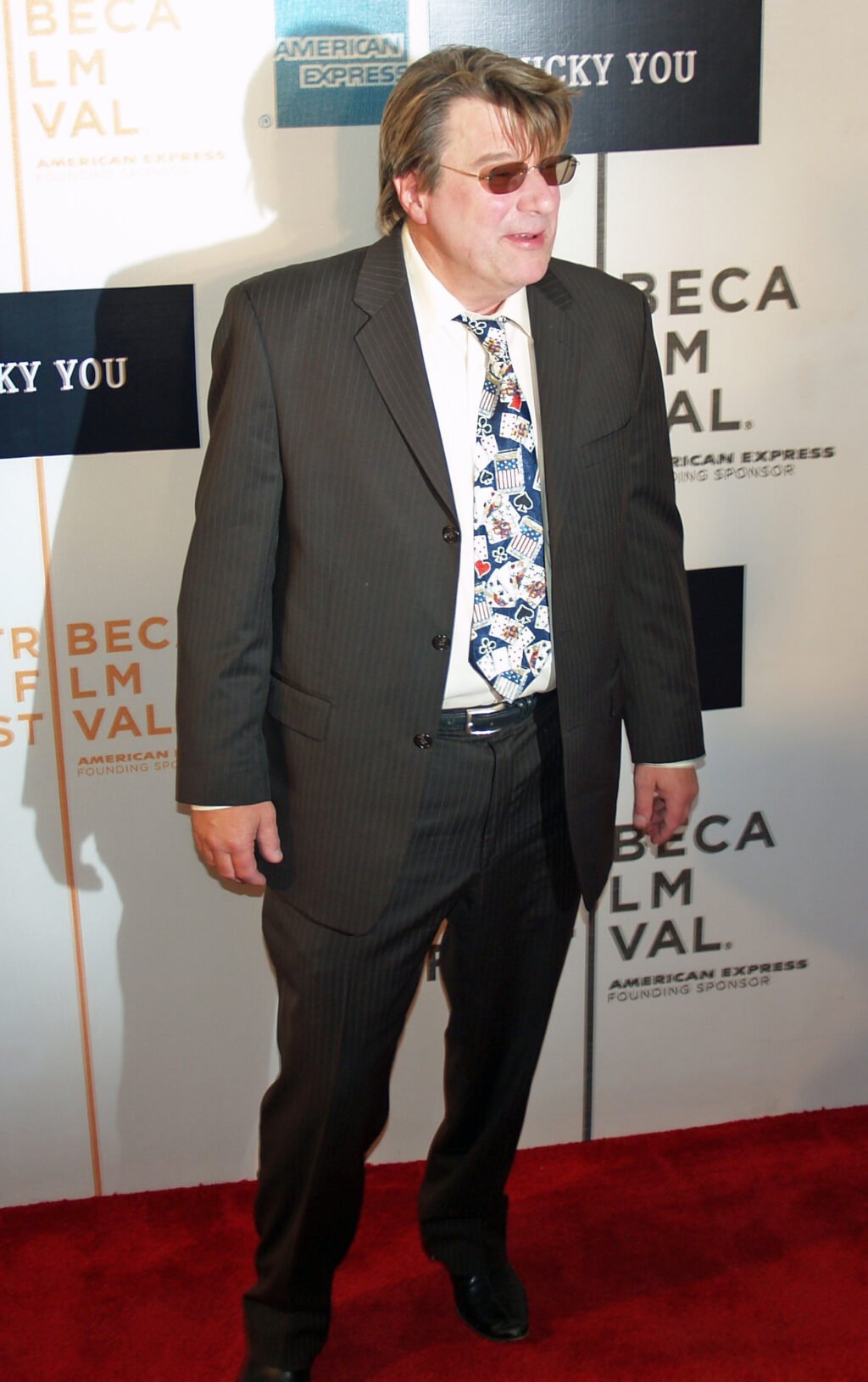
Christopher Young is the composer who dragged horror scoring back to the full orchestra — at the exact moment the genre was drowning in cheap synthesizer dread, he showed up with a choir, a string section, and total seriousness, and Clive Barker’s sadomasochistic fairy tale suddenly sounded like a requiem. If you have ever felt the floor tilt under you during Hellraiser, that was him. And here’s the thing nobody tells you: the man started out as a jazz drummer who didn’t even know film music was a job until Bernard Herrmann’s scores ambushed him. This is the story of how the drummer became horror’s gothic voice — and kept that voice for forty years, from Hellraiser to Sinister.
From Jazz Drums to Bernard Herrmann
Christopher Young was born on 28 April 1958 in Red Bank, New Jersey. He began as a jazz drummer, and the conversion to film music is, by his own consistent account, a Herrmann story. Hearing Bernard Herrmann’s work — he names Vertigo and Citizen Kane — settled it: “Here was someone doing everything I wanted to do,” he has said. “I fell in love with the music before I realized that it was written for movies.” Hold onto that quote, because it explains everything that follows. Young didn’t fall for horror first. He fell for orchestral writing first — and then spent a career proving the two belonged together.
He took a BA in music at Hampshire College in Massachusetts, did post-graduate work at the University of North Texas, and moved to Los Angeles in 1980, where he took classes at the UCLA Film School and studied with David Raksin, the composer of Laura, who became his mentor. At UCLA he met student filmmakers Stephen Carpenter and Jeffrey Obrow and scored their student feature The Dorm That Dripped Blood (1982), which was picked up for release. That was the door. What was on the other side of it was not glamour — it was the grind.
The Corman-Era Grind
Young’s early eighties were spent at Roger Corman economics: The Power (1984), a replacement score on Def-Con 4 (1985), Wheels of Fire and the Cirio Santiago/New Concorde quickies — full scores written and recorded in days. Some credits from those years, like Barbarian Queen and Wizards of the Lost Kingdom (1985), are tracked music shared with James Horner material rather than original scores, and they should be labelled that way. But the grind was the education. A composer who can deliver a complete score at that speed, on that budget, learns things no conservatory teaches.
The first major-franchise credit arrived in 1985: A Nightmare on Elm Street 2: Freddy’s Revenge, for director Jack Sholder — a dark orchestral-electronic score for the strangest entry in the series, written when Young was twenty-seven. Then came Tobe Hooper’s Invaders from Mars (1986), working from a script by Dan O’Bannon, and the heavy-metal horror of Trick or Treat (1986). The résumé was filling up with exactly the right names. What it needed was one film that let him write the way Herrmann wrote. He got it the following year.
Hellraiser and Hellbound: The Breakthrough
Hellraiser (1987) was Clive Barker‘s directorial debut, and Barker had first worked with the industrial group Coil on the film’s music; their material went unused, and the direction the production settled on instead was Young’s — a full-blooded gothic orchestral and choral score. Think about the risk in that. This was an extreme, transgressive film about desire and damnation, made for very little money, and instead of the synths everyone expected, it got music with the weight of a Hammer film played completely straight. The score gave the Cenobites and their puzzle box a liturgy. It is routinely ranked among the greatest horror scores ever written, and it made Young’s name.
He returned for Hellbound: Hellraiser II (1988) and expanded the sound into a bigger, demonic orchestral-choral canvas for the labyrinth of Hell — and this time the industry noticed officially. Young won the Saturn Award for Best Music for Hellbound. It remains the genre award of record in his career, and it was earned the hard way: by writing better music than the budget said the film deserved.
Discipline matters here, because databases get Young wrong in both directions. His Hellraiser scores are the 1987 original and Hellbound — full stop. Hellraiser III is Randy Miller, and the later sequels, including Hellraiser: Judgment, are other composers’ work. The voice that follows Pinhead out of the box in the first two films is Young’s. After that, the box changed hands.
The Studio Years
The years around the breakthrough were busy in every direction: the gothic melodrama of Flowers in the Attic (1987), the full orchestral treatment for Chris Walas’s The Fly II (1989), and The Dark Half (1993) — George A. Romero adapting Stephen King, the Romero collaboration of Young’s record. Then 1995 announced that the “horror composer” had become a first-call studio thriller composer: Species, Virtuosity and Copycat in a single year, plus Rusty Cundieff’s anthology Tales from the Hood, a horror credit too often dropped from short versions of his story.
The prestige work followed, because the range was real: Murder in the First (1995), Norman Jewison’s The Hurricane (1999) and Curtis Hanson’s Wonder Boys (2000). Back in the genre, he scored the slasher revival’s Urban Legend (1998) and then The Gift (2000) — Sam Raimi’s Southern gothic thriller, and the hinge of his later career, because it began the Raimi relationship. The Shipping News (2001), for Lasse Hallström, brought a Celtic-inflected score and a Golden Globe nomination for Best Original Score — the mainstream-awards peak of his career, and a nomination, not a win; his record needs no inflating. Swordfish (2001) and The Core (2003) rounded out the studio run.
The Grudge (2004) took him to Japan by way of Hollywood: Takashi Shimizu directing the remake of his own film, and Young writing an American studio score built around dread for a Japanese ghost grammar. Unusually for a remake chain, the composer followed the director across both films — Young also scored The Grudge 2 (2006). The Grudge 3 is Sean McMahon’s, not his. Then The Exorcism of Emily Rose (2005) began his second great director partnership, with Scott Derrickson: a courtroom-horror score mixing liturgical choral writing with dissonant modernism.
Raimi, Superheroes and the Modern Landmarks
The Raimi thread paid off in an unexpected place. Young contributed additional music to Spider-Man 2 (2004) — additional music only; the score is Danny Elfman‘s — and then wrote the main score for Spider-Man 3 (2007), building on Elfman’s established themes; the film itself credits “Themes by Danny Elfman,” and both halves of that credit line matter. Young even turns up in Spider-Man 3 in a cameo, as the “Music director.”
Drag Me to Hell (2009) was Sam Raimi‘s return to horror, and Young met it with a gleefully demonic orchestral score — gypsy-curse fiddle colours, choir, full gothic weight — widely treated as a career-highlight horror score. He cameos in this one too, billed immortal as “Pedestrian with cupcake.” Then came the modern landmark. Sinister (2012), his second collaboration with Derrickson, threw the orchestra away entirely: an experimental electronic sound-design score of processed loops, bowed metals and dread textures — the sound of those Super 8 reels. The afterlife of that choice is measurable: in the Broadbandchoices “Science of Scare” heart-rate study of 2020, Sinister was ranked the scariest film ever measured. That is the study’s ranking, a heart-rate measurement rather than a critical consensus — but as verdicts on a composer’s work go, it is a striking one.
The Derrickson partnership completed its trilogy with Deliver Us from Evil (2014), NYPD procedural meets exorcism. In 2019 Young returned to big-franchise horror in his sixties with Pet Sematary, an electronic-tinged treatment answering the 1989 original, and the late cult credits followed: David Prior’s The Empty Man (2020) and The Offering (2022). His official biography counts more than 150 scores across the career — and alongside all of it, he teaches at the USC Thornton School of Music. The drummer trains the next generation now.
Signatures and Habits
The choir is the signature you can hear across four decades: the choral and solo-voice writing that gives Hellraiser and Emily Rose their sacred dread, with profile writers also singling out the waterphone among his trademark colours. But the deeper signature is the two-sidedness of the filmography itself — the same man wrote Sinister‘s bowed-metal nightmare and The Shipping News‘ Celtic lyricism. Modernist dread on one side, melody on the other, and no embarrassment about either.
The other signature is resilience. Young’s career carries a remarkable run of ghost scores — music written, sometimes partly recorded, and never heard in the released film. The most on-brand for this site is The Exorcist III (1990): his score for it is catalogued as an incomplete, unused replacement score, and the film audiences know is scored by Barry De Vorzon. The pattern recurs on Dragonfly (2002), Hide and Seek (2005) and Ask the Dust (2006). Lesser careers would treat that as a wound. Young treated it as inventory: material from the unused Lucky You score was later developed into the concept album The Lost Children of Planet X (2018). Directors kept hiring the composer other productions had thrown out — which tells you what the people who actually worked with him thought.
Why Christopher Young Matters
For horror, Young is the bridge. Behind him stands the Golden Age orchestral tradition, reached through Herrmann, his declared inspiration. In front of him stands modern sound-design horror, which he helped define by abandoning the orchestra altogether on Sinister — twenty-five years after proving, with Hellraiser, that an orchestral-choral score could carry an extreme horror film with total seriousness. Barker, Romero, Raimi, Shimizu, Derrickson: the directors who defined modern horror kept choosing the same composer, and they were not choosing a brand. They were choosing a craftsman who treated their monsters like they mattered.
His awards ledger, stated exactly, is this: one Golden Globe nomination (The Shipping News); a Saturn Award win for Hellbound: Hellraiser II; the BMI Richard Kirk Career Achievement Award in 2008; and — the famous scandal of his record among horror fans — no Academy Award nominations at all. His official biography also credits him with two Emmy nominations. A composer of this stature, this central to his genre, unrecognised by the Academy entirely: the horror community has been making that argument for decades, and the filmography makes it better than any campaign could.
Trivia
- Young began as a jazz drummer. His path to film music runs through Bernard Herrmann’s scores for Vertigo and Citizen Kane — “I fell in love with the music before I realized that it was written for movies.”
- He has cameos in two of his own Raimi films: “Music director” in Spider-Man 3 (2007) and “Pedestrian with cupcake” in Drag Me to Hell (2009).
- He wrote a score for The Exorcist III (1990) that was never used — the released film is scored by Barry De Vorzon. It is the most famous of several ghost scores in his career.
- His Hellraiser involvement is exactly two films: the 1987 original and Hellbound: Hellraiser II (1988), the second of which won him the Saturn Award for Best Music.
- Music from his unused Lucky You score was reworked into the 2018 concept album The Lost Children of Planet X.
- He teaches at the USC Thornton School of Music while continuing to score films — the student who studied with Laura composer David Raksin now holds a film-scoring classroom of his own.
FAQ
Did Christopher Young score Sinister 2?
No. Young’s Sinister score is the 2012 original only. Sinister 2 (2015) was scored by tomandandy.
Which Hellraiser films did Christopher Young score?
Two: Hellraiser (1987) and Hellbound: Hellraiser II (1988). Hellraiser III is Randy Miller’s score, and every later sequel is another composer’s work.
Has Christopher Young won an Oscar or a Golden Globe?
Neither. He is a Golden Globe nominee, for The Shipping News (2001), and he has never received an Academy Award nomination. His famous genre win is the Saturn Award for Best Music for Hellbound: Hellraiser II, and he received the BMI Richard Kirk Career Achievement Award in 2008.
Did Christopher Young score Spider-Man 2?
No — he contributed additional music to Spider-Man 2. His Spider-Man score is Spider-Man 3 (2007), written using Danny Elfman’s themes.
Did Christopher Young score The Exorcist III?
He wrote a score for it, but it went unused and incomplete; the released film is scored by Barry De Vorzon. It belongs in his story as the most famous of his ghost scores, not in his list of released horror scores.