The fuel gauge is nearly empty, and behind the helicopter the city is coming apart. You set down on a flat roof because it’s the only flat roof you can see. Through the skylight, under the department store signs and the Christmas tinsel, they’re already waiting: hundreds of them, gray-faced, drifting past the fountains and riding the escalators as if they still have somewhere to be. Canned music is drifting through the speakers. Food, clothes, guns, medicine: this place has everything you could ever need, you think. Look closer at the shoppers, fiends. Nobody down there is browsing.
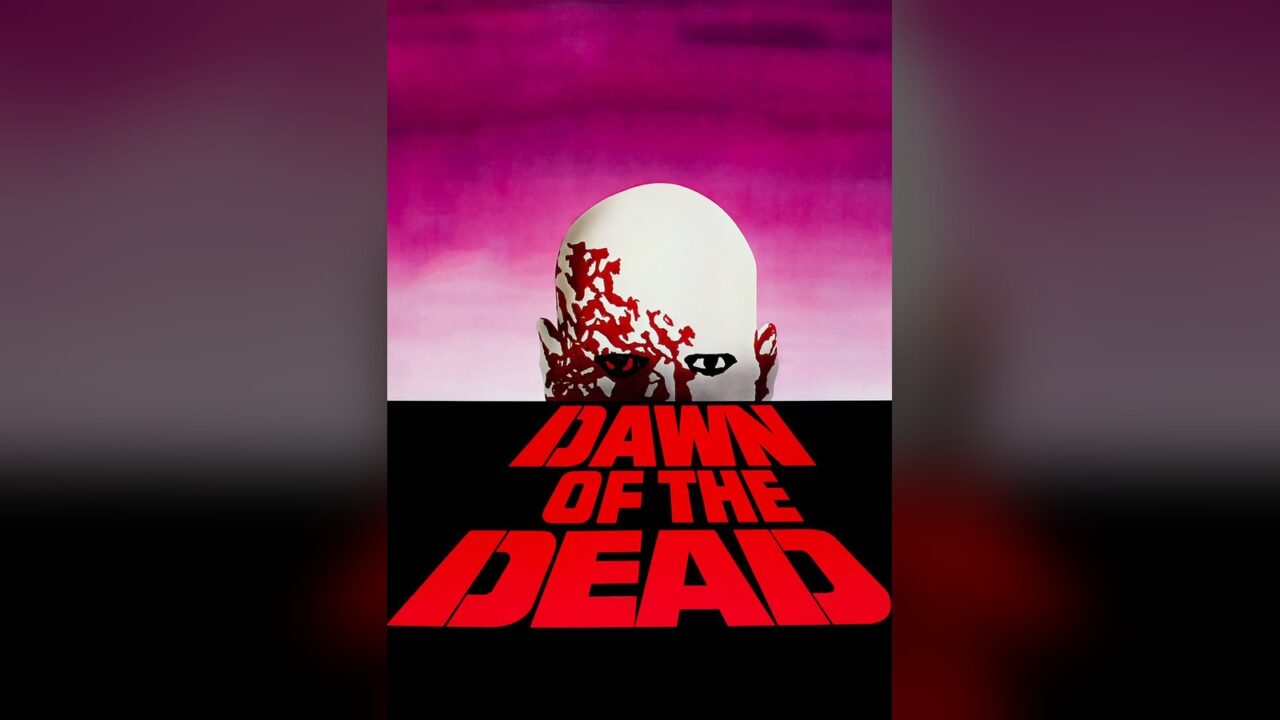
Dawn of the Dead (1978) is George A. Romero’s zombie sequel: four survivors flee a collapsing Philadelphia by helicopter and barricade inside a mall.
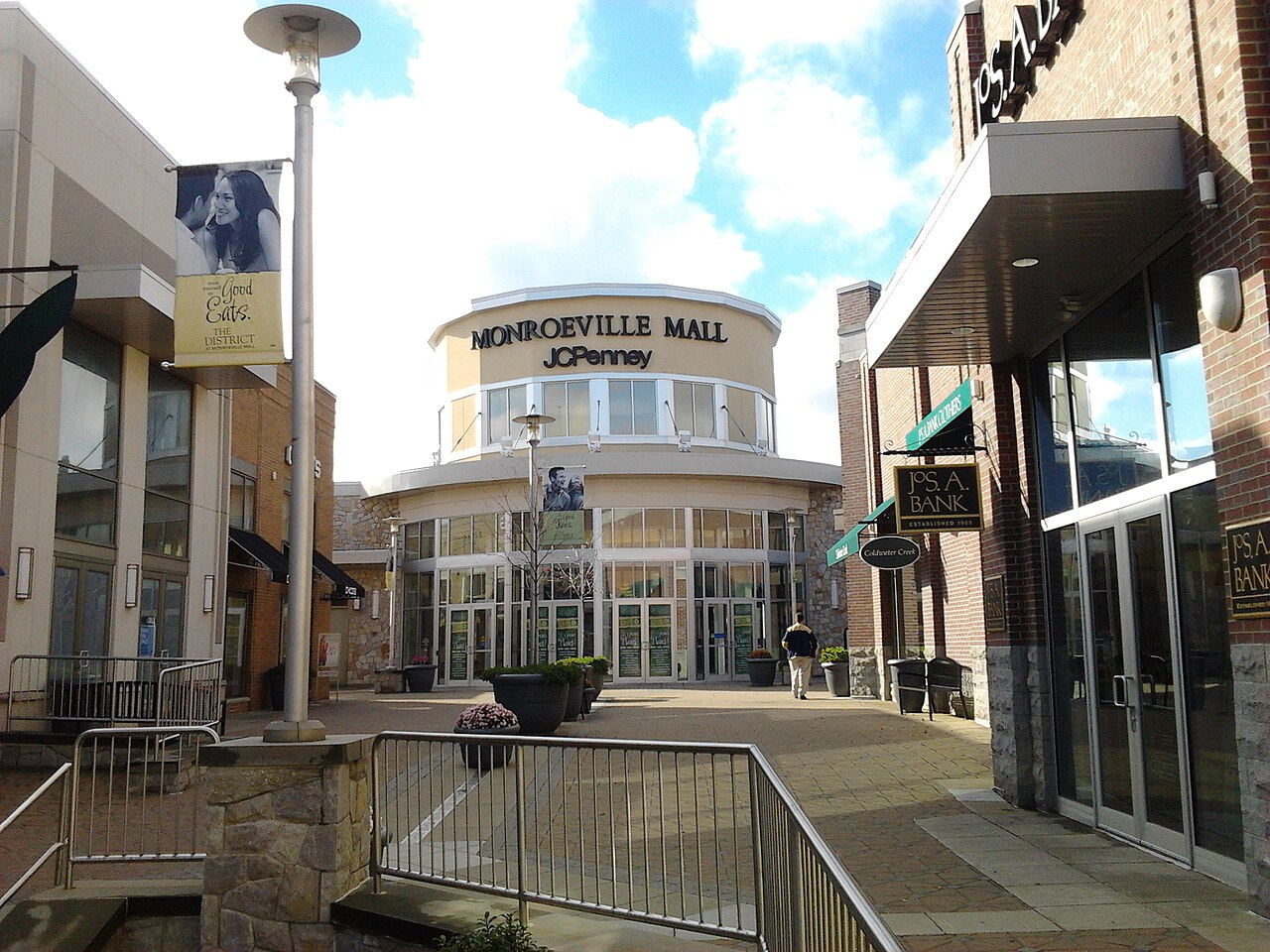
Ten years after a farmhouse full of strangers lost the night, Romero came back with color film, a much bigger canvas and a much meaner sense of humor. He shot it after hours in a working Pennsylvania mall during the holiday rush, paid for it partly with Italian money, and released it without a rating rather than accept an X. At least one critic walked out. One of the most famous called it “one of the best horror films ever made.” Both reactions were fair, and the second one won.
Watch the Trailer:

The Review
Romero took his time with a sequel. After Night of the Living Dead (1968), he waited several years before making another zombie film, partly to avoid being typecast as a horror director. The idea that brought him back came from a shopping trip of sorts. In 1974, a friend named Mark Mason, whose company, Oxford Development, managed the Monroeville Mall east of Pittsburgh, gave Romero a tour of the place, including its hidden corners. Mason joked that someone could survive in there if an emergency ever happened. Romero started writing.
Money was harder. Romero and producer Richard P. Rubinstein couldn’t find investors in the US. Then word of the project reached Dario Argento, the Italian director of Suspiria and a longtime champion of Night. Argento helped secure financing in exchange for the international distribution rights and invited Romero to Rome to write the screenplay. The deal shaped the film in a lasting way: Romero controlled the cut for English-speaking countries, and Argento made his own, shorter version, called Zombi, for everywhere else.
The story starts in chaos. At a Philadelphia TV station, traffic reporter Stephen (David Emge) and his pregnant girlfriend, producer Francine (Gaylen Ross), plan to steal the station’s helicopter. Across town, SWAT officers Roger (Scott Reiniger) and Peter (Ken Foree) survive a disastrous raid on a housing project where the tenants have been hiding their dead. The four fly out of the city together, find the mall, clear it, wall it off with trucks and move in. For a while, they have everything. Then they find out what having everything is worth.
What Works
The mall is the whole argument. The setting is the joke and the horror at the same time. The dead wander the concourse like customers, and the living move in because it has everything. Ebert caught the comedy of the place in his 1979 review: the dead are “even a little comic, lurching about a shopping center and trying to plod up the down escalator.” He also caught the point of it, calling the film “savagely merciless in its satiric view of the American consumer society.” Nearly fifty years on, the satire hasn’t dated a day.
The long middle is the best part. The stretch where the four clear the stores, build a hidden apartment and start living like the last customers on Earth is slow on purpose. They settle into a hedonistic life with anything the stores can give them, while the emergency broadcasts go quiet. Romero gives the safe life enough time to start to rot, so that when the danger comes back, it feels like a judgment on everything they built.
Ken Foree’s Peter is the anchor. Peter is the steady one, the survivor who keeps his head while the others come apart, and he’s the one who decides, at the last second, to live. Ebert credited the survivors with “courage, too, and a certain nobility at times,” and Steve Biodrowski went further: “the acting performances are uniformly strong.”
Tom Savini changes the genre. Savini had been lined up for effects on Night before he was drafted and sent to Vietnam. Dawn became his debut as an effects artist, and his crew of eight put gray makeup on two to three hundred extras every weekend of the shoot. The bites, the gunshot wounds and the infamous exploding head in the opening raid set a new bar for gore in American horror.
The real threat is still us. As in Night, the dead are a condition, not a villain. The worst people in the film are the living: the racist, trigger-happy officers in the opening raid and the biker gang that tears the mall open later to loot it. Ebert put it bluntly: “The depravity is in the healthy survivors.”
What Doesn’t
It’s long. The US theatrical cut runs 126 minutes, and the Cannes cut runs 139. Even the slow middle that makes the film work will test anyone who came for wall-to-wall zombies.
The blood looks like paint. The fake blood, produced by 3M, came out a bright, almost fluorescent red. Savini argued against it at the time. Romero liked it because it gave the film a comic-book feel. Depending on your taste, it either keeps the gore watchable or makes it look cheap.
The characters were a sore point from the start. Not every critic bought the people inside the mall. Variety complained that the gore made Savini “the real ‘star’ of the film” and that “the actors are as woodenly uninteresting as the characters they play.” Later critics have been much kinder, but it’s a complaint that has followed the film for decades, and it’s the one most likely to bother a first-time viewer who wants characters as rich as the satire.
The tone swerves hard. Slapstick sits right next to disembowelment, often in the same scene. That’s the design: Ebert noted that Romero “teases us with these passages of humor” and then hits you “just when we were off guard.” Pauline Kael didn’t see it as design at all. Compared with the “truly frightening” Night, she wrote, “you begin to laugh with relief that you’re not being emotionally challenged or even affected.” If the humor doesn’t land for you, the gore won’t either.
Spoiler warning: the next paragraph discusses the ending.
The biker raid wrecks everything. Stephen, refusing to give up what he thinks of as his, starts a firefight he can’t win, gets shot in the elevator shaft and is torn apart by the dead. Then he comes back and leads them straight to the hidden apartment. Peter kills him while Francine escapes to the roof. Alone, he puts a pistol to his own head, then changes his mind and fights his way up to her. They fly off with almost no fuel toward a future the film doesn’t show. It wasn’t always meant to end that way. Romero’s original script had Peter shoot himself and Francine put her head into the helicopter’s spinning blades, and the film still contains the setup for it, including an early shot of a zombie scalped by those same blades. Romero said the ending was dropped before it was shot, though behind-the-scenes photos suggest it was at least tested. The change from Night‘s total wipeout to a slim chance of escape is the film’s one note of mercy, and Romero makes it feel earned rather than easy.
The first reviews were split. Janet Maslin of The New York Times said she walked out after the first fifteen minutes, Gene Shalit of NBC’s Today show dismissed it as “Yawn of the Living,” and Vincent Canby, also of the Times, called it “fake mayhem and not worth getting exercised about.” On the other side, Roger Ebert picked the film for the USA Film Festival in Dallas, where its US premiere played in April 1979, and wrote the review that’s followed it ever since. “But, even so, you may be asking, how can I defend this depraved trash?” he wrote. “I do not defend it. I praise it. And it is not depraved, although some reviews have seen it that way. It is about depravity.” Audiences sided with Ebert. The film earned $900,000 on its opening weekend in the US and $5.1 million in the US and Canada in four weeks, then kept going overseas. In West Germany it sold enough tickets to win the Golden Screen award, which takes at least three million admissions within 18 months.
It’s long, the blood is the wrong color, and two of the four leads never fully come into focus. None of that dents what it does. It took the farmhouse siege of Night and turned it into a portrait of a whole society hiding in the stores, and it gave horror its most famous image of the undead: dead shoppers who still know their way to the mall.
Harper’s verdict: 5 ravens out of 5. Buried with honors. Romero’s mall of the damned is gory, funny, too long and still the sharpest zombie satire ever made.
Trivia & Facts
They shot it on the night shift. Filming started on November 13, 1977, at the Monroeville Mall, which was open for business during the Christmas shopping season. The crew could work only after closing, from 11 PM until 7 AM, when the mall’s automated music came on.
The decorations stayed up. By December, taking down and putting back the mall’s Christmas decorations every night was eating too much time, so the production stopped filming for the last three weeks of the year and resumed on January 3, 1978. Romero used the break to start editing.
Not everything is in the mall. The survivors’ hideout and the elevator shaft were sets built at Romero’s production company, The Latent Image, because no such space existed in the mall. The gun store scene was filmed at a real Pittsburgh shop, Firearms Unlimited, in the East Liberty district.
One “prop” was a real skeleton. Savini rented a skeleton for the film that its owner knew was real. It later ended up on display in a costume shop, where the county coroner confiscated it in 1982 with fake flesh from the shoot still attached. It was buried in 1983.
There are three main versions. Romero’s hurried 139-minute cut premiered at the 1978 Cannes Film Market and was trimmed to 126 minutes for US theaters. Argento’s 119-minute cut, Zombi, premiered in Turin, Italy, on September 1, 1978, months before the US release, and leans much harder on music by the Italian prog-rock band Goblin.
The mall music is a stock polka. Romero’s cut uses library cues from the De Wolfe Music Library. The tune heard in the mall and over the end credits is “The Gonk,” a polka by Herbert Chappell, with a chorus of zombie moans that Romero added.
Familiar faces in small parts. Romero appears uncredited as the TV station’s director, Savini plays the machete-swinging biker Blades, and Joseph Pilato, later Captain Rhodes in Day of the Dead (1985), plays a police officer at the dock.
Harper’s Extras
Dawn of the Dead (1978), the full wiki file: cast, production and the many cuts of Romero’s mall siege. ( https://thinkhorror.com/dawn-of-the-dead-1978/ )
George A. Romero, the wiki file: the Pittsburgh filmmaker who turned the dead into a genre. ( https://thinkhorror.com/george-a-romero/ )
Night of the Living Dead (1968), the wiki file: the farmhouse siege that started it all. ( https://thinkhorror.com/night-of-the-living-dead-1968/ )
Tom Savini, the wiki file: the effects artist who made his name on this film. ( https://thinkhorror.com/tom-savini/ )
Dario Argento, the wiki file: the Italian director who helped pay for Dawn and cut his own version. ( https://thinkhorror.com/dario-argento/ )
Suspiria (1977), Harper’s review: Argento’s own nightmare from the year before, also scored by Goblin. ( https://thinkhorror.com/suspiria-1977-review/ )
Shaun of the Dead, the wiki file: the 2004 comedy that owes its title and a lot of its jokes to this one. ( https://thinkhorror.com/shaun-of-the-dead/ )
Where to Watch
As of November 24, 2026, JustWatch lists no subscription or free streaming service for Dawn of the Dead (1978) in the US. You can rent it on Amazon Video or buy it there and on GRUV, and it’s sold on DVD and Blu-ray. The film’s scarcity is a long story: it reportedly went out of print on home video after producer Richard P. Rubinstein sharply raised its licensing fees. For the best picture, look for the 2020 limited edition from the UK distributor Second Sight Films, which restored the theatrical, Cannes and Argento cuts in 4K, the first two from the original camera negative under the supervision of cinematographer Michael Gornick. Check the region coding on any import before you buy. Streaming lineups change often, so check JustWatch before you settle in.
Frequently Asked Questions
Is Dawn of the Dead (1978) a sequel to Night of the Living Dead?
Yes, but loosely. It’s the second film in Romero’s Dead series and shows the same plague on a much larger scale, but it doesn’t share any characters or settings with Night. You can watch it first without missing anything.
Which version of Dawn of the Dead should I watch?
Start with Romero’s 126-minute US theatrical cut. It’s the version he made for English-language audiences. The 139-minute Cannes cut adds footage, and Argento’s 119-minute Zombi cut is faster, has more Goblin music and drops some of the explanation.
Why was Dawn of the Dead released unrated?
The MPAA gave the US theatrical cut an X for its graphic violence. Rather than accept the X or cut the film, Romero and the producers released it unrated, which helped its commercial chances.
Where was Dawn of the Dead filmed?
Mostly at the Monroeville Mall in Monroeville, Pennsylvania, east of Pittsburgh, at night during the Christmas season of 1977 and into early 1978. Other scenes were shot at an airfield in Monroeville, on sets at The Latent Image and at locations in Pittsburgh.
Is the 2004 Dawn of the Dead a remake?
Yes. Zack Snyder directed the 2004 remake, his first feature, from a script by James Gunn. It keeps the mall and changes most of the rest, and original cast members Ken Foree and Scott Reiniger, along with Tom Savini, have cameos.
Quick Specs
Director: George A. Romero
Writer: George A. Romero
Producer: Richard P. Rubinstein
Starring: David Emge (Stephen), Ken Foree (Peter), Scott Reiniger (Roger), Gaylen Ross (Francine)
Makeup Effects: Tom Savini
Cinematography: Michael Gornick
Editing: George A. Romero
Music: Goblin, Dario Argento; De Wolfe Music Library cues in Romero’s cut
Studio: Laurel Group
Distributor: United Film Distribution Company (US); Titanus (Italy)
Released: September 1, 1978 (Italy, as Zombi); April 13, 1979 (US theatrical opening in Pittsburgh, after an April 7 festival premiere in Dallas)
Runtime: 126 minutes (US theatrical cut)
Rating: Unrated in the US (released without a rating after the MPAA gave it an X)
Budget: About $640,000, according to Rubinstein (often reported as $1.5 million)
Box Office: About $55 million to $66 million worldwide (The Numbers lists $55 million; Wikipedia, citing an earlier Numbers figure, gives $66 million)
Until next time, fiends. Keep the helicopter fueled, keep the bikers out of the parking lot, and if the music in the mall ever starts playing on its own, don’t go down to see who turned it on.
The weekly roundup
One letter a week, from the crypt.
- New reviews, with the ravens
- New wiki entries and news
- Cool stuff worth your night
Weekly. No spam, unsubscribe in one click.