
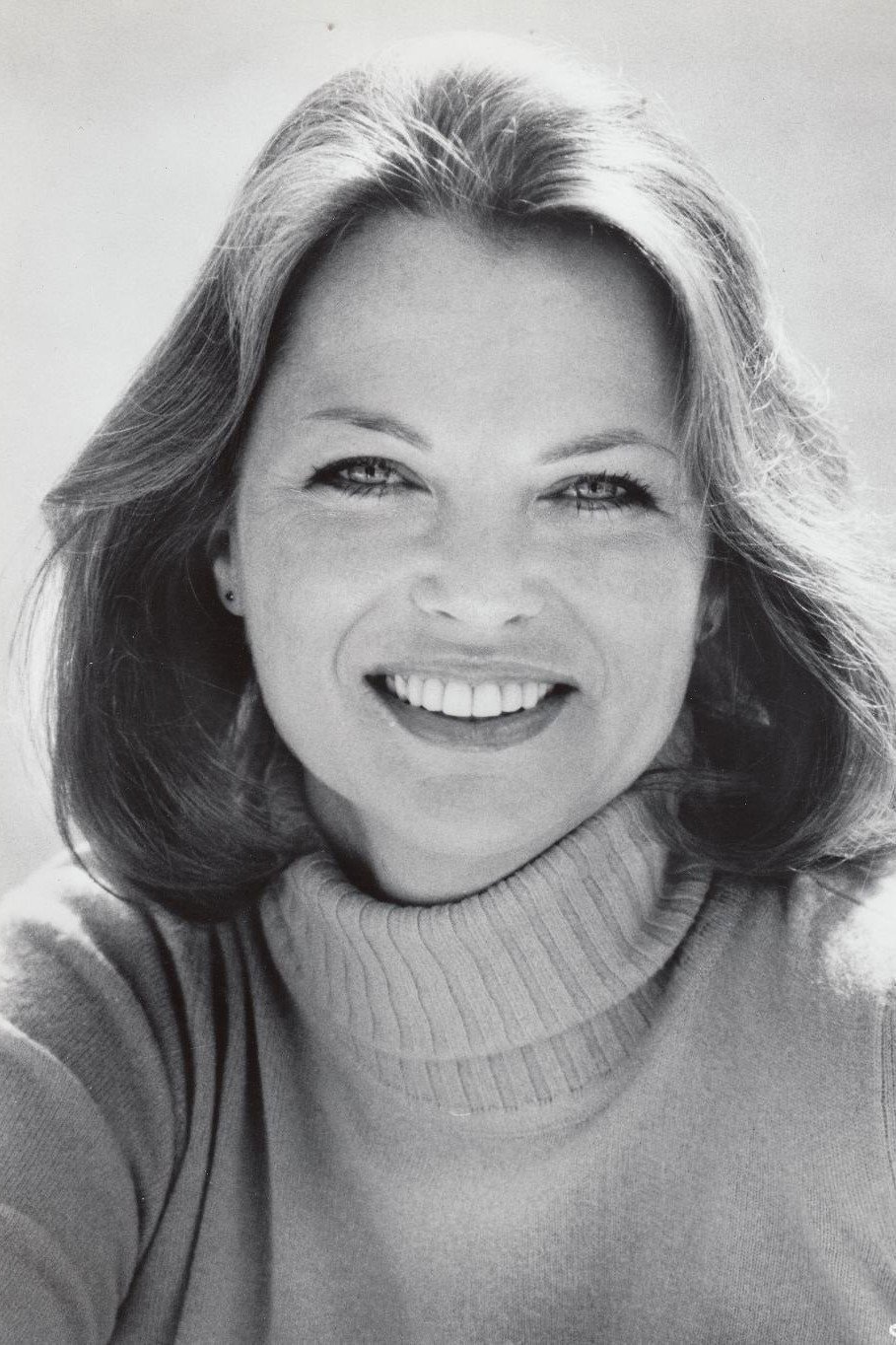
Louise Fletcher is the Oscar-winning actress who made Nurse Ratched in One Flew Over the Cuckoo’s Nest the quietest terror in film history.
Quick Specs
- Born: July 22, 1934, Birmingham, Alabama
- Died: September 23, 2022, Montdurausse, France (aged 88)
- Known for: One Flew Over the Cuckoo’s Nest, Exorcist II: The Heretic, Flowers in the Attic, Star Trek: Deep Space Nine
- Occupation: Actress
- Awards: Academy Award for Best Actress (1976); BAFTA Award; Golden Globe Award — all for Nurse Ratched
- Years active: 1958–2017
Overview
Louise Fletcher disappeared for eleven years, then came back with one of the defining performances in American film. As Nurse Ratched — soft voice, fixed smile, absolute power — she built a villain out of procedure instead of rage, and One Flew Over the Cuckoo’s Nest carried her to the Academy Award. Horror kept the receipt: she co-headlined Exorcist II: The Heretic, played Stephen King’s kindest farm wife in Firestarter, and in Flowers in the Attic built Ratched’s only true successor. Then, pushing sixty, she built a second iconic villain in just fourteen episodes of Star Trek: Deep Space Nine. She belongs in the first rank of horror actors — and none of it was supposed to happen.
The Life
Estelle Louise Fletcher was born July 22, 1934, in Birmingham, Alabama, the second of four hearing children of the Reverend Robert Capers Fletcher, an Episcopal missionary from Arab, Alabama, and Estelle Fletcher. Both of her parents were deaf, and both worked with deaf and hard-of-hearing people; her father founded more than forty churches for the deaf across Alabama. Because the Fletcher children were hearing, each was sent in turn to a hearing aunt in Texas — their mother’s sister — to learn spoken English. Fletcher did not fully use her voice until she was eight, and was once sent home from school by teachers convinced she was deaf herself. Her earliest memory: spelling out on her father’s hand, in his bed at night, that she was ill. Her own summary of that childhood is the key to everything she later played: “I grew up as a parent to my parents.”
She graduated from the University of North Carolina at Chapel Hill with a drama degree in 1957 and went to Los Angeles. In 1959 she married producer Jerry Bick; they had two sons, John Dashiell Bick and Andrew Wilson Bick, and divorced in 1977. In the early 1960s she stopped acting to raise the boys. The break lasted eleven years, and by her own account it was not an exile — “I had an 11-year layoff from acting, having a wonderful time being a mother and housewife” — she had absolutely no intention of returning. When she tested the water in the early 1970s, fifteen agents told her she had no chance. She died in her sleep, of natural causes, on September 23, 2022, at her Montdurausse home — built from a 300-year-old farmhouse — surrounded by family. She was 88.
The Work
From 1958 into the early 1960s Fletcher worked steadily in episodic television — Bat Masterson, Maverick, Lawman, 77 Sunset Strip, The Untouchables, Wagon Train, and two appearances on Perry Mason. At 5 feet 10 inches, she was told she was too tall opposite leading men: “No television producer thought a tall woman could be sexually attractive to anybody. I was able to get jobs on westerns because the actors were even taller than I was.” Her first film work came in a small role in A Gathering of Eagles (1963); a decade later she walked back in a trained professional of forty — no discovery, no gamble.
Thieves Like Us (1974) is the hinge of the entire career. Robert Altman’s Depression-era crime drama, produced by her husband, cast Fletcher — reluctantly, at first, for fear of being accused of nepotism — as Mattie, the capable filling-station woman who shelters Keith Carradine’s escaped convict and his gang, then turns to the police. Pauline Kael called the performance “impressively strong.” What the role did matters more: Miloš Forman saw it while assessing Shelley Duvall for another film, and asked who that woman was.
One Flew Over the Cuckoo’s Nest (1975) is the centerpiece. Fletcher, 41 at release, plays the head nurse of an Oregon psychiatric ward — the film gives her a first name, Mildred: Kesey’s 1962 novel gives the Big Nurse none, and by Fletcher’s own account she supplied it herself. She was the last person cast in the film: Anne Bancroft, Angela Lansbury, Ellen Burstyn, Geraldine Page, and Colleen Dewhurst had all declined, and Forman still took four or five meetings across a year to trust what he had seen. Fletcher: “I was the last person cast… It wasn’t until we were halfway through shooting that I realized the part had been offered to other actresses who didn’t want to appear so horrible on the screen.” Forman, on the read-through: “Beneath the velvety exterior, I discovered a toughness and willpower that seemed tailored for the role.”
What she did with it rewrote screen villainy. She refused the monster: “I didn’t want to make her a monster — I wanted to make her as believable as a real person in those circumstances.” She grounded Ratched in the Nixon era’s misuse of power — “people can believe that they’re doing good and they know best” — and prepared with a week observing at the Oregon hospital — group therapy attended, electroconvulsive therapy watched at 6 a.m. — alongside Jack Nicholson, whose McMurphy her nurse manages, crushes, and finally lobotomizes. Around them: Brad Dourif as Billy Bibbit, Danny DeVito, Christopher Lloyd, Scatman Crothers, and Will Sampson as Chief Bromden. And she never raised her voice — “the eye of the hurricane, the calm in the center of the storm, deceptively its most dangerous part.”
At the 48th Academy Awards on March 29, 1976, the film took the Big Five — Best Picture, Best Director, Best Actor, Best Actress, Best Screenplay — only the second film ever to do it, after It Happened One Night (1934); The Silence of the Lambs would later become the third. Her personal record is separate: only the third woman, after Audrey Hepburn and Liza Minnelli, to win the Oscar, the BAFTA, and the Golden Globe for one performance. Her acceptance speech opened with a joke — “It looks as though you all hated me” — then turned to the cameras and her parents back in Birmingham, speaking and signing: “I want to thank you for teaching me to have a dream. You are seeing my dream come true.” A moment of silence, then thunderous applause. The American Film Institute’s 2003 100 Years… 100 Heroes & Villains list fixed the archetype: Nurse Ratched is the No. 5 screen villain of all time, behind only Hannibal Lecter, Norman Bates, Darth Vader, and the Wicked Witch of the West. Her surname became a common noun.
Exorcist II: The Heretic (1977) is the horror centerpiece, stated plainly: Fletcher is not in The Exorcist (1973) at all — that film’s women are Ellen Burstyn and Linda Blair. In John Boorman‘s sequel she is co-lead: Dr. Gene Tuskin — spelled Gene — the soft-spoken psychiatrist treating the teenage Regan MacNeil (Linda Blair). Tuskin’s experimental “synchronizer” hypnosis machine links Regan’s mind with others, and her sessions convince Father Philip Lamont — Richard Burton — that Pazuzu is not finished with the girl. Fletcher, 42 at release, is the film’s rational center: the scientist whose own machine proves the supernatural to her. The film was famously ill-received — Forman’s Oscar-night joke made flesh — and remains a grand, baffling failure, with her calm Tuskin among the elements that work.
The immediate post-Oscar run shows the range fighting the typecasting: The Cheap Detective (1978), Neil Simon’s spoof, Fletcher riffing on Ingrid Bergman as Marlene DuChard; The Lady in Red (1979), written by John Sayles, with Fletcher as Anna Sage, the real-life “Woman in Red” who betrayed John Dillinger; and Mama Dracula (1980), a comedy-horror turn in the title role as the vampire countess.
The eighties made her a genre fixture with a difference. Strange Behavior (1981) put her in Michael Laughlin’s small-town slasher as Barbara Moorehead; Laughlin’s Strange Invaders (1983) cast her as the inscrutable Mrs. Benjamin. Brainstorm (1983) was the counterweight: Douglas Trumbull’s experience-recording thriller, with Fletcher, at 49, as the driven project scientist Lillian Reynolds, opposite Christopher Walken and Natalie Wood in Wood’s final film. Critics singled her out — People called Reynolds “the best-written and most colorful part in the film” — and she modeled the character on her eighth-grade English teacher. Firestarter (1984), Mark L. Lester’s Stephen King adaptation, gave her the anti-Ratched: Norma Manders, the “fearful farm wife” who, with Art Carney as her husband John, shelters David Keith’s Andy McGee and Drew Barrymore’s pyrokinetic Charlie from the Shop’s hunters — and whose kindness brings the hunters to her door. She was 49. And Invaders from Mars (1986) put her back in a nurse’s uniform, as Mrs. McKeltch, for Tobe Hooper’s remake — this time the nurse is not to be trusted either.
Flowers in the Attic (1987) is the second great villain. Jeffrey Bloom’s film of V. C. Andrews’ 1979 bestseller credits her simply as Grandmother — Olivia Foxworth in the novel — the fanatically religious matriarch ruling the four Dollanganger children hidden in Foxworth Hall’s attic — starved, beaten, and poisoned by degrees while their mother Corrine (Victoria Tennant) schemes for her inheritance (Kristy Swanson plays Cathy). Fletcher, 53, played Ratched’s only true successor in her own filmography — another woman whose cruelty wears the mask of righteous order — in a starring role. Her own verdict, delivered at DragonCon in 2009: the film was “the worst experience I’ve ever had making a movie.” The 1987 film is Fletcher’s; the 2014 remake cast Ellen Burstyn as the Grandmother — the woman who had turned down Ratched, inheriting a Fletcher role thirty-nine years later. The two films are not to be blurred.
The later film run is one breath, and the pattern is the point: Blue Steel (1990) — Shirley Turner, mother of Jamie Lee Curtis‘s rookie cop, in Kathryn Bigelow’s thriller — The Player (1992), as herself for Altman, Virtuosity (1995), 2 Days in the Valley (1996), High School High (1996), Cruel Intentions (1999) as the genteel Helen Rosemond, Big Eden (2000). Decades of directors casting the same quiet authority and enjoying what she did inside it.
Television gave her the second act. From 1993 to 1999, Fletcher recurred on Star Trek: Deep Space Nine as Winn Adami — the ambitious Bajoran religious leader who debuts in the first-season finale, maneuvers to election as Kai — Bajor’s supreme religious leader — in season two, and ends the series allied with Dukat in releasing the Pah-wraiths. Fourteen episodes across seven seasons: all it took to build her second iconic villain, and a poisonous “my child” that fans still quote as the most condescending address in television. She was 58 when Winn debuted, 64 when it ended; her verdict: “DS9 was one of the best memories of my working life.” She earned Emmy nominations for Outstanding Guest Actress for Picket Fences (1996) and Joan of Arcadia (2004), and — at 77 — played Peggy “Grammy” Gallagher, Frank Gallagher’s foul-mouthed mother doing time for manslaughter over a meth-lab explosion, across four episodes of Shameless. Her final horror credit was Cassadaga (2011), as Claire; her final role, at 82–83, was Rosie in Girlboss (2017). A sixty-year career, 1958 to 2017, with an eleven-year hole in the middle that somehow contains its peak.
The Fletcher Touch
Start with the voice — or rather, its refusal of force. Fletcher’s signature is volume withheld: Ratched governs a ward, Tuskin faces down a demon, the Grandmother rules a house, and Winn nearly takes a planet’s soul, and none of them ever shouts. Raised voices are for people whose power is in doubt. Hers never is.
Second, the belief. Her villains are never villains to themselves. Ratched, in Fletcher’s own key to the performance, “feels abused if her authority is questioned” — the cruelty is conviction, not sadism. The horror in a Fletcher performance is procedural: forms observed, rules enforced, a smile held a half-second too long.
Third, the counter-signature: warmth, same stillness, opposite charge — Mattie’s decency, Norma Manders’ kindness, Lillian Reynolds’ drive. The industry kept ordering Ratched; her frustration was with the ordering, not the role.
Why She Matters
Ratched changed what a screen villain could be. Before 1975, the great villains were grand. Fletcher made one out of procedure — medication lines, therapy sessions, rules read aloud in a gentle voice — and the culture took the point permanently: her character’s surname is now the language’s shorthand for petty institutional cruelty.
For horror, the record is no footnote to Cuckoo’s Nest: the psychiatrist facing down Pazuzu with a hypnosis machine, the farm wife sheltering Stephen King’s most hunted child, Hooper’s nurse, the attic tyrant of Flowers in the Attic. No other Oscar-winning actress of her generation has a horror filmography this deep.
And the career shape itself is the argument. A tall television actress told she could not be cast. A mother who left for eleven years and was rejected by fifteen agents on her return. A 41-year-old who won the industry’s highest honor for the role five stars feared — then worked forty-two more years and built a second iconic villain in her sixties. The industry’s verdicts are weather, not climate.
Trivia & Facts
- In 1982, Gallaudet University — the world’s leading university for deaf and hard-of-hearing students — awarded her an honorary degree.
- Forman, on Oscar night, surveying the Big Five sweep: “Now we all will make tremendous flops.” Fletcher’s next major film was Exorcist II.
- The Guardian‘s obituary reports that, after the Oscar, she turned down the evangelical mother in Carrie — the role Piper Laurie played.
FAQ
Who is Louise Fletcher?
An American actress (1934–2022) who returned from an eleven-year break to win the Academy Award as Nurse Ratched in One Flew Over the Cuckoo’s Nest (1975), then worked four more decades across horror, drama, and television.
Was Louise Fletcher in The Exorcist?
No. She has no role in the 1973 original. She co-leads the sequel, Exorcist II: The Heretic (1977), as Dr. Gene Tuskin, the psychiatrist treating the older Regan MacNeil.
Did Louise Fletcher play Nurse Ratched in the Netflix series Ratched?
No. The Netflix series is a separate prequel production starring Sarah Paulson; Fletcher had no part in it. Her Ratched exists in one place: Forman’s 1975 film.
What is Louise Fletcher’s best film?
One Flew Over the Cuckoo’s Nest for the landmark performance; Flowers in the Attic and Exorcist II for horror. Start with Cuckoo’s Nest — everything else she did is a footnote to, or a fight against, Ratched.