
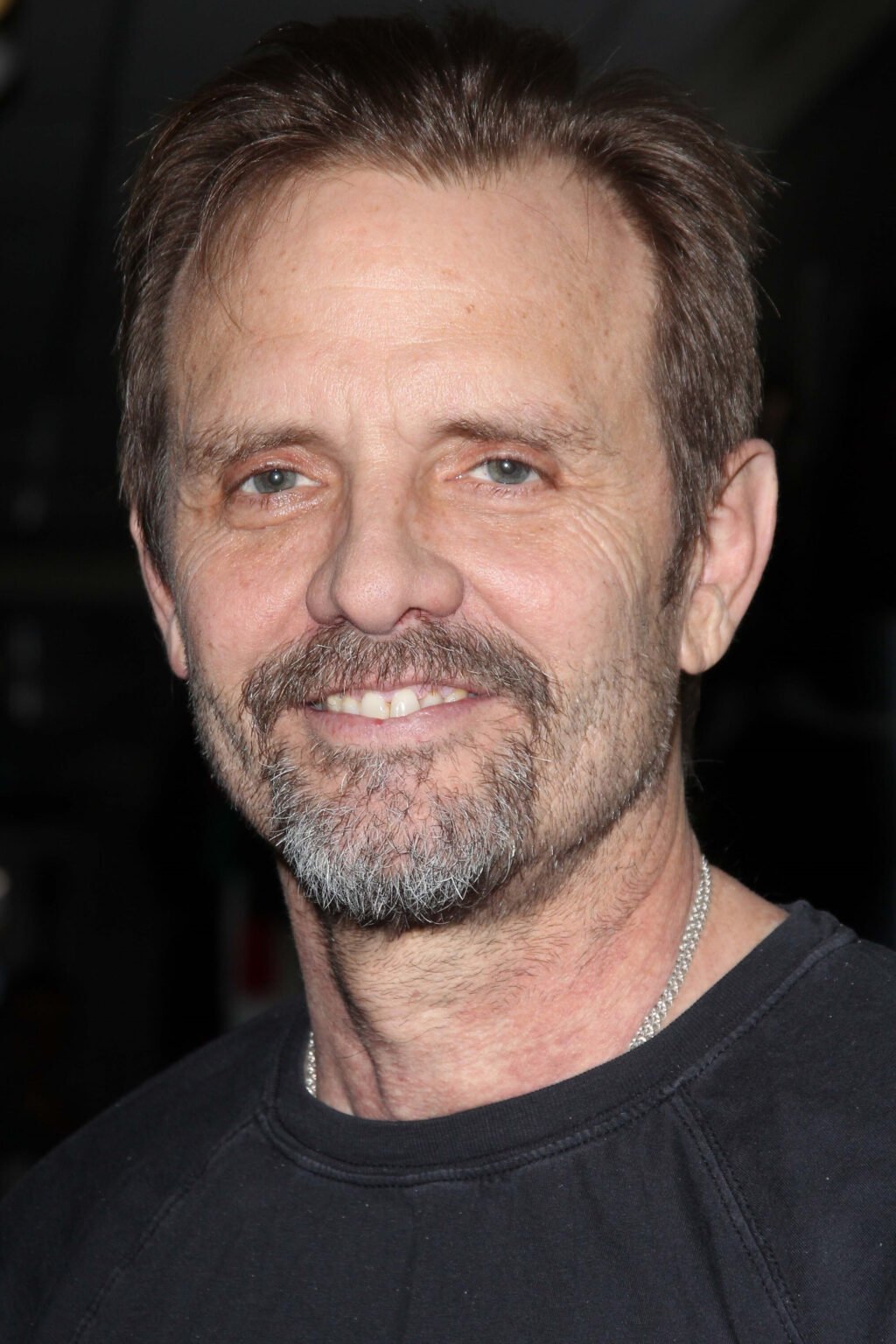
Michael Biehn (born 1956) is the American actor who played Kyle Reese in The Terminator and Corporal Dwayne Hicks in Aliens.
Quick Specs
| Born | July 31, 1956, Anniston, Alabama, U.S. (as Michael Connell Biehn) |
| Training | Drama program, University of Arizona |
| Horror and genre | Douglas Breen in The Fan (1981); Sgt. Kyle Reese in The Terminator (1984); Cpl. Dwayne Hicks in Aliens (1986); Russell Quinn in The Seventh Sign (1988); Lt. Hiram Coffey in The Abyss (1989); Sheriff Hague in Planet Terror (2007); Ian in The Walking Dead (2022); the voice of Vandy in Predator: Killer of Killers (2025) |
| Signature roles | Lt. James Curran in Navy SEALs (1990); Johnny Ringo in Tombstone (1993); Commander Charles Anderson in The Rock (1996); Lang in The Mandalorian (2020) |
| Television | Mark Johnson, series lead of The Runaways (NBC, 1978 to 1979); The Magnificent Seven (1998 to 2000) |
| Directing | The Blood Bond (2010); The Victim (2011), which he also wrote and starred in |
| Honours | Saturn Award nominations for Aliens (Best Actor) and The Walking Dead (Best Guest Starring Role on Television) |
Who He Is
Michael Connell Biehn was born on July 31, 1956, in Anniston, Alabama, the second of three boys born to Marcia Biehn (née Connell) and Don Biehn, a lawyer. The family moved when he was a boy, first to Lincoln, Nebraska, and then to Lake Havasu City, Arizona, where he joined the high-school drama club. He went on to the drama program at the University of Arizona, where he was a member of the Sigma Nu fraternity, before leaving for Hollywood.
His screen career began on television in 1977, with an episode of Logan’s Run and an appearance in James at 15. In 1978 came the TV movie Zuma Beach and the part that anchors the early record: Mark Johnson, the series lead of The Runaways, a Quinn Martin primetime drama for NBC about a team that tracks down runaway teenagers, which he carried for two seasons, 1978 to 1979. His first feature was an uncredited bit part in Grease (1978), at 21: he is a Rydell student on the basketball court whom John Travolta’s Danny punches in the stomach.
He has been married three times: to Carlene Olson from 1980 to 1987, to Gina Marsh from 1988 to 2014, and since 2015 to the actress Jennifer Blanc, his producing partner on The Victim. He has five sons. By his own account he drank heavily until the mid-2000s, had a stroke around 2008 and underwent open-heart surgery, and spent what he has called “six or eight years” in which his health kept him from working. He has said he expected to retire, and that an offer from Jon Favreau changed his mind. He turned 70 on July 31, 2026, and he is still working.
The Work, and What He Did in It
His first lead was a villain. In Edward Bianchi’s The Fan (1981), from Bob Randall’s novel, Biehn, at 24, plays Douglas Breen, a disturbed young record-store clerk whose letters to the Broadway star Sally Ross, played by Lauren Bacall, more than three decades his senior, curdle into stalking and murder. Before the soldier roles made him the genre’s everyman hero, his breakthrough notice was as a killer.
The Terminator (1984) changed everything. In James Cameron’s film he plays Sergeant Kyle Reese, the resistance soldier sent back from 2029 to protect Sarah Connor (Linda Hamilton) from Arnold Schwarzenegger’s machine. The Terminator is built like a horror film, an unstoppable killer stalking a young woman, and Reese is its heart: for long stretches the film’s point of view, the man who explains the future war, who falls for the woman he was sent to guard, fathers John Connor, and dies in the factory finale destroying the machine. He was 28. By his own account he was lukewarm at first; he had hoped to work opposite actors like Pacino or De Niro, not in what he thought of as a Schwarzenegger film, until Cameron’s conviction won him over. Made for about $6.4 million, it grossed about $78.4 million worldwide.
He filmed a return for Terminator 2: Judgment Day (1991), a dream sequence in which Reese appears to Sarah in a hospital corridor, but it was cut from the theatrical release and restored only in later special editions. That makes his Cameron record three released films plus one deleted scene. In 2019 he confirmed he would not return to the series.
Aliens (1986) gave him his signature role, and he got it because another actor lost it. James Remar was the original Corporal Hicks and had filmed for about two weeks when he was fired; the story at the time was creative differences, but Remar later said he had been arrested for drug possession during the London shoot. Producer Gale Anne Hurd called Biehn on a Friday, and he was on set the following Monday, without the Marine boot camp the rest of the cast had been through. One effects shot of Remar as Hicks, back to camera, entering the hive, is still in the finished film. Biehn inherited armour already decorated for his predecessor, including a heart-and-padlock motif on the chest, and rejected it, joking that it was like a giant bullseye.
As Corporal Dwayne Hicks he plays the Colonial Marines’ calm professional, the one who keeps his head as the mission falls apart, effectively becomes Ripley’s second-in-command and teaches her the pulse rifle. Hicks is wounded but alive at the end, in hypersleep beside Ripley, Newt and Bishop as they leave LV-426. Sigourney Weaver summed up what he brought: a sensitivity, “an alpha male who had no problem following a woman’s lead.” He was 29, thirteen days short of 30, at release. The performance brought a Saturn Award nomination for Best Actor, and the film grossed about $131.1 million worldwide on a budget of about $18.5 million.
Then Alien 3 (1992) killed Hicks off-screen in its opening minutes, in the crash of the escape ship. It did not have to: William Gibson’s early draft had made the surviving Hicks its protagonist. Biehn does not appear in the film. The production used his likeness for the dead Hicks without his knowledge; he learned of it from a friend who had seen a chest-burst Hicks dummy at Pinewood, objected, and was paid for the use. He later played Hicks again by voice, in the game Aliens: Colonial Marines (2013) and in the 2019 Audible audio drama of Gibson’s unfilmed script, in which Hicks lives and leads.
Between Cameron films he played Anthony Fraser, the prosecutor at the centre of William Friedkin’s death-penalty thriller Rampage (1987), and Russell Quinn in Carl Schultz’s apocalyptic horror drama The Seventh Sign (1988), the husband of Demi Moore’s Abby, a pregnant woman whose unborn child is bound up in an end-of-days prophecy.
The Abyss (1989), his third Cameron film, turned him into the threat. He plays Lieutenant Hiram Coffey, the Navy SEAL commander on a deep-sea rig who, suffering from high-pressure nervous syndrome, deteriorates from a professional antagonist into the film’s human monster, opposite Ed Harris and Mary Elizabeth Mastrantonio. He was 33, and it drew his strongest reviews of the decade; the studio lobbied, unsuccessfully, for a Best Supporting Actor nomination. The film took about $90 million worldwide, an underperformance on release that its reputation has since reversed; its budget is disputed, from the $43 million Fox stated to the much higher estimates.
The 1990s made him a soldier for hire. He led a SEAL team again as Lieutenant James Curran in Navy SEALs (1990), opposite Charlie Sheen, and was the mountaineer Taylor Brooks in K2 (1991). His great villain came in Tombstone (1993), at 37: Johnny Ringo, the educated, Latin-quoting gunfighter of the Clanton and McLaury faction, whose story ends in the creek-side duel with Val Kilmer’s Doc Holliday. Cameron’s verdict, given to The Hollywood Reporter: “Who can forget Johnny Ringo in Tombstone?” The film was a word-of-mouth hit, about $56 million on a budget of about $25 million.
The Rock (1996) is his biggest film and one of his smallest parts. In Michael Bay’s Alcatraz thriller he is Commander Charles Anderson, the SEAL leader who takes his team into the prison and is killed with them in the shower-room ambush early in the film. It grossed about $335.1 million worldwide, the largest of his career, but his billing and screen time were cut back, and he never landed another part in a big-budget Hollywood film. That made Anderson the third SEAL commander of his career, after Coffey and Curran.
Television leads followed in CBS’s The Magnificent Seven (1998 to 2000), Adventure Inc. (2002 to 2003) and Hawaii (2004), along with The Art of War (2000) and Clockstoppers (2002). In Planet Terror (2007), Robert Rodriguez’s half of Grindhouse, Biehn, at 50, played Sheriff Hague, the small-town lawman holding the line against the infected. The role reconnected him with horror audiences and, as he tells it, with the effects artist Greg Nicotero, who later brought him to The Walking Dead.
He became a director, making The Blood Bond (2010) and then writing, directing and starring in The Victim (2011), co-produced with Jennifer Blanc, and kept working in low-budget genre leads such as The Divide (2011). His voice found a second career: Sergeant Rex “Power” Colt in Far Cry 3: Blood Dragon (2013), a full-throttle 1980s-action pastiche built on his Cameron-era persona, after earlier work in Command and Conquer: Tiberian Sun (1999).
The late return began with The Mandalorian (2020), where he played Lang, a gunslinger villain in the second season, at 64. In 2022 he played Ian in a guest arc in the eleventh and final season of The Walking Dead, which brought a Saturn nomination for Best Guest Starring Role on Television. And in Dan Trachtenberg’s animated anthology Predator: Killer of Killers (2025) he voiced Vandy, back in the Alien and Predator universe thirty-nine years after Aliens; it is a new character, not Hicks. In 2026 he has talked about new work with the director Adam Wingard and a Schwarzenegger reunion project.
He is not in Avatar. Cameron considered him for Colonel Miles Quaritch, and by his own account Biehn believed for nine months that he would play it. Cameron passed because Biehn alongside Sigourney Weaver would remind audiences too much of Aliens, and Stephen Lang took the part.
Cool Verified Facts
- His three James Cameron films are The Terminator, Aliens and The Abyss; his Terminator 2 scene was cut and restored only in later editions.
- Kyle Reese is a sergeant, Dwayne Hicks a corporal and Hiram Coffey a lieutenant.
- He replaced James Remar as Hicks and was on the Aliens set three days after the call, with no boot camp.
- One shot of Remar as Hicks, filmed from behind, survives in Aliens.
- Hicks survives Aliens; Alien 3 killed him off-screen.
- The Runaways (NBC, 1978 to 1979) was a real primetime drama, and he was its series lead.
- The Rock is his highest-grossing film, at about $335.1 million, and he dies early in it.
- He played a Navy SEAL commander three times: The Abyss, Navy SEALs and The Rock.
- He was considered for Quaritch in Avatar and believed for nine months that he had the part.
Signatures, Habits and Behind the Scenes
Reese, Hicks and Coffey are three grades of the same figure: the professional whose competence is emotional as much as tactical, and who curdles, in Coffey, when the professionalism breaks. Cameron’s view of why the man behind them never became a bigger star is on the record: “He didn’t like playing the Hollywood game, schmoozing people and all that. For him it was all about the work.” He has never hired a publicist, and in 2019 he said he had put family ahead of career, turning down projects with long shoots.
His own verdict on the star question is blunt: “People always talk about me being an ’80s star. I was not an ’80s star. Bruce Willis was an ’80s star. Tom Cruise was an ’80s star… I never even got $1 million. I kind of liked it that way.” He has said he remains comfortable on his Screen Actors Guild pension.
The Hicks grievance is forty years old and still running. From the dummy he never agreed to, to a 2025 podcast in which he called the decision to kill Hicks and Newt “the f---ing ludicrously stupidness of all of this,” after Cameron “spent the last third of Aliens… saving Newt,” he has been the character’s most loyal defender. The audio drama of Gibson’s script let him perform the fate he thought Hicks deserved.
Why He Matters
For horror and its borderlands, Michael Biehn is the human face of the Cameron era, the actor who made the future war personal. The Terminator is a horror film in structure, and Reese is its heart; Aliens is the action-horror hinge of the 1980s, and Hicks proved a science-fiction soldier could be gentle without being soft. Add The Seventh Sign’s apocalypse, Planet Terror’s grindhouse, The Walking Dead and the Predator return, and his horror thread runs unbroken from the stalker of The Fan in 1981 to 2025.
He is also the case study of the almost-star, and the record says the ceiling was partly chosen: three Cameron films in five years, a Saturn nomination, an Oscar campaign, Johnny Ringo, and a man who would not schmooze and “kind of liked it that way.” And he owns a matched pair no other actor does. He got his signature role because another actor’s life fell apart mid-shoot, then spent decades defending that character against the sequel that killed him off-screen, until he finally performed the unfilmed script in which Hicks survives.