
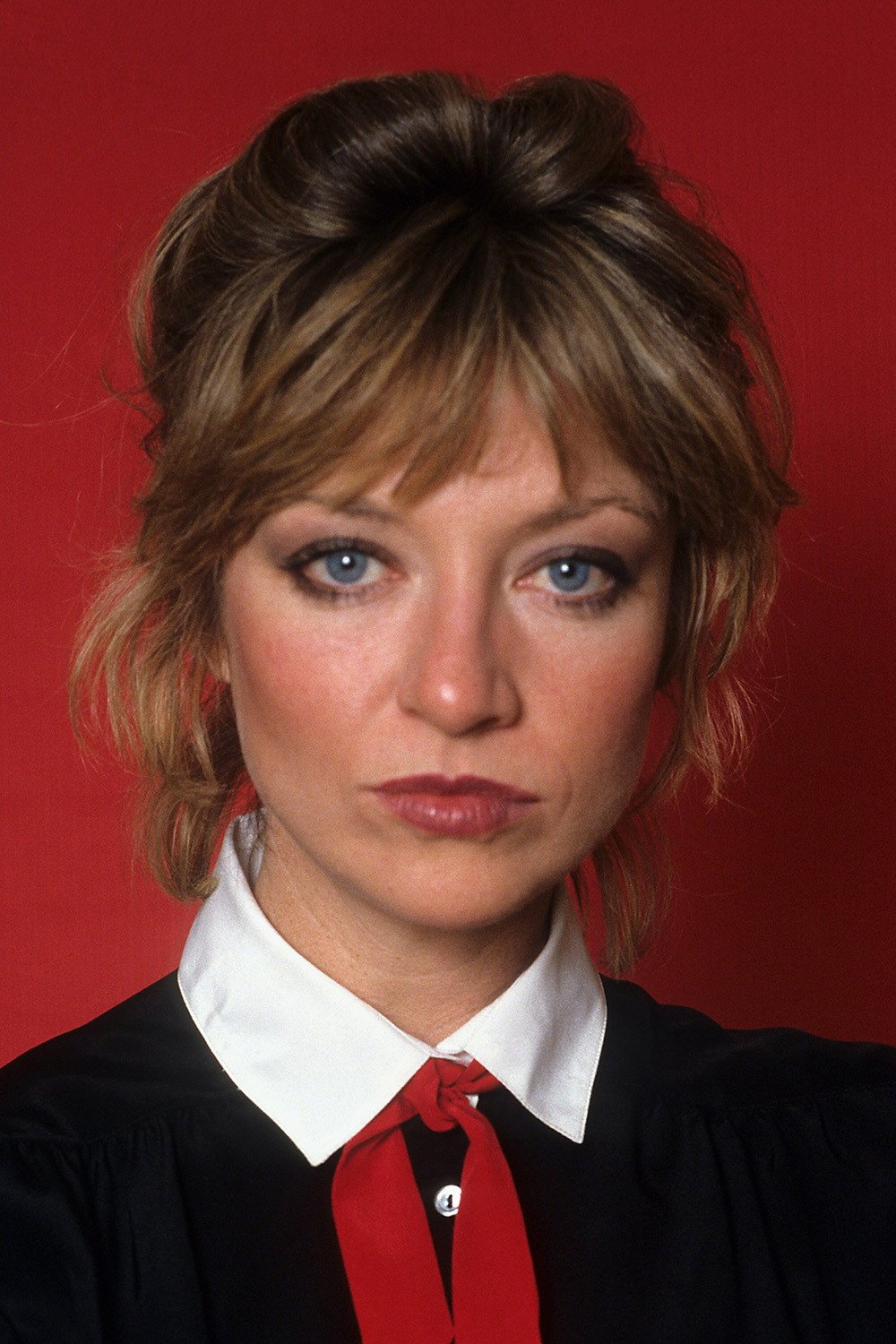
Veronica Cartwright is the English-born American actress who played Lambert in Alien, Nancy in Invasion of the Body Snatchers and Cathy in The Birds.
Quick Specs
| Born | April 20, 1949, Bristol, England (as Veronica A. Cartwright) |
| Raised | Los Angeles |
| Sister | Actress Angela Cartwright (born 1952) |
| On screen since | 1958 |
| Horror and sci-fi | Cathy Brenner in The Birds (1963); Nancy Bellicec in Invasion of the Body Snatchers (1978); Lambert in Alien (1979); Felicia Alden in The Witches of Eastwick (1987); Octavia Tarrant in Candyman: Farewell to the Flesh (1995); Cassandra Spender in The X-Files (1998 to 1999); Wendy Lenk in The Invasion (2007); Lambert’s voice in Alien: Isolation (2014) |
| Other key roles | Rosalie Wells in The Children’s Hour (1961); Jemima Boone in Daniel Boone (1964 to 1966); Betty Grissom in The Right Stuff (1983) |
| Awards | Saturn Award for Best Supporting Actress (Alien); regional Emmy (1964); three Primetime Emmy nominations (1997, 1998, 1999) |
| Spouses | Richard Gates (divorced); Stanley Goldstein (divorced); Richard Compton (married 1982 until his death in 2007) |
Who She Is
Veronica A. Cartwright was born on April 20, 1949, in Bristol, England. As a young child she emigrated to the United States with her parents and her younger sister, Angela, and the family settled in Los Angeles. The sisters are two different actresses whose credits are often merged. Angela, born in 1952, was Brigitta von Trapp in The Sound of Music, Penny Robinson in Lost in Space and Linda Williams on The Danny Thomas Show. Veronica played none of those parts. Her only crossings into Angela’s shows were two walk-ons in Make Room for Daddy (1959 to 1961) and a single guest spot as Princess Alpha in the Lost in Space episode “Princess of Space” (1968).
She began working on screen in 1958, at 9. She has credited her parents with keeping the sisters’ working childhood normal; her father stayed with her on The Children’s Hour because of its subject matter. When she outgrew daughter parts in the late 1960s, the work slowed almost to nothing, and she used the dead years, in her words, to “redefine and find out what the hell I was doing.” Roughly a decade separates the end of Daniel Boone in 1966 from her 1978 breakthrough.
She has married three times: to Richard Gates and to Stanley Goldstein, both ending in divorce, and from 1982 to the actor, director and writer Richard Compton, who directed episodes of The X-Files, Charmed and Babylon 5 and died on August 11, 2007, at 69. She is a Catholic who has attended Mass at St. Charles Borromeo with Angela. She is based in Los Angeles and turned 77 in April 2026, still working.
The Work, and What She Did in It
She made her debut uncredited in In Love and War (1958). On Leave It to Beaver she played Violet Rutherford, the girl who gave Beaver Cleaver his first kiss, and in The Twilight Zone episode “I Sing the Body Electric” (1962), from Ray Bradbury, she played Anne Rogers, at 13.
In William Wyler’s The Children’s Hour (1961), with Audrey Hepburn and Shirley MacLaine as teachers destroyed by a pupil’s lie, she is Rosalie Wells, the schoolgirl Mary Tilford blackmails, having caught her stealing a bracelet, into backing Mary’s invented story. She was 12, and she plays the lie’s unwilling instrument.
Hitchcock saw that film and cast her in The Birds (1963) as Cathy Brenner, the younger sister of Rod Taylor’s Mitch. The first mass attack falls on Cathy’s birthday party in Bodega Bay, and at the end she pleads for the lovebirds brought as her birthday gift: “They never hurt anyone!” She was 13, and it was her first commercial success. From 1964 to 1966 she was Jemima Boone, Daniel Boone’s daughter, opposite Fess Parker for the first two seasons of Daniel Boone, 37 episodes, and in 1964 she won a regional Emmy for the TV movie Tell Me Not in Mournful Numbers. “I won a regional Emmy when I was fifteen,” she has said.
After the lean years, her one significant feature was Inserts (1975), as Harlene, with Richard Dreyfuss, and then Jack Nicholson cast her as his former lover, Hermine, in Goin’ South (1978).
Invasion of the Body Snatchers (1978) was the adult breakthrough. Philip Kaufman directed W. D. Richter’s script from Jack Finney’s novel, a remake of Don Siegel’s 1956 film, with Siegel and Kevin McCarthy in cameos. She plays Nancy Bellicec, wife of Jeff Goldblum’s Jack; the Bellicecs run a mud-bath business, where a half-formed duplicate is first found, and Nancy is among the first to grasp the rule of the invasion: you are taken when you sleep. “My character was the voice of reason,” she said. She plays the believer in a film about disbelief. Donald Sutherland’s Matthew and Brooke Adams’s Elizabeth spend the film catching up with what Nancy knows, and she ends it as the apparent last human, which loads the final shot. Kaufman told her Matthew was not a pod, and told Sutherland that he was. “That was not scripted at all. I did not know he was going to be a pod. I learned about it the day we filmed it,” she said. “That reaction came totally out of him betraying me!” She was 29. The film cost $3.5 million and took $24.9 million in North America.
Alien (1979) is the role. Ridley Scott directed from Dan O’Bannon’s script, from a story by O’Bannon and Ronald Shusett. She had read for Ripley and believed she had it, and learned she was Lambert only at a wardrobe fitting in London. She disliked Lambert’s emotional weakness at first, until the filmmakers won her over: “They convinced me that I was the audience’s fears; I was a reflection of what the audience is feeling.” Lambert, the Nostromo’s navigator, credited simply as Lambert and later expanded to Joan Lambert in franchise materials, is the crew’s emotional register. She is in the surface party that brings Kane back, the party Ripley refuses to let back aboard under quarantine. After the chestburster she is the first to propose the plan the film finally follows, to abandon the Nostromo and take the shuttle, which Ripley vetoes because the shuttle cannot take four. She helps Parker take down Ash. At the end, gathering coolant, she is cornered; Parker, flamethrower in hand, shouts at her to get out of the way, and she is frozen and cannot move. The alien kills Parker, and Lambert dies off screen, in screams over the intercom. She won the Saturn Award for Best Supporting Actress. She was 30, five months after Body Snatchers. Alien’s budget is most often given as $11 million, within a documented range of $8.4 million to $14 million, and it took $78.9 million in the US.
In Kaufman’s The Right Stuff (1983), a part she says Kaufman told her he had written with her in mind, she played Betty Grissom, wife of the Mercury astronaut Gus Grissom (Fred Ward), whose 1961 flight ended with the capsule’s hatch blowing early and the capsule sinking. She plays the programme’s domestic cost: pride, the public humiliation of the hatch verdict, and the film’s angriest domestic scene, Betty’s fury that the lost capsule also costs her the promised meeting with Jackie Kennedy. She was 34. The film took about $21.5 million in the US against a $27 million budget, then won four of its eight Oscar nominations and joined the National Film Registry in 2013. In between she was a housewife besieged by an enormous rat in the “Night of the Rat” segment of Nightmares (1983), and later the mother of the vanished boy in Flight of the Navigator (1986).
The Witches of Eastwick (1987), directed by George Miller with Jack Nicholson as Daryl Van Horne, gave her the film’s grotesque set piece. Felicia Alden, wife of the newspaper owner Clyde (Richard Jenkins), is the town scold who names Van Horne as the Devil early and loudly, in church, and is dragged out for it. Struck by the counter-spell the women unwittingly cast, still ranting that Daryl is the Devil, she starts vomiting cherry stones in growing quantities until Clyde, horrified, beats her to death with a fireplace poker. She was 38 and was nominated for a Saturn Award. The film took $63.8 million in the US against a $22 million budget. Worldwide totals for it conflict between the sources, and no settled worldwide figure can be given.
Her first Primetime Emmy nomination, for Outstanding Guest Actress in a Drama Series, came for Norma Houston in ER (1997), at 48, and she learned of it unwarned: “I had no idea that the nominations had come out.” Chris Carter told her he had been trying to find a role for her on The X-Files for years. As Cassandra Spender, in four episodes, “Patient X,” “The Red and the Black,” “Two Fathers” and “One Son” (1998 to 1999), she plays a multiple abductee, the mother of Agent Jeffrey Spender and the ex-wife of the Cigarette Smoking Man, held by the Syndicate as the chief test subject of its alien-human hybrid project and finally its first success. Cassandra is no victim: she uses a wheelchair, wants to be taken again, and her certainty shames Mulder in his season of disbelief. Both seasons brought Emmy nominations, three in three consecutive years.
The genre run kept going. She was Sister Aja in Mirror, Mirror II: Raven Dance (1994) and Octavia Tarrant, Annie’s mother, in Candyman: Farewell to the Flesh (1995). In Scary Movie 2 (2001) she cameoed in the Exorcist-parody prologue as the mother of the possessed Megan (Natasha Lyonne), billed with the joke surname Voorhees. She co-starred as Wendy Lenk in The Invasion (2007), the fourth film version of Finney’s story, twenty-nine years after Nancy Bellicec. The actor killed in the film of Eastwick came back as Bun Waverly, a series regular in ABC’s Eastwick (2009 to 2010). In ABC’s Resurrection (2014) she was Helen Edgerton, a churchgoer hostile to the Returned until one of her own loved ones comes back.
In 2014 she went back to the Nostromo, voicing Lambert in the game Alien: Isolation. Her recent work includes Michael Schur’s A Man on the Inside (2024), with Ted Danson, and A Kill for a Kill (2025).
Cool Verified Facts
- Hitchcock hired her for The Birds after seeing The Children’s Hour.
- She gave Beaver Cleaver his first kiss, as Violet Rutherford.
- She read for Ripley and found out she was Lambert at a wardrobe fitting.
- Two directors in consecutive years got famous reaction shots from her by keeping something from her about the scene.
- Lambert’s planned death, dying of fright in a locker, was never shot; the screen death was assembled from other footage, and one shot uses Harry Dean Stanton’s legs.
- She is in two film versions of Jack Finney’s body snatchers story, 29 years apart: 1978 and 2007.
- She has three Primetime Emmy nominations, no wins, in three consecutive years.
- Her sister Angela, not Veronica, was Brigitta in The Sound of Music.
Signatures, Habits and Behind the Scenes
She is the actress two directors misled for a reaction, a year apart, in different ways. Kaufman told her and Sutherland different things about the ending. “Phil told me one thing, and he told Donald something else,” she said. Scott’s chestburster was different: the cast knew a creature would burst from Kane’s chest and had seen the puppet. The notion that only John Hurt knew is an exaggeration. What they were not told was the execution: the rigging, the volume of blood, the real offal from a butcher’s packed into the false torso, and that a jet of blood would hit her in the face. Scott’s reason: “If an actor is just acting terrified, you can’t get the genuine look of raw, animal fear.” The first pass failed when the puppet would not get through Hurt’s shirt; on the second, the jet hit her and she went backward over the banquette and came back into the shot. “What you saw on camera was the real response. She had no idea what the hell happened,” Tom Skerritt said. Shusett and Yaphet Kotto remembered her passing out after the take; her own account is falling backward. “I didn’t have to do anything,” she said. “Your reaction is just going off what you’re seeing.”
Lambert’s death was never filmed as planned. She recalled in 1979: “Ridley wanted to do a thing where I freak out and crowded back into one of those lockers that the cat came out of. I sort of crawl up into it and die of fright.” It went unshot for lack of time. Lambert has no filmed death scene, only a sound one, and it is the franchise’s most imitated.
Hitchcock’s meeting with her at his Universal bungalow involved no audition talk. “He told me how to cook a steak, as he felt I would need to know this some day when I was married,” she said. Learning she was born in Bristol, he talked wine. “He was just lovely to me. He had a very dry sense of humour.” Her account of The Right Stuff has an injury beneath it: she went to the producers’ interview fresh out of a cast from a 1981 car accident that had broken her leg in 35 places, and when she saw Kaufman coming she “danced the whole length of the hallway” so he would not see her limp.
Across the record she is cast as the first person to understand: Nancy grasps the sleep rule, Felicia names the Devil, Cassandra knows while the FBI doubts, Lambert sees the way off the ship first. The understanding comes out as fear at full volume, for steadier co-stars to play against. There is no record of her as difficult on any set.
Why She Matters
Veronica Cartwright is in the two ensembles that defined late-1970s science-fiction horror, in consecutive years and in opposite registers: the believer the plot proves right, left as humanity’s apparent last witness, and the crew’s fear made visible. Between those two films screen horror changed from paranoia to dread, and she is one of very few performers at the centre of both.
Lambert changed what a horror performance could be. The Saturn win recognised terror played without vanity, pleading, hyperventilating, frozen at the fatal moment, in a film whose star was a newcomer and whose monster was mostly withheld. Ripley’s competence became the genre’s template; Lambert’s panic remained its ground truth, and in story terms Lambert is right about the ship first. Thirty-five years later the franchise brought her voice back for Alien: Isolation.
She also bridges horror’s eras: a Twilight Zone child and a Birds child who stalled, came back to lead the defining adult films of the genre, then took three straight Emmy nominations in the defining horror series of the 1990s. A regional Emmy at 15, a Saturn at 30, Emmy nominations at 48 to 50, new credits at 76: a career begun in 1958 and still running.