
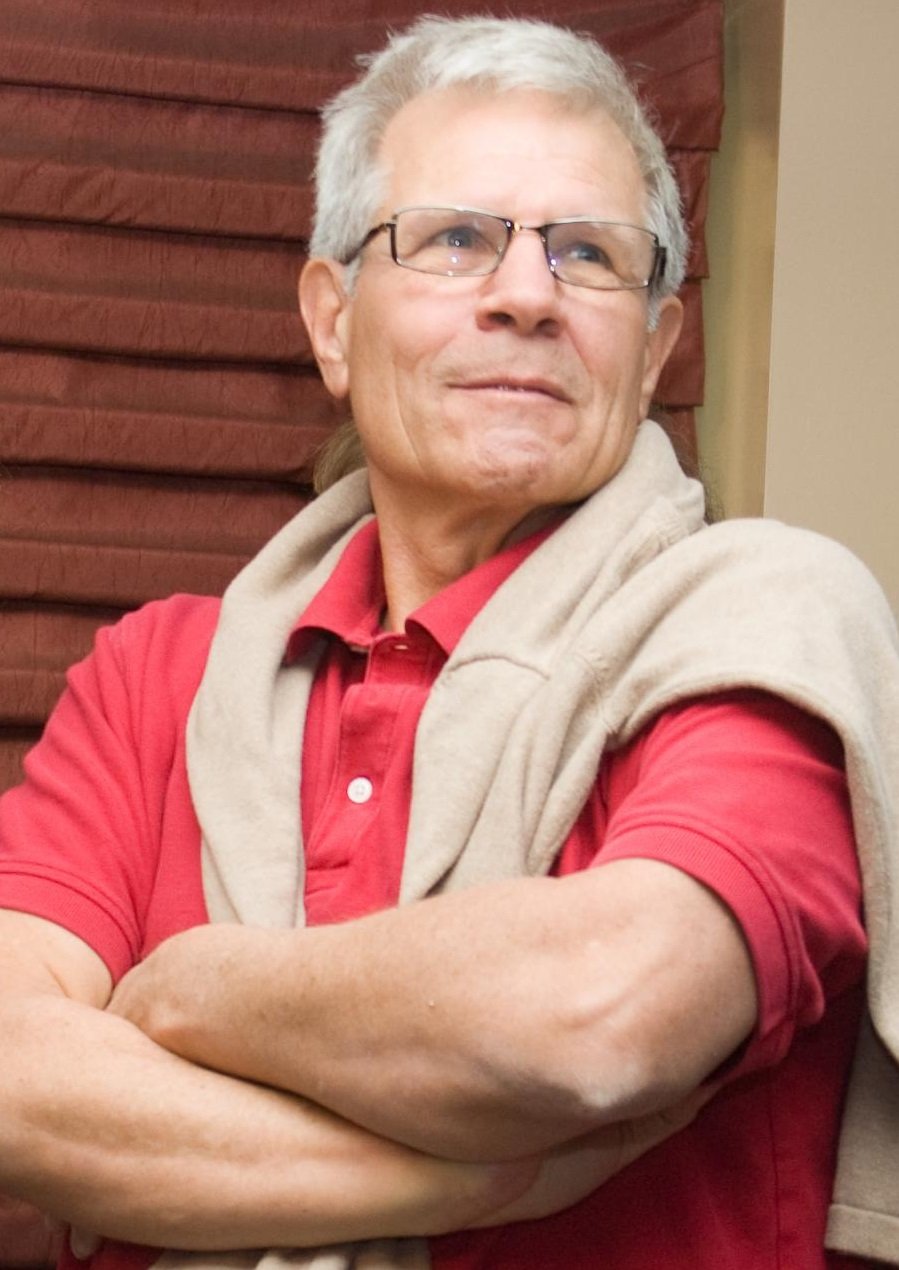
Tom Holland (born 1943) is the American writer-director of Fright Night and Child’s Play, and the screenwriter of Psycho II.
Quick Specs
| Born | Thomas Lee Holland, July 11, 1943, Poughkeepsie, New York |
| Not to be confused with | the Spider-Man actor of the same name, a different and much younger man |
| Training | Bucks County Playhouse apprentice at 16; Actors Studio under Lee Strasberg |
| Education | BA (summa cum laude, 1970) and JD, UCLA; passed the California Bar on his first attempt |
| Writing breakthrough | Psycho II (1983) |
| Directing debut | Fright Night (1985) |
| Key films | Fright Night (1985), Child’s Play (1988), The Langoliers (1995), Thinner (1996) |
| Honors | Saturn Award for Best Writing for Fright Night; Edgar Award nomination for Psycho II |
| Lives in | Sherman Oaks, Los Angeles |
Who He Is
Thomas Lee Holland was born in Poughkeepsie, New York, on July 11, 1943. His father worked for a department-store chain and the family moved constantly. “By the time I was two, I had been in almost every state,” Holland has said. He went to Ossining High School and then Worcester Academy, graduating in 1962.
He started acting at 16 as an apprentice at the Bucks County Playhouse in Pennsylvania, and later trained at the Actors Studio under Lee Strasberg. Through the 1960s he was a working TV actor. He debuted on Temple Houston, played Steve Reynolds in about 50 episodes of the ABC soap A Flame in the Wind (1965 to 1966), and shot more than 200 commercials. He had film parts in Jacques Demy’s Model Shop (1969) and A Walk in the Spring Rain (1970).
Somewhere in there he also became a lawyer. After a year at Northwestern and time at NYU, he took a BA at UCLA, summa cum laude, in 1970, then a law degree there, and passed the California Bar on his first try. He didn’t stay in law. He kept acting, with a guest spot on The Incredible Hulk in 1978, and started writing.
His son, Josh Holland, is a RADA-trained actor. Holland lives in Sherman Oaks.
The Work, and What He Did in It
His first writing credit was the story for the 1978 TV movie The Initiation of Sarah. His first produced feature screenplay was The Beast Within (1982), from Edward Levy’s novel, followed the same year by Class of 1984, which ran into censorship in the UK and became a cult film.
Psycho II (1983) made him. Universal hired him to write a sequel to Hitchcock, and Anthony Perkins agreed to play Norman Bates again only after he read Holland’s script. Richard Franklin directed. The film opened at number two, behind Return of the Jedi, and grossed $34 million. Holland has a cameo as Deputy Norris, and the script earned him an Edgar Award nomination. He still calls it “the best script I ever wrote.”
He wrote Cloak & Dagger (1984), again for Franklin, which flopped, and Scream for Help (1984), directed by Michael Winner. He was unhappy with what Winner did with his script, and that is the documented reason he decided to direct his next one himself.
That was Fright Night (1985), which he’d conceived while writing Cloak & Dagger. A horror-fan teenager, Charley Brewster (William Ragsdale), realizes his new neighbor Jerry Dandrige (Chris Sarandon) is a vampire. Nobody believes him, so he turns to the only expert he can think of: Peter Vincent (Roddy McDowall), a washed-up actor who hosts the local late-night horror show. By Holland’s account he wrote the script in about three weeks, laughing the whole time.
He named the character after Peter Cushing and Vincent Price. “I was writing a love letter to horror fans,” he said. He wrote the role for Price, who turned it down, citing his health and a wish to get away from typecasting. McDowall played Vincent as a ham who, as Holland put it, unlike real stars “such as Peter Lorre and Vincent Price or Boris Karloff, this poor sonofabitch just played the same character.”
The film cost $9.5 million, with about $1 million of that on effects. It was the most successful horror film of the summer of 1985, and Roger Ebert gave it a rave. Holland won the Saturn Award for Best Writing, and the film took the Dario Argento Award at Avoriaz and the Critics’ Award at Fantasporto.
Next he directed, but didn’t write, Fatal Beauty (1987), a Whoopi Goldberg action film with Brad Dourif as the villain. He had left Child’s Play in development to make it, and when he came back to direct he brought Dourif with him. “You can go look at the end of Fatal Beauty and see Chucky in Brad’s performance,” he said.
Child’s Play (1988) launched the Chucky franchise, and who created Chucky is a real three-way dispute. Here is what each man has on the record.
Don Mancini, then a UCLA junior, wrote the original script, Blood Buddy. In it the doll is the boy’s unchained id, the two seal a blood-brother pact, the killer’s identity stays unclear until the third act, and the doll is simply called Buddy. Producer David Kirschner brought in John Lafia to rewrite it because, in Kirschner’s words, the studio “did not want Don.” Lafia says: “the biggest contribution I made was to give the character a back story… In my draft, it became Charles Lee Ray. I coined the name Chucky.” Holland says that after Lafia’s draft, the Charles Lee Ray idea came to him “like a flash out of nowhere,” and he worked out how to bring the killer into what had been a whodunit. Mancini, for his part, credits Holland with the voodoo and with the rule that Ray can transfer his soul only into the first person he reveals himself to, the mechanism the whole franchise runs on.
So Lafia and Holland disagree about who came up with Ray, and both Mancini and Holland agree that Holland built the soul-transfer rule. The killer’s name joins Charles Manson, Lee Harvey Oswald and James Earl Ray. The title changed from Blood Buddy to avoid legal trouble with the My Buddy doll line.
Shooting began in Chicago in January 1988 and moved to Culver City. It was a hard shoot. Holland and Kirschner clashed on set, and Kevin Yagher’s animatronic doll kept failing. Mancini has estimated that about half of his original script made it to the screen.
Holland then moved into TV. He directed three episodes of Tales from the Crypt between 1989 and 1992, including “King of the Road” with a then-unknown Brad Pitt. “I saw a movie star booming,” he said. He also directed the Amazing Stories episode “Miscalculation,” after Kirschner called Steven Spielberg on his behalf and described him as “an arrogant guy, but talented.” He directed the TV movie The Stranger Within (1990) and the thriller The Temp (1993).
The Stephen King films came next, and they came about because King was a fan of Fright Night and Child’s Play. Producer Richard P. Rubinstein put them together. Holland wrote and directed the ABC miniseries The Langoliers (1995), shot on 16mm to save money, with King in a cameo as a pharmacist and Holland in a small part. Then he directed Thinner (1996), which he co-wrote with Michael McDowell. The project had been stuck for more than a decade, “turned down by almost every director in Hollywood,” Holland said, because of its bleak ending. Josh Holland plays Frank Spurton.
After Thinner he didn’t direct for eleven years. No reliable source explains why. He came back in 2007 with “We All Scream for Ice Cream,” an episode of Showtime’s Masters of Horror adapted by David J. Schow from a John Farris story, starring William Forsythe.
In 2009 he co-founded Dead Rabbit Films with David Chackler. He wrote and directed Twisted Tales (2013), a nine-episode horror anthology webseries for Fearnet. He went back to acting too, playing Bob in Adam Green’s Hatchet II (2010). In 2017 he returned to features for the first time in 21 years with Rock, Paper, Scissors, also called Rock Paper Dead, co-written by Friday the 13th writer Victor Miller, scored by Harry Manfredini and premiered at the Nightmares Film Festival.
Fright Night still follows him. In 2020 he announced a direct sequel, Fright Night: Resurrection, ignoring Part 2. In June 2024 the original cast reunited for a 40th-anniversary table-read podcast, with Mark Hamill reading McDowall’s Peter Vincent. He has written novels: The Notch (2020, Cemetery Dance) and Fright Night: Origins (2022, with A. Jack Ulrich). A prequel novel, Hellbound, by Michael Harbron with Holland, followed in October 2025. He also runs Terror Time, a store selling autographed memorabilia, scripts and apparel from his films.
Cool Verified Facts
- Fright Night Part 3 died with the Menendez murders. McDowall had set up a meeting for Holland with Jose Menendez, the Live Entertainment executive whose company held the rights. Menendez and his wife were killed on August 20, 1989, before the meeting could happen.
- Anthony Perkins agreed to return as Norman Bates only after he read Holland’s Psycho II script.
- The role of Peter Vincent was written for Vincent Price, and the name honors both Price and Peter Cushing.
- Chucky’s soul-transfer rule, the franchise’s ticking clock, is Holland’s contribution by the original writer’s own account.
- Holland guest-starred as an actor on The Incredible Hulk in 1978, in the episode “Another Path.”
- He has a law degree from UCLA and passed the California Bar on his first attempt.
Signatures, Habits and Behind the Scenes
- He makes love letters to horror fans. Fright Night’s hero is a fan who is right about the monster while every adult dismisses him, and the expert he turns to is a horror host. Child’s Play also takes a child’s belief completely seriously.
- He casts from his own sets. Dourif got Chucky because Holland had just watched him play the villain in Fatal Beauty.
- He keeps turning up in his own work: Deputy Norris in Psycho II, a small part in The Langoliers, Bob in Hatchet II. The Bucks County apprentice never quite left the frame.
- When the studios aren’t offering, he builds his own outlet. Dead Rabbit Films, Twisted Tales and Terror Time are the same move he made at 42, when he stopped handing his scripts to other directors.
Why He Matters
Holland links classical and modern American horror. An Actors Studio actor with a law degree, he wrote the sequel to Hitchcock that brought Perkins back, then directed two defining horror films of the 1980s. Fright Night showed a horror film could be a valentine to the genre, funny and affectionate and still scary, and it kept the local horror-host culture that raised its audience alive inside a hit. Child’s Play gave the genre Chucky, one of the few horror icons to carry a franchise across four decades, running on a rule Holland built. Stephen King sought him out because he admired the films. Decades later Holland is still writing Fright Night novels, holding table reads and selling signed scripts straight to the fans those films were made for.