Chucky (Charles Lee Ray)
Chucky is Child’s Play’s killer doll: the soul of serial killer Charles Lee Ray in a Good Guy doll, voiced throughout by Brad Dourif.

At a Glance
| Field | Details |
|---|---|
| Also Known As | Charles Lee Ray; the Lakeshore Strangler |
| Created By | Don Mancini |
| First Appearance | Child’s Play (1988) |
| The Doll | A Good Guy doll — two and a half feet tall, red hair, blue overalls |
| Goal | Transfer his soul into a human body before the doll becomes permanent |
| Voiced By | Brad Dourif (every Mancini-continuity film and all three TV seasons); Mark Hamill (2019 remake) |
Overview
Chucky is horror’s smallest slasher and its most talkative. In Child’s Play (1988), the dying serial killer Charles Lee Ray — the “Lakeshore Strangler” — performs a voodoo ritual in a toy store and pours his soul into the nearest vessel: a Good Guy doll, the season’s must-have toy, bought the next morning for six-year-old Andy Barclay. The doll swears, schemes and kills, and only Andy knows. Where the era’s other killers were silent shapes, Chucky is a personality: a grown murderer’s rage and filthy wit trapped in two and a half feet of merchandising.
He is also, uniquely among his peers, one creator’s lifelong property. Don Mancini has written or co-written every entry in the character’s home continuity — seven films and a three-season television series across nearly four decades — and one actor has voiced him in all of it. This page covers his creation, the voice, the films, the bride, the rival Chucky built by another studio, and the television years.
Creation
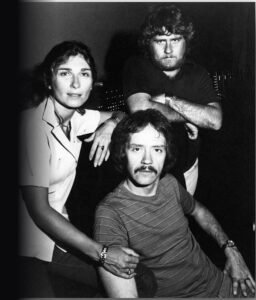
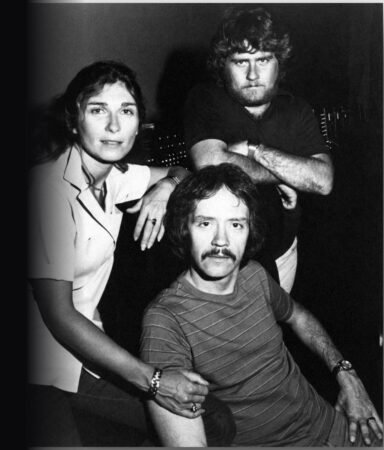
Mancini wrote the original script at UCLA, and his draft — called Blood Buddy — had no killer doll in it at all. In that version the doll (then just “Buddy”) was not possessed: lonely Andy mixed his own blood with the doll’s in a “friends ’til the end” pact, and the doll became an embodiment of the boy’s subconscious rage, killing while Andy slept — a whodunit and a satire on advertising to children. Producer David Kirschner requested extensive rewrites; John Lafia rewrote for sympathy and structure; and director Tom Holland‘s version produced the filmed story — the serial-killer possession and the voodoo transfer. Mancini is on record about the change: “the voodoo was not part of my original script.”
The doll itself was designed and built by Kevin Yagher from Mancini’s description — two and a half feet tall, red hair, freckles, blue eyes, red sneakers, blue overalls. Nine Chucky dolls of different functions were built for the 1988 shoot, from simple toy to walking rig to hand-puppet close-up, with performer Ed Gale in a suit for wide and action shots. Even the killer’s name is an assemblage: Charles Lee Ray is built from Charles Manson, Lee Harvey Oswald and James Earl Ray — three infamous names fused into one fictional one.
The Character
The premise runs on a clock. Ray’s ritual bought him a body, not an escape: he must transfer his soul into a human host — initially Andy himself — before too much time passes and the doll form becomes permanent. That deadline drives the early films’ plots and gives Chucky something no other slasher has: a reason to keep his victims alive and talking. He is a killer who needs people.
It also makes him a character rather than a force. Michael Myers is a blank; Leatherface is a frightened child; Chucky is a vain, furious, funny adult man in humiliating circumstances, and the performance of him — the sneer, the laugh, the tantrums when a plan fails — is the franchise. Bride of Chucky (1998) fixed his modern image: killed and stitched back together by his former girlfriend Tiffany, he carries the scarred, sutured face that has been his default ever since.
The Voice — Brad Dourif
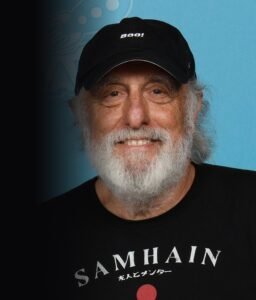
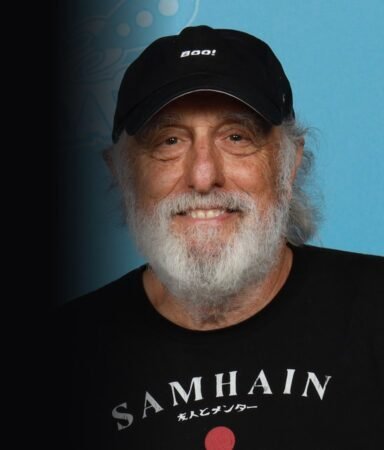
Chucky has the rarest thing in horror: one voice, unbroken. Brad Dourif plays Charles Lee Ray in the 1988 film’s opening minutes and voices the doll in all seven Mancini-continuity films and all three seasons of the television series — the only Chucky of that continuity, from 1988 forward. His on-screen returns as Ray himself are rare and specific: the 1988 opening, black-and-white flashbacks in Curse of Chucky (2013), and the television series’ third season — three productions across thirty-six years.
The family business extends one generation. Dourif’s daughter Fiona Dourif joined as Nica Pierce in Curse (2013) — the paraplegic heroine Chucky spends two films trying to destroy and finally, in Cult of Chucky (2017), possesses outright: Cult ends with Chucky driving away in Nica’s body. In the television series’ first season, Fiona also plays the young adult Charles Lee Ray in flashbacks, in prosthetics, with her father’s voice — the role quite literally handed down.
The Films
The home continuity runs seven films. Child’s Play (1988) made $44.2 million worldwide on a budget its own tracker lists inconsistently ($9 million on one page, $13 million on another). Child’s Play 2 (1990) rebuilt him — the toy company reassembles the doll to disprove the bad publicity — and Child’s Play 3 (1991) followed just nine months later, a pace Mancini has repeatedly called ridiculous and named his least favourite entry. Bride of Chucky (1998) rebooted the tone: Jennifer Tilly‘s Tiffany resurrects him, dies, and joins him in a bride doll — and from here the series is marketed as the Chucky films, seed of a family that Seed of Chucky (2004) completed with their child, Glen. Seed was Mancini’s directorial debut and the continuity’s last theatrical release.
Curse of Chucky (2013) and Cult of Chucky (2017) went direct-to-video and back to straight horror — no box office exists for either, and none should be invented: a mailed doll, a family score settled in flashback, then soul-splintering multiplicity and the Nica possession. The through-line is Mancini tightening the story back around the Barclays, the Pierces and the doll.
The Other Chucky
There are two franchises because the rights split. The 1988 film was MGM’s; when the series moved to Universal, MGM kept remake rights to the first film only — and exercised them in Child’s Play (2019). That Chucky is no one’s soul: he is a Buddi doll, a Kaslan Corporation AI companion whose safety protocols were disabled in the factory, voiced by Mark Hamill. Mancini and Kirschner were offered executive-producer credits on it and declined. The two continuities share a doll’s face and nothing else.
Television and What’s Next
The Chucky series (Syfy and USA Network, 2021–2024) continued the film continuity for three seasons and twenty-four episodes, weaving the film cast — Dourif, Tilly, Fiona Dourif, Alex Vincent‘s Andy, Christine Elise’s Kyle — through a new generation of teenagers. It was cancelled in September 2024. Mancini’s response, on the record: gratitude for “three killer years,” and “Chucky will return! He ALWAYS comes back.” As of 2026 he is writing a new theatrical Chucky film, modelled on Curse’s back-to-roots approach and tying the films and series together. No title, cast or date has been announced.
Trivia and Facts
- In Mancini’s original script there was no voodoo and no possession — the doll was an embodiment of Andy’s own rage.
- Charles Lee Ray’s name is assembled from Charles Manson, Lee Harvey Oswald and James Earl Ray.
- Nine different functional Chucky dolls were built for the 1988 shoot; Ed Gale performed in-suit for wide shots.
- Brad Dourif has played Charles Lee Ray on screen in exactly three productions across 36 years — the rest is voice.
- Fiona Dourif plays both Chucky’s nemesis Nica Pierce and, in TV flashbacks, the young Charles Lee Ray himself.
- Curse and Cult of Chucky are direct-to-video films — any box-office figure attached to them is invented.