
The Brides of Dracula (1960) is Hammer’s second Dracula film, with Peter Cushing’s Van Helsing hunting Baron Meinster, a vampire disciple of Dracula.
The title promises two things the film never delivers: Dracula, and his brides. The Count is dead before the first scene, and the brides belong to somebody else. What it delivers instead is a blond young baron in chains, a mother who has been feeding him village girls, and a windmill that turns into the biggest crucifix in Hammer history.
Three things to settle first. Count Dracula does not appear, and Christopher Lee is not in the film. Baron Meinster is not Dracula under another name; he is one of the Count’s disciples, a vampire Dracula made. And the “brides” of the title are not the three women from Bram Stoker’s novel. They are Meinster’s victims.
Quick Specs
- Directed by: Terence Fisher
- Screenplay by: Jimmy Sangster, Peter Bryan and Edward Percy
- Produced by: Anthony Hinds
- Production company: Hammer Film Productions
- Starring: Peter Cushing, Yvonne Monlaur, David Peel, Martita Hunt, Freda Jackson
- Cinematography: Jack Asher, in Technicolor
- Music: Malcolm Williamson
- Production design: Bernard Robinson
- Released: June 15, 1960 (United States); premiered in London in early July 1960
- Runtime: 85 minutes
- Series place: Second of Hammer’s Dracula films, after Dracula (1958)
- Country: United Kingdom
The Cast
Peter Cushing returns as Doctor Van Helsing, the role he played opposite Lee in Dracula (1958), and he is the only lead who comes back. This is a kinder, more romantic Van Helsing than the first: a scholar who rides into a village because the local priest sent for him, and who ends the film hanging off a windmill sail. He is the film’s real link to the first one. For more on the character, see Abraham Van Helsing.
David Peel plays Baron Meinster, the young aristocrat whose mother keeps him chained in the family chateau. Yvonne Monlaur is Marianne Danielle, a French schoolteacher on her way to a post at a girls’ academy. Martita Hunt plays the Baroness Meinster, and Freda Jackson is Greta, the servant who has looked after the Baron since he was a baby and is still devoted to him.
Andrée Melly plays Gina, Marianne’s roommate at the academy. Miles Malleson is Doctor Tobler, the local physician; he was the undertaker in the 1958 film, a different part. Henry Oscar and Mona Washbourne run the school as Herr and Frau Lang, Fred Johnson plays the village priest who sends for Van Helsing, Marie Devereux is the village girl, and Michael Ripper drives the coach.
The Plot
Transylvania, near the end of the nineteenth century. A narrator tells us that Count Dracula is dead, but his disciples live on. Marianne Danielle is travelling to a teaching post at a girls’ school when her coach driver abandons her at a village inn. Ignoring the warnings of the locals, she accepts the Baroness Meinster’s offer of a bed for the night at her castle.
The Baroness explains that her son is ill and kept confined. Marianne slips into his quarters anyway and finds the Baron chained to the wall by the ankle. He is handsome, gentle and very persuasive: his mother, he says, has stolen his lands and locked him up. Partly from pity and partly because he has charmed her, Marianne steals the key from the Baroness’s bedroom and frees him.
It is the worst thing she could have done. The Baron kills his mother and drinks her blood, and Marianne flees into the night. Greta reveals the truth: the Baroness allowed her son to be turned into a vampire by Dracula, then chained him and lured girls to feed him.
The next morning Doctor Van Helsing finds Marianne exhausted in the woods, with no memory of the night before, and takes her to the school. He has come at the request of the village priest. In the village, a girl has been found dead with wounds on her throat. Van Helsing asks her father not to bury her, but he does, and that night Van Helsing and the priest find Greta at the grave, coaxing the dead girl out of the earth. Greta holds them off, and the new vampire escapes.
At the chateau Van Helsing finds the Baroness risen as a vampire herself, ashamed of what she has become. Her son’s revenge on her for chaining him was to make her one of his kind. The Baron flees. Van Helsing pities the Baroness and, at sunrise the next morning, stakes her.
The Baron, meanwhile, visits Marianne at the school and asks her to marry him. She says yes, to the envy of her roommate Gina. That night he drains Gina. Van Helsing has Gina’s body locked in a padlocked coffin in the stable and watched. Marianne takes a turn at the vigil with the stable keeper, Severin, who is killed by a bat. Then the locks drop off the coffin one by one, and Gina rises. She lets slip that the Baron is hiding at the old mill, and Van Helsing arrives in time to drive her off.
At the mill, Van Helsing finds the Baron’s coffin and both of his brides, Gina and the village girl, and holds them back with his crucifix. Greta, still human, wrestles the cross from him and falls from the rafters to her death. The Baron arrives, overpowers Van Helsing and bites him.
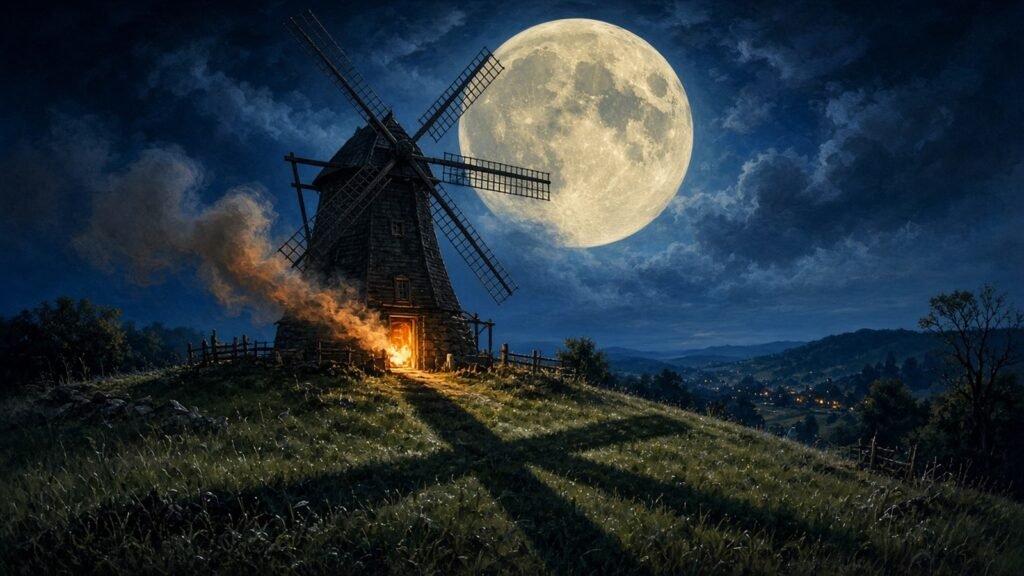
When he wakes, Van Helsing heats a metal tool red-hot in a brazier, burns the wound on his neck and pours holy water over it. The bite is gone. When the Baron brings Marianne to the mill, Van Helsing throws holy water in his face, and it burns him like acid. The Baron kicks over the brazier and flees outside as the mill catches fire and the brides escape. Van Helsing leaps onto the mill’s sails and swings them so that their shadow, in the moonlight, falls across the Baron as a giant cross. The shadow kills him. Van Helsing comforts Marianne as the mill burns. What becomes of the two brides is never shown.
A Dracula Film Without Dracula
After the success of Dracula in 1958, Hammer wanted a sequel, and Christopher Lee did not. He was asked to return as the Count and turned it down because he feared being typecast. He would not play the role again until Dracula: Prince of Darkness in 1966, the third film in the series. For Lee’s own story, see Christopher Lee.
That left Hammer with a Dracula sequel and no Dracula. Jimmy Sangster’s first script, called Disciple of Dracula, was about an acolyte of the vampire, with the Count himself in only a cameo. Peter Bryan rewrote it to take Dracula out and bring Van Helsing in, and Edward Percy revised it again. Sangster, Fisher and Cushing all reportedly had a hand in later rewrites, and Hinds and Fisher were still changing scenes on set. Another working title was Dracula 2.
The replacement villain was Baron Meinster, and the replacement actor was David Peel, best known on stage. Where Lee’s Count was a predator, Peel’s Baron is a spoiled, charming young aristocrat with a terrible mother, and the film plays the relationship between the two of them as its own kind of horror.
Hinds, who produced, later described how personally everyone took these films. “My own personal involvement in a film like Brides was always 100 percent,” he said, “not because I felt it to be my duty but because I felt very strongly that the pictures were mine. No doubt Terry thought they were his and Jimmy Sangster thought they belonged to him. And Peter C. knew they were his.”
Making It
Filming began on January 26, 1960, and ended on March 18. Most of the interiors were shot at Bray Studios, with exteriors in nearby Black Park and at Oakley Court. Jack Asher shot it in Technicolor, and Bernard Robinson designed the sets.
The windmill ending was not the original plan. The first version had Van Helsing use a black-magic curse to call down a swarm of bats on the Baron. It was dropped partly for cost and partly because Cushing objected to Van Helsing using black magic at all, which he felt betrayed the character’s faith. The bat idea was later used in Hammer’s Kiss of the Vampire (1963).
The bat that did make it into the film became a joke of its own; reviewers still single it out as one of the least convincing props Hammer ever put on screen.
One small scene has a literary ancestor. The moment when the padlocks fall from Gina’s coffin, one after another, comes from M. R. James’s ghost story “Count Magnus.”
Release and Reception
The Brides of Dracula opened in the United States on June 15, 1960, on a double bill with The Leech Woman. In Britain it premiered at the Odeon Marble Arch in early July (accounts give July 6 and July 7) and went on general release in London on August 29. It was among the money makers at the British box office that year.
Its reputation has only grown. Critic Roderick Heath notes that the film, “overshadowed and dismissed as a by-product at the time of its release,” has “slowly gained repute, to the point where some state today that it’s the best horror work the studio ever made.” Rotten Tomatoes lists it at 79 percent from 19 reviews.
Where It Fits
The Brides of Dracula is the odd one out in Hammer’s Dracula series, one of only two entries, with The Legend of the 7 Golden Vampires, that Lee is not in. Its hot-iron-and-holy-water cure for a vampire bite is the film’s own invention, and the series never used it again.
What it shares with the first film is its director, its hero and its taste for gothic colour: a chained baron, a mother who fed him, a coffin whose locks open by themselves and a mill sail turned into a cross. Audiences who came for the Count got a different story, and the film has been winning them over ever since. For Hammer’s other early hits, see The Curse of Frankenstein.