The Revenge of Frankenstein (1958) is Hammer’s first Frankenstein sequel, in which Cushing’s Baron cheats the guillotine and builds his crippled rescuer a perfect body.
You’re a grave robber, and tonight’s work should be easy: a fresh burial, a heavy coffin, a dead aristocrat with rings on his fingers. You prise the lid. The face inside is not the Baron’s. It’s a priest’s, fiends, still in his collar, and the head is not quite where it should be. Then you hear a cultured voice behind you, asking whether you’ve found what you came for. The man whose name is on the tombstone is standing at your shoulder.
Welcome back to the crypt. Tonight’s file is the sequel to the film that made Hammer: the Baron’s escape, his new life, his new practice and his new experiment, all made at speed by the same team that had just finished Dracula. Terence Fisher directs, Jimmy Sangster writes, and Cushing gives the Baron charm, cheek and a bedside manner to die for. The Revenge of Frankenstein. Check your doctor’s credentials.
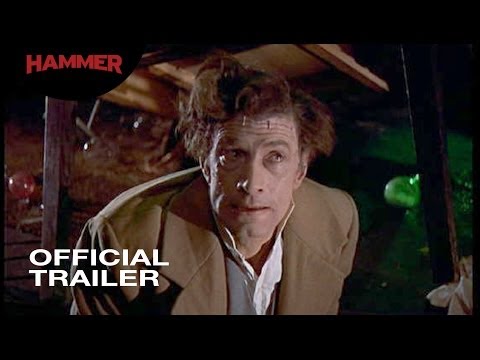
Watch the Trailer
Quick Specs
- Director: Terence Fisher
- Screenplay: Jimmy Sangster
- Starring: Peter Cushing (Doctor Victor Stein / Baron Frankenstein), Francis Matthews (Doctor Hans Kleve), Eunice Gayson (Margaret Conrad), Michael Gwynn (Karl, in his created body), Oscar Quitak (Karl, in his hunchback form), John Welsh (Bergman), Lionel Jeffries (Fritz), Richard Wordsworth (Up Patient), Michael Ripper (Kurt)
- Music: Leonard Salzedo
- Cinematography: Jack Asher
- Editor: Alfred Cox
- Producers: Anthony Hinds
- Production Company: Hammer Film Productions
- Distributor: Columbia Pictures
- Premiered: June 1, 1958
- Runtime: 91 minutes
- Verdict: 4 ravens – the Baron’s best bedside manner, and his cleverest escape.
- On This Site: The Revenge of Frankenstein in the wiki · The Curse of Frankenstein

The Review
The Curse of Frankenstein ended with the Baron on his way to the guillotine, which was a problem when Hammer wanted another one. By Jimmy Sangster’s own account, the studio had already presold a sequel in America on the strength of a poster, and when he protested that he had killed Frankenstein in the first film, he was given six weeks and told he would think of something. He did. Shooting began at Bray Studios in January 1958, just days after the same director and star had wrapped Dracula, and the film that resulted is a rare thing for Hammer: a true direct sequel, opening exactly where its predecessor left off.
It is 1860, and the condemned Baron (Cushing) is led to the blade. But it is the priest who heard his confession who dies under it, swapped into his place by Karl (Oscar Quitak), a crippled dwarf who helped the Baron escape for one price: a new, perfect body. Three years later, in the town of Carlsbruck, the Baron is Dr. Victor Stein, the most fashionable physician in town, tending the wealthy in his private practice and the destitute at the poor hospital, where the patients unknowingly supply him with spare parts. When young Dr. Hans Kleve (Francis Matthews) of the medical council recognises him and asks to become his apprentice, Stein accepts, and takes him down to the cellar to show him the body he has assembled. All it lacks is a brain, and Karl is ready to give his.
The transplant works. Karl wakes in a tall, handsome new body, now played by Michael Gwynn. And then a frightened man slips his straps, a drunken janitor strikes him on the head, and the perfect body begins, slowly and horribly, to twist back into the shape of the old one.
What Works
- Cushing makes the Baron irresistible. This is the most charming Frankenstein of the whole series, and Cushing plays him with relish: an ex-convict who has rebuilt himself as a pillar of the community, amused by the medical council’s jealousy and utterly unashamed of how he gets his materials. When he is finally cornered, his response is to dare them to prove who he is. You should loathe him. You will enjoy his company.
- Karl’s tragedy is the film’s heart. Michael Gwynn gives the series one of its most affecting creatures. His Karl is not a monster but a man who has dreamed all his life of being looked at without pity, and who panics at the thought of being exhibited as a medical marvel. Watching his new body betray him, an arm curling, a leg dragging, a back bending back into the old hunch, is genuinely upsetting, and his collapse at a society reception, begging the Baron by his true name for help, is one of the best scenes in early Hammer.
- It has a satirist’s eye. Sangster’s script is sharper and funnier than most horror sequels. The medical council is a nest of petty rivals, the wealthy patients are vain, and the poor hospital is a scandal everyone ignores until the Baron makes use of it. The film’s revenge is aimed squarely at polite society, and the poor patients get the last word in the most violent way possible.
- It looks magnificent. Jack Asher’s Technicolor photography and Bernard Robinson’s sets are lush to the point of decadence, from the gleaming laboratory to the candlelit drawing rooms, and they make the film’s modest scale feel lavish.
What Doesn’t
- The first act takes its time. After the brilliant pre-credits escape, the film spends a while establishing Dr. Stein’s practice, the council’s grievances and Hans’s apprenticeship before the experiment begins. It is well written, but the horror is slow to arrive.
- Margaret is a plot device. Eunice Gayson brings warmth to Margaret Conrad, the volunteer at the poor hospital whose kindness frees Karl too soon, but the role exists mainly to make that mistake happen, and she has little to do once she has done it.
- The horror is restrained. Karl’s degeneration carries a hint of cannibalism, echoing an earlier experiment in which a chimpanzee given an orangutan’s brain ate its mate, but the film only hints at it. Viewers expecting the shocks of The Curse of Frankenstein may find this a gentler, more cerebral film.
The ledger was mostly generous from the start. Variety called it a high-grade horror film with rich production values and a well-plotted script peopled with interesting characters, and Harrison’s Reports judged it a first-rate picture of its kind; only the Monthly Film Bulletin dissented, complaining of a contrived plot and a notable lack of pace. It is the wittiest of Hammer’s Frankensteins and one of the most humane, and it gives Cushing his finest showcase as the Baron who will not stay dead.
Harper’s verdict: 4 ravens – the Baron’s best bedside manner, and his cleverest escape.
Spoilers settle here, fiends — the ending is in the trivia and the questions below.
Trivia & Facts
- Sangster had killed him off. Jimmy Sangster later said he objected to writing a sequel because he had killed the Baron in the first film. He was given six weeks before shooting and told he would think of something. The priest swap was the answer.
- It started straight after Dracula. Filming began at Bray Studios on January 6, 1958, three days after Terence Fisher and Peter Cushing finished Dracula (1958).
- Two actors play Karl. Oscar Quitak plays Karl in his original crippled form, and Michael Gwynn plays him in the new body.
- America got a horror double bill. The film opened in the US in June 1958 on a double bill with Jacques Tourneur’s Curse of the Demon (1957).
- The Baron survives his own film. Beaten nearly to death by the hospital patients, the Baron is saved when Hans transplants his brain into a replica body he had prepared, and the film closes in London with him practising as Dr. Franck.
- It is the tightest sequel Hammer made. The Revenge of Frankenstein is the only Hammer Frankenstein to follow on directly from its predecessor. Later entries reset or ignore the continuity, and The Evil of Frankenstein (1964) rewrites the Baron’s history outright.
Harper’s Extras
- The Revenge of Frankenstein — the full wiki file: the complete case file on the Baron’s escape and his second life.
- The Curse of Frankenstein — the wiki file: the 1957 film this one picks up from, at the foot of the guillotine.
- Dracula (1958) — the wiki file: the film Fisher and Cushing had just finished when this one began.
- Frankenstein Created Woman — the wiki file: where the Baron turns from bodies to souls.
- Jimmy Sangster — the wiki file: the writer who brought the Baron back from the dead.
- Peter Cushing — the wiki file: never more charming than here.
- Crank it: Leonard Salzedo’s score. Salzedo’s music is grand and formal, more concert hall than horror house, and it suits a film about a monster who has made himself respectable.
Where to Watch
As of November 9, 2026, in the US: The Revenge of Frankenstein streams free with ads on Tubi and with a subscription on fuboTV, and you can rent or buy it digitally on Amazon Video, Google Play, Apple TV Store or Fandango At Home. Streaming availability can change.
FAQ
How does Frankenstein escape the guillotine?
Karl, his crippled accomplice, arranges for the priest who heard the Baron’s confession to be executed and buried in his place. Karl’s price is the promise of a perfect new body, which the Baron later builds for him.
Is The Revenge of Frankenstein a direct sequel to The Curse of Frankenstein?
Yes. It opens right where The Curse of Frankenstein (1957) ends, with the Baron facing execution. It is the only Hammer Frankenstein film to follow its predecessor that closely.
Does the Baron die at the end of The Revenge of Frankenstein?
No. The hospital patients beat him nearly to death, but his apprentice Hans transplants the Baron’s brain into a replica body. The film ends in London, with the Baron alive and practising as Dr. Franck.
Who plays Karl in The Revenge of Frankenstein?
Two actors. Oscar Quitak plays Karl in his original crippled body, and Michael Gwynn plays him after the transplant, in the new body the Baron built.
Until next time, fiends — keep the lights low, keep your appointments with the poor hospital short, and if your charming new doctor has a cellar, don’t ask what’s in it. Harper will leave a lamp burning for you.
The weekly roundup
One letter a week, from the crypt.
- New reviews, with the ravens
- New wiki entries and news
- Cool stuff worth your night
Weekly. No spam, unsubscribe in one click.