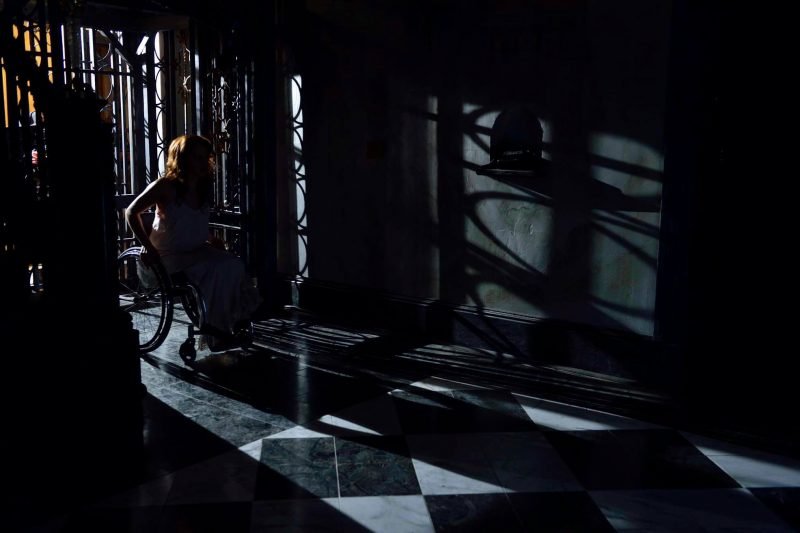
The parcel has no return address, and nobody in the house ordered a doll. You wheel yourself past it all evening — a vintage Good Guy, grinning from the hall table of a house already wearing mourning black — and every time you pass, you would swear it has turned its head a fraction. Your mother threw it in the trash this morning. It is inside again. It is always inside again. Sleep well, fiend.
Curse of Chucky (2013) brings the series back to straight horror: a mysterious package delivers Chucky to paraplegic Nica Pierce and her grieving family.

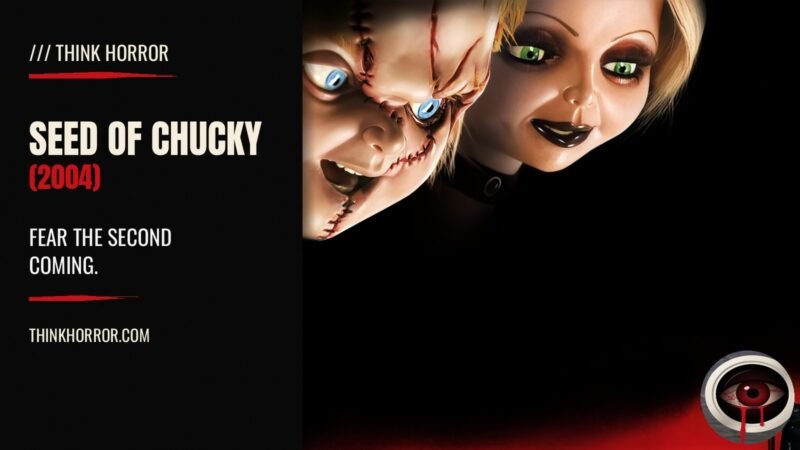
Nine years after Seed of Chucky played the doll for sitcom laughs, the package arrives with no return address at a big, gloomy house, and Sarah Pierce does what any sensible mother would do with an unrequested Good Guy doll in 2013 — she throws it in the trash. By morning she is dead on the floor with a pair of scissors in her chest, ruled a suicide, and the doll is back inside the house. It always comes back inside the house. That is the whole design of Curse of Chucky: everything the audience thought the series had outgrown — the patience, the dread, the doll sitting perfectly still while your back is turned — brought back like it never left.
Don Mancini, who has written every Chucky film there is, calls this one a tonal reboot: a sequel in continuity, a reboot in temperature. He had spent years developing an actual remake before Universal steered the project into a direct-to-video sequel through its 1440 arm, shot in Winnipeg in the autumn of 2012 on a budget reported anywhere between $2.8 million and $9 million, and the first shot digitally. What he built with the small money is a gothic chamber piece: one house, one grieving family, one wheelchair lift rattling between floors, and a doll whose face looks wrong in a way nobody in the film can quite name. The veterans know why it looks wrong. The film is counting on the new blood not asking.
Quick Specs
- Director: Don Mancini
- Screenplay: Don Mancini
- Starring: Fiona Dourif (Nica Pierce), Danielle Bisutti (Barb Pierce), Brennan Elliott (Ian), Maitland McConnell (Jill), Chantal Quesnelle (Sarah Pierce), Summer H. Howell (Alice Pierce), A Martinez (Father Frank), Brad Dourif (voice of Chucky; Charles Lee Ray)
- Music: Joseph LoDuca
- Cinematography: Michael Marshall
- Editor: James Coblentz
- Producers: David Kirschner
- Production Company: Universal 1440 Entertainment, David Kirschner Productions
- Distributor: Universal Studios Home Entertainment
- Premiered: August 2, 2013 (Fantasia Festival, Montreal); US digital September 24, 2013; Blu-ray and DVD October 8, 2013
- Runtime: 95 minutes (R-rated cut); 97 minutes (unrated cut)
- Rating: R
- Budget: Reported figures range from $2.8 million to $9 million; $5 million is the most commonly cited
- On This Site: Curse of Chucky in the wiki · Child’s Play (1988)
The Review
This Curse of Chucky (2013) review begins with the casting, because the casting is the film’s secret weapon, and it is a family affair in the most literal sense available to horror. Nica Pierce is played by Fiona Dourif — Brad Dourif’s daughter — which means that for most of the running time, the killer doll is being voiced by her father while he hunts her through the house, and in the flashbacks Brad Dourif steps out from behind the doll entirely, de-aged, playing Charles Lee Ray in human form for the first time since 1988. Fiona, who first read for the sister’s part before Mancini moved her to the lead, is superb: Nica is paraplegic, uses a wheelchair, and is written and played as the most capable person in the house — the one who does the research, spots the stranger lurking in the family’s old home movies, and understands what the doll is while the able-bodied adults are still arguing about the will. The film never makes her chair a gimmick. It makes it geography: the lift, the stairs, the balcony rail become the board the endgame is played on.
Around her, Mancini builds the kind of slow, mean little machine the series hadn’t attempted since the first film. The family that gathers after Sarah’s death is rotten with ordinary secrets — Barb, the older sister, played by Danielle Bisutti, is having an affair with the nanny under her husband’s roof; Ian, the husband, has hidden a camera inside the doll to catch her at it, which means the film’s most damning evidence of a living Chucky sits inside a marital snoop’s footage nobody believes in time. The kills are patient and grubby: rat poison slipped into one bowl at the family dinner, and the priest who eats it decapitated in a car crash on the drive home; the nanny electrocuted when a bucket of rainwater goes over the floor outlets and the house blacks out behind her. And over it all hangs the question the marketing pretended was a reboot’s clean slate — why does this doll’s face look like a new doll’s face stretched over something old? Because it is. When that too-smooth face finally comes under a fingernail in the attic, what is underneath answers the question — and the answer itself waits in the spoilers below. The sequels were never retconned. They were concealed, and the concealment was the scariest idea in the film.
The critics noticed the resurrection: it took the Gold Award for Best International Feature at its Fantasia premiere, it earned a Saturn nomination for its disc release, and the notices were the warmest the series had drawn in years. For a film with no theatrical gross to point at — it was built for your shelf, fiends, not the multiplex — it did the one job that mattered: it made Chucky frightening again, and it made the series continuable.
Spoiler Section
Spoilers settle here, fiends — outcomes are named plainly.
The last act is where Curse stops nodding at the original and starts arguing with it. Chucky, caught at last, tells Nica the story the whole series had been missing: Charles Lee Ray was a friend of this family before he was a doll — obsessed with Sarah, murderer of her husband, and the man who stabbed the pregnant Sarah in the stomach when he believed she had betrayed him, which is why Nica was born paraplegic. His flight from the police that same night ran straight into the toy store where Child’s Play began. Twenty-five years of franchise, and the doll’s oldest grudge turns out to be against the woman in the wheelchair. Nica fights him off — and loses anyway, in the cruellest ending the series ever dared: found with the knife among the bodies, convicted of the murders, and wheeled into a psychiatric institution while she screams the truth nobody will print. The doll, meanwhile, is couriered onward by Tiffany Valentine herself, out of a dead policeman’s car and into a little girl’s hands.
So the honest ledger: Sarah, Father Frank, Jill, Barb and Ian all die; Alice survives, delivered into the doll’s hands for a possession the film cuts away from before it completes; Nica survives into a cell of the state’s and Chucky’s making.
And anyone who stayed past the credits — a scene the Netflix version famously dropped — got the reward: six months later, a package arrives for a grown Andy Barclay, who has been expecting it, and answers the box with a shotgun.
Trivia
- It grew out of a remake that never happened. Mancini and producer David Kirschner spent years developing a Child’s Play remake before the project settled, by June 2012, into a direct-to-video sequel — which Mancini then deliberately shot to feel like a fresh start until its final act. His name for it: a tonal reboot.
- Fiona Dourif is Brad Dourif’s daughter. She originally read for Barb, the older sister; Mancini recast her as Nica, the lead. Her father voices the doll hunting her and plays the human Charles Lee Ray in flashbacks — his first time in the role, in person, since 1988.
- The clean face is a lie the film tells on purpose. For most of the runtime Chucky wears latex “makeup” over the stitched face he has carried since Bride of Chucky — revealed when Barb peels at it in the attic. Bride and Seed are not ignored by this film; they are under its skin.
- There is no box office, and anyone quoting one is inventing it. Curse of Chucky premiered at the Fantasia Festival on August 2, 2013, went digital in the US on September 24 (the unrated cut), and reached Blu-ray and DVD on October 8, 2013, alongside the six-film Complete Collection. Its disc also holds both cuts of the film — 95 minutes rated, 97 unrated, differing by a couple of minutes of gore and language.
- Andy Barclay’s post-credits return was his first appearance since Child’s Play 2 in 1990 — twenty-three years. The shotgun does not finish Chucky: Cult of Chucky reveals Andy has spent the years since torturing the doll’s still-living severed head.
- The house had a second career. Curse’s success on disc revived the series after nine years — Cult of Chucky was confirmed within weeks of the home release — and the film itself became a Halloween Horror Nights scare zone at Universal Studios Hollywood in 2013.
Where to Watch
As of November 9, 2026, in the US: Curse of Chucky streams on AMC+ via the Roku Premium Channel, and you can rent or buy it digitally on Amazon Video, Apple TV Store or Fandango At Home. Streaming availability can change.
The Verdict
Rating: 3.5 ravens out of 5.
Three and a half ravens. Curse of Chucky is not flawless — the middle sags, the budget shows in the seams, and two cuts of the film differing by two minutes of gore have confused its paperwork ever since — but as an act of franchise salvage it is close to perfect. It remembered what the doll was for. It is the rare sixth film that makes the first one scarier.
The weekly roundup
One letter a week, from the crypt.
- New reviews, with the ravens
- New wiki entries and news
- Cool stuff worth your night
Weekly. No spam, unsubscribe in one click.