
One week into shooting a new Texas Chainsaw Massacre in Bulgaria, the producers looked at the footage, decided it wasn’t working, and fired the directors. The sets were already standing, the clock was burning, and the ninth film in one of horror’s most argued-over franchises suddenly had nobody steering it. The call went to Austin — to a cinematographer who had directed exactly one feature, a tiny border drama he’d shot in his own hometown with a crew of eight.
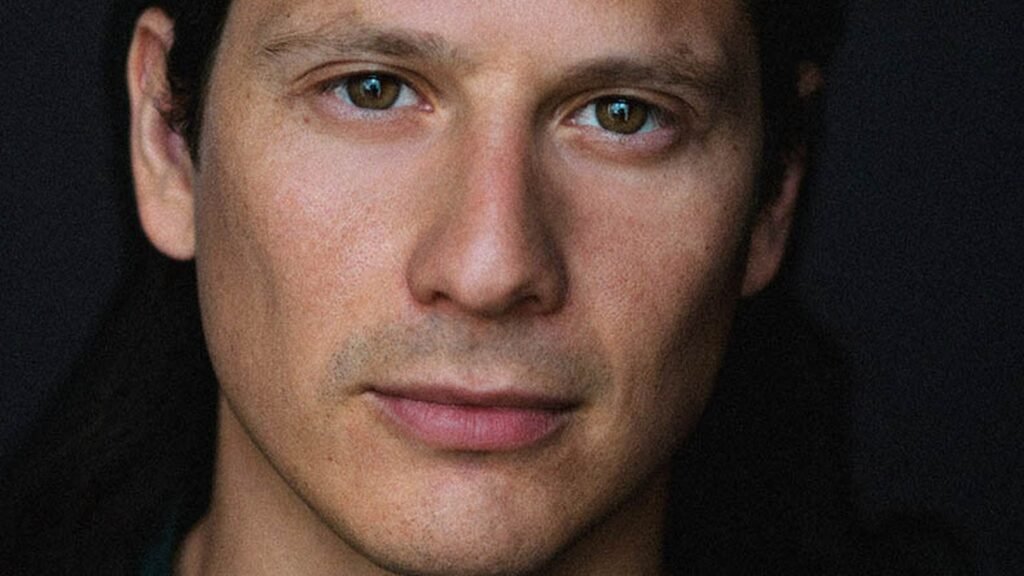
David Blue Garcia is an Austin-based director and cinematographer who inherited Leatherface mid-production and rebuilt Texas Chainsaw Massacre (2022) from scratch. That is not the normal way a director lands a legacy franchise. It’s the emergency way. And the strangest part of the story is that the man who got the call had spent his whole career preparing for it without knowing — shooting other people’s films, directing commercials across the world, and making his one feature back home on the South Texas border, where all of this started.
Quick Specs
- Raised: South Texas border (Harlingen); birth date not publicly documented
- Based in: Austin, Texas
- Occupation: Director, cinematographer
- Education: University of Texas film school, class of 2006
- Known for: Texas Chainsaw Massacre (2022), Tejano (2018)
Raised on the border, raised on a VHS camera
Garcia was born and raised on the South Texas border and grew up in Harlingen, down in the Rio Grande Valley — and when the official bios tell his origin story, it starts the way a lot of horror kids’ stories start. His festival and trade bios describe a kid who got hold of the family VHS camera and started directing his younger brother in homemade action movies. That detail comes from the bios themselves rather than independent reporting, so take it as the story Garcia’s own materials tell — but it fits the career that followed, because he never really stopped pointing a camera at things.
He went to film school at the University of Texas, graduating in 2006, and then he stayed. Austin became the base while the work went everywhere: he directed commercials and branded content in many countries, and he built his reputation the working way, as a cinematographer. His bios credit him with lensing six feature films before he directed one of his own — that number is a bio figure rather than an independently audited count, but the shape of it is consistent everywhere he’s introduced. One named cinematographer credit is Blood Fest (2018). Festival and trade bios also describe him as Emmy award-winning; the specific category, year, and work behind that Emmy are not identified. By the late 2010s, David Blue Garcia was a working director of photography in Austin with an eye people trusted and a hometown story he still hadn’t told.
Tejano: the hometown debut
The story he told first was Tejano (2018), his feature-directing debut — a film he also shot and produced, written by Kyle Bogart. It follows Javi, a hardworking South Texas farmhand whose elderly grandfather falls gravely ill. With the medical bills mounting and no honest way to pay them, Javi is coerced into a deal with a local cartel: smuggle drugs across the border hidden in a cast on an arm he has deliberately broken. It’s a crime story, but it’s built out of the exact pressures of border life — family, debt, dignity, and the deals desperation puts in front of good people.
By his bio’s account, the film was a personal project in the most literal sense: he made it in 2015 by going home, taking a crew of just eight people back to his hometown, and shooting the place he grew up in, inspired by Robert Rodriguez and determined to put South Texas Latinx culture on screen as it actually looks from inside it. One festival bio puts the budget at $58K; nobody disputes the film was made for very little, by very few people, in the place it depicts.
It worked. Tejano had its world premiere at the 2018 Dallas International Film Festival and won the Audience Award there, and in 2020 HBO acquired the television rights. For a first feature made with eight crew members and a hometown cast of locations, that’s a remarkable landing — and it put Garcia on exactly the lists that matter when a studio suddenly needs a director who can walk onto a set, in a hurry, and shoot.
The call: Texas Chainsaw Massacre (2022)
The Texas Chainsaw Massacre franchise had been circling a legacy sequel for years. The version that finally moved came from Fede Álvarez and Rodo Sayagues, who wrote the story; Chris Thomas Devlin wrote the screenplay, and the producers included Álvarez, Sayagues, Pat Cassidy, Ian Henkel, and Kim Henkel — who co-wrote the 1974 original — for Legendary Pictures, Exurbia Films, and Bad Hombre. The plan was a direct sequel to The Texas Chain Saw Massacre (1974), set roughly fifty years after Tobe Hooper’s film, ignoring the tangle of sequels in between. (Álvarez later clarified, in February 2022, that the earlier sequels still took place in the film’s continuity — the marketing said direct sequel, the producer said both.)
Directors Ryan and Andy Tohill were hired in February 2020. By August, about a week into the shoot in Bulgaria, they were gone — fired over creative differences after the producers disliked the footage, as reported at the time. Their footage was scrapped entirely. Garcia was hired to restart the production from scratch, on very short preparation, reportedly working from shorthands and bullet points rather than a settled shooting plan. The Tohills’ director of photography, Angus Mitchell, left with them; Ricardo Diaz shot the restarted film. Keep the wording where the reporting keeps it: this was a professional reset, not a scandal — a studio deciding the movie it was getting wasn’t the movie it wanted, and a replacement director walking into the hardest job in the genre that year.
What Garcia made, under those conditions, is lean to the bone. Bulgaria stood in for Texas, and he leaned into the resemblance — by his account, they worked to make it feel like West Texas, out near the Fort Davis mountains. The production went old school where it counted: vintage lenses, and practical effects for the gore. Fifty years after Leatherface’s 1973 killing spree, young entrepreneurs Melody (Sarah Yarkin) and Dante (Jacob Latimore), Melody’s sister Lila (Elsie Fisher), and Dante’s girlfriend Ruth (Nell Hudson) travel to the abandoned town of Harlow to auction off old properties and build something trendy on the bones. In a dilapidated orphanage they find elderly Ginny McCumber (Alice Krige) still living there — and the confrontation over the property, and her death, brings Leatherface (Mark Burnham) back out of the walls. Waiting in the wings is Sally Hardesty, the original film’s sole survivor, now played by Olwen Fouéré and done running. The full Texas Chainsaw Massacre (2022) page walks the film itself; what matters here is the shape of it — 83 minutes, Colin Stetson on the score, no fat anywhere.
The film was initially planned for a theatrical release in 2021, then moved to Netflix only, where it premiered on 18 February 2022. Because it never played theaters, there is no box-office gross for it — anyone who quotes you one is making it up. The honest measure of its reach is streaming hours, and we’ll get to those below.
Gore praised, terror questioned
The reviews were rough, and pretending otherwise would insult the film and the reader. The later Rotten Tomatoes tally stands at 30% of 162 critics positive, with an average score of 4.3/10, and a consensus that reads: “Texas Chainsaw Massacre doesn’t skimp on the gore, but Leatherface may have irrevocably lost his ability to terrify.” Metacritic has it at 34/100 from 28 critics — “generally unfavorable,” in their words, and the general critical verdict was negative. Contemporary launch-week reports put the Rotten Tomatoes figure in the 29–32% range; the 30% tally is the settled later count.
And yet. Netflix’s reported figures put the film at roughly 29 million hours viewed in its opening stretch — the accounts disagree on the exact window, some framing it as the debut week and others as the first three days — good enough for a #2 debut on Netflix’s global chart before it slipped to #3 the following week. Both halves of that paragraph are true at once, and together they’re the real story of the film: enormous numbers of people watched a Texas Chainsaw Massacre movie in February 2022, critics mostly shrugged at it, and the gore — the practical, old-school gore Garcia insisted on — was the one element nearly everybody conceded. For a director who’d been handed the franchise mid-collapse, that’s a complicated legacy, but it isn’t a failure. The film kept Leatherface in the present tense.
Zeus and the road ahead
On 6 November 2024, Garcia was announced as the director of Zeus, a horror-thriller creature feature for Mucho Mas Media, written by Tate Hanyok and Shane McKenzie, with Highland Film Group handling worldwide rights and launching sales at the American Film Market, and financing from HarbourView Equity Partners. The premise is a mean little hook: a group of friends in their early twenties, a lakeside holiday, and a Cane Corso — a very large mastiff — pitched in the announcement as a new killer predator in the lineage of Jaws, Cujo, and Michael Myers. Zeus is an announced film, not a released one: a later festival bio has production slated for 2025, and no release, cast, or completed-film record has surfaced. Until it lands, it sits in his filmography as exactly what it is — announced, unreleased, and very much the kind of swing a director takes after surviving a franchise.
One more attachment trails him in a single festival bio, which also reports him attached to a Scott Free Productions horror feature, with no title behind it yet.
Filmography (directing)
- Tejano (2018) — director; also cinematographer and producer
- Texas Chainsaw Massacre (2022) — director
- Zeus (announced 2024, unreleased) — director
As cinematographer, his bios credit six features before his directing debut; the one named credit is Blood Fest (2018).
Where he stands
David Blue Garcia’s public record is unusually honest about its own limits: no birth date on file, an Emmy his bios mention but never specify, a first feature made for pocket change in his hometown, and a second feature that most directors would have run from. That’s the page, and it’s enough. He is the rare replacement director whose name stayed on the film and in the conversation — the Austin cinematographer who went home to make Tejano, got the worst phone call in horror, and delivered a Chainsaw movie that tens of millions of people watched in its first days. Whatever Zeus becomes, he has already done the hardest trick in the business: he started over, from shorthands and bullet points, and finished. You’ll find him in our Horror Directors index — filed, fittingly, under directors who earned it the hard way.