
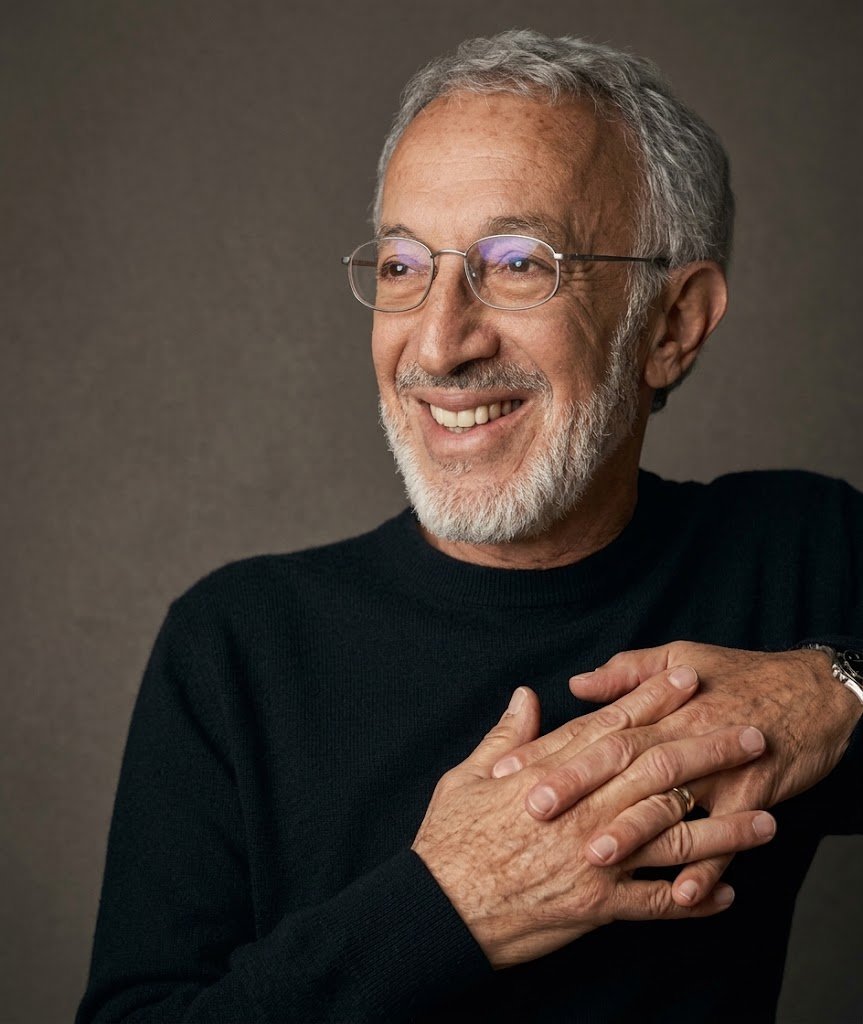
Stan Winston (1946 to 2008) was the American creature effects artist whose studio built the Terminator endoskeleton, the Alien Queen, the Predator suit and the Jurassic Park dinosaurs.
Stan Winston came to Hollywood to be an actor. In 1969 he did stand-up comedy while he waited for parts, the parts never came, and he took a makeup apprenticeship at Walt Disney Studios as a day job. He never did become a movie star. Instead he spent four decades building the characters that movie stars had to act against, and a 14-foot Alien Queen, a hunter from another planet and a full-size Tyrannosaurus all came out of his shop.
Quick Specs
| Born | April 7, 1946, Arlington, Virginia (some obituaries give Richmond, Virginia) |
| Died | June 15, 2008, at his home in Malibu, California, after a seven-year illness with multiple myeloma |
| Known for | The Terminator (1984), Aliens (1986), Predator (1987), Terminator 2: Judgment Day (1991), Jurassic Park (1993), Iron Man (2008) |
| Studio | Stan Winston Studio, founded 1972 in the garage of his house in Encino, later based in Van Nuys |
| Director | Pumpkinhead (1988); A Gnome Named Gnorm (1990) |
| Academy Awards | 4 wins from 10 nominations: Visual Effects for Aliens; Makeup and Visual Effects for Terminator 2; Visual Effects for Jurassic Park |
| Emmy Awards | 2 wins from 5 nominations: Gargoyles (1973 award) and The Autobiography of Miss Jane Pittman (1974) |
| Also founded | Digital Domain (1993), with James Cameron and Scott Ross |
| Training | Painting and sculpture at the University of Virginia (1968); Disney makeup apprenticeship under Bob Schiffer |
| Honours | Hollywood Walk of Fame star (2001); Visual Effects Society Hall of Fame (2017, posthumous) |
| Family | Married Karen Winston in 1969; son Matt Winston, an actor, and daughter Debbie Winston |
Who He Was
Stanley Winston was born on April 7, 1946, in Arlington, Virginia. The Television Academy and The Independent both give Arlington; some syndicated obituaries give Richmond. He grew up in Arlington, fascinated by drawing, puppets, monster movies and special effects, and the Television Academy’s obituary adds that Disneyland’s animatronic Abraham Lincoln “only deepened his obsessions.” He graduated from Washington-Lee High School in 1964.
He studied painting and sculpture at the University of Virginia in Charlottesville and graduated in 1968. His son Matt has said he spent his first year aimed at dentistry before switching to fine arts and drama, and that he acted with the Virginia Players and more or less ran their makeup department.
In 1969 he moved to Hollywood to act. Matt says watching Planet of the Apes convinced him that makeup effects could be his way in. He did stand-up while he looked for acting work, found none, and began a three-year makeup apprenticeship at Walt Disney Studios under the department head Robert J. (Bob) Schiffer, regarding it at first, The Independent noted, as “a day job.” He became a makeup artist in 1972.
That same year he founded Stan Winston Studio. “Stan Winston Studio was the garage and kitchen table of our tiny two-bedroom house in Encino, California!” Matt has said. It grew into one of the major creature shops in Hollywood, based in Van Nuys. Winston once compared the talent there to “the finest painters, sculptors and artists of the Renaissance.”
He married Karen Winston in 1969, and they were together until his death. They had a son, the actor Matt Winston, and a daughter, Debbie Winston.
The Work, and What He Did in It
A word on credit first, because Winston insisted on it. From 1972 nearly everything was Stan Winston Studio work, designed, sculpted, mechanised and puppeteered by teams of artists he hired, trained and supervised. “It’s not about me,” he said of his studio’s history. “It’s really about hundreds of people who I have had the good fortune of working with through my career, who have made the studio work.” The sections below say what was his and what was the shop’s.
Two Emmys on Television
His first credited job was Gargoyles, a CBS television horror film first broadcast on November 21, 1972. He designed and built the gargoyle makeups and suits, winged and horned creatures made with prosthetics on a television budget, and shared the 1973 Emmy for Outstanding Achievement in Makeup with Del Armstrong and Ellis Burman, Jr. His first credit won an Emmy in the year he founded his studio.
The second Emmy came in 1974 for The Autobiography of Miss Jane Pittman, for the ageing makeup that took Cicely Tyson’s character from 19 to 110 years old. He shared it with the young Rick Baker, and Winston later said he learned early mould-making techniques from Baker on that production, techniques Baker had learned from Dick Smith.
Faces and Robots
On W.C. Fields and Me (1976) he was the make-up designer, and The Independent recorded that he “won praise for his remarkable transformation of Rod Steiger into the famed comedian Fields, whose bulbous nose was his trademark.” On The Wiz (1978) he was special make-up designer; The Independent called his work, including Michael Jackson’s scarecrow, “one of the redeeming features in an otherwise overblown musical.” For that film he made crow characters with enormous beak faces, an idea he would bring back fourteen years later. In the same period he made the Wookiee costumes for the Star Wars Holiday Special (1978).
Heartbeeps (1981) starred Andy Kaufman and Bernadette Peters as two robots who fall in love. Winston created the robot characters and earned his first Academy Award nomination, for Best Makeup. He lost to Rick Baker’s An American Werewolf in London.
One Dog on The Thing
The Thing (1982) is Rob Bottin‘s film. Bottin designed and supervised the effects for John Carpenter and worked himself into hospital with exhaustion. Overloaded, he asked Winston to take over one effect. “There was a rather intricate effect which was needed, that Rob felt he didn’t have the time to do,” Winston recalled. “So he wanted me to design the effect; otherwise they were going to have to drop it from the film.” Winston designed and built the main Dog-Thing puppet, the transformed kennel dog, a large hand puppet built around the arm and body of the puppeteer Lance Anderson. Other stages of the dog transformation came from Bottin’s own team. Winston asked not to be credited, so the praise would stay with Bottin.
The Terminator
James Cameron first offered The Terminator (1984) to Dick Smith, who turned it down and suggested Winston. Winston called the result “a match made in heaven between Jim Cameron and myself.” Cameron arrived with his own sketches of the endoskeleton, and he chose elements from three concept designs for the final look. Winston’s shop engineered and built it, a process that took six months. The T-800 endoskeleton was a full-size puppet: for tight shots Shane Mahan carried the torso on a backpack rig, the head and eyes were radio-controlled, and the full walking shots used stop-motion. The shop also made the damage makeups that expose chrome under Arnold Schwarzenegger’s torn skin, vacuum-metalised plastic shells inside sculpted foam appliances, and a puppeteered mechanical arm for the self-surgery scene. “We broke ground with The Terminator,” Winston said later. “Nobody had ever seen anything like it.” He called it a huge breakthrough in his career.
The Queen
For Aliens (1986) Winston and his studio created a creature the first film never had. The original Xenomorph design is H. R. Giger’s, from Alien (1979). The Alien Queen was new, and Winston designed her with Cameron in a sketch-by-sketch design battle. Before anything expensive was built, the two of them tested a full-scale mock-up made of garbage bags and ski poles, with two puppeteers inside, in a parking lot a few months before the shoot moved to England. The finished Queen was a 14-foot puppet hung from an overhead crane, with two performers inside the torso working her four arms and hydraulics and radio controls doing the rest; as many as 16 operators ran her. Shane Mahan sculpted her head and John Rosengrant her body. The studio also built the warrior aliens, about 15 suits and 10 articulated puppets, and reworked their movement so they looked less like men in suits.
The Queen, who faces Sigourney Weaver‘s Ripley in the finale, won Winston his first Oscar, for Best Visual Effects, shared with Robert Skotak, John Richardson and Suzanne Benson.
The Predator Rescue
Predator (1987) needed saving. The original creature, built by another shop, failed on location and production shut down. On Schwarzenegger’s suggestion, director John McTiernan turned to Winston, fresh from Aliens, to redesign it, and his team had a matter of weeks to do it (accounts differ, at six to eight). Two of the most famous features came from other people, by Winston’s own telling. The dreadlocks came from a painting of a Rastafarian warrior in producer Joel Silver’s office. The mandibles came from Cameron: sketching beside him on a flight to Japan, Winston heard, “You know, I’ve always wanted to see something with mandibles.” What Winston’s studio did was everything else, turning those ideas into a wearable suit that survived the jungle, with a servo- and cable-driven face moving the mandibles, cheeks and brows, worn by Kevin Peter Hall. The cloaking and thermal vision were optical effects, not the suit. It brought an Academy nomination for Best Visual Effects, shared with Joel Hynek, Robert M. Greenberg and Richard Greenberg.
For Predator 2 (1990), with Danny Glover in the lead, the studio built a revised City Hunter with a spiny head sculpt and new masks and weapons. For the finale it made nine more Predator suits for the Lost Tribe and gave each one to a single artist to customise, so the tribe reads as individuals. The Elder Predator was built from the original moulds. Hall returned inside the main suit for the last time.
The Monster Squad
Fred Dekker’s The Monster Squad (1987) needed Dracula, Frankenstein’s monster, the Wolf Man, the Mummy and a Gill-man who read instantly as the Universal classics without copying them. “Although we were doing a movie that was a takeoff on the Universal classics,” Winston said, “none of our designs infringed on the original designs of the Universal characters. There were subtle changes.” On that shoot Tom Woodruff, Jr. asked if he could paint Frankenstein appliances alongside him. “Mind? I would love to,” Winston said.
Directing Pumpkinhead
Pumpkinhead (1988) was his debut as a director. Lance Henriksen plays Ed Harley, a rural father who raises a demon to avenge his son. Winston directed and shared the story credit with Mark Patrick Carducci and Gary Gerani; his studio’s artists built the creature while he ran the set. It was a modest release that grew into a cult film and a franchise, with a direct-to-video sequel and two television sequels. He directed once more, the family comedy A Gnome Named Gnorm (1990), which left little mark.
Edward’s Hands and the Penguin
For Tim Burton’s Edward Scissorhands (1990), Winston created Edward’s scissor hands from Burton’s drawing: prosthetic hands with steel blades about ten inches long for hero shots, and vacuum-metalised plastic copies for safety. Burton was delighted by Winston’s version. “I didn’t think he’d actually have scissors for fingers,” he said. “I thought they’d just be long sharp pieces of metal that weren’t finished, but this is much better!” The film brought a Best Makeup nomination, shared with Ve Neill.
On Batman Returns (1992) the studio made the Penguin makeup for Danny DeVito, working from Burton’s sketches through Mark “Crash” McCreery’s concept art and lifecast tests by Shane Mahan and John Rosengrant. Winston disliked the early pointed-nose designs, which he said resembled a witch, and went back to the clay himself, reviving the big-beaked idea from his Wiz crows. The result was the T-shaped nose, lip and brow appliance, with crooked teeth, whitened skin and dark-ringed eyes. Ve Neill applied it on set, and DeVito spent around three hours a day in the chair. The studio also built the robotic penguins. It brought a Best Makeup nomination shared with Neill and Ronnie Specter.
Terminator 2: Two Oscars in One Night
Terminator 2: Judgment Day (1991) is the clearest picture of the split between practical and digital work. Industrial Light and Magic, under Dennis Muren, created the liquid-metal T-1000’s morphing in computer graphics. Winston’s studio built the T-1000’s practical forms, the animatronic puppets for the blown-apart and impaled states and the metallic wound makeups and props that let Robert Patrick’s performance cut into ILM’s shots, along with the T-800’s progressive damage makeups and animatronic doubles. At one ceremony Winston won two Oscars for the same film, one in each of his crafts: Best Makeup, with Jeff Dawn, and Best Visual Effects, with Dennis Muren, Gene Warren, Jr. and Robert Skotak.
Jurassic Park
For Steven Spielberg’s Jurassic Park (1993) the studio built the full-scale animatronic dinosaurs. The centrepiece was the hydraulic T. rex, about 20 feet high and 40 feet long, which plays the paddock breakout opposite the actors for real, in a rainstorm, though animatronic puppets are not built for rain. The shop also made the sick Triceratops, the Velociraptors as suits and puppets, and the Dilophosaurus. The film was a planned hybrid: of roughly 15 minutes of dinosaurs on screen, about 9 are Winston’s animatronics and about 6 are ILM’s computer graphics, with Phil Tippett’s team moving from stop-motion into supervising the digital animation. The first T. rex face the audience sees is Winston’s machine; the running Gallimimus herd is ILM’s. The Best Visual Effects Oscar was shared by Dennis Muren, Stan Winston, Phil Tippett and Michael Lantieri.
Digital Domain
In 1993 Winston co-founded the digital effects company Digital Domain with James Cameron and Scott Ross. His reason: “I don’t want to become extinct like the dinosaurs in Jurassic Park.” The practical-effects master co-owned a digital house and treated computer graphics as a tool rather than an enemy. He and Cameron left the board in 1998, after Titanic.
Interview with the Vampire
Neil Jordan thought of Winston as the dinosaur guy, and Winston had to pitch the studio’s makeup work to him in person to get Interview with the Vampire (1994). The vampire makeups his shop made were deliberately subtle: translucent, marble-pale skin with visible blue veins, fangs and contact-lens eyes. The veins were real. The actors were hung upside down so their own veins rose, and the makeup team traced them before painting them in.
Teddy and A.I.
On Pearl Harbor (2001) the studio’s credit was special effects makeup, not creatures; the attack itself belonged to ILM and the production’s pyrotechnics. The same year brought one of its hardest builds. For Spielberg’s A.I. Artificial Intelligence (2001) the studio made the robots, above all Teddy, the robotic bear who goes everywhere with David. The hero Teddy held 50 servo motors, 24 of them in the head, more points of motion than the Jurassic Park T. rex. Several Teddies were built, and ILM matched the practical bear for shots it could not do. “The combination of the amount of screen time, the range of performance needed, his importance to the story and the time crunch we were under made Teddy one of the most difficult challenges we’ve ever faced,” Winston said. The film brought his tenth and last Academy nomination, for Best Visual Effects, for a bear small enough to hold.
Iron Man and the Last Months
Jon Favreau’s Iron Man opened on May 2, 2008. The suits were designed by others: the Mark III by Phil Saunders with Adi Granov, from Granov’s comics art, and the Mark I by Ryan Meinerding. Winston’s studio refined them and built them as working practical armour: the cave-built Mark I, which ended up in more than 80 percent of its shots, the Mark II, the red-and-gold Mark III and the Iron Monger. ILM built its digital doubles from the practical suits. Favreau put it plainly: “it is difficult to identify a single person as the designer,” but the suit “was built by Winston.”
About six weeks after Iron Man opened, on June 15, 2008, Stan Winston died at his home in Malibu of multiple myeloma, a cancer of the plasma cells he had lived with for seven years and kept largely private. A spokeswoman said he “died peacefully at home surrounded by family.” Iron Man and Indiana Jones and the Kingdom of the Crystal Skull, both carrying his studio’s work, were in cinemas at the same time. He was in preparatory work on Terminator Salvation and on Cameron’s Avatar; Terminator Salvation (2009) is dedicated to his memory. A private funeral was held at Hillside Memorial Park. He was survived by Karen, Matt and Debbie, a brother and a sister, and four grandchildren.
Spielberg’s tribute: “Stan was a fearless and courageous artist/inventor, and for many projects, I rode his cutting edge from teddy bears to aliens to dinosaurs. My world would not have been the same without Stan. What I will miss most is his easy laugh every time he said to me, ‘Nothing is impossible.'”
Cool Verified Facts
- Terminator 2 won him two Oscars at the same ceremony, Best Makeup and Best Visual Effects.
- His six nominations without a win: Heartbeeps, Predator, Edward Scissorhands, Batman Returns, The Lost World: Jurassic Park and A.I. Artificial Intelligence.
- He received a star on the Hollywood Walk of Fame in 2001; the Television Academy described him as the first special-effects artist to receive one.
- In 2003 the Smithsonian Institution invited him to speak on his life and career at the National Museum of American History.
- He won three BAFTA Awards across his career.
- After his death his four senior supervisors, Shane Mahan, John Rosengrant, J. Alan Scott and Lindsay Macgowan, founded Legacy Effects, named in his honour.
- The Stan Winston School of Character Arts was set up by his family with Gnomon after his death, announced in July 2010, with the first lessons in January 2011. It grew from his own wish to travel and teach.
Signatures, Habits and Behind the Scenes
Characters, Not Effects
His signature line: “I don’t do special effects. I do characters. I do creatures.” John Rosengrant, his right hand for 25 years, says it was a working rule, not a slogan: “Stan would say, ‘What we’re doing is creating characters.'” The companion doctrine was just as plain: “It’s not about technology. It’s about writers writing wonderful stories with fantastic characters and me being able to create a visual image that’s beyond what you would expect.”
Build It Full Size
The signature work is physical and at full scale: a 14-foot Queen run by up to 16 operators, a 40-foot T. rex in the rain opposite real actors, a teddy bear with 50 motors because a close-up cannot be faked. The garbage-bag Queen is the method in one story: prove the character can move, cheaply, before anyone builds the expensive version.
Practical First, Digital Where It Helps
He ran the defining practical shop of his era and co-founded a digital one. He built Teddy, in his words, to “lessen the CGI burden while attaining a seamless blend.” Favreau called him “the king of integrating practical effects with CGI, never losing his relevance in an ever-changing industry.”
The Shop as a School
The studio trained a generation. Rosengrant remembers Winston taking him aside on Amazing Stories to say, “You’re a really good artist,” as the moment he felt he had arrived. Woodruff got his brush on Frankenstein. When Legacy Effects opened, the family tree of the modern creature shop ran straight through the Van Nuys building.
The Actor by Other Means
He came to Hollywood to act, and his creatures are performances: the Queen, the Predator, Teddy and the T-800 were all played by suit performers, puppeteers and servo operators. Matt Winston put it this way: his father’s ambition to be a movie star “became a reality indirectly as he infused personalities into his creature effects.”
Why He Matters
For horror and creature films, Winston is the hinge between the man in a rubber suit and the modern creature performance. The New Yorker’s assessment, quoted when he died, was that he “almost single-handedly elevat[ed] the craft of creature-making from the somewhat comic man-in-a-rubber-suit monsters of the 1950s and ’60s to animatronics.” The Queen, the Predator, Pumpkinhead, the Monster Squad and the Interview vampires are a large part of the genre’s modern bestiary, and nearly all of them are performances, worn and puppeteered by teams.
For effects as an industry, he made the creature shop a single address where a director could hand over a whole character: design, sculpture, moulds, mechanics, puppeteering, makeup and later digital. Then he hedged his own craft by co-founding Digital Domain, and on Jurassic Park and A.I. he showed the future was a blend rather than a replacement. The record backs it: four Oscars from ten nominations in two crafts, two Emmys and a Walk of Fame star.
The work outlived him in organised form. Legacy Effects, founded by his supervisors, kept building practical suits, and his family’s school turned his shop-floor teaching into a curriculum. He died with two of the summer’s biggest films in cinemas carrying his studio’s work. The career did not wind down; it stopped at full speed.