Pennywise
Pennywise the Dancing Clown is the face of It, Stephen King’s entity that wakes roughly every 27 years to hunt Derry’s children.
At a Glance
| Field | Details |
|---|---|
| Also Known As | It; Bob Gray; Pennywise the Dancing Clown |
| Created By | Stephen King |
| First Appearance | It (novel, 1986) |
| Home | Derry, Maine |
| The Cycle | Wakes roughly every 27 years, then hibernates |
| True Form | Unknown — glimpsed only as the deadlights |
| Portrayed By | Tim Curry (1990 miniseries); Bill Skarsgård (2017 films and It: Welcome to Derry) |
Overview
Pennywise began on the page. Stephen King’s novel It arrived in 1986 and grew into one of the defining horror novels of its era — a huge, two-timeline story about seven childhood friends, the town that shaped them, and the thing underneath it. The clown became the book’s public face almost immediately: the shape the entity wears most, because a clown is built to beckon children closer.
What separates Pennywise from most horror icons is that the costume is the least of him. Freddy has rules, Michael has a shape, but It is something older wearing whatever frightens the person in front of it — a leper, a werewolf, a drowned boy, a clown. The painted smile is a fishing lure. Underneath it is a predator that has been hunting the same small town since before the town existed, and that considers the whole exercise a meal, not a war.
The character now spans the 1990 television miniseries, two blockbuster films — It (2017) and It Chapter Two — and the HBO prequel series It: Welcome to Derry, which premiered in 2025. Through every version, the bargain stays the same: the clown grins, the child trusts, and the deadlights do the rest.
The Entity Behind the Clown
It did not come from Derry. It came from outside — an ancient entity from the void beyond the universe, the macroverse, which arrived on Earth in an asteroid in prehistoric times and settled where Derry would one day stand. It has an opposite in that void: the Turtle, a vast, patient counterpart whose existence the entity grudgingly respects. Humans, by contrast, are toys and food.
Its true form cannot be perceived by a human mind. The closest anyone comes is the deadlights — a crawling mass of orange light that hypnotizes or kills whoever stares into it. The nearest physical shape it takes in our world is a monstrous female spider, and even that is only the mind’s translation of something it cannot hold. Audra Phillips — Bill Denbrough’s wife, carried into the lair as bait — is the only person known to look into the deadlights and recover, though it leaves her temporarily catatonic. Beverly Marsh is shown them and survives the glimpse, left floating and unconscious; Ben Hanscom comes a breath away and describes an endless, crawling, hairy creature made of orange light.
It calls itself Bob Gray when it wants a name, and it hunts children by preference, for a reason it explains itself: their fears are simpler, easier to shape into flesh, and fear seasons the meat. As the novel puts it in the entity’s own thinking, frightened flesh tastes better — it calls the process salting the meat. It can shapeshift, manipulate reality, and work through human agents. What it cannot do is understand being beaten. Across centuries of feeding, nothing has ever seriously threatened it — until seven children in Derry refuse to stay afraid.
The Cycle
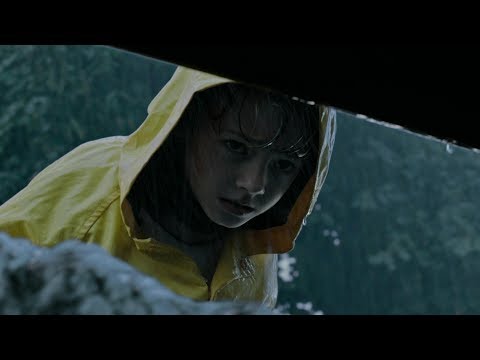
Its hibernations begin and end in blood. One cycle opened with the disappearance of all 340 settlers of Derry Township between 1740 and 1743, an entire community gone without a trace. Another closed with the Kitchener Ironworks explosion of 1906, which killed 108 people, 88 of them children at an Easter egg hunt. Then, in October 1957, It woke during a great storm that flooded part of Derry — and its first victim of the new cycle was Georgie Denbrough, who followed a paper boat down a gutter and met a clown in the storm drain.
Georgie’s brother Bill and his friends — the self-named Losers Club — traced the year’s child murders to the sewers and fought the entity in its lair, wounding it through the Ritual of Chüd, an ancient psychic duel of wills in which Bill faced It across the macroverse. The Losers swore a blood oath to return if it ever woke again, then drifted apart — and, as Derry’s forgetting took hold, lost their memories of everything but each other.
It woke again in 1984. Mike Hanlon, the one Loser who stayed in Derry and remembered, called the others home. Stan Uris could not face it and took his own life; the remaining Losers returned, restored their buried memories, and went down into the dark a second time. In the final confrontation — against the spider shape — Bill fought his way inside the creature’s body and crushed its heart between his hands. A storm swept Derry as it died, and the scars on the Losers’ palms faded: the cycle, at last, was broken. Stephen King has never written a sequel to It, and the ending is why: the story of Pennywise is the story of two summers, twenty-seven years apart, and the friendship that outlasted both.
Portrayals
Tim Curry played Pennywise first, in the 1990 ABC miniseries — a two-part event directed by Tommy Lee Wallace from Lawrence D. Cohen’s teleplay, aired November 18 and 20, 1990, and watched by some 30 million viewers across the two nights. Its $12 million budget was roughly double the usual for television of the time — it filmed in Vancouver — and much of Curry’s menace was built by restraint: effects artist Bart Mixon designed the clown as a regular circus clown, reasoning, as he put it, that “90% of the time he’s suckering kids in.” Curry played the charm — the music-hall patter, the balloons, the grin — and let the evil leak through the cracks. The performance defined the character for a generation, and Curry himself called the role “a wonderful part” when he passed his blessing to the next actor in line.
Bill Skarsgård took over for Andy Muschietti‘s films, after Will Poulter — originally cast — departed along with the project’s first director. Where Curry seduced, Skarsgård unsettles: his Pennywise is twitchy and animalistic, a predator wearing a clown the way a trap wears bait, with a voice that slides between babyish and broken. Muschietti kept Skarsgård away from the child actors until their first scene together, so the fear on screen would have something real to stand on. Skarsgård said in 2023 that he was done with the role — and then returned anyway for It: Welcome to Derry, the prequel series developed by Andy Muschietti, Barbara Muschietti, and Jason Fuchs, which premiered on HBO on October 26, 2025, with its first season set in 1962. A second season is planned to reach back to 1935 and the Bradley Gang massacre.
Two clowns, two philosophies, one appetite. Curry’s Pennywise is the stranger your parents warned you about; Skarsgård’s is the thing that was never human to begin with. The films’ combined success — and the character’s return to television — suggests audiences are happy to be terrified by both.
Across the Screen
It (2017), directed by Andy Muschietti, told the childhood half of the novel and became a phenomenon: released September 8, 2017, it grossed $702.8 million worldwide — over $700 million on a reported budget in the $35–40 million range — making it the highest-grossing horror film of all time, unadjusted for inflation. It Chapter Two followed on September 6, 2019, with the adult Losers returning to Derry, and grossed $473.1 million worldwide. The second film reimagines the Ritual of Chüd as a Native American rite Mike learned of, and changes the ending’s mechanics — the Losers defeat Pennywise by diminishing him, taunting him smaller and smaller until they can crush his heart together — but the destination is the novel’s: belief, wielded by friends, is the one weapon the entity never learned to counter.
It: Welcome to Derry takes the story backward instead. Set in 1962 — one cycle before Georgie — the prequel explores the town and the entity in an earlier feeding season, with Skarsgård’s clown waiting at the center of it. It is a fitting shape for the franchise: Pennywise’s story was always told in cycles, and there are dark years in Derry’s history the books only list as disasters. The series gives those disasters a face. It is, of course, the same face.
The wider It hub gathers the films, the miniseries, and the series in one place.
Reception and Legacy
Pennywise is routinely ranked among the greatest horror villains ever created, and he carries an unusual distinction: he changed how a generation feels about clowns. The character arrived at the exact moment to merge King’s literary reputation, Curry’s era-defining television performance, and the films’ box-office dominance into something bigger than any of them — a monster children who never read the book can draw from memory.
The legacy runs in two directions. Forward: the 2017 film’s record-breaking run proved an R-rated horror property could open like a superhero movie, and the current prequel era of horror television runs straight through Welcome to Derry. Backward: the 1990 miniseries remains a benchmark for what network television could do with horror — no gore to speak of, a clown in a sewer, and 30 million people watching through their fingers. Both roads end at the same drain, where something is still offering you a balloon.
Trivia and Facts
- Stephen King’s response to the 2017 film losing its first director was pure Derry: “we’ll always have Tim Curry. He’s still floating down in the sewers of Derry.”
- The entity’s cycles open and close with disasters in the novel — the vanishing of Derry Township’s 340 settlers in the 1740s and the Kitchener Ironworks explosion of 1906, which killed 88 children.
- It (2017) is the highest-grossing horror film of all time, unadjusted for inflation, at $702.8 million worldwide.
- Bart Mixon deliberately designed Curry’s Pennywise as an ordinary circus clown — the horror works because, in his words, “90% of the time he’s suckering kids in.”
- Bill Skarsgård was kept apart from the child cast until his first scene with them, so their reactions would be genuine.
- The deadlights have never been fully shown on screen — by design. In the novel, looking into them directly kills or maddens; the films only ever let audiences glance at the glow.